Home Blog

You’re no longer my daughter! Get out of my house!” — my mother kicked me out when I refused to share the inheritance

0

Svetlana pulled the last purchases out of her bag. Milk, bread, medicine for her mother. She had spent money again—money she already barely had. There was almost nothing left for her own needs.

“Svetochka, where’s the cottage cheese?” her mother’s voice called out. “I asked you to buy the fat-free kind.”

“They didn’t have any, Mom,” Sveta replied, putting the groceries in the fridge. “I’ll go to another store tomorrow.”

Nina Petrovna sighed sadly. Her displeased expression made it clear that a simple explanation would not be enough.

“They didn’t have any?” her mother sat down on the chair by the window. “Did you look well? Or maybe you just didn’t want to go out of your way again?”

Sveta turned toward the sink. She heard that reproachful tone every day. Eight years ago, her mother promised things would change. That she would find a job, become independent. But the years passed, and the situation only worsened.


“Mom, I checked the entire dairy aisle,” Sveta said, taking a cloth and starting to wipe the countertop. “Tomorrow after work, I’ll go to another store.”

“Exactly, after work,” Nina Petrovna sighed theatrically. “And I sit home alone all day. My heart hurts, my blood pressure spikes, and my daughter only thinks about herself.”

Sveta gripped the cloth tighter. This song about a sick heart had been playing for years. Doctors said there were no serious problems. Just age-related changes that could be controlled.

“Maybe you should look for a job?” Sveta suggested cautiously. “At least part-time. Talking to people, new experiences…”

Her mother suddenly straightened in the chair. Her eyes narrowed, an expression of offense appearing on her face.

“A job?” Nina Petrovna’s voice rang with indignation. “How can you say that? I have health problems!”

“Mom, the doctor said it would be good for you…”

“The doctor doesn’t understand anything!” her mother interrupted. “She’s young and healthy. How could she know what it’s like when something hurts every day?”

Sveta put the cloth down on the countertop. Her head was starting to ache from the conversation. These scenes repeated every week.

“For what did I raise you?” Nina Petrovna continued, standing up from the chair. “I denied myself everything so that you could study and become a person. And now you want to send me to work?”

“No one is sending you away,” Sveta said tiredly. “Just think about it, maybe…”

“Yeah, think!” her mother came closer. “Did you forget how I stayed up nights when you had a fever? Now, when I need help, you want to get rid of me.”

Sveta lowered her eyes. Those words hit the mark. Her mother really had sacrificed a lot for her. But did that mean she had to pay for it all her life?

“Do you even have a roof over your head?” her mother’s voice grew more confident. “The apartment is mine. And I used to pay the utilities myself. But you’re always unhappy!”

Sveta looked up at her mother. Confidence in being right shone in her mother’s eyes. Nina Petrovna knew she had hit a nerve. Sveta quietly said:

“I’m not unhappy, Mom. I just want to have a life of my own, too.”

Her mother threw up her hands.

“A life of your own? What is that? Running around clubs, wasting money on nonsense?”

Sveta was about to answer, but the phone rang. An unknown number showed on the screen.

“Hello?” Sveta answered cautiously.

“Good afternoon. This is the notary’s office. Are you Svetlana Mikhailovna Kuznetsova?” a businesslike female voice said clearly and confidently.

“Yes, that’s me,” Sveta glanced at her mother in surprise.

“You need to come to us regarding an inheritance. When can you come?” the notary shuffled papers.

Sveta sank into a chair. An inheritance? From whom? The only grandfather left alive was Ivan Sergeevich on her father’s side. But they hadn’t been in touch for about ten years.

“May I ask whose inheritance it is?” Sveta’s voice trembled with excitement.

“From Ivan Sergeevich Kuznetsov. He named you the sole heir,” the woman said bluntly.

Nina Petrovna suddenly leaned closer to her daughter. Her eyes were burning with curiosity.

“I can come tomorrow after lunch,” Sveta whispered.

“All right, we’ll expect you at three o’clock. Bring your passport,” the call ended.

“What was that? Who was it?” her mother grabbed Sveta’s hand.

“Grandpa Ivan… left me an inheritance,” Sveta slowly put the phone in her pocket.

Nina Petrovna’s face changed. Confusion was replaced by a calculating gleam in her eyes.

“Well! What exactly did he leave?” her mother sat down next to her on a nearby chair.

“I don’t know yet. I’m going to the notary tomorrow,” Sveta got up and headed toward the fridge.

The next day passed in a fog. At work, Sveta couldn’t concentrate on the numbers. Her mind spun with thoughts about a grandfather she barely remembered.

The will made Sveta freeze. A one-room apartment. And a substantial sum in the bank. She stared at the documents for a long time.

At home, her mother waited impatiently.

“Well, tell me! What’s there?” Nina Petrovna practically pounced on her daughter in the hallway.


“An apartment and money,” Sveta sat on a stool, taking off her shoes.

“How much money? Where’s the apartment?” her mother’s eyes lit up with a greedy fire.

“Mom, it’s my inheritance,” Sveta said cautiously.

“Yours?” Nina Petrovna’s voice rose. “And who raised you? Who invested in you all your life?”

Sveta stood and went to the kitchen. Her mother followed her closely.

“I spent my whole youth raising you!” Nina Petrovna waved her hands. “I gave up my personal life, put all my strength into you!”

“Mom, what are you saying,” Sveta turned on the kettle.

“You owe me half of the money!” her mother came close. “And the apartment should be sold, the money divided in half!”

“Absolutely not,” Sveta answered firmly.

Nina Petrovna’s face twisted with anger. She grabbed the edge of the table.

“How is it ‘absolutely not’? Ungrateful!” her mother’s voice broke into a scream. “I devoted my whole life to you!”

“And I’ve been paying for everything for eight years!” Sveta raised her voice for the first time in a long while.

“You pay?” her mother sobbed. “Is that how you talk?”

“This is my chance to finally start living for myself,” Sveta turned toward the window.

“You’re no longer my daughter!” Nina Petrovna threw a kitchen towel on the floor. “Get out of my house!”

“All right, Mom,” Sveta said calmly. “If that’s how it is, I’ll leave.”

Nina Petrovna froze. She clearly did not expect such a reaction from her daughter.

“What did you say?” her mother’s voice trembled.

“I said I’ll leave,” Sveta passed by her mother toward the kitchen exit. “You told me to.”

“Stop! Where are you going?” Nina Petrovna rushed after her. “I didn’t mean that!”

“What exactly did you mean?” Sveta stopped in the hallway. “You shouted that I’m not your daughter.”

Her mother’s face flushed red. Her hands trembled with anger.

“You’re selfish!” Nina Petrovna shouted. “I gave you my best years! Because of you, I never had a personal life!”

“No one asked you to sacrifice your personal life,” Sveta answered firmly. “That was your choice.”

“My choice?” her mother threw up her hands. “I gave up everything for you!”

Sveta took a large bag out of the closet.

“You kept me close because it was convenient for you. I’ve been supporting this house for eight years, and you play the sick one.”

Nina Petrovna clutched her heart.

“How dare you! I really have health problems!”

Sveta began packing clothes into the bag.

“The doctor said there are no serious diagnoses. You just don’t want to work.”

Her mother watched every movement of her daughter. Panic grew in her eyes.

“Svetа, stop!” Nina Petrovna’s voice cracked into falsetto. “What are you doing?”

“What you told me,” Sveta packed the last things into the bag. “I’m leaving your house.”

“But I didn’t think you’d actually…”


Her mother tried to grab her daughter’s hand. Sveta pulled away.

“Eight years ago, you threw a fit when I wanted to move out. You talked about your heart, about loneliness. But now you’re the one kicking me out. I won’t miss this chance!”

Nina Petrovna realized her daughter was serious. Her hands trembled, and confusion appeared on her face.

“Svetochka, I overreacted!” tears ran down her mother’s cheeks. “You don’t have to go anywhere!”

“I have to, Mom,” Sveta zipped up her bag. “I’ll be thirty soon, and I’m still living at the mercy of your whims.”

Nina Petrovna paced the hallway, not knowing what to do. Panic grew with every second.

“This is not whimsy! I am your mother!” Nina Petrovna blocked the door, spreading her arms wide.

“A mother doesn’t use her children for personal gain,” Sveta looked firmly into her mother’s eyes. “You’ve been parasitizing on my sense of duty.”

“Svetа, think!” Nina Petrovna’s voice cracked into a scream. “What will I do alone? Who will help me?”

“The same as other fifty-two-year-old women,” Sveta answered calmly. “They work and provide for themselves.”

Nina Petrovna’s face twisted with despair. She grabbed the doorframe. Through tears, she shouted:

“You’re destroying the family! You’re abandoning a sick mother for money!”

Sveta picked up her bag.

“I’m saving my life. And you’re not sick, Mom. You’re just lazy.”

“All right!” her mother shouted, but her voice was breaking from sobs. “Go! But never come back to this house again!”

“I won’t,” Sveta promised, going around her mother.

Three days later, Sveta stood in her one-room apartment. Sunlight flooded the small room. Silence. No one was shouting, demanding attention, or accusing her of ingratitude.

Documents for professional development courses lay on the table. Sveta had long dreamed of studying, but there was never enough money. Now her grandfather’s inheritance made it possible.

The phone was silent. Her mother hadn’t called. Maybe she was still waiting for her daughter to come back and confess.

Sveta brewed tea and sat by the window. For the first time in many years, anxiety receded. No one needed feeding, supporting, or listening to complaints. Only her own desires and plans.

Tomorrow she would apply for leave and sign up for courses. A new life starts today.

A billionaire was left speechless when he discovered the waitress serving him was actually his daughter—missing for fifteen years—and the shocking truth about his wife’s betrayal came to light.

0

Billionaire Stunned to Discover Waitress Is His Long-Lost Daughter — Unveiling His Wife’s Dark Secret

The upscale restaurant hummed quietly with the soft clinking of fine glassware and muted conversations of affluent diners. At the center of it all sat Edward Harrington, a billionaire known for his ironclad control, and his elegant wife, Margaret. In business circles, Edward was a titan — commanding, unyielding, and often feared.

But tonight, that unbreakable image began to shatter.


A young waitress approached their table, carrying two plates. She looked no older than twenty, her uniform simple but her demeanor steady and confident. As she placed Edward’s meal before him, his eyes flicked up—and then froze.

There was something hauntingly familiar in her gaze.

Eyes he hadn’t seen in fifteen years.

From another life.

“Sir, are you alright?” the waitress asked gently, noticing his sudden stillness.

Edward swallowed hard. “What’s your name?”

Surprised, she answered, “Lily, sir.”

Margaret’s brow furrowed. “Edward, it’s just a waitress. Don’t make a scene.”

But Edward couldn’t look away. His heart raced. “Lily, what’s your last name?”

The young woman hesitated. “I… don’t know. I grew up in foster care. They told me I was abandoned as a baby.”

Edward’s hand trembled, causing his wine glass to slip and shatter on the floor. Silence fell over the room.

Margaret’s face drained of color.

Fifteen years ago, Edward had been told his infant daughter had died tragically. He remembered the heartbreak, the tiny pink blanket, the tears he’d shed after decades of emotional armor. Margaret had stood by him, whispering of an unavoidable tragedy.

Now, standing before him, was this girl—his daughter.

His voice barely steady, Edward asked, “How old are you?”

“Almost sixteen,” Lily replied softly.

Margaret’s fork clattered onto her plate.

Edward stood abruptly. “We need to talk. Now.”

Lily looked startled. “I’m working—”

“This can’t wait.” Edward addressed the manager with quiet authority. “I’ll cover her shift.”

Margaret gripped his arm. “Edward, you’re making a scene. Sit down.”

He shook her off, eyes locked on Lily. “Please. Just five minutes.”

After a reluctant nod from the manager, Lily stepped outside with Edward.

He looked into her eyes. “Do you have anything from your past? A birthmark, a keepsake?”

She touched her neck. “A small star-shaped birthmark. They said I was found with a pink blanket embroidered with an ‘E.’ Why?”

Edward’s breath caught. The same blanket. The same mark.

Softly, he whispered, “You’re my daughter.”

Lily stepped back, alarmed. “That’s not a joke.”

“I’m serious,” Edward said, voice cracking. “Fifteen years ago, my daughter vanished. I was told she died. But you—” He swallowed hard. “You look like your mother… my first wife.”

Trembling, Lily whispered, “I don’t understand.”

Margaret appeared, face tight. “Edward, stop. Don’t confuse this girl.”

Edward turned to her, cold. “Margaret… did you know? Did you lie to me all this time?”


For a fleeting moment, Margaret’s calm faltered. “You’re imagining things.”

“No. You hid the truth. If she is my daughter, then you—” Realization dawned. “You lied about her death. You made her disappear.”

Margaret’s lips pressed into a thin line.

Edward’s chest tightened as he looked from frightened Lily to stone-faced Margaret.

“Tell me the truth. Did you take my daughter away?”

Margaret’s voice was icy. “You were too busy with your empire to raise a child. I did what was necessary—for both of us.”

Lily gasped. “You’re saying you abandoned me?”

Margaret glanced at her coldly. “You wouldn’t understand. Edward’s world revolved around his business. He never cared for late-night cries or feedings. He barely noticed when—”

“Enough!” Edward’s voice thundered. “I trusted you. I mourned a child you claimed was dead. Do you realize what that did to me?”

Margaret’s façade cracked briefly. “You would’ve chosen her over me. I couldn’t allow that.”

Lily stepped back, trembling. “I don’t know what’s real anymore. I need to leave.”

Edward caught her arm. “Please don’t go. I promise, I’m telling the truth. I’m your father.”

Her eyes searched his. “Why believe you?”

Edward pulled out a worn photograph from his jacket—a newborn wrapped in that same pink blanket, embroidered with an ‘E.’ “This was taken the day you were born. Do you still have the blanket?”

She nodded. “Yes. I’ve kept it all these years.”


Margaret paled.

“Lily,” Edward said softly, “I lost you once because I trusted the wrong person. I won’t lose you again.”

Tears welled in Lily’s eyes. “I… I need time.”

Edward nodded. “Take all the time you need. But please, let me protect you. If Margaret did this… who knows what else she’s done.”

Margaret snapped, “How dare you accuse me in front of her? You’re turning her against me!”

Edward’s glare was fierce. “You did that yourself.”

That night, Edward hired a private investigator. Within two days, damning evidence emerged—documents, adoption papers, and payments tracing back to Margaret. She had arranged for Lily’s foster care placement under a false identity, fabricating abandonment.

When confronted, Margaret broke down. “Yes! I did it! You obsessed over that child. Every plan, every word was about her. I was your wife. I refused to be second!”

Edward clenched his fists but controlled himself. “You didn’t just betray me. You destroyed an innocent girl’s life.”

Lily sat quietly, tears falling. “All my life, I thought no one wanted me. And my father was alive all along?”

Edward’s voice shook. “I wanted you every day. I thought I failed. But now I know—it wasn’t me who left. It was her.”

Margaret pleaded, “Edward, we can fix this. We can—”

“Leave,” Edward said firmly.

Margaret froze. “What?”

“Pack your things. Leave. My lawyers will deal with the rest.”

In the weeks that followed, Lily hesitated to accept Edward’s world—luxury, security, a mansion she felt alien in.

One evening, Edward found her staring at an untouched dinner plate.

“Hungry?” he asked gently.

“No. It’s not the food. I just don’t belong here.”

Edward sat beside her. “This house doesn’t make us family. I care about you.”

Her eyes softened. “You really mean that?”


“I do,” he said firmly. “Fifteen years lost, but I’ll spend the rest making it right—if you let me.”

Slowly, Lily began to trust him, returning to school, attending events with Edward at her side. For the first time, she felt truly wanted—not out of obligation, but love.

Margaret faced criminal charges for fraud, kidnapping, and child endangerment.

On trial day, Edward held Lily’s hand as they passed reporters. “You don’t have to look at her,” he whispered.

Lily nodded. “I don’t care about her anymore. I just want you.”

That night, in the quiet mansion, Lily whispered, “Daddy, can I call you that?”

Edward’s eyes filled with tears. “Please do. I’ve waited fifteen years to hear it.”

For the first time since losing her as a baby, Edward Harrington finally felt whole again.

Sweetheart, this apartment has been mine since before we married. So iron your shoelaces — and get out,” the wife said sharply.

0

Dina was at the store when she received a message from her husband. Short, usual: “A colleague will stop by for half an hour, we’ll discuss work matters.” Strange, of course. Vladimir usually didn’t hold such meetings at home, preferring to resolve everything at the office or in a café. But she thought — maybe it really was something urgent.

Dina returned with bags of groceries just as voices came from the hallway. A male acquaintance — Vladimir, and a female stranger, with a clear ringing voice. Dina put the bags down and listened. Something about the tone of the woman’s voice made her wary. Too many intimate notes for a work conversation.

“Dina, come in, meet her,” Vladimir called out when he heard the sound of keys.

In the living room, on the couch, sat a young woman about twenty-five, dark-haired, in a light summer dress. Beautiful, to give credit. Vladimir stood nearby, holding two cups of coffee.


“This is Elena, my colleague from the marketing department,” the husband introduced. “And this is my wife, Dina.”

Elena smiled, but something elusive flickered in her eyes. Embarrassment? Or a challenge? Dina couldn’t tell.

“Nice to meet you,” Dina said neutrally. “Vladimir didn’t mention that you had new employees.”

“Elena has been working with us for six months,” Vladimir answered quickly. “I just rarely talk about work at home.”

Six months. Dina counted in her mind. Six months ago Vladimir started staying late at work, business trips appeared that hadn’t been there before. Six months ago her husband began to smell differently — not with his usual scent, but some floral, unfamiliar perfume.

“Please, have a seat,” Dina offered, indicating the armchair opposite the sofa.

Elena nodded and settled into the chair with a ease that revealed she wasn’t here for the first time. Dina noticed immediately. Usually, guests look around, choose a place, ask permission. Elena sat as if she already knew the most comfortable spot.

“Would you like some coffee?” Vladimir asked his wife.

“Thanks, I’ll make it myself,” Dina replied and headed to the kitchen.

From the kitchen, it was easy to hear what they were saying in the living room. Dina turned on the coffee machine and listened. Vladimir was talking about a presentation, Elena responding. But the tones… too soft, too personal for work talk.

“Do you remember how we discussed this project last time?” Vladimir said.

“Of course I remember,” Elena replied, and there was something in her voice that made Dina freeze with the cup in her hands.

They weren’t just talking about work. At least, not only about work.

Dina returned to the living room with the coffee. Vladimir was now sitting on the sofa next to Elena, showing her something on a tablet. Too close for colleagues. Dina sat in another chair and watched.

“Elena, tell me a little about yourself,” Dina asked. “Where did you study, where are you from?”

“I’m local,” Elena smiled. “I graduated from the economics faculty, then worked a bit in advertising. And now I’m in marketing.”

“Interesting,” Dina nodded. “Do you have a family?”
Family games

Elena paused for a moment, then shook her head:

“No, I’m single for now.”

Vladimir looked away. Dina caught the gesture.

“Vladimir, why don’t you show Elena our terrace,” Dina suggested. “It’s so beautiful now, the flowers are blooming.”

“Yes, of course,” Vladimir agreed.

They went to the terrace. Dina stayed in the living room but didn’t close the door. Everything was audible.

“What a beautiful terrace you have,” Elena said.

“Dina loves flowers very much,” Vladimir replied.

“And you?”

“What do you mean?”

“Do you like flowers?”

Pause. Dina strained to listen.

“I like many things,” Vladimir said quietly.

Dina stood and walked to the window. Vladimir and Elena were standing by the terrace railing, very close to each other. Elena whispered something; Vladimir nodded. Then Elena touched Vladimir’s hand. Not by accident, not casually. Purposefully, gently.

Dina stepped away from the window. The picture became clear.

They returned to the living room a few minutes later. Vladimir looked tense; Elena was slightly flushed.

“I need to use the bathroom,” Elena said.

“Of course,” Dina nodded. “The second door down the hallway.”

Elena headed toward the corridor. Dina watched her and noticed — Elena went straight to the second door, not looking back, not searching. She knew where to go.

“A good employee,” Dina remarked when they were alone.

“Yes, smart,” Vladimir agreed, not meeting her eyes.

“Have you known each other long?”

“I told you, she’s worked here six months.”

“But you could have known each other earlier.”

Vladimir finally looked at his wife:

“What do you mean?”


“Nothing special,” Dina shrugged. “Just curious.”

Elena returned from the bathroom. Dina noticed the hand towel hung differently than in the morning. So Elena used it. She knew where it was.

“Excuse me, where can I wash my hands?” Elena asked.

Too late. Dina already understood everything.

“There’s a sink in the bathroom,” Dina answered calmly.

“Oh, right, of course,” Elena blushed.

They returned to the living room. Vladimir offered more coffee; Elena agreed. Dina watched as her husband prepared the coffee. Without sugar, but with milk. Just as Elena liked it — Vladimir knew it by heart.

“How do you like your coffee?” Dina asked Elena.

“Without sugar, with milk,” Elena answered.

“Vladimir, how do you know?” Dina inquired.

He froze with the coffee pot in his hands.

“What?”

“How do you know how Elena likes her coffee? You started making it exactly that way.”

“I… she mentioned it at work,” Vladimir mumbled.

“She told the whole department?”

“No, just… in conversation.”

Dina nodded. Everything fell into place.

“Elena, do you often visit colleagues at home?” Dina asked.

“Rarely,” Elena answered, her voice trembling.

“But you come here?”

“This is the first time.”

“Strange,” Dina drawled. “And you know where the towel hangs in the bathroom?”

Elena blushed. Vladimir sharply put the coffee pot on the table.

“Dina, what are you talking about?” asked her husband.

“I’m talking about what I see,” Dina answered, feeling her hands tremble. “Elena went to the bathroom without asking for directions. Used the towel that hangs in the bathroom, not the toilet. Knows how she likes coffee. Sits in the armchair like she’s at home.”

Silence fell. Elena looked at the floor; Vladimir shifted his gaze between his wife and the mistress. Dina felt something tighten in her chest. There it was. Seven years of marriage were collapsing right now.

“Maybe it’s just intuition,” Elena tried to justify.

“Maybe,” Dina agreed, trying to keep calm. “Or maybe experience.”

Vladimir cleared his throat:

“Dina, you’re making a mountain out of a molehill.”

“Am I?” Dina stood up from the chair. “Then let’s clarify the situation. Elena, tell the truth — is this really the first time you are in our home?”

Elena looked up. Desperation was written in her eyes.

“I…” Elena began but stopped.

“You don’t have to answer,” Dina said. “I understand everything anyway.”

Dina went to the window and looked outside. Summer, sun, people walking on the sidewalk, living their lives. And here, in the apartment, another family was falling apart. Dina clenched her fists, trying to control the growing anger.
Family games

“Vladimir,” Dina called without turning.

“Yes?”

“How long has this been going on?”

“What?”

“Don’t play dumb. How long has your affair lasted?”

Vladimir sighed heavily. Elena sobbed. Dina turned — her husband’s face was pale, guilty.

“Dina, it’s not what you think,” Vladimir said.

“What is it then?”

“It’s… hard to explain.”

“Try,” Dina folded her arms, feeling her anger rise.

“We didn’t plan it,” Vladimir began. “It just happened. Elena came to work, we started talking…”

“Talking,” Dina repeated. “And how long have you been talking?”

“Four months,” Elena said quietly.

“Four months,” Dina’s voice trembled. “And for those four months, you, Vladimir, never thought to tell me the truth?”

“I didn’t know how to say it.”

“Didn’t know?” Dina laughed bitterly. “But bringing her home as a colleague — you knew how.”

“I wanted you to meet Elena,” Vladimir mumbled. “I realized she was a good person.”

“A good person,” Dina repeated, feeling a wave of anger rise. “Who sleeps with another man’s husband.”

“Dina, don’t be like that,” Elena pleaded.

“Don’t be like what?” Dina turned to Elena. “Don’t call things by their names? Or don’t spoil your mood?”

Elena stood up:

“I’ll go.”

“Yes,” Dina agreed, barely holding back the trembling in her voice. “Go. And don’t come back.”

“Dina, don’t make a scene,” Vladimir pleaded.

“A scene?” Dina felt everything boiling inside. “And what do you think I should do? Have tea with your mistress?”

“She’s not a mistress,” Vladimir objected.

“Who then? A friend? A colleague? Or maybe a distant relative?”

“We love each other,” Elena said quietly.

Dina froze. Those words felt like a slap. They love each other. So this is not just an affair, not an accident.


“You love each other,” Dina repeated slowly. “I see.”

Dina went to the dresser, took out documents: marriage certificate, apartment papers. She put them on the table, trying not to let her hands shake.

“Here’s the deal, darlings,” Dina said, surprised at her own calmness. “This apartment is mine. Bought before the marriage, with my money. So, Vladimir, pack your things. And you, Elena, can take your beloved right now.”

Vladimir turned pale:

“Dina, what are you doing?”

“I’m putting my house in order,” Dina answered. “Sweetie, this apartment is mine, from before the marriage. So straighten your shoelaces — and get out.”

Elena grabbed her purse:

“I really will go.”

“Right,” Dina nodded. “And take him with you.”

Dina gestured toward her husband.

“Dina, stop,” Vladimir begged. “Let’s talk properly.”

“Properly?” Dina raised an eyebrow. “Is it proper to bring a mistress home and introduce her as a colleague? Or proper to lie to me for four months?”

“I didn’t lie.”

“Didn’t lie? What about the business trips? The late work nights? The new perfume you wear?”

Vladimir lowered his head. Elena stood by the door, unsure whether to leave or stay.

“Elena,” Dina called. “Go already. The show is over.”

“Vladimir,” Elena called her husband. “Are you coming?”

Vladimir looked at his wife, then at Elena.

“Dina, maybe we should discuss this?” the husband asked.

“There’s nothing to discuss,” Dina replied. “The decision is made.”

“What decision?”

“I’m filing for divorce.”

“Dina, wait,” Vladimir tried to take his wife’s hand, but Dina pulled away. “Don’t rush your decision. Let’s think it over.”

“Think it over?” Dina struggled to hold back tears. “You thought about cheating on me for four months. Now it’s my turn to think.”

“But divorce… it’s serious,” Vladimir mumbled.

“Infidelity is serious too,” Dina replied. “Elena, are you still here? Or waiting for me to see you out?”

Elena looked at Vladimir, then at Dina.

“Vladimir, I really will go,” Elena said quietly.

“No, stay,” Vladimir begged. “Dina, she’s not to blame.”

“Not to blame?” Dina felt everything inside overturn. “Interesting position. Then who’s to blame?”

“I’m to blame,” Vladimir admitted. “I’m the only one responsible.”

“Fine,” Dina nodded. “If you’re to blame, you’ll pay the price.”

Dina took another folder with documents from the dresser.

“Here’s the apartment purchase agreement,” Dina said, waving the papers. “Date — a year before our wedding. Buyer — me. Seller — the developer. Everything clean and legal.”

Vladimir looked closely at the documents.

“Dina, I understand the apartment is yours,” Vladimir said. “But we can make a deal. After seven years of marriage, there’s a lot accumulated. Car, country house, savings…”

“Make a deal?” Dina realized he wanted to bargain. “About what?”

“Give me time to think it over,” Vladimir asked. “I’ll end things with Elena, we’ll try to start over.”

“End things?” Dina looked at Elena. “Did you forget to ask her? You love each other.”

Elena stood by the door, not knowing what to say.

“I don’t want to ruin another family,” Elena whispered.

“The family is already ruined,” Dina answered. “Four months ago.”

“Dina, please,” Vladimir sat on the sofa, putting his head in his hands. “I understand everything. I was wrong. But give me a chance to fix it.”

“A chance?” Dina sat opposite her husband. “How many chances did you give our marriage when you started seeing Elena? When you first brought her here?”

“First time?” Vladimir asked.

“Not the first,” Dina said. “Elena knows the house too well. Towels, room layout, where everything is. How many times have you met here?”

Vladimir was silent. Elena turned to the window.

“It doesn’t matter,” Dina said, feeling exhaustion wash over her. “The main thing is that it won’t happen again.”

Dina stood, went to the closet, took out a large travel bag.

“Here,” Dina said, handing the bag to her husband. “Pack your things. I give you until tomorrow morning.”

“Until tomorrow?” Vladimir raised his head. “Dina, be reasonable. We need to discuss everything calmly. Property division, documents…”

“We’ll discuss through lawyers,” Dina replied. “Tomorrow morning I’m filing for divorce.”

“And where will I go?” Vladimir asked.

“That’s not my problem anymore,” Dina answered. “You can go to your parents, or to Elena. Or to a hotel.”

“Dina, be human,” Vladimir pleaded. “We’ve been together seven years. Doesn’t that mean anything?”

“Seven years,” Dina repeated. “Four months of those you lived a double life. And who knows how much longer it would have lasted if I hadn’t found out.”

Vladimir took the bag and got up from the sofa.

“Okay,” Vladimir said. “I understand. But at least give me time to find a lawyer, sort out documents. The country house is in both our names, the car too, savings…”

“We’ll sort it out in court,” Dina cut him off. “You’ll get what’s legally yours.”

“Dina,” Elena intervened. “Maybe it doesn’t have to be so drastic?”

“Are you still here?” Dina was surprised. “I thought you already left.”

“I…” Elena hesitated. “I don’t know what to do.”

“You know,” Dina said. “Go home. Think about what you’ve done. And tomorrow decide if you can live with someone capable of such betrayal.”

Elena nodded and took her purse.

“Vladimir, I’ll call you tomorrow,” Elena said and left.

Dina was left alone with her husband. Vladimir stood with the bag in his hands, not knowing where to start.

“Go pack your things,” Dina said. “Only your personal stuff. Don’t touch the equipment we bought together. We’ll sort that out in court too.”

“Dina,” Vladimir called, already heading to the bedroom.

“What?”

“I want you to know. I didn’t want it to turn out this way.”

“You already said that,” Dina replied.

“Will you ever forgive me?” Vladimir asked.

“I don’t know,” Dina answered honestly. “Maybe in years. Maybe not.”

“I’ll try to get you back,” Vladimir said.

“Don’t waste your time,” Dina advised. “Better focus on your new life.”

Vladimir went to pack. Dina stayed in the living room, took her phone. Dialed her friend Svetlana.

“Sveta, it’s Dina,” she said into the phone, trying to keep her voice steady. “Can you talk?”

“Of course,” her friend answered. “What happened? You sound strange.”

“Vladimir is cheating on me,” Dina said and felt tears welling up. “I’m kicking him out.”

“What?!” Svetlana exclaimed. “Are you sure?”

“Absolutely,” Dina answered. “He brought his mistress home disguised as a colleague today. Thought I wouldn’t notice.”

“How brazen,” Svetlana was outraged. “And now?”

“I’m filing for divorce tomorrow,” Dina said. “Good thing the apartment’s mine.”

“Right,” her friend supported her. “But divorce takes time. Through the courts. Need help with a lawyer?”

“Thanks,” Dina answered. “I’ll find one myself tomorrow. Just wanted to let you know.”

“Hang in there,” Svetlana said. “Call anytime.”

Dina hung up. Sounds came from the bedroom — Vladimir was packing.

An hour later, Vladimir returned to the living room with a full bag.

“I packed only the essentials,” Vladimir said. “I’ll take the rest later.”

“Warn me in advance,” Dina nodded. “Leave the keys on the table.”

Vladimir took the keys from his pocket and put them on the table.

“Dina,” Vladimir said. “I want you to know. I didn’t want this to happen.”

“You said that already,” Dina replied.

“Will you ever forgive me?” Vladimir asked.

“I don’t know,” Dina answered honestly. “Right now, I don’t even know what I feel.”

“Thanks for seven years,” Vladimir said.

“Thanks for the lesson,” Dina answered.

Vladimir left. Dina heard the door slam, footsteps fading on the stairs. Silence. Dina sat on the couch and finally allowed herself to cry.

In the morning, Dina woke up on the couch, never making it to bed. Her head hurt, eyes swollen from tears. But her decision hadn’t changed. Dina took the phone and dialed a legal consultation number.

“Good afternoon,” Dina said to the secretary. “I want to make an appointment for a divorce consultation.”

“When is convenient for you?” the secretary asked.

“Today,” Dina answered. “As soon as possible.”

“Would two hours from now be okay?”

“Great,” Dina agreed.

Having made the appointment, Dina took a shower, tidied up. Took the apartment documents, marriage certificate, income statements. Everything that might be needed.

At the lawyer’s, Dina spent an hour and a half. It turned out the divorce wouldn’t be as simple as she thought. The jointly acquired property would have to be divided — car, country house, savings. Vladimir had rights to all that despite the infidelity.

“Infidelity does not affect property division,” the lawyer explained. “You can file for divorce on grounds of ‘irreconcilable differences.’ If the husband doesn’t object, the procedure takes about a month through the registry office. If he disputes or demands property division — court proceedings, which take three to four months minimum.”

“What about the apartment?” Dina asked.


“The apartment is entirely yours,” the lawyer confirmed. “Bought before the marriage, documents are in order. Husband has no rights to it.”

“Good,” Dina nodded. “We begin the procedure.”

In the evening, Dina called a locksmith.

“I need to change the locks,” Dina said. “Can you come today?”

“Of course,” the locksmith replied. “I’ll be there in an hour.”

Dina hung up. New locks, new life. Time to start over.

A month later, Vladimir signed the divorce consent. Apparently, he realized there was no chance for reconciliation. But the property issue was more complicated.

“Dina, I need half the value of the country house,” Vladimir said on the phone. “And the car. We bought them together.”

“I know,” Dina answered. “The lawyer explained everything. We’ll divide it in court.”

“Maybe we can settle it amicably?” Vladimir asked.

“You took away our chance for an amicable settlement four months ago,” Dina replied.

The court proceedings dragged on for six months. Vladimir demanded half of everything jointly acquired. Dina didn’t argue — the law was on the husband’s side. The country house had to be sold, the money split in half. The car was sold too, each got their share. The savings were divided fairly.

“So, does infidelity count for nothing?” Dina asked the lawyer after the last hearing.

“Unfortunately, infidelity is not taken into account in property division,” the lawyer shrugged. “But you kept the main thing — the apartment. That’s not small.”

Dina nodded. Yes, the apartment remained. The home she bought with her own hands, with her own money. No one could take that away.

Vladimir and Elena got married three months after the divorce. Dina heard this from mutual acquaintances. She felt a sting — unpleasant, but not fatal.

“They’re quick,” her friend Svetlana noted. “Not even a year passed.”

“But honest,” Dina answered. “They don’t hide anymore.”

“Don’t you regret it?” Svetlana asked.

“What to regret?” Dina shrugged. “Finding out the truth? No. Spending seven years on someone capable of betrayal? Sometimes I regret it. But that’s in the past.”

“Are you planning to remarry?”

“Not in a hurry,” Dina answered honestly. “I want to understand what I want from life first. Get used to living alone.”

And indeed, life got better. Dina renovated the apartment, rearranged the furniture, changed the interior. Erased all traces of her life with Vladimir. Enrolled in a foreign language course, started traveling. Realized that freedom isn’t so bad.

A year later, Dina met Vladimir and Elena at the mall. They were walking with a stroller — apparently, they had a child. Vladimir looked older, with wrinkles. Elena looked tired; motherhood was not easy.

“Hi,” Vladimir said, noticing his ex-wife.

“Hi,” Dina replied. “Congratulations on the baby.”

“Thank you,” Elena nodded. “We have a son.”

“How are things?” Vladimir asked.

“Good,” Dina answered. “Living, working, enjoying life.”

“Not remarried?” Vladimir asked.

“Not yet,” Dina smiled. “Not in a hurry.”

They stood a little longer, talked about the weather and work. A normal conversation between ex-spouses. No aggression, no claims. The past stayed in the past.

“Let’s go,” Elena said to her husband. “The baby’s hungry.”

“Yes, of course,” Vladimir agreed. “Dina, good luck with everything.”

“Same to you,” Dina replied.

They parted ways. Dina watched them leave. Family. Child. Routine. Responsibility. Maybe Vladimir was happy. Maybe not. But that was no longer her concern.

Dina returned home. Her own home, which no one could take away. Made tea, sat by the window. The sun was shining outside, life went on.

Sometimes Dina told her story to young friends. She always ended with the same advice:

“Girls, buy property in your name. Before marriage or during — doesn’t matter. The main thing is to have documents in your name. You never know what life will bring. Owning your home is not just a roof over your head but confidence in tomorrow. When you have your own house, it’s harder to be hurt, harder to be put in a dependent position.”

Indeed. The premarital apartment became Dina’s salvation. Not just a roof over her head but the possibility to keep her dignity, not to humiliate herself, not to beg for mercy. She could afford to be principled because she knew — in any case, she wouldn’t end up on the street.

Vladimir, deprived of the home, found himself in a vulnerable position. He had to rent an apartment, then move in with Elena. Start a new life from scratch at thirty-five.

Fair? Dina thought yes. Everyone got what they deserved. Betrayal has its price. And it’s good when the betrayer pays that price.
“Your family are beggars!” — my husband hissed disdainfully, not knowing that my ‘poor’ aunt had left me a fabulous business.

0

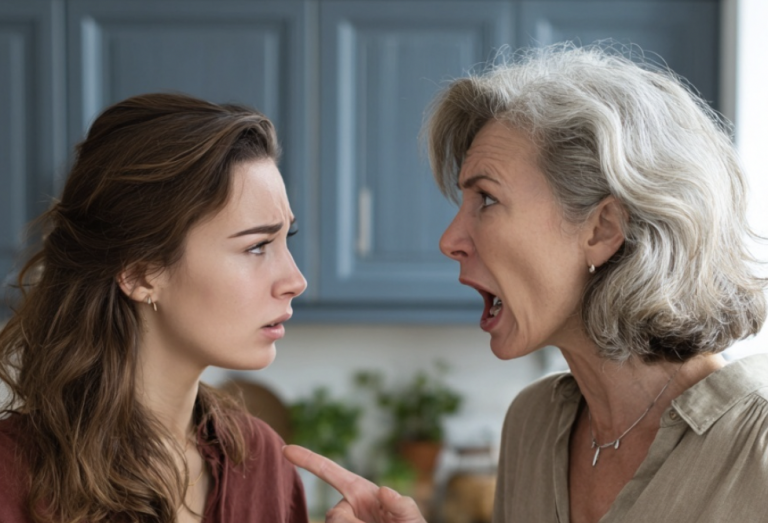
“Your family — complete paupers, homeless in ragged clothes with empty plates!” Oleg spat venomously, as if he had just spat toward the kitchen, his fingers gripping the TV remote tightly. Each press of a button felt like a sharp, hostile strike — as if the device itself was to blame for his bad mood.

I stood by the table, carefully placing the plates as if building a barricade out of porcelain. In my mind, I repeated like a mantra: one, two, three… seven, eight, nine… Eight years of marriage — not just a number. Eight years filled with patience, burned inside me like paper in a fire. Eight years during which I learned to accept humiliation with calm gratitude, as if they were not insults but some strange form of care.

“Especially your Aunt Sofia,” he continued without taking his eyes off the screen, where bright commercials flashed. “She always comes with that pathetic cake from Magnit, like it’s some celebration. As if we can’t afford real desserts! And herself? Works in her dump on the outskirts, clipping old ladies’ nails for pennies. What a lifestyle!”

I clenched my fists under the table, my nails digging into my palms. Each word was a needle piercing my heart. But I stayed silent. Silent because over the years I had learned to be invisible in my own home.

Suddenly, light hurried footsteps echoed in the hallway — the children were back. Kirill, my ten-year-old son, and Alisa, our little artist, burst into the apartment laughing, cheeks flushed from the winter walk. I felt relief — as if fresh air had blown into the room, clearing the heavy atmosphere.

“Dad!” Alisa shouted, running to the couch with a sheet of paper in her hands. “Look, I drew Aunt Sonya and me!”

The drawing showed two figures: a woman with gray hair in an old-fashioned scarf, and a girl in a pink coat. Between them was a huge sun drawn in orange crayon, so bright it seemed to shine not just on paper, but right into the room.

“Well done,” Oleg grunted without looking away from the screen. “But enough with these grandmas. Better draw Dad. Or the new car I’ll buy soon when I become head of the department.”

Alisa froze. Her eyes dimmed as if someone had switched off the light inside. I felt a lump tighten in my chest — not just from hurt for my daughter, but from my own helplessness.

“Very pretty, sunshine,” I quickly said, taking the drawing and kissing Alisa on the crown of her head. “Let’s hang it on the fridge? It will remind us how talented you are.”

Kirill, already too grown-up for his age, looked into the pot on the stove.


“What’s for dinner?”

“Your mom’s diet horror again,” Oleg cut in with clear sarcasm. “Chicken breast, buckwheat, steamed vegetables… Like we live in a nursing home, not a normal family.”

“It’s healthy,” I answered evenly. “We’re saving on unnecessary expenses. And health is most important.”

“Yeah, sure, saving!” He raised his voice sharply. “Because your father is a loser who can’t help his own daughter, and your pensioner aunt only gives you old books and pathetic gifts!”

The children froze. Kirill looked at me, then at his father — in his eyes was a question: Why are you silent? Why don’t you protect us?

I put the salad bowl on the table with such force that several tomato cubes jumped onto the tablecloth, leaving red spots like blood.

“Oleg,” I said quietly but firmly. “Enough.”

“Enough what?” he snapped, turning sharply to me. “Telling the truth? You all live in illusions! Remember, kids,” he added turning to them, “if you don’t want to live in poverty like Mom’s relatives, learn to earn, not dream about grandma’s cakes!”

At that moment, I looked at Kirill. He didn’t look away. In his eyes was no childish resentment, but adult understanding. He saw everything. Saw how his father humiliated his mother. Saw how I pressed my lips to keep from crying. And at that moment I felt unbearably ashamed. Not for the ‘poor’ family. Not for Aunt Sonya. But for myself. For my silence. For letting this go on for years.

My apron pocket vibrated — a phone message from Aunt Sonya:

“Sunshine, come by tomorrow. We need to talk.”

I didn’t know then that it would be the last time I’d see her alive.

Aunt Sofia died two weeks later. Quietly, in her sleep, just as she lived — modestly, without noise or demands. As if she didn’t want to disturb anyone, even in death. At the funeral, Oleg stood nearby, glanced at his watch twice, as if rushing to meet someone more important. When I broke down and cried, he hissed in my ear:

“Enough already! It’s not your mother who died, really!”

He never knew what we talked about that last day. I still remember her kitchen — warm, smelling of tea and cinnamon. She complained about her heart, but not with sorrow, rather with a light sigh, as if it was just an inconvenience. Then she brewed strong tea in an old porcelain teapot with a chipped spout, took homemade cookies from a tin box, and looked at me — piercingly, as if seeing right through me.

“Marina,” she said simply. “You are unhappy.”

Not a question. Not a guess. A statement. Like a diagnosis.

Then she hugged me — thin arms, lavender scent, warmth I hadn’t felt since childhood.

“But everything will change,” she whispered. “I know.”

At the time, I thought it was just the words of a dying woman. Comfort. Hope.

But she was right.

A month after the funeral, I was called to the notary.

“You are the sole heir of Sofia Mikhailovna Verkhovskaya,” announced the woman in a strict black suit, looking at me over her glasses. “You inherit ownership of a non-residential property of 78 square meters at Leninsky Prospect, 42. It houses the beauty salon ‘Sofia.’ Also — a bank deposit in the amount of…”

The number she named made me stagger. I gripped the armrests of the chair, afraid to fall. My heart pounded. My head was full of noise, like the roar of surf.

“There must be a mistake,” I breathed. “Aunt couldn’t have had so much money. She lived so modestly…”

The notary smiled slightly.

“Your aunt was a very wise woman. The salon operated steadily. She didn’t spend extra. She invested everything. For fifteen years. Not a single extra ruble for herself. Only for the future.”

I walked outside holding the folder of documents as if it was a new life. The air was sharp, cold. I breathed in — and for the first time in many years felt I could breathe freely. That I had a choice. A real choice.

That evening, after the children slept, I told Oleg — only about the salon. Not a word about the money. His face changed instantly. The contempt disappeared, replaced by greedy interest.

“Well, well, well,” he said, putting down his phone. “And how much is this shed worth?”

“It’s not a shed,” I said, and for the first time in years felt something awaken inside me. Pride. Strength. “It’s a business. In the city center. With regular clients. With a reputation.”

“We’ll sell it,” he decided. “Or transfer it to me. You have no experience. You’re not a businesswoman.”

In the past, I would have agreed. Bowed my head. Given everything. To avoid conflict. To keep silence in the house.

But now — Aunt Sonya’s voice rang in my ears: “Everything will change.”

“No,” I said quietly.

“What?” he didn’t understand.

“No. I won’t sell it. And I won’t transfer it to you.”

He laughed — loudly, like at a stupid joke.

“Marish, are you crazy? What kind of entrepreneur are you? You can’t even handle the kids without my orders!”

“I can,” I raised my eyes. For the first time in a long time, I looked him straight in the eyes. “I handle the kids. I run the house. And I will handle the salon.”

His face twisted — first a smirk, then irritation, then anger.

“Stop this clowning around! Tomorrow we’ll go to a lawyer and make a power of attorney. I’ll take care of everything.”

“No,” I stood up from the couch. “This is my aunt’s inheritance. It’s my choice. It’s mine.”

He hit me.

Click — and the sound echoed through the silent apartment like a gunshot. I felt burning on my cheek. At the doorway — Alisa. Her eyes full of horror.

“Mommy?”

“Go to sleep, sunshine,” I said evenly, though everything inside screamed. “It’s okay. Dad and I are just talking.”

When she left, Oleg grabbed my shoulders.

“Are you completely out of your mind?! I slave away like a horse, feed you all, and you do this to me?”

I looked past him — at the crack in the wallpaper running along the wall like a river through a desert. I wondered how long it had been there. Why hadn’t I noticed before?

“Do you hear me?” he shook me.

“I hear you,” my voice was calm. “And now you will hear me. Never again — not once — dare to raise a hand against me. Never dare to humiliate my family. And tomorrow I’m going to the salon. Alone.”

He let me go as if I had suddenly become a stranger.

“What happened to you?”

I touched my cheek. The pain was sharp. But inside — silence. And strength.

“Nothing happened to me,” I said. “I just finally understood: you have no right to call my family paupers when my ‘poor’ aunt left me a business and money you won’t earn in five years. And you — you don’t even deserve to touch what she preserved for me.”

His face flushed a dark crimson, as if blood rushed to his head, veins in his temples pulsing like they might burst. He stood before me, fists clenched, breathing heavily like a trapped animal.

“How much?” he hissed, barely holding back anger.

I named the number. Not a whisper, not trembling, but clearly, distinctly, as if swearing an oath. Silence fell in the room. Even the ticking clock stopped.

Oleg whistled — first quietly, then louder, as if trying to exhale shock. And suddenly laughed — nervously, wildly, like a man who cannot believe reality.


“Well, see!” he exhaled, rubbing his forehead. “Especially — you can’t just keep that money! You have to manage it wisely! I know where to invest, what projects to launch, where to earn even more! I have connections, you know?”

“No,” I said. One word. Firm as stone.

“What do you mean ‘no’?!” he roared, grabbing the edge of the table. “You’re my wife! That’s our money! We’re family!”

“It’s not joint money,” I replied, my voice calm, as if reading aloud from a law textbook. “By law, inheritance received during marriage is not considered jointly acquired property. It belongs to me. Only me. And I will no longer let you decide for me. Not for me, not for my children, not for my life.”

He looked at me as if a ghost stood before him. A stranger. A woman he didn’t recognize. His lips trembled.

“You’ve been replaced,” he whispered. “You used to be normal. Calm. Submissive.”

“I used to be scared,” I said, and at that moment felt something break completely inside — not my heart, but chains. “I was afraid of conflicts, afraid of loneliness, afraid that without you I could do nothing. But I’m not afraid anymore. It’s over.”

He shouted something in response — threats, accusations, meaningless words — but I didn’t listen anymore. I stood by the window, looking at the dark city, feeling for the first time in eight years my breath was deep, free.

All night I didn’t close my eyes. I heard him pacing the apartment — heavy steps, slamming doors, the clink of a bottle as he opened whiskey, the clatter of a glass as if trying to drown his thoughts in alcohol. I lay in the dark, counting each breath, each heartbeat. And understood: I’m not afraid anymore. Not of his anger. Not of loneliness. Not of change.

In the morning, he left the bedroom with a swollen face, red eyes, hair tousled as if he spent the night fighting. He stopped in the doorway, saw me in the hallway with a bag in my hands.

“We haven’t finished talking,” he croaked.

“We have,” I said. “I’m going to the salon. And maybe I won’t come back.”

The ‘Sofia’ salon greeted me not with the old door and smell of dust as I remembered, but with light, cleanliness, and the scent of essential oils. Spacious room, modern chairs, full-length mirrors, soft lighting — everything spoke of professionalism, of care. Four masters — two hairdressers, a manicurist, and a cosmetologist — met me cautiously, but not hostilely. In their eyes — hope.

“Sofia Mikhailovna loved you very much,” said Vera, the administrator with short hair and sharp eyes. “She said: ‘When I’m gone, Marina will continue my work. She’s stronger than she thinks.’”

I felt a lump rise in my throat.

“I know nothing about salon business,” I admitted honestly. “I don’t even know where to start.”

“But I know,” Vera smiled. “I’ve been here ten years. And Sofia Mikhailovna left detailed instructions — on calculations, schedules, supplies, even social media management. She thought of everything. Down to the smallest detail.”

I walked through the salon, touching the chairs, mirrors, shelves with cosmetics. Each item was like a letter from her. A reminder: “You are not alone. I believed in you.”

Of course, she had thought it all out. Even how to help me break out of the cage I had built myself — of fear, dependence, and silence.

That evening I came home late. Oleg was waiting, sitting in the chair like a judge on a throne. He started talking — about ‘family values,’ about ‘unity,’ about how ‘we must decide together,’ that my ‘rebellion’ was destroying the family, that ‘the children would suffer.’
Family games

“You destroyed our family,” I interrupted, standing in the hallway with a suitcase in my hands. “For years. With every word. Every humiliation. Every look where I was nothing to you. You didn’t just tell the truth — you built your self-esteem on my humiliation.”

“I was honest!” he shouted.

“No,” I said firmly. “You were cruel. You made me small to feel big. But I am no longer your shadow. And I won’t let you do the same to my children.”

He rushed to the closet, grabbed the keys.

“And where are you going? To the loser dad? To that old aunt who left you her junk?”

“To Aunt Sonya’s apartment,” I said. “Now it’s mine. And the junk, as you call it, is the legacy of a woman who was richer in spirit than you will ever be. The children are coming with me.”

“You’re dreaming!” he shouted. “You won’t take them! I’ll go to court!”

Kirill came out of the room. He held Alisa’s hand; her eyes were red from tears, but she was not crying. She looked at me — and in her gaze was love. And trust.

“We want to be with Mom,” Kirill said. His voice was firm, like an adult’s. “We already packed. And we don’t want Dad to yell at Mom again.”

Oleg froze. He looked at his children — and for the first time, it seems, he saw them. Not as extensions of himself, but as separate people. People who chose me.

Six months passed.

Aunt Sonya’s small apartment became our new home — cozy, warm, filled with laughter and children’s drawings on the walls. I turned one room into an office where I learned bookkeeping, studied marketing, talked with suppliers. The ‘Sofia’ salon not only survived — it flourished. I increased the staff, launched a loyalty program, started managing social media. And after four months opened a second salon — in a residential area where prices were more affordable but quality remained high.

Oleg initially threatened court, tried to contest the inheritance. Then called, offering to ‘forget everything,’ to return ‘as a family.’ Now he only calls for business: arranging meetings with the kids, clarifying who will take Alisa to piano, who picks Kirill up from rehearsals.

I don’t hate him. I just don’t fear anymore.

Today I sit in a café across from the salon, drinking cappuccino and watching clients enter ‘Sofia’ — some tired, some anxious, others just seeking beauty. And leave — with lightness in their shoulders, with smiles. I feel pride. Not for money. Not for success. But for doing it myself.

My phone vibrates. A message from Vera:

“The team finished the renovation. Tomorrow you can welcome the first clients in the new hall.”

I send a heart emoji and close my eyes. For a moment, I feel her — a warm hand on my shoulder, the light scent of lavender. And a voice, quiet as the wind:


“See? I told you — everything will change.”

When the waitress brings the bill, I look up — and notice a young man at the next table looking at me. Not boldly. With interest. With respect.

Before, I would have looked down. Felt embarrassed. Shut down.

Now I just smile back. Straighten my shoulders. Lift my spine.

Because I am no longer who I was.

I am a woman who survived. Who stood up. Who began.

And my story is just beginning.

The widow was rushing the funeral of her wealthy husband, but the young resuscitation doctor noticed a disturbing detail…

0

Angela headed to her shift with a light step and a sparkle in her eyes. What else could she do, since she madly loved her job? Her colleagues teased her, saying that Angela lived in the clouds. How could someone be so devoted to a profession with so much responsibility and such a poor salary? But for her, it was not just a job — it was a passion. And she had no intention of changing anything.

She loved rushing to the toughest calls, seeing glimmers of hope in the eyes of those waiting for her help, saving even those who seemed beyond rescue. She had brilliantly completed her training course, and many predicted a dazzling career for her in large clinics. However, after practicing in ambulance service, Angela realized: this was exactly where she belonged. For seven years now, she had been giving herself fully to her work.

She was so absorbed in her work that she hardly had time for a personal life. Nor did she particularly want one. Her past, connected with family, had left too much pain.
Family games

— “Angelочка, it’s time for your shift!” — The grandmothers at the entrance always greeted her warmly. She never passed by without at least nodding.

— “Hello, girls. Yes, back to work again!”

One of the old ladies shook her head. Again on the night shift.

— “Why don’t you have any men among you who could work at night? You always have to deal with sick, drunk, and even aggressive people.”

— “What difference does it make? They’re all patients. Well, I have to go. Thank you. Just take care of yourselves.”

— “Alright, run along, dear. Just take care of yourself.”

Angela headed to the bus stop, and the grandmothers began to discuss her among themselves.


— “Poor girl, isn’t it? Others would have long since hated doctors, but she chose this profession herself.”

— “That’s exactly why she chose it — to reduce the number of bad medics like the ones she had. Remember how her mother didn’t get help in time?”

— “Of course, we remember! That girl went through a lot of sorrow. And her father was a real monster. How did she even grow up to be such a person?”

— “Yeah, fate… Her parents died in a drunken fight. And what about him now? Do you know anything?”

— “No, where would we? Maybe he’s gone too. With a character like that…”

Angela roughly guessed what the old ladies whispered about when they saw her. That was their nature — to recall the past a little, to gossip. But they meant no harm, it was just their custom.

Angela jumped out of the minibus, waved to the driver — a young guy who always looked at her with some sadness but never dared to get acquainted. She was inside the cabin; he was behind the wheel. He smiled and waved back.

— “Angela, how great that you came early! The chief doctor was looking for you.”

— “Great, thanks. I’ll check in now.”

Stepan Vladimirovich met her with joy, like family.

— “Angela, Angelочка Vasilyevna, have a seat. I feel, Stepan Vladimirovich, you want something from me. Otherwise, why would you be so happy to see me?”

Stepan Vladimirovich always treated her almost like a grandfather to his granddaughter. Although at first they often argued — he could not accept the modern treatment methods Angela proposed.

Once a serious conflict flared between them, and Stepan Vladimirovich lost his temper:

— “Who do you think you are, little one?! Trying to teach me? Get out! You’re fired!”

His words brought Angela to tears. She went outside, and her colleagues ran after her, urging her to stay. They assured her that Stepan was not a bad man, just overly hot-tempered.

And then, as if fate decided to intervene, a terrible car accident happened right opposite the ambulance station. Two cars collided at high speed. Four people were inside, all in critical condition. Their rescue required lightning-fast action. Before loading the injured into the ambulance, it was necessary to stabilize their condition at least a little. One of them had stopped breathing.

Stepan Vladimirovich tried with all his might to revive him, but unsuccessfully. Then Angela decisively pushed him aside. He tried to interfere, saying she had no right to use such a method, that it was illegal and no one did it that way. But Angela restarted the injured man’s heart. True, she seemed to burn out inside herself.

When all the injured were delivered to the hospital, they sat outside for a long time together. Stepan Vladimirovich, who had been fighting for human lives for more than thirty years, now talked with Angela, sometimes silent, then speaking again. Since then, they became true friends. And Stepan started doing what he never had before: he began listening to Angela’s advice.

— “Angela, you are right as always. I understand, this goes against all the rules. It’s not allowed, you might not withstand it, but on the other hand, if anyone can do it, it’s you.”

— “Stepan Vladimirovich, stop beating around the bush!”

— “Angela, three of my paramedics caught a nasty flu. Tomorrow there simply won’t be anyone to work the shift. I know you’re coming off a night shift, but can you stay at least half a day longer? After lunch, Valentina Sergeevna will cover.”

— “Stepan Vladimirovich, why make it so complicated? You know I won’t refuse. There’s nothing to do at home. I didn’t even get a cat so it wouldn’t get lonely.”

— “Angela, if the shift is too hard, if you get tired, be sure to say so, okay?”

— “Alright, agreed.”

The night turned out surprisingly lively. A tramp stabbed another tramp, a wife greeted her husband with a rolling pin. Only the calculations failed — the shot hit the wrong place. By morning, there was an incident worthy of an anecdote. The husband came home not at eight, as usual, but at five in the morning. And at home, his “darling” was not alone — with her lover. The man was apparently a hunter because there was buckshot in the cartridge belt. The lovers were alive, but doctors would now have to extract the buckshot.

Just before the shift change, everything quieted down — a typical situation. People gathered to go to work, schools, kindergartens, no time to think about ailments. Those who had been out all night were already asleep, and those who woke up awaited alcohol shops to open. So in the mornings, there was usually an hour or two of relative calm. Everyone gathered at the station, drinking coffee and joking.


— “Brigade on a call!”

The doctors exchanged surprised looks. Who had gotten sick right now, during their rightful free time? A fresh brigade went out, including those who stayed late from the night shift. However, they returned quickly.

— “Where were you? Finished so fast?”

— “You won’t believe it, in the morgue.”

Angela choked. Now they even call there?

— “Exactly. A lady came to pick up her husband. Apparently, he was an important person or just a rich man. Paparazzi gathered near the morgue, and she needed to play her role properly.”

— “Play a role?” Angela was surprised.

— “Exactly. She’s perfectly healthy. Even her pulse is normal. But for the newspaper material, she had to fit the image.”

Angela shook her head. Times were really strange — even death was made into a show.

— “Here you are absolutely right, Angela. I think this won’t be her last call today. If journalists were at the morgue, there will definitely be some at the cemetery. If anything, I’m ready. We just need to create the appearance of work.”

— “Are you really helping her?”

— “You bet! For such a reward, I’d even dance the polka-butterfly.”

The doctor showed several large bills.

— “Oh, how cleverly she slipped them into her pocket — I didn’t even notice!”

Everyone in the break room burst out laughing.

— “Well, luck is clearly smiling on you today. By evening you’ll collect enough for a new car!”

Still laughing, they heard the dispatchers’ phones come alive. Not a quarter of an hour passed before the station emptied. Angela’s call came exactly at eleven.

— “Angela, central cemetery. The caretaker will meet and guide you there. Looks like they’re burying someone well off.”

Angela immediately recalled the morning incident with her colleagues. She was sure: it was that same woman.

— “Alright, let’s go, take a look at the grieving widow.”

The driver smirked.

— “You think it’s her?”

— “I’m sure. Such coincidences just don’t happen.”

The funeral was lavish. Angela immediately noticed the expensive coffin, many fresh flowers, a crowd of people and photographers, and the “grieving” widow who whispered too actively with a man right next to the coffin. Glancing briefly at the deceased, she turned to the woman.

— “Are you feeling unwell?”

And then the widow seemed to snap out of her role. Quickly looking at the man, she hissed:

— “Finish here quickly, time is pressing!”

After that, folding her hands, she began to sag. The man in a strict suit, probably a notary or family representative, managed to catch her and seat her on a chair. Angela grimaced — everything was exactly as she suspected. The widow felt perfectly fine. Whispering to the medics:
Family games

— “Give me a pill, and you’re free to go,”

she almost laughed.

Angela was angry. Now, while she wastes time on this farce, someone truly in need might be left without help. Throwing away the offered money, she loudly slammed her medical bag shut and prepared to leave.

But something caught her attention. Not just something — someone. The one lying in the coffin. When the man next to the widow ordered to close the coffin, two workers moved to carry out the command. But Angela couldn’t take her eyes off the deceased’s face. Something seemed strange. She carefully touched his cheek. Cold, but not the cold of death. Just cold, as when a person has not moved for a long time or has frozen.

— “Stop!” Her hand rose. The workers froze, and photographers started actively capturing what was happening.

— “What’s going on? Why are you disturbing the funeral?” The widow ran up.

Angela pretended not to hear. She took out her phone and called Stepan Vladimirovich.

— “I need urgent answers. Remember how you told me about your friend in Africa who was almost buried alive? All the signs were there then. Looks like we have a living corpse here.”

The widow recoiled and looked amazed at her companion.

— “What the hell are you standing there for? Command, bury him! I’m paying you for the job!”

The workers looked at each other.


— “No, boss, if the doctor says he’s alive, we won’t take the sin on our souls.”

The man tried to grab the lid himself, but then the driver ran out of the car with a crowbar in his hands. Apparently, Stepan Vladimirovich had already explained the situation to him. Journalists followed him. They formed a tight ring, not allowing the widow or her companion to come closer.

Silence. Angela carefully checked the pulse millimeter by millimeter. Impossible. It was impossible that she was wrong. There it was! It was!

— “Quick, get him into the car, quickly!”

The pulse was so weak and barely noticeable that there was almost no hope for successful rescue.

Angela addressed the journalists:

— “Please, I don’t have time. Call the police, detain them. And tell them the autopsy was not done either, though now it’s unavoidable.”

All the way to the hospital, she was in touch with Stepan Vladimirovich, who consulted with a toxin expert. Angela followed every instruction without questions. Every second counted.

When they howled up to the clinic, where medics were already waiting, the man’s pulse became noticeably stronger. Angela leaned over him, whispering:

— “Do you hear me? You just have to survive, you have to.”

Did the man’s eyelashes twitch in response? Now all that was left was to wait.

Tired, Angela later sat in Stepan Vladimirovich’s office. He placed a mug of strong tea and a huge sandwich in front of her. Noticing her surprised look, he explained:

— “Lidia stopped by and strictly ordered to feed you.”

Angela smiled. Lidia was Stepan Vladimirovich’s wife, who immediately took Angela as her own daughter.

— “Well, not really. Just the shift was special.”

— “Yeah, that’s not something you meet every day. Your ‘corpse’ has little chance. After all, a night in the fridge is no joke. Although maybe that saved him. The poison didn’t have time to fully dissolve and absorb.”

The phone on the table rang. Angela froze with the sandwich halfway to her mouth, and Stepan Vladimirovich picked up.

— “Yes? What?!” His face brightened, then broke into a wide smile. “Well, for such news, I’m ready to splurge on cognac!”

He hung up and turned to Angela. She barely held back from shouting:

— “Well?!”

— “See… Maybe you really were born under a special star? Your ‘godson’ was revived! Of course, he has a long recovery ahead, but he will not only live but be aware!”

Angela almost jumped over puddles after a short summer rain while heading to the bus stop. A minibus arrived. The young driver looked surprised — he usually didn’t drive passengers at this time. But Angela, smiling, opened the door next to him.

— “May I?”

The guy responded with a toothy smile.

— “You know you may.”

Angela sat down and turned to him.

— “My name is Angela.”

— “And mine is Viktor. Looks like I’m the happiest person today. I already thought I’d never talk to you except through the rearview mirror.”

Angela laughed. If only he knew how happy she felt at that moment.

And a year later, the entire shift gathered to see Angela off on maternity leave. Everyone’s eyes were slightly moist with joy.

“What are you talking about, divorce? You’ve got stage four cancer! And the apartment? I won’t inherit it!” her husband shouted in panic, pacing the room.

0

Elena slowly wiped the fogged-up mirror in the bathroom and froze, staring intently at her reflection. Her once-soft facial features now seemed sharp and angular, her cheeks noticeably hollowed, and her eyes had lost their former sparkle, becoming dull and lifeless. The illness was mercilessly altering her appearance, as if erasing all traces of her former life. I need to call Katya, she repeated to herself. Her niece had to know the truth, even if it would be hard for them both.

From the living room came the muffled sound of a soccer match—Pavel was once again sprawled on the couch, legs up on the coffee table, engrossed in the game. No doubt, crumbs from his beloved TV chips were already scattered around him. Elena sighed heavily, feeling the invisible weight pressing on her shoulders, and closed her eyes, trying to detach from reality, if only for a moment.

This apartment was the symbol of her years of effort and sacrifice. She had bought it long before she met Pavel, paying off the mortgage over five long years. She worked two jobs, denied herself the bare minimum, saved on everything: ate the simplest food, avoided buying anything for her own pleasure, came home well after midnight only to leave for work again at sunrise. When she finally made the last payment, she couldn’t hold back her tears—these walls were steeped in her sleepless nights, endless labor, and sheer persistence. She knew she had earned them at the cost of her life, and this apartment was more than just a home—it was proof of her resilience.

She met Pavel by chance a few years ago, in a coffee shop line. He had won her over with his attention, easygoing manner, and caring attitude. During the first month of their relationship, he showered her with flowers, cooked romantic dinners, and showed touching concern. But then, everything changed abruptly, as if someone had switched off the light. The perfect man she thought she’d found slowly vanished, replaced by someone who no longer cared about her life—or her feelings.


“Lena, did you pay for the internet? It’s acting up today,” Pavel called from the living room.

“Yes, I paid on Monday,” she replied, stepping out of the bathroom. “Restart the router.”

“Too far,” he drawled lazily. “Come on, you’re closer.”

Elena didn’t argue. She silently went over to the router, blinking red, and pressed the reset button. Such little everyday irritations had long since stopped bothering her. But today, after her visit to the doctor, every detail of their shared life seemed to take on a sharper, more significant meaning.

“Stage four,” the doctor had said, avoiding her gaze. “Metastases in the liver and bones. There are treatment options, but we have to be realistic.”

Elena nodded, as if he were telling her tomorrow’s weather rather than how much time she had left. She had always been practical, and the diagnosis only reinforced her habit of solving problems step by step. In her mind, she began making a list: write a will, check the insurance, talk to Katya. Everything had to be arranged so that nothing was left to chance.

“Lena, what’s for dinner?” Pavel’s voice again.

“I didn’t cook today,” she said, sitting down in the armchair. “Order something.”

“Spend money again? You had the day off—you could’ve cooked,” he grumbled.

Elena didn’t reply. Pavel truly believed that earning money was a woman’s job. He preferred odd gigs or daydreaming about grand projects that never materialized. At first, Elena hadn’t minded—she was used to relying only on herself. But over time, it became clear: Pavel wasn’t just lazy; he genuinely believed his role was to “find himself” while she kept them afloat.

“I went to the doctor today,” Elena said, looking at his profile.

“Mm-hmm,” he murmured without looking away from the TV.

“I have cancer.”

Pavel turned to her, frowning in confusion.

“What?”

“Cancer, Pasha. Stage four,” she repeated calmly.

He set the remote aside and sat up straighter, visibly shaken.

“What does stage four mean? Can’t they treat it?”

“They can try, but chances are slim. The doctor says it’s a matter of months.”

Pavel blinked, ran a hand through his hair.

“Well… medicine’s advanced these days. Maybe there are experimental treatments? Or abroad?”

“Maybe. But it’s expensive,” Elena said, watching his face.

“You have good insurance, don’t you? And savings,” he said quickly.

There it was. Even now, his first thought was money—not how to support her, but how to handle the problem financially. And naturally, she was to bear the responsibility for her own treatment.

“Yes, I have savings,” Elena said.

“Then great,” he replied with forced optimism. “We’ll treat it. You’ll see, everything will be fine.”

He gave her a quick, awkward hug, then stepped back as if afraid of catching something.

“I need to meet with Dimon about some work stuff,” he said, grabbing his jacket. “Hang in there, okay? I won’t be long.”

The door closed before Elena could respond.


A week later, it was obvious: Pavel was coming home late, claiming to have work meetings despite working from home for the past two years. He smelled of unfamiliar perfume and kept his phone face-down. Elena didn’t confront him. What was the point? After the doctor’s words, such things no longer mattered—until one night, she overheard him on the balcony:

“Yeah, it’ll be over soon,” he said to someone. “The doctor says she won’t last long. Of course I’m upset, but… Well, the inheritance will be mine. We’re married—apartment, savings… all mine.”

Elena froze. So that was it—he was already planning his life without her, counting on what she had earned through years of sacrifice.

The next morning, Pavel cheerfully announced he was going to a friend’s dacha “to clear his head.” Elena only nodded. As soon as the door shut, she called Katya.

“Come over. We need to talk.”

Within an hour, Katya arrived, worried. When Elena told her the diagnosis, she cried but quickly composed herself.

“What can I do?”

“Help me make a will. I want the apartment and all my savings to go to you.”

“But… Uncle Pasha?”

“Katya, he’s already planning how to spend my money,” Elena said with a bitter smile. “While I’m under IV drips, he’s busy with his new fling.”

That same day, they went to a notary. Elena also filed for divorce—no property disputes, no drama, just ending what had long been a hollow arrangement.

For the first time in years, she felt lighter.

When Pavel returned three days later, rested and smelling of cologne, a message from the government portal informed him of the divorce filing. He thought it was a mistake. When he saw the details, panic set in—especially the note stating the property wasn’t subject to division. Half her belongings were gone; so was her presence.

When Elena came back briefly to collect the rest, he tried to block her path.

“You can’t just leave! What about treatment? Support? You’re sick!”

“Oh, now you remember the treatment?” she said coldly. “Don’t worry, I’ll take care of myself. As I always have.”

He grabbed her hand.

“I’ve spent years on you!”

“No, Pasha,” she replied, pulling free. “I spent years on you. And I won’t anymore.”

She left, locking the door behind her.

The divorce was finalized a month later. Elena didn’t attend; her lawyer handled everything. Pavel painted himself as the abandoned husband to friends, omitting his late-night calls to his mistress and inheritance plans.

That day, Elena was in the hospital, Katya holding her hand.

“You know,” Elena said softly, “I don’t regret it. Not the divorce, not ending the pretense of having a family. Better to spend what time I have with someone who truly cares.”

Katya squeezed her hand.

“We’ll get through this. Together.”

Meanwhile, Pavel was moving into a dingy rented room, the comfort he once took for granted gone. For the first time, he had to face life without someone to depend on—and the emptiness was deafening.

“Don’t I get a say in this? Then you won’t get a single kopeck from me!” My mother-in-law froze as I slammed my hand on the table.

0

Anna sat on the edge of the couch as if it were a taut wire. Beneath her was the expensive upholstery she had bought for herself—upholstery that Yelena Mikhailovna had been calling “marketplace tackiness” for three months now. Vasily, on the other hand, lounged comfortably in an armchair, one leg crossed over the other, cracking sunflower seeds—despite being far past the age when that was excusable. Thirty-eight years old, a father of two, and still cracking seeds like a ninth-grader in the courtyard.

“Well, Annushka,” Yelena Mikhailovna said with a sly tone, noisily setting a pot of borscht on the table, “Vasya and I talked it over and decided: let’s sell your little car. You work nearby anyway, but Marina needs to get to the clinic somehow. She can’t exactly ride a minibus with a pregnant belly, right?”

“Talked it over,” Anna mocked silently. So I’m just the yard dog here—put on a leash and led wherever they decide.

“Did you ask me?” she replied evenly, her voice cold enough to freeze water, locking eyes with her mother-in-law.

“What’s there to ask?” the older woman sniffed, ladling herself some borscht. “In our family, if someone’s struggling, everyone helps. That’s normal. I raised my son with that principle. But you—you only ever think about yourself…”
Family games

Without looking up from his phone, Vasily mumbled,
“Anya, you know Marina’s pregnant, it’s hard for her now… It’s not forever. Once she’s back on her feet, we’ll give it back.”

“Give it back?” Anna suddenly smirked. “Will you put that in writing? Or will it be like that kitchen loan—still in your mom’s possession after five years of ‘just long-term safekeeping’?”

“What kind of person are you?” Yelena Mikhailovna flared up. “I’m not your enemy! I’m your mother! You should be offering help yourself, not sitting here looking like some sulky princess! Everything’s wrong for you, everything’s unfair!”

Anna stood up. No shouting, no drama. Just… done. She’d spent too long pretending not to notice how “lovingly” this family clipped her wings. Without a word, she walked into the bedroom. That’s when the chorus started:

“She’s mad?” her mother-in-law stage-whispered loudly, as if Anna were deaf.

“Anya, seriously?” Vasily called. “Don’t be so harsh. Mom probably didn’t mean it that way…”

“I spoke as a mother!” Yelena Mikhailovna declared. “If she doesn’t understand that, then she’s not one of us. She doesn’t fit in this family.”

A couple of minutes later, Anna came out holding the car documents. She placed them on the table.

“Here’s the deal. The car is mine, registered in my name. The apartment, by the way, I inherited from my grandmother—none of you have any claim to it. That’s my entire ‘contribution’ to your version of family.”

“You’re going to ruin everything over some piece of metal?!” Yelena Mikhailovna cried.

“No—over you,” Anna said with a nod. “Over your endless control, and over your cowardly compliance, Vasya.”

“Anya, wait,” Vasily groaned, holding his head. “We just wanted to help Marina…”

“Then sell your garage with the 2003 Lada,” Anna said with a sharp smile. “You can definitely take taxis—you won’t fall apart.”

Her mother-in-law banged her spoon against her bowl.

“You’re not a wife, you’re a businesswoman. All you think about is property and papers. No heart, no conscience.”

“And you’re nothing but love and compassion?” Anna shot back. “Funny how it’s always at my expense. Astonishing kind of charity you’ve got.”

She left for the bathroom, shutting the door to breathe. Inside, she was trembling—not from fear, but from rage.

A couple of hours later, Vasily came into the bedroom. No sunflower seeds, no phone, no pride.

“Anya… let’s talk.”

“Too late, Vasya. Too late to drink Borjomi after your mom’s sold the kidneys. You didn’t even make a peep when she was discussing how to get rid of my car. What was that?”

“I didn’t want a fight…”

“You never want anything—except peace and quiet. And that ‘quiet’ always means you stay silent while I give up my rights, my property, and my common sense.”

Vasily exhaled heavily.
“Let’s talk tomorrow. Like adults. We’ll sit down, sort it out. Don’t get heated.”

Anna looked him straight in the eye.
“Are you sure you’re still my man, Vasya? Or have you been your mother’s for a long time now?”

He said nothing.

The apartment was silent. Even the pot of borscht had gone cold.

The next morning, Anna woke earlier than usual. Sunlight streamed in through the window—brazenly, as if it knew today was a turning point. Vasily was snoring on the kitchen couch, like nothing had happened. As if he’d just won an argument about curtain colors, not sold her out to his mother.

She poured herself coffee, careful not to clink the cups—not out of respect, but out of principle. Noise was emotion. Today, she was steel.

Enough. They’d get not one more inch of her life.

Yelena Mikhailovna swept into the kitchen—didn’t enter, but flew in—wearing a robe, a hairnet, and a face full of accusations.

“Well, mistress of the apartment,” she sneered, “did you sleep well in your rightful square meters?”

Anna turned to her silently, her gaze so sharp that if Yelena Mikhailovna had been any wiser, she would’ve walked right back out. But no—fools’ bravery is the most destructive kind.

“I’ve been thinking,” the older woman continued, sitting down at the table and reaching for Anna’s cup. “Maybe you just don’t understand how a family works. Back in my day, if a man was struggling, his wife stood behind him like a rock. You’re more like a cemetery notary—counting who gets what.”
Family games

“Lovely metaphor,” Anna said calmly, taking her cup back. “Except I’m not at a cemetery—I’m in a marriage. Or I was.”

“Oh, the drama,” her mother-in-law snorted. “Like in a soap opera. Don’t you think you’re overdoing it, Annushka?”

At that moment, Vasily shuffled in, scratching his head, wearing the sweatpants Anna had wanted to throw out two years ago.

“Mom, are you starting again?” he mumbled.

“And you’re silent again?” Anna snapped, turning to him. “No, Vasya—right now. Choose. Right now.”

“Don’t dramatize,” he muttered, trying to sound wise. “We can work this out. Like adults.”

“Then act like one. I’m asking: who are you? My husband, or an extension of your mother’s kitchen?”

Yelena Mikhailovna stood, her voice icy.
“Son, tell me plainly—is she more important to you than your mother? I raised you. Fed you. Married you… to her. And this is how it is?”

Vasily stood there like a donkey at a crossroads, as if choosing between two supermarkets with only one coupon.

Anna stepped closer.
“You know what hurts the most? Not that you don’t defend me. That you defend them. And you stay silent, as if you’re not even part of it—just a spectator. As if this marriage is a TV show, not your life.”

“I didn’t want a war…” he mumbled.

“This isn’t war. It’s an escape. I’m leaving. Actually—you’re leaving.”

“We?”

Anna opened the hall closet, pulled out his bag, tossed in his shirts.
“Five minutes. Or I start throwing things out myself. What matters more—your mom, or this apartment? Leave the keys on the table. And take the borscht—it’s hers. You can taste it.”

Vasily looked at her like a cat staring at a closed fridge—hoping someone might come back and open it.

“Anya…”

“Too late, Vasily. I no longer believe you’ll ever grow up. Forty years old and still under the skirt. I don’t need a son like that. Certainly not a husband.”

Yelena Mikhailovna slammed the bedroom door, then returned with her own bag—stuffed with blood pressure, control, advice, and the eternal line: “In our house, we never did things that way.”

Fifteen minutes later, they were gone. Anna stood by the door like after a fire. It smelled of borscht, but she wanted a cigarette.

She went to the kitchen, took her wineglass from the cupboard, poured herself a drink. Looked out the window. It was raining—just like in the movies.

And suddenly, it was funny. She smiled—first with just the corner of her mouth, then out loud.

“And no—I’m not a cemetery notary. I’m the mistress of my own life. Finally.

“Don’t worry, Mom! She won’t get a penny,” her husband boasted, unaware that his wife was eavesdropping.

0

Marina was coming home, exhausted.
It was an ordinary autumn evening—weekday, damp. In her bags: bread, milk, a pack of buckwheat, apples. In the stairwell, as always, it smelled of mildew and boiled cabbage, and the bulb above the second floor flickered in its nervous rhythm, like an alarm signal.

Climbing to the third floor, she turned toward the railing almost automatically—when she noticed that the door of her mother-in-law’s apartment, on the second floor, was ajar. In the same instant, she heard the voice of her husband, Andrey, from inside.

“Don’t worry, Mom. Everything’s already taken care of. The apartment is mine under the prenup. She won’t even realize until she’s left with nothing. The signature looks real.”

Marina froze. Her heart dropped into her shoes.

“That’s right, son,” the mother-in-law replied. “Didn’t give you an heir, so why should she get the apartment? She’s just a temporary inconvenience.”

Marina pressed herself against the wall, gripping the handles of her shopping bags as if trying to anchor herself to reality. Without making a sound, she slowly continued upstairs, like a shadow.

She shut the door behind her and slowly set the bags down on the kitchen table. One tore, the bread tilted, and the apples rolled across the floor—she didn’t even try to catch them. She just sat on the stool by the radiator, staring into emptiness.

The words from a floor below hammered in her head like a mallet striking metal.
“She won’t even realize… The signature looks real…”


Stupid. Did he really think she wouldn’t figure it out?

And yet, it had all started with “convenience.” Six years ago, when they were choosing a flat, Andrey spoke with confidence, insistence—like he had already made the decision.

“Mom’s apartment is just one floor down. That’s a plus! She’ll be right there to help, to keep an eye on things. We’ll pay off the mortgage faster. Makes sense, right, Marish?”

He called it “family support.”

Marina had simply nodded. She didn’t know how to argue—and didn’t want to. The important thing was to have their own place. Their own territory. Even with a mortgage, at least it wouldn’t be rented, with someone else’s rules.

They registered the apartment in both their names. Then the papers started.

“Sign this,” Andrey would leave a sheet on the kitchen table, next to her coffee cup. “Just standard stuff, the bank needs it.”
Or, “The lawyers said it’s for insurance. Pure formality.”

She signed. Not because she was stupid—because she trusted him. Who double-checks “formalities” with the person you live with, eat with, sleep with, share a bed and a loan with?

Her mother-in-law, Nadezhda Semyonovna, had never hidden her disapproval:

“You’re cold. No tenderness, no smile. Everything with you is on a schedule. Not a woman—an audit in a skirt.”

Marina never took offense—she simply stayed silent. Only when Andrey left—for work or the gym—did she let herself relax. A deep breath in, and out—like climbing a mountain.
Her mother-in-law interfered in everything: curtains, dishes, the frequency of marital “dates,” as she called them. Even soup.

“Not salty. Do you even know how to cook?”

Marina didn’t know how to snap back. She just did her part—laundry, bills, Saturday cleaning, sorting laundry by color.
She lived by the rules—what she thought were shared rules. Turned out, they were someone else’s.

And now all the “technicalities,” the little things she signed without thinking, had suddenly become a weapon. Against her. With her own signature.

She stared at an apple that had rolled under the fridge and thought, for the first time:
“Maybe I haven’t really been living—just existing on paper.”

She said nothing. Not that evening, not at dinner, not over coffee the next morning. Everything was the same: Andrey hurried through breakfast, complained about traffic, kissed her cheek, and slammed the door on his way out. Only now, she no longer watched him go.

When he left, Marina opened the bottom drawer of his desk. The folder with documents lay there as always—carelessly. She sifted through the papers with trembling fingers. Then—there it was: Prenuptial Agreement.

Inside—her name, his name, and the terms stating that the apartment would go to him in the event of a divorce.
Dated a month before the wedding.
Her signature. Almost.

She stared at it for a long time. It was almost her signature—but not quite. She had never written the letter “M” at that angle.

Two hours later, she sat in a café by the window, across from Sveta, her friend from law school.

“It’s a forgery,” Sveta said, after skimming the scans. “We’ll need handwriting analysis. In the meantime—silence. Don’t let him suspect.”

That evening, Marina placed a small voice recorder in the hallway—under the dresser. She photographed the signature and compared it to her passport.

The next day, she recorded Andrey in the bathroom telling his mother:

“Relax, Mom. She hasn’t noticed a thing.”

Three days passed. Marina kept up the routine—laundry, mopping, stacking groceries on shelves. But now she counted Andrey’s steps, listened to his tone, and asked herself over and over: How can he sit next to me and lie so calmly?

On Saturday, she made borscht—his favorite, with garlic and fried onions. She baked an apple pie. Andrey came home cheerful, snapping his fingers to the music on his phone.

“Smells amazing! I’m dead tired today. Let’s eat?”

They ate in silence. Marina was calm—almost icy. When he finished his second bowl, she dried her hands on a towel and looked him straight in the eye.

“I heard your conversation with your mom. And I found the ‘contract.’ You didn’t even bother to forge my signature properly.”

Andrey froze. Then smirked sharply.

“What nonsense? As usual, you’re making things up.”

Marina took the copy of the document from the drawer and laid it in front of him. Then she played the recording, his voice clearly saying:
“The apartment is mine under the prenup.”


Andrey went pale, then flushed.

“Everything depends on me! You’re nothing! You can’t prove a thing. It’s already done. You make trouble—you’ll be out of here in your slippers.”

Marina stood up calmly.

“Thank you, Andrey. You’ve just helped me win the case.”

The next day, she filed the papers. Sveta handled everything—divorce petition, motion to declare the prenup invalid, request for handwriting analysis.

The experts confirmed: the handwriting wasn’t hers. The slant, the pressure, even the curve of the letter “r”—all wrong. Plus, the audio recordings. In them, Andrey freely discussed with his mother how to leave his wife with nothing. Sveta smiled:

“It’s clean. The scheme he was so proud of is now working against him.”

In court, Andrey sat sullen, lips pressed in a thin line. His mother sat behind him, clutching her purse to her chest. Her expression wasn’t shame—it was disappointment: he hadn’t pulled it off.

The judge didn’t waste time.

“Signature forged. Contract invalid. Audio confirms intent. The apartment remains with the wife. The defendant will pay compensation.”

After the hearing, Marina stood at the courthouse entrance, clutching a copy of the decision. The paper rustled as if it were breathing.

Andrey walked past without meeting her eyes. His mother beside him.

“You shouldn’t have eavesdropped,” he muttered. “You ruined everything.”

Marina didn’t answer. She simply turned away and walked to the bus stop. Steady. Straight.

When Andrey finally moved out—over two nights, without farewells—the apartment became quiet. Strangely so. No sound of his footsteps, no mother-in-law’s voice on the phone, no slamming door in the mornings.

A week later, Nadezhda Semyonovna rang the doorbell. Marina opened without checking the peephole.

“Let’s not be enemies? We’re still family,” the mother-in-law murmured, clutching a container of pies.
Family games

Marina shut the door without a word. Not harshly—calmly.

That same day, she took down the dark curtains and threw out the wedding china set. Bought a new kettle, painted the kitchen walls a light color. Laid a rug she had always wanted, but which “didn’t match the sofa.”

For the first time, she moved the bed—not according to her mother-in-law’s feng shui, but for her own comfort.
A bright potted plant appeared on the windowsill.

Marina made tea, opened the window, and sat at the table.
This was her place. At last.

A year passed. Marina was now a senior analyst at the same company. Recently she’d been offered a managerial position, and for the first time she didn’t doubt—Yes, I can handle it.

She lived alone. Peacefully. With trips, unhurried weekends, and Saturday pottery classes.

That’s where she met Egor—a widowed instructor, slightly balding, with a quiet voice and warm hands. He didn’t laugh loudly, but his laughter was contagious.

“You’ve got the hands of someone who’s done this before,” he told her once, watching her shape a vase.

They began seeing each other more often. No promises—just warmth.

One evening, sitting in her newly bright kitchen, Marina held a cup of tea and smiled.

“Now I know—whatever they’re saying through the wall, the most important thing is that your own life carries your own voice.”

“I’m not dragging myself to that godforsaken village to bury your mother,” her husband snapped. But when he heard about her bank account, he showed up with flowers.

0

Natalya was awakened by the persistent ringing of her mobile phone. It was still dark outside; the alarm clock showed it was just eight minutes into August — Monday morning. Next to her, Vitaly groaned in annoyance and yanked the pillow over his head, trying to muffle the irritating sound.

“Hello?..” Natalya’s voice trembled, groggy and hoarse.

“Natalya, it’s Valentina Ivanovna, your mother’s neighbor,” came the anxious voice of an elderly woman. “Dear, brace yourself… your mother… Her heart gave out last night. We called an ambulance, but… they didn’t make it in time.”

The phone slipped from her fingers. The room spun. Mom… she was gone. Just three weeks ago they had spoken—Yelena Pavlovna had complained about the heat, told her about the apple trees and the garden harvest…

“What happened?” Vitaly muttered, eyes still closed.

“My mom died,” Natalya breathed. The words sounded foreign, like they didn’t belong to her.

Her husband propped himself up on his elbows and gave her a brief glance. No pain, no sympathy—just mild irritation.

“Well, that’s unfortunate. My condolences,” he muttered, then turned back to the wall.

Natalya stood up slowly. Her legs felt like jelly, but she had to act. The funeral, paperwork, packing… Her head spun with thoughts. She opened the closet, pulled out a travel bag, and began packing: a black dress, shoes, her passport.

Vitaly sat up in bed, picked up his phone, and casually opened the news feed.

“Where are you going?” he asked indifferently, eyes still glued to the screen.

“To the village. For the funeral.”

“What village? That godforsaken place 300 kilometers away?”

“Vitaly, my mother died. Don’t you understand?”

He winced like he’d heard something unpleasant.

“Look, I have an important presentation this week. Management’s coming from Moscow. I can’t just drop everything and drag myself out to that hole.”

Natalya froze, holding a shirt in her hands, and turned slowly.

“I’m not asking you to drop everything. But this is my mother’s funeral.”

“So what? The dead don’t care who shows up. I have to think about my career. We have a mortgage, remember?”

She continued packing in silence. After fifteen years of marriage, Natalya had endured his temper, stinginess, and indifference to domestic life. But something inside her broke. The last thread holding them together snapped.

“How long are you staying?” Vitaly asked, heading to the kitchen.

“Three or four days. I need to organize everything, do the paperwork.”

“Just don’t spend too much. We already have enough expenses.”

Natalya clenched her jaw. What expenses was he talking about? His new smartphone that cost 80,000 rubles? His endless fishing trips?

Two hours later, she stood at the bus station with her bag. Vitaly hadn’t even offered to drive her—said he was “going the other way.” No hug, no words of support.

“Let the locals dig the grave,” he’d said in parting. “I’m not dragging myself out to that dump.”

On the bus, Natalya sat by the window. Fields rushed past, golden stubble under the August sun. Her mother had loved this time of year. She used to say August was the most generous month, when the earth gives back for all the labor.

A plump woman with a kind face sitting next to her asked gently:

“Going on vacation?”

“For a funeral. My mother died.”

“God rest her soul… Burying a parent is the hardest thing.”

Natalya nodded. She didn’t feel like talking. Vitaly’s words echoed in her mind: “not dragging myself.” How could someone be so indifferent? Yelena Pavlovna had always treated him kindly—sending homemade preserves, knitting socks, taking care of him when he broke his leg. She looked after him for a whole month.

The village greeted her with quiet and the scent of freshly cut grass. The house at the edge of town—whitewashed, with blue shutters. Her mother refreshed the whitewash every year: “A home should be beautiful, like a holiday.”

Valentina Ivanovna met her at the gate.


“Natalya, my dear… Yelena Pavlovna didn’t complain at all, she was working in the garden, seemed cheerful…”

“Where is she?”

“In the house. We prepared her with the neighbors. In the blue dress—her favorite. The coffin was made by Petrovich, he’s our local craftsman.”

Natalya entered the living room. The coffin rested on a table covered with a white cloth. Her mother lay peacefully, as if asleep. Her face looked smoother, younger. Natalya fell to her knees and wept for the first time that day.

The funeral was set for the next day. Natalya called her relatives—her cousin, her nephew. Everyone promised to come.

That evening, Alexander Petrovich—the head of the village council—came by. Gray-haired, bearded, he knew everyone in the village.

“Natalya Sergeyevna, please accept my deepest condolences. Yelena Pavlovna was a rare soul. Everyone here respected her.”

“Thank you.”

“I’m here on official business. Your mother came to me a year ago—asked to notarize a copy of her savings book. The deposit was in your name.”

Natalya took the document in surprise. Her mother had never mentioned it. She lived modestly, saved on everything.

“It’s a decent amount—about 800,000 rubles,” the chairman continued. “She saved for years, and with interest it added up.”

Natalya’s heart clenched. Eight hundred thousand—it could change their lives. Pay off part of the mortgage, buy a car, renovate the apartment…

“And she left you the house too. The will is with the notary in the district center. She thought of everything, smart woman.”

After Alexander Petrovich left, Natalya sat on the porch. The sky burned with pink hues. Cows mooed in the distance, returning from pasture. Her mother loved these evenings—sitting with a cup of tea, watching the sunset.

Her phone was silent. Vitaly hadn’t called. Not once all day. Natalya dialed him herself.

“Yes?” His voice was irritated.

“The funeral is tomorrow. At two o’clock.”

“So what? I told you—I’m not going.”

“That’s not why I’m calling. Mom left a deposit. In my name. Eight hundred thousand.”

Silence. Then a light cough.

“Eight hundred? Are you serious?”

“Yes. And she left me the house too.”

“That’s… that’s great!” His voice suddenly turned warm. “Listen, maybe I should come after all? Help with the paperwork?”

“No need. I can manage.”

“Natalya, come on. I’m your husband. I should be there for you.”

She smiled bitterly. When she grieved—he turned his back. When he heard “money”—he remembered his duty.

“Come if you want,” she said quietly. “If not—stay where you are.”

Vitaly didn’t come. Only relatives and neighbors attended the funeral. Yelena Pavlovna was laid to rest with dignity—quiet memorial speeches, kind memories, genuine tears from those who knew her as a kind, hardworking woman who devoted her life to her children and her land.

Four days later, Natalya returned to the city. The key barely turned in the lock—Vitaly had again forgotten to oil it. His dirty sneakers were in the hallway, his jacket thrown carelessly on the rack. The living room looked like a storm had passed through—beer cans on the table, pillows on the floor, an ashtray overflowing with cigarette butts. The kitchen was worse: a mountain of dirty dishes, hardened food scraps, the trash bin overflowing. Just four days—and the apartment looked like it belonged to someone who didn’t care.

In the bedroom, Vitaly lay in a wrinkled t-shirt, staring at his tablet. Hearing her steps, he looked up but didn’t get up.

“So, you’re back? I’m hungry.”

Natalya stood in the doorway, looking at him—his unshaven face, greasy hair, a posture more lazy than tired. Fifteen years with this man… How had it come to this?

“Did you even wash the dishes once while I was gone?”

“No time. Work.”

“Today is Sunday.”

“So what? I need rest too.”

She walked into the kitchen in silence and began cleaning. Her hands moved automatically, but her mind was far away. Thinking of her mother, who had saved every ruble for years so her daughter could have a better life. Of the man who couldn’t even take out the trash while his wife buried her mother. Of a life that was supposed to get easier—but had turned into a burden.

That evening, something unexpected happened. Vitaly came home with a huge bouquet of red roses and a bag from the bakery—her favorite eclairs.

“Sweetheart, I’ve been thinking… I behaved terribly. Your mom died, and I didn’t support you, didn’t go… That was so wrong of me.”

He placed the flowers in a vase, neatly arranged the pastries on a plate, brewed tea. His face was tense, like he was forcing remorse.

“Forgive me, Natalya. I should’ve been there. Remember how we met? At that fair, where you were selling cucumbers and zucchini. Your mom smiled at me like I was family.”
Family games

Natalya nodded. Yes, she remembered. Back then, Vitaly was different—alive, attentive, caring. Where had that man gone?

“I was thinking,” he continued, “about the money… We need to handle it right. I can take a day off, go with you to the bank, to the notary. There are so many scammers now… I just want to protect you.”

“Thanks, but I can handle it myself.”

“But we’re a family! We should decide together how to invest the money. I know a guy—he’s into investments, he can help.”

“Vitaly, it’s my mother’s inheritance. I’ll make the decisions myself.”

He frowned but quickly composed himself.

“Of course, dear. But you understand—in a family, everything is shared. We’ve been together for years, paying the mortgage together…”

“That you took out in your name,” Natalya reminded him quietly but firmly.

“That’s just a formality! The apartment is ours, you’re registered there…”

“Registration doesn’t mean ownership. And inheritance is not marital property.”

Vitaly stood up abruptly. The mask of the repentant husband slipped.

“What are you saying? That you won’t share?”

“I’m saying I won’t rush into anything. My mother died a week ago. I need time.”

“Time?” His voice sharpened. “When I needed a car, you didn’t ask for time! You just said we had no money!”

“Because we didn’t. We were barely scraping by.”

“But now we do! Eight hundred thousand! We can buy a decent car, go to Europe—not that shabby spa you dragged me to!”

“That ‘shabby spa’ was the only one we could afford. I saved for it for six months.”

“Enough!” Vitaly slammed the table. The vase with roses shook. “I’m your husband! I have a right to half!”

“No, you don’t. The law clearly states: inheritance is separate property.”

“How do you know that?”

“I read it. On the bus. And I also found out I can file for divorce without your consent.”

Vitaly froze. Then slowly sank into a chair.

“You want a divorce?”

“I’m considering it. Vitaly, face the truth. You didn’t come to my mother’s funeral because you didn’t care. And now you suddenly ‘care’—only after hearing about the money.”

“I truly regret it! It’s just… work, stress…”

“Don’t lie. You don’t care that I lost my mother. You care about the bank account.”

“How dare you! I’ve worked for us for fifteen years!”

“Worked? When’s the last time you cooked dinner? Did the laundry? Asked how I was? I work just as much, but I run this house alone!”

“That’s a woman’s job!”

“And a man’s job is what? Being rude, demanding, doing nothing? Where were you when I needed support?”


Vitaly grabbed the vase and hurled it at the wall. The roses scattered, glass shattered on the floor.

“You ungrateful wench! I pulled you out of that village and gave you a decent life!”

“From the village? I graduated from university, got a job, earned my own money! You just showed up later and took credit!”

The argument hit its peak. Vitaly shouted, flailed his arms, spit flying. Natalya looked at him and, for the first time in years, saw—not a husband, but a stranger. Aggressive. Greedy. How had she excused him for so long? Told herself, “He’s just tired,” “He means well,” “He’ll change with time”?

“You know what?” she said quietly, standing up. “Get out.”

“What? This is my apartment!”

“This is a mortgage apartment, and I pay half. But if you want, I’ll call the police. Tell them how you’re breaking things.”

She took his keys off the hook and handed them to him.

“I’ll pack your things and leave them in the hallway. Take them and go.”

“You wouldn’t dare!”

But at that moment, the door across the hall opened. Nina Vasilievna, the neighbor, stepped out, drawn by the noise.

“Everything’s fine, Nina Vasilievna,” Natalya said calmly. “Vitaly was just leaving.”

The woman glanced at his distorted face, then at Natalya—tired but resolute. She nodded.

“If you need anything—call me. Petrovich will help.”

Vitaly realized he had lost. With a witness present, he didn’t dare cause more trouble. He grabbed his jacket and stormed out.

“You’ll regret this!” came his shout from the stairwell.

Natalya shut the door and leaned against it. Her hands were trembling. But inside—there was no emptiness, no fear, only a strange, unexpected relief. As if after years of captivity, she was suddenly free.

The next day, she packed his things into boxes, left them in the hallway, changed the locks, and notified the concierge.

A week later, she filed for divorce. No children, no property disputes. In court, Vitaly tried to claim half the deposit, but the judge clearly explained: inheritance is personal property.

A month later, everything was finalized. The 800,000 rubles were in her account. The house in the village was officially hers. Natalya took a vacation and went there—to sort through her mother’s belongings, clean up, breathe the air of her childhood home.

Standing on the porch, she watched the sunset. The warm wind smelled of apples and hay. Somewhere in the distance, children laughed, cows mooed. Peace. For the first time in years—true peace.

Her phone rang. Vitaly’s number. Natalya calmly declined the call and blocked the contact.

The past was behind her. Ahead lay a new life. Without humiliation. Without pretending. Without having to endure a stranger beside her.

Her mother had been right: happiness isn’t about money. Happiness is having the right to choose how to live.

And now, Natalya had that choice.

“Come home immediately!” her husband almost shouted. “Or do you not care about your own daughter? I’m tired of sitting with her!”

0

Elena raised a glass of champagne, smiling at her friend Olga. The birthday party was a success—about twenty people had gathered at the café, laughter never stopped, and for the first time in months she felt like just a woman, not only the mother of one-year-old Yulia.

— To your happiness! — she said, just as her phone rang sharply.

— Elena, where are you?! — Mikhail’s voice was clearly irritated. — Our daughter’s been screaming for an hour and a half!

— Mikhail, I told you I’d be late. Olga only celebrates once a year. We agreed…

— You promised to be back in two hours! It’s already been three!

Elena stepped away from the table so she wouldn’t disturb the others.

— Try giving her a bottle of water. Maybe she’s just hot.

— I’ve tried everything! Yulia’s sick, she needs her mother!

— Misha, calm down. Check her diaper—maybe it’s rubbing. I’ll be there in an hour.

— No! Come home right now! — Mikhail was almost shouting. — Or do you not care about your own daughter?

— Fine, I’ll get there ten minutes early.

— Elena, you… — Busy tone. He hung up.

Elena returned to the table, but the mood was ruined. Her friends gathered around her with concern.

— What happened? — Olga asked gently.

— Yulia’s crying and Misha can’t calm her down. Says she’s sick.

— Good grief, he’s a man! — Tatyana cut in. — My Igor panicked at first too. Thought the baby would break if he touched her.

— And my husband still can’t figure out why our daughter cries — Marina laughed. — He calls me for every little thing.

— Girls, maybe I should go after all? — Elena wavered.

— This is your first time out in three months! — Olga said firmly. — He can wait an hour. Let him learn to be a father.

Elena tried to rejoin the conversation when Mikhail burst into the café holding a whimpering Yulia.

— There she is! — he bellowed across the room. — Mother of the year! While her daughter is dying, she’s out having fun!

All conversation stopped. People turned to stare, and Elena flushed.

— Misha, what are you doing? — she said quietly.

— Doing what I should have done an hour ago! — Mikhail rocked the sniveling child theatrically. — Bringing our dying daughter to her irresponsible mother!

— Stop making a scene, — Olga stood up. — It’s inappropriate, and the child, I might remind you, is yours too.

— Stay out of it! — he snapped. — You’re the one who tore her away from Yulia. Look — he pointed at the child’s wet eyes.

— Keep your voice down, young man, — a gray-haired man at the next table addressed him. — People are trying to eat.

— None of your business! — Mikhail barked. — My wife abandoned a sick child!

— Misha, please, — Elena stood, took her daughter. Yulia calmed almost immediately in her arms.

— Olya, I’m sorry, — she said to her friend. — I need to go.

— Of course you do! — Mikhail smirked nastily. — Finally remembered your motherly duties!

— Don’t apologize, — Olga hugged her. — This isn’t your fault.

— Go to hell! — Tatyana couldn’t hold back. — Normal men don’t behave like this!

Mikhail started to retort, but the café manager strode firmly up to their table.

— I’m sorry, but I have to ask you to leave. You’re disturbing the other guests.

At home, Elena took off her daughter’s top and found a tag sticking out on the inside of the collar that had left a red mark on the delicate skin.

— So that’s the big illness, — she showed her husband. — The tag was chafing.

— How was I supposed to know? — he shrugged, settling onto the couch.

— How? By undressing her and looking!

— Listen, I didn’t sign up to be a nanny. That’s women’s work.

Elena turned to him.

— What did you just say?

— Exactly what I said. I work, I provide for the family. Kids are your responsibility.

— Misha, you humiliated me in front of everyone over a clothing tag!

— At least now you know a mother belongs at home, not in a café with her girlfriends.

— Are you serious? — Elena couldn’t believe it. — Misha, I work remotely, I’m running three projects at once, I take care of the baby, I cook, I clean… When am I supposed to rest?

— Rest? — Mikhail snorted. — Staying home with a child is rest. Try grinding away in an office for ten hours!

— Try not sleeping at night with a screaming baby! — Elena flared.

— Oh, come on, how hard can it be? Feed her, change the diaper…

— Exactly! How hard can it be? Yet somehow you couldn’t even find a tag!

Mikhail grabbed his car keys.

— That’s it, I’m tired. I’m going to Sergey’s to get a break from all this family bliss.

— Run along, — his wife said softly. — Like you always do.

Elena looked at the closed door, her calm daughter in her arms. She quickly packed the baby’s things into a bag, dressed Yulia, and left the apartment.

Half an hour later she was standing at her mother-in-law’s door with a suitcase and a stroller.

— Elena? — Anna Petrovna was surprised. — What happened?

— I’m leaving Mikhail. Can we stay with you for a few days?

— Of course, come in. Tell me what that fool’s done this time.

— He made a scene in a café in front of everyone, — Elena sat on the sofa, rocking Yulia. — Shouted that I’m a horrible mother, that our daughter was dying… And it turned out the tag on her clothes was rubbing. He didn’t even really try to figure it out.

— Lord, what a disgrace, — her mother-in-law shook her head. — And then?

— Then he said children are exclusively women’s business. That he’s not a nanny.

— I see, — Anna Petrovna said dryly. — So Yulia isn’t his daughter, then?

— Exactly. And you know what infuriates me most? He thinks staying home with a child is a vacation.

— I was a fool, — the older woman sighed. — I spoiled the boy. Thought marriage would straighten him out. He’s only gotten worse.

The next day Mikhail showed up at his mother’s, angry.

— Mom, where’s my wife? She has to come home!

— She’s not going anywhere, — Anna Petrovna replied calmly. — But you explain why you put on a circus in the café?

— What circus? I was defending my daughter’s interests!

— From a clothing tag? — his mother asked coolly. — Elena told me everything.

— Don’t listen to her, Mom! She’s exaggerating! — Mikhail paced nervously. — Kick her out of here, she needs to go home!

— Mikhail, sit down, — Anna Petrovna said sternly. — We’re going to have a proper talk.

— About what? A wife belongs at home!

— Elena has more right to live in that apartment as the mother of my granddaughter. And you… you’ve disappointed me.

— Mom, I’m the one bringing in money!

— And Elena works too. From home, online, but she works. Plus she’s raising the child, plus she handles the whole household. And what do you do?

— I provide for the family!

— Then provide quietly. Remember how hard it was for me to raise you alone after your father died? I thought you’d understand what responsibility is.

— Oh, come on, that’s not the same. My job is hard, stressful…

— And hers is easy, right? — his mother said with sarcasm. — Mikhail, when was the last time you got up with the baby at night?

— Why would I? She’s got milk!

— When was the last time you played with your daughter? Took her for a walk? Gave her a bath?

Mikhail was silent, realizing he had no answer.

— Mom, I get tired at work…

— So does she! But she doesn’t throw tantrums in public places!

Mikhail’s eyes flashed with anger.

— Fine! I’ll find another woman and marry her! Let this one sit alone with the child!

— Try it, — his mother replied evenly. — But first, pay your child support on time. I’ll make sure of it.

— Mom, whose mother are you? Mine or hers?

— I’m the mother of a grown man who should take responsibility for his actions. Right now all I see is an infantile egoist.

A month later the divorce was finalized. Mikhail was triumphant—finally, freedom! He even brought home a new acquaintance, Svetlana, a blonde from the neighboring department.

— Misha, your apartment is so beautiful! — she admired, looking around.

— That’s nothing, — Mikhail smirked. — I’ll redo the place soon, buy new furniture. Now that I’ve gotten rid of the family ballast, I can live for myself.

— And your ex-wife? — Svetlana asked.

— What about her? She’s living at my mother’s with the kid. Let her sit there and parent.

— And alimony?

— What alimony? — Mikhail waved it off. — My mother’s well-off, they won’t starve.

They were sitting in the kitchen when the door opened with a key. In walked Anna Petrovna, followed by Elena with Yulia.

— Why did you bring her here? — Mikhail asked his mother in alarm when he saw his ex-wife with the child.

— I’m returning the rightful owners, — Anna Petrovna announced. — The apartment now belongs to my granddaughter Yulia. And you, young lady, are free to go.

— Mom, what are you doing? — Mikhail shouted.

— What I should’ve done earlier. Pack your things, you’re coming to live with me.

— Misha, what’s going on? — Svetlana asked, bewildered.

— Nothing special, — Anna Petrovna said coolly. — My son forgot to mention that the apartment was transferred to my granddaughter six months ago. I foresaw this turn of events.

— Mom, you can’t do this! — Mikhail pleaded.

— I can. And I will. Elena, make yourself at home.

Svetlana grabbed her purse and ran out without saying goodbye.

— Sveta, wait! — Mikhail shouted after her, but the door had already slammed.

Two years passed. Mikhail realized his friends were avoiding him—tired of the constant whining. His mother spoke to him coldly, and she categorically forbade him to live with a new woman in her apartment.

He dialed Elena’s number.

— Lenochka, let’s talk. Maybe we can get back together?

— There’s nothing to go back to, Misha. I’m already home.

— But we’re a family! Yulia needs her father!

— You can be a father after divorce, too. No one’s stopping you from seeing your daughter.

— Listen, maybe I can help with renovating the nursery?

— Thanks, it’s already done. Viktor helped.

— What? Who’s Viktor? — Mikhail tensed.

— A colleague. A very good man. By the way, he’s asked me to a café tomorrow.

— Are you going?

— I think so. It’s time to start living without you.

— Who even is this guy? Some random man?

— Not random. He’s been helping me for three months. Plays with Yulia, does the grocery run when I’m sick.

— Does he give you money too? — Mikhail asked acidly.

— No, Misha. He helps because he wants to. Without tantrums and reproaches.

Mikhail sat in his mother’s room staring at the ceiling. Everything had collapsed because of a stupid clothing tag. No—because of his inability to simply undress his child and see what was bothering her.

The phone rang. Elena.

— Misha, I wasn’t sure whether to tell you, but you should probably know. Viktor proposed.

— What?! — Mikhail yelled. — And what did you say?

— I’ll think about it. But, you know… he doesn’t cause scenes in public. And he loves spending time with Yulia. I haven’t decided yet, but…

— Lenochka, wait… You can’t be serious! We lived together five years!

— So what? Do those five years give you the right to scream at me in public?

— I didn’t mean to! You just drive me crazy with your “rightness” sometimes!

— You see? Even now you can’t talk normally.

— Lena, let’s try again!

— No, Misha. Viktor has shown me how a man can treat a woman. He reads Yulia bedtime stories, and he doesn’t consider it beneath him.

— I can read those stupid stories too!

— Not stupid—important to our daughter. But you don’t get that.

— I do! I was just tired of working for you two!

— Exactly. “For us.” Viktor says “for us,” not “on us.” See the difference?

— Lenochka, wait…

— It’s decided. I’m sorry, but the family we tried to build ended that day in the café. Forever.

Busy tone. Mikhail slowly set the phone down and realized he had gotten exactly what he claimed to want—complete freedom from family obligations. Only somehow it brought no joy at all.

In the next room he heard his mother’s voice on the phone:

— Of course, Lenochka, I’ll be at your wedding. It’s your choice, and my granddaughter…

Mikhail burst out of the room.

— Mom! What are you doing?

— Talking to Elena. She invited me to the wedding.

— You can’t go! I’m your son!

— And? Does that give you the right to ruin a good girl’s life?

— A good girl? She dumped me!

— She did the right thing. In her place I’d have left much earlier.

— Thanks for the support, Mother!

— Support is for when you deserve it. Right now you deserve only the truth.

— What truth?

— That you’re an egoist, Misha. You think only of yourself.

— I worked! I brought money home!

— And thought that was enough. While your wife was supposed to keep quiet and endure your outbursts.

— What outbursts? I didn’t drink, I didn’t cheat!

— But you shouted all the time. Belittled her. Were ashamed of your own daughter.

— I wasn’t ashamed! I just didn’t know what to do with her!

— You should have loved her, Misha. Just loved her.

A week later Mikhail met Elena outside the kindergarten. She was picking up Yulia, and a tall man in glasses stood beside her.

— Lena!

She turned. Her face grew wary.

— Hi, Misha.

— Is that him? — Mikhail nodded at the man.

— Viktor, this is Mikhail, Yulia’s father.

Viktor held out his hand.

— Pleasure to meet you.

— Can’t say the same, — Mikhail muttered, not taking the hand.

— Misha, don’t start, — Elena warned.

— Don’t start what? She’s my daughter!

— No one’s arguing. You can see her on weekends.

— Under his supervision, right?

— Of course not. But if you want to take her for the weekend, tell me in advance.

— Oh, so now I have to ask permission?

— Not just have to—you’re obliged. I’m her legal guardian, and you’re just her father… her biological father.

— Daddy! — Yulia shouted, running out of the kindergarten.

The girl threw herself into her father’s arms. Mikhail lifted her up.

— Hi, sweetheart. I missed you.

— I missed you too! And Uncle Vitya said we’re going to the zoo!

— Uncle Vitya? — Mikhail winced at the words.

— Uh-huh! He’s really kind. He buys ice cream and reads books!

— I see. Bought my daughter with ice cream. How dare you! You’re meddling in my life!

— Not in yours— in theirs, — Viktor explained. — And you walked out of their life yourself.

— I didn’t walk out! I was thrown out!

— Yulia, let’s go, — Elena stepped in. — It’s time to head home.

— Lena, wait! — Mikhail called. — Don’t go!

— Why should I stay? So you can stage another scene?

— I don’t make scenes!

— You do, Daddy, — Yulia said quietly. — You always shout at Mom.

Mikhail froze. His three-year-old daughter’s words were harsher than any reproach.

— Yulia, I…

— I’m scared when you shout.

— That’s enough, — Elena said. — Yulia, let’s go.

They left. Mikhail stood alone outside the kindergarten, realizing he had lost not only his wife but maybe his daughter too. And he had no one to blame but himself.