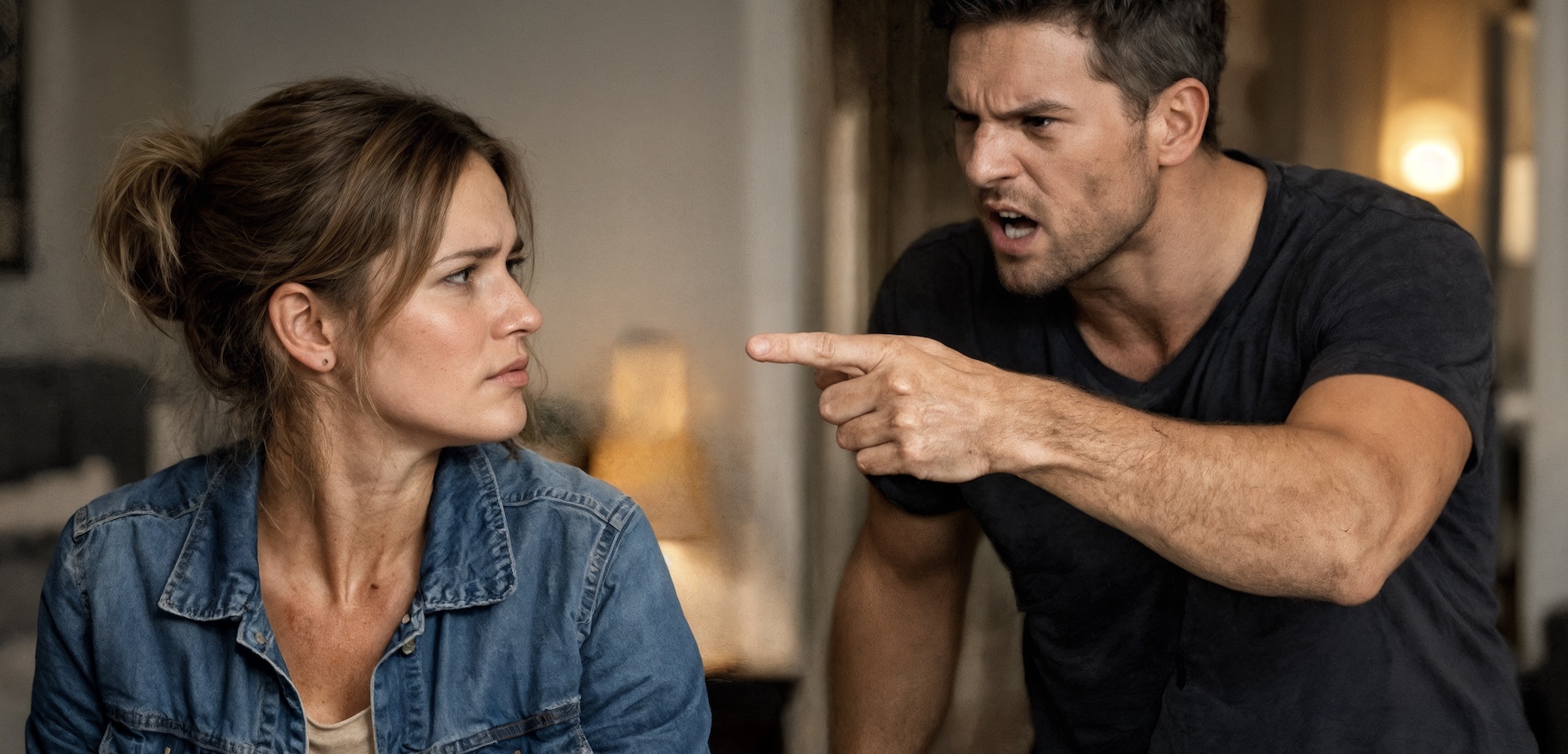
In the spacious living room of the old house Lina had inherited from her grandmother, Anton irritably flung a set of e-tickets onto the table. The weak December sun filtered through the tall windows, catching the restored ceiling moldings—proof of the months of work Lina had poured into the place.
“They’re already on the road! My parents are coming for New Year’s, so we’ll have to squeeze in,” he announced in a commanding voice, not even looking up from his phone.
Lina stood still, coffee cup in hand. The hot ceramic was burning her fingers, but she barely felt it.
“Wait… you invited them to live here for two weeks without even telling me?”
Anton flicked his hand as if shooing away a bothersome insect.
“What is there to talk about? Family is sacred. Mom’s been wanting to see how you… remade everything.”
He lingered on that last word with a faint, mocking note, and Lina felt a surge of anger rise in her chest.
Lina set the cup down with such force that coffee splashed across the wooden tabletop. Anton grimaced.
“Careful! That’s an antique.”
“An antique I restored with my own hands,” Lina said quietly, but Anton had already gone back to his phone.
Three years earlier, when Lina’s grandmother died, Lina had inherited the house—once a grand early-twentieth-century mansion, now half-collapsed and neglected. Everyone tried to talk her out of the crazy idea of restoring it, but Lina, a young architect with bright, stubborn vision, could see a future masterpiece through the flaking plaster.
She invested every last savings account, took out loans, spent weekends on the site working shoulder to shoulder with the builders. Back then Anton only shrugged; he was fine in their rented apartment. But once the house was transformed, he moved in eagerly, telling friends how “we” had brought the family home back to life.
“Your mother is going to criticize every corner again,” Lina tried to reason with him. “Do you remember last time? She spent an hour lecturing us about how blue curtains in the bedroom were ‘tacky.’”
“Mom just worries about us,” Anton replied. “She wants what’s best.”
Galina Petrovna—Anton’s mother—always wanted what was “best.” She knew best what kind of wife her son should have: domestic, compliant, and unambitious. In Anton’s family, women had lived for generations by an unspoken rule: the husband provides, the wife keeps the home. The fact that Lina had opened her own architecture studio, Galina Petrovna took as a personal insult.
“I have a presentation for the cultural center project in five days,” Lina tried one last time. “It’s the most important contract my studio has ever gone after. I need quiet and focus.”
Anton finally tore his attention from the phone and looked at her, irritation barely concealed.
“So your work is more important than family again? Mom’s right—you’ve forgotten what family values are. Women used to manage everything: the house and the guests.”
“Back then women didn’t design buildings and support husbands who spend half a year ‘looking for the right job,’” Lina blurted before she could stop herself.
Anton’s face darkened. He stood up sharply, bumping the chair.
“I explained it already—I can’t just take any random position! I need a job that matches my level. And you… you’re just selfish!”
The study door slammed. Lina was left alone in the living room she had restored so carefully, returning the house to its former grandeur. Every detail had been her choice—from the paint colors to the vintage switches. And now, for two weeks, her home would become a war zone with Galina Petrovna.
That evening Lina packed her laptop, blueprints, and project documents into a large bag. When Anton saw her, he smirked.
“What, going to work from a café? Don’t be dramatic. Mom won’t even be here until tomorrow night.”
“I’m going to Dina’s for a couple of days. I need to concentrate on the presentation.”
Dina wasn’t just a colleague—after five years together at an architecture firm, they’d become close friends. Dina was the one who had supported Lina when she decided to open her own practice.
“To Dina’s?” Anton frowned. “That feminist who keeps filling your head with nonsense?”
“She’s a successful architect who understands how important my work is.”
“And I don’t understand?”
Lina zipped the bag, exhausted.
“You invited your parents into my home for two weeks without asking me, knowing I have the biggest presentation of my career. What ‘understanding’ are you talking about?”
Dina’s small apartment smelled like coffee and fresh pastries. Without a word, Dina hugged Lina and sat her at a table cluttered with architecture magazines.
“Tell me,” she said simply.
And Lina told her—about Anton’s latest stunt, and everything that had been piling up for months. The barbed comments whenever Lina landed a new client: “Well, look at you—too important for ordinary mortals now.” The scene he’d caused when her private-home project was featured in a prestigious magazine: “You could’ve warned me you’d be photographed. I would’ve at least ironed a shirt.” The way he never once defended her when Galina Petrovna declared in front of guests that “a real woman shouldn’t earn more than her husband—it humiliates a man.”
“You know what hurts the most?” Lina said, staring at the sketches of her cultural center. “I’ve always been proud of my independence—my ability to reach my goals. But at home I feel guilty for every success.”
The next day, while Lina was making the final edits to her presentation at the studio, the door flew open. Anton walked in without knocking, his face flushed with anger.
“You need to come back right now!” he snapped instead of greeting her. “Mom’s offended that you ran off. Where is your respect for your elders?”
Lina looked up from the drawings. Two employees were working in the studio as well, carefully pretending not to hear.
“Anton, let’s talk in the meeting room,” she suggested quietly.
“No! You’re packing your things and going home to apologize to my mother—now!”
“I’m working. My presentation is the day after tomorrow, and it’s a forty-million project.”
“I don’t give a damn about your project!” Anton slammed his fist onto the table and pencils rolled across the floor. “You’re my wife, and you belong at home when my parents arrive!”
A young intern named Pavel rose from his chair, but Lina stopped him with a gesture. She slowly stood, gathered the scattered pencils, and said evenly:
“Get out of my studio, Anton. We’ll talk this evening at home.”
“You think you can order me around?”
“This is my workplace. Leave, or I’ll call security.”
Anton stared at her with open contempt, turned, and left, slamming the door hard enough to make the walls tremble. Silence hung in the room.
“Lina Sergeyevna… maybe you should take the day off?” Pavel offered carefully.
“No,” Lina said, returning to the drawings, even though her hands were shaking slightly. “We don’t have time.”
That evening she decided to stop by the house for warm clothes—December had been especially bitter. Lina hoped to slip in unnoticed, but as she climbed the stairs she heard voices in the living room. The door was slightly ajar, and Galina Petrovna’s words carried clearly.
“I told you a hundred times—this kind of woman will never make you happy. She’s too independent, too ambitious. Look how she talks to you! You need to show her who’s in charge while it’s not too late.”
“Mom… she’s just stressed because of work…”
“Work!” Galina Petrovna snorted. “A normal woman doesn’t put work above family. Your father always knew dinner, cleanliness, and peace would be waiting at home. And what do you have? An empty house and a wife who thinks she’s equal to a man!”
“Times have changed, Mom.”
“Times change, but men stay men! You’re unhappy, son—I can see it. Her success crushes you, makes you feel inferior. That’s not right!”
Lina waited for Anton to argue, to defend her, to say a single word in her support. But the living room fell silent. A long, heavy silence of agreement.
“Maybe you’re right, Mom,” Anton finally said. “She used to be different. And now… this business of hers, the constant projects. She’s changed.”
“She hasn’t changed—she’s shown her true face! Divorce, son. While there are no children, divorce her. You’ll find a proper girl who knows her place.”
Lina went back down the stairs without making a sound and stepped outside. The cold air burned her lungs, but it kept the tears from spilling over. She got into her car and sat there for a long time, staring at the windows of her home—the home she had brought back from ruin.
Her last doubts died in the moment Anton stayed silent. He didn’t protect her. He agreed. He betrayed her.
Two days later, after a successful presentation, Lina returned home. Galina Petrovna pointedly didn’t greet her, and Anton met her in the hallway with:
“Finally. Come on—we need to talk.”
They went into the study—the very room where Lina used to spend nights working on her projects. Anton sat down in her chair, a gesture she might once have overlooked, but now saw for exactly what it was.
“I hope you’ve come to your senses and you’re ready to apologize to Mom.”
Lina sat opposite him and studied his face. Strangely, she didn’t feel anger—only fatigue and a sharp, crystal clarity.
“Anton, answer me honestly. Have you ever been happy for my successes? Or did you only see them as a threat?”
“What kind of stupid question is that?”
“Answer it. When I won the award for restoring that historic building—what did you say?”
Anton frowned.
“Well… I said you could’ve warned me there’d be a photo shoot.”
“And when I opened the studio?”
“I… I was worried you were taking on too much.”
“You said I’d regret not listening to you. Anton, not once—do you hear me, not once—have you ever said, ‘I’m proud of you.’”
“Well, you know…” Anton hesitated, then blurted out: “It’s hard for me when my wife is more successful than her husband! It’s unnatural! A man is supposed to be the head of the family—the provider, the protector. And you… you’re making me a laughingstock!”
Lina leaned back. There it was. Finally—the truth.
“You know what? I feel relieved,” she admitted. “Everything is clear now. You want a different woman, Anton—the kind who fits your family system, who will quietly cook borscht and iron your shirts. I’m not her. And I never will be.”
Anton stared at his wife as if seeing her for the first time. Lina stood and walked to the window; outside, her beloved garden glowed faintly in the dusk.
“Your parents are staying in my house. Pack your things and leave. Find a hotel or rent somewhere—that’s no longer my problem,” she said without turning around. “After the holidays, I’ll file for divorce.”
“You can’t throw my parents out! They’re elderly!”
“I can. This is my grandmother’s house, which I restored with my own money. And I decide who lives here.”
Anton jumped up.
“This is my house too!”
“We don’t have a prenuptial agreement. I kept every receipt and every document from the restoration. Don’t make this harder than it needs to be, Anton. You have three hours to pack.”
Galina Petrovna heard the news from her son and stormed into the study without knocking.
“How dare you! We came as guests and you’re tossing us out into the street!”
“You came without an invitation,” Lina replied calmly, continuing to file papers into a folder. “I didn’t consent to your visit.”
“Shameless! Ungrateful! I always knew you weren’t right for my son!”
“You were absolutely right, Galina Petrovna. I don’t fit your family. And you know what? I’m not required to.”
Her mother-in-law turned crimson.
“You’ll regret this! No normal man will ever take a career woman like you! You’ll end up alone in your precious house!”
“Maybe. And now, excuse me—I have work to do.”
Two hours later the house was empty. Lina walked through the rooms, opening windows to let in the icy air. In the bedroom Anton had left a few shirts behind; she folded them into a bag and set it by the door.
That evening a message came from an unfamiliar number:
“Lina, this is Masha—Anton’s sister. Mom forbade me to talk to you, but I have to say this: you’re right. In our family they break everyone the same way. Women are taught to be shadows; men are taught to be tyrants. I couldn’t take it either—I left for another city. You’re just the first person who didn’t bend under Anton. Be happy.”
Lina read the message twice. Then she poured herself a glass of wine and raised it in a silent toast—to Masha, to herself, to every woman who had found the strength to say “no.”
Snow fell outside. Ahead of her was a whole year. A whole life. Her own.