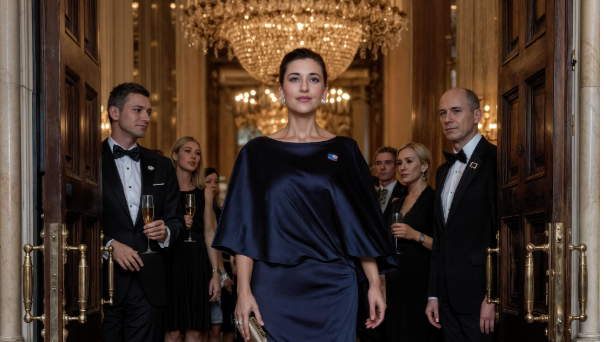
I never told my son that I made $40,000 a month. He thought I was just an ordinary employee — until the night I walked into a dinner that changed everything.
For thirty-five years, my son Marcus believed I was ordinary. He saw the small apartment, the thrift-store clothes, the brown handbag that had survived more weddings than I care to admit. To him, his mother was “simple.” I never corrected him.
He had no idea that I was a senior executive at a multinational corporation. That I signed multimillion-dollar contracts. That my salary reached forty thousand a month. I never flaunted it, because I did not need to. Real power does not need to prove itself.
Then one day, Marcus called.
“Mom, Simone’s parents are coming from abroad. We’re having dinner on Saturday. Please come.”
His tone was not warm. Controlled, more like — as if he were managing a problem rather than inviting family. That was enough for me to understand.
So I asked:
“Do they know anything about me?”
Silence. Then:
“I told them you’re simple. That you live alone. That you don’t have much.”
I smiled to myself. That word again. Simple.
So I decided to show them exactly what they expected to see.
On Saturday evening, I put on my oldest gray dress, the one with the loose seams and the stain near the hem. I tied my hair back, wore no makeup, no jewelry, and carried an old faded tote bag. When I looked in the mirror, I saw a small woman, forgettable, invisible. Perfect.
The restaurant was all marble and gold trim. Marcus looked impeccable in a dark suit, Simone seemed as though she had stepped out of a magazine. Her parents were already seated: Veronica shimmering in an emerald sequin dress, Franklin polished and serious beside her. They had the kind of smile people use with waiters — polite, but empty.
“Mom, you came,” Marcus said, his voice tight.
“Of course, my son.” I smiled as if I could not see the embarrassment in his eyes.
Veronica’s handshake was icy. Franklin’s was limp.
They talked about their travels, their penthouses, their wine cellar, the thousand-dollar-a-night hotel. Between every sentence, there was a pause — just enough time to let me be impressed.
Then came the knife disguised as kindness:
“And what do you do for a living, my dear?” Veronica asked.
“I work in an office. Papers, little things,” I replied.
She smiled.
“Oh, administrative work. That’s nice. Honest work.”
The waiter arrived with menus in French. I pretended to struggle reading them. Veronica sighed and ordered “something simple.” Then she added:
“We don’t want to overdo it.”
Franklin nodded in approval. Simone lowered her eyes. Marcus looked as though he wanted to disappear.
Dinner turned into a performance about money.
Their wine: two hundred a bottle.
Their steak: eighty dollars.
Their daughter’s honeymoon: fifteen thousand.
Their contribution toward a house: forty thousand.
The unspoken moral of the evening was clear: they were generous, cultured, superior.
Then she said it — softly, as if it were an act of charity:
“We would like to offer you a small allowance. Let’s say five or seven hundred a month. That way Marcus won’t have to worry about you anymore. In return, you would give them some space. You understand?”
I smiled.
“That is very kind,” I said. “May I ask you something: exactly how much do you think my ‘worth’ is, if the goal is for me to disappear?”
Veronica’s fork froze. Franklin shifted in his chair.
Marcus murmured:
“Mom, please.”
I kept my voice calm.
“You have spent the whole evening talking about money. Not once did you ask whether I was happy, or whether your daughter’s husband had grown up in love. You measured me against your wallet — and I wanted to see it with my own eyes. Thank you for confirming it.”
Silence. Thick, heavy, guilty.
Then I stood, slipped my hand into my faded bag, and pulled out my business card. Black. Platinum. My name engraved on it: Alar Sterling, Regional Director.
I placed it on the white tablecloth in front of her.
“Here. Pay for dinner — and leave a generous tip. Consider it a gift from the poor, naïve mother.”
Veronica stared at it as if it were radioactive. Franklin’s voice trembled:
“What is this supposed to be?”
“It’s mine,” I replied. “No limit. The only thing I have never needed to prove to anyone.”
I leaned slightly toward her.
“You offered me seven hundred dollars to make myself disappear. I would offer you a million if you could name one single person you have ever respected while having less than you.”
She said nothing. Of course.
At that moment, the waiter returned.
“Sir, I’m sorry — your card has been declined,” he said to Franklin.
The silence that followed was worth more than any number in my accounts.
I smiled, straightened up, and said:
“Don’t worry. Dinner is on me. Consider it my little allowance for you.”
And for the first time that evening, they really looked up — really looked at me.
Not like a poor woman.
But like a power they could never buy.
I never told my son that I earned $40,000 a month. He had always seen me living simply.
One day, he invited me to dinner with his wife’s parents. I wanted to see how they would treat a poor person, so I decided to pretend to be a ruined, naïve mother.
But the moment I walked through that door… I had never told him that I made $40,000 a month, even though he had always seen me living a modest life.
One day, he invited me to dinner with his wife’s parents, who were visiting from abroad. I decided to see how they would treat a poor person by pretending to be a broke and somewhat simple woman.
But the moment I stepped into that restaurant, everything changed. That night, something happened that shook my daughter-in-law and her family in a way they never could have imagined. And believe me, they had it coming.
Let me explain how I got there. Let me tell you who I really am. Because my son Marcus, at thirty-five years old, never knew the truth about his mother.
To him, I had always been just that woman who left early to go “to the office,” came home tired in the evening, and made dinner with whatever was in the fridge: some anonymous employee, maybe a secretary, an ordinary person, nothing special. And I never corrected him.
I never told him that I made $40,000 a month, that I had been a senior executive at a multinational corporation for nearly twenty years, that I signed multimillion-dollar contracts and made decisions affecting thousands of people. Why would I?
Money was never something I hung on the wall like a trophy. I grew up in a time when dignity was carried inside, when silence was worth more than empty words. So I kept my truth to myself.
I lived in the same modest apartment for years. I used the same leather handbag until it was worn nearly to pieces. I bought my clothes from discount chains, cooked at home, saved everything, invested everything, and became wealthy in silence.
Because real power does not shout. Real power observes. And I was observing very carefully when Marcus called me that Tuesday afternoon. His voice sounded different, nervous, like when he had done something wrong as a child.
“Mom, I need to ask you a favor. Simone’s parents are visiting from abroad. It’s their first time here. They want to meet you. We’re having dinner on Saturday at a restaurant. Please come.”
Something in his tone made me uneasy. It was not the voice of a son inviting his mother. It was the voice of someone asking not to be embarrassed, asking someone to “make a good impression.”
“What do they know about me?” I asked calmly.
There was a pause. Then Marcus stammered:
“I told them you worked in an office, that you lived alone, that you were simple, that you didn’t have much.”
There it was, that word: simple. As if my whole life could fit into that miserable little adjective, as if I were a problem that needed excusing. I took a long, very long breath.
“All right, Marcus, I’ll come.”
I hung up and looked around my living room. Old but comfortable furniture, walls without expensive paintings, a small TV, nothing that could impress anyone. And in that moment, I decided that if my son thought I was a poor woman, if his wife’s parents were coming prepared to judge me, then I would give them exactly what they expected to see.
I would play the broke, naïve mother who struggled to make ends meet. I wanted to feel, in black and white, how they treated someone who had nothing. I wanted to see their real faces, because I already had my doubts.
I suspected Simone and her family were the kind of people who measured others only by the size of their bank account. And my instincts are never wrong.
Saturday came. I dressed in the worst clothes I owned. A shapeless, wrinkled light-gray dress, the sort you find in thrift stores. Old, worn-out shoes, no jewelry, not even my watch.
I took a faded canvas tote bag, tied my hair back in a messy ponytail, and looked at myself in the mirror. I looked like a woman broken by life. Forgettable. Perfect.
I got into a taxi and gave the address. A luxury restaurant in the chicest part of the city, one of those places where the menu has no prices, where each place setting costs more than a normal monthly salary.
During the ride, I felt something strange, a mixture of anticipation and sadness. Anticipation, because I knew something big was going to happen. Sadness, because part of me still hoped I was wrong.
I hoped they would treat me kindly, that they would be warm, that they would look past my worn clothes. But the other part of me, the one that had spent forty years working among corporate sharks, knew exactly what was waiting for me.
The taxi stopped in front of the restaurant. Warm lights, a doorman in white gloves, elegantly dressed people walking in. I paid, stepped out, took a deep breath, crossed the threshold, and saw them.
Marcus was standing near a large table by the windows. He wore a dark suit, a white shirt, and polished shoes. He looked nervous.
Beside him stood Simone, my daughter-in-law. She wore a custom cream dress with gold details, high heels, and perfectly straight hair falling over her shoulders. Impeccable as always, but she was not looking at me. She was staring toward the entrance with a tense, almost embarrassed expression.
And then I saw them, Simone’s parents, already seated at the table, waiting like royalty on a throne. Her mother, Veronica, wore a fitted emerald dress covered in sequins, jewelry around her neck, wrists, and fingers. Her dark hair was swept into an elegant bun. She had that cold, calculating beauty that intimidates.
Beside her sat Franklin, her husband: flawless gray suit, huge watch on his wrist, stern expression. They looked as if they had stepped straight out of a luxury magazine.
I walked toward them slowly, with small steps, as if I were afraid. Marcus saw me first and his face changed. His eyes widened. He looked me up and down. I noticed him swallow hard.
“Mom, you said you’d come.” His voice betrayed his discomfort.
“Of course, my son, here I am.”
I smiled shyly, the smile of a woman who was not used to places like this. Simone greeted me with a quick kiss on the cheek, cold and mechanical.
“Mother-in-law, what a pleasure to see you.”
Her eyes said the exact opposite. She introduced me to her parents in a strange tone, almost apologetic.
“Dad, Mom, this is Marcus’s mother.”
Veronica looked up, studied me, and in that instant I saw everything. Judgment, contempt, disappointment. Her gaze traveled over my wrinkled dress, my worn shoes, my canvas bag.
At first she said nothing, only extended her hand. Cold, quick, without warmth.
“Pleasure to meet you.”
Franklin did the same thing. Limp handshake, fake smile, self-satisfied.
I sat down in the chair at the end of the table, farthest from them, like a second-class guest. No one helped pull out my chair. No one asked whether I was comfortable.
The waiter arrived with heavy, elegant menus written in French. I opened mine and pretended not to understand a thing. Veronica was watching me.
“Do you need help with the menu?” she asked with a smile that never reached her eyes.
“Yes, please. I don’t understand these words.”
My voice came out small, timid. She gave a slight sigh and ordered for me.
“Something simple,” she said. “Something that doesn’t cost too much. No need to overdo it.”
The sentence hung in the air. Franklin nodded. Marcus looked away. Simone fiddled with her napkin. No one said anything. And I watched.
Veronica began with small talk, the trip from abroad, how tiring it had been, how everything was so different here. Then, delicately, she began talking about money.
She mentioned the hotel they were staying at, $1,000 a night. The luxury rental car, of course. The boutiques they had visited.
“We bought a few little things. Nothing crazy, just a few thousand.”
She said it while looking at me, waiting for a reaction, expecting me to be impressed. I simply nodded.
“That’s wonderful,” I said.
“You see, Aara,” she continued, “we have always been very careful with money. We worked hard. We invested wisely. Today, we own property in three countries. Franklin has big business interests and I, well, I manage our investments.”
She smiled smugly.
“And what exactly do you do?” The tone was soft, but venomous.
“I work in an office,” I replied, lowering my eyes. “I do a bit of everything. Paperwork, filing, simple things.”
Veronica exchanged a glance with Franklin.
“Oh, I see. Administrative work. Very good. Honest work. Every profession has dignity, doesn’t it?”
“Of course,” I replied.
The food arrived. Huge plates with tiny portions, everything arranged like a work of art. Veronica cut her meat with precision.
“This one costs $80,” she commented. “But it’s worth it. Quality costs money. One can’t just eat anything, right?”
I nodded. “You’re right.”
Marcus tried to change the subject by talking about work and projects. Veronica interrupted him.
“My dear, does your mother live alone?”
Marcus nodded. “Yes, she has a small apartment.”
Veronica looked at me with false compassion.
“That must be difficult, isn’t it? Living alone at your age, without much support. And does your salary cover everything?”
I felt the trap closing. I answered barely above a whisper:
“I manage. I save. I don’t need much.”
Veronica gave a theatrical sigh.
“Oh, Aara, you are so brave. Truly, I admire women who struggle on their own. Even though, of course, one always wishes one could offer one’s children more, give them a better life. But that’s how it is, everyone gives what they can.”
There it was, the blow, subtle but painful. She was telling me I had not been enough for my son, that I had not given him what he deserved, that I was a poor and insufficient mother.
Simone stared at her plate. Marcus clenched his fists under the table, and I simply smiled.
“Yes, you’re right. Everyone gives what they can.”
Veronica went on.
“We always made sure Simone had the very best. The best schools, trips all over the world, four languages. Now she has an excellent job and earns very well. And when she married Marcus, well, we helped them a great deal. We paid the down payment on the house. We paid for the honeymoon, because that’s who we are. We believe in supporting our children.”
She stared at me intensely.
“And you, were you able to help Marcus in any way when they got married?”
The question hung in the air like a blade.
“Not much,” I said. “I gave him what I could. A small gift.”
Veronica smiled. “That’s adorable. Every little detail matters, doesn’t it? The amount isn’t important. It’s the intention that counts.”
And that was when I felt the anger wake up inside me. Not explosive anger. Cold, controlled anger, like a river under ice.
I breathed slowly, kept my timid smile, and let Veronica keep talking, because that is what people like her do. They talk. They puff themselves up. They perform. And the more they talk, the more they reveal themselves, the more they show the emptiness inside.
Veronica took a sip of her overpriced red wine, swirling it like a great connoisseur.
“This wine comes from an exclusive region in France. It costs $200 a bottle, but when you recognize quality, you don’t look at the price. Do you drink wine, Ara?”
“Only on special occasions,” I replied, “and usually the cheapest kind. I don’t know anything about it.”
Veronica smiled at me condescendingly.
“Oh, don’t worry. Not everyone has an educated palate. It comes with experience, travel, culture. Franklin and I have visited vineyards in Europe, South America, and California. We know quite a bit.”
Franklin nodded. “It’s a hobby, something we enjoy. Simone is learning too. She has good taste. She gets that from us.”
He looked at Simone proudly. Simone gave him a weak smile.
“Thank you, Mom.”
Veronica turned to me.
“And you, Ara, do you have any hobbies? Anything you enjoy doing in your free time?”
I shrugged. “I watch TV, cook, walk in the park, simple things.”
Veronica and Franklin exchanged another look. Loaded with meaning, with silent judgment.
“That’s cute,” Veronica said. “Simple things have their charm too. Even if, obviously, one always aspires to a little more, doesn’t one? To see the world, have new experiences, rise culturally. But I understand not everyone has those opportunities.”
I nodded. “You’re right. Not everyone has those opportunities.”
Dessert arrived. Tiny portions of something that looked like edible art. Veronica ordered the most expensive one.
“Thirty dollars for a slice of cake the size of a biscuit. It’s delicious,” she declared after the first bite. “There’s edible gold on it. See those little golden flakes? That’s the sort of detail only the best restaurants offer.”
I ate my dessert. Simpler, cheaper. In silence.
Veronica resumed:
“You know, Aara, I think it’s important that we discuss something, now that we’re family.”
She lifted her eyes. Her expression shifted, becoming serious, falsely maternal.
“Marcus is our son-in-law and we love him very much. Simone adores him, and we respect her choice, but as parents, we always want the best for our daughter.”
Marcus stiffened. “Mom, I don’t think this is the moment.”
Veronica lifted a hand. “Let me finish, dear. This is important.”
She looked at me. “Ara, I understand that you did your best with Marcus. I know raising him alone couldn’t have been easy, and I respect you for that, truly. But now Marcus is at another stage of his life. He is married. He has responsibilities and, well, he and Simone deserve stability.”
“Stability?” I asked softly.
“Yes,” she replied. “Financial and emotional stability. We have helped them a great deal and we will continue to do so. But we also believe it is important that Marcus not have unnecessary burdens.”
The meaning was clear. She was turning me into a burden. Me, his mother.
Simone stared at her plate as if she wanted to disappear. Marcus’s jaw tightened.
“A burden?” I repeated.
Veronica sighed.
“I don’t want to be harsh, Aara, but at your age, living alone with a limited salary, it is natural that Marcus worries about you, feels obliged to help you, and that’s lovely. He is a good son. But we don’t want that concern to weigh on his marriage. You understand?”
“Perfectly,” I replied.
Veronica smiled. “I’m glad you understand. That is why we wanted to speak to you. Franklin and I thought of something. We could help you financially, give you a small monthly allowance, something that would let you live more comfortably without Marcus worrying so much. Of course, it would be modest. We don’t work miracles, but it would be support.”
I remained silent, looking at her, waiting. She went on:
“And in return, we would only ask that you respect Marcus and Simone’s space, that you not call on them too often, not put pressure on them, let them build their life together without interference. What do you say?”
There was their offer, the bribe wrapped in charity. They wanted to buy me. Pay me to disappear from my son’s life, so I would not stain their daughter’s perfect image with my poverty.
Marcus exploded. “Mom, stop. You don’t have to—”
Veronica cut him off. “Marcus, calm down. We are speaking between adults. Your mother understands, doesn’t she?”
I took my napkin, calmly dabbed my lips, took a sip of water, and let the silence grow.
They were all looking at me. Veronica with expectation, Franklin with arrogance, Simone with shame, Marcus with distress. Then I spoke.
My voice came out different. It was no longer timid. No longer small. It was firm, clear, icy.
“That’s an interesting offer, Veronica. Very generous indeed.”
Veronica smiled, victorious. “I’m glad you see it that way.”
I nodded. “But I do have a few questions, just so I understand properly.”
Veronica blinked. “Of course, go ahead.”
I leaned slightly forward.
“How much exactly would this modest monthly allowance be?”
Veronica hesitated. “Well, we were thinking $500, maybe $700, depending.”
I nodded. “I see. Seven hundred dollars a month for me to disappear from my son’s life.”
Veronica frowned. “I wouldn’t put it that way—”
“And yet,” I replied, “that is exactly how you presented it.”
She straightened in her chair.
“Ara, I don’t want you to misunderstand me. We only want to help.”
“Of course,” I said. “Help. Like you ‘helped’ with the down payment on the house? How much was that exactly?”
Veronica nodded proudly. “Forty thousand dollars. Forty thousand even.”
“Ah, forty thousand. How generous. And the honeymoon?”
“Fifteen thousand,” Veronica said. “Three weeks in Europe.”
“Incredible. Extraordinary,” I replied. “So you have ‘invested’ about fifty-five thousand dollars in Marcus and Simone.”
Veronica smiled. “When you love your children, you don’t count.”
I nodded slowly. “That’s true. When you love your children, you don’t count. But tell me, Veronica. All that ‘investment,’ all that money, what exactly did it buy you?”
Veronica blinked, confused. “What do you mean?”
“Did it buy you respect? Did it buy you real love, or only obedience?”
The atmosphere changed. Veronica stopped smiling.
“Excuse me?”
My tone sharpened.
“You have spent the entire evening talking about money, about how much things cost, how much you spent, what you own. But you didn’t ask me a single time how I was, whether I was happy, whether something hurt, whether I needed company. You only calculated my value and apparently I am worth $700 a month.”
Veronica went pale. “I—”
“Yes,” I interrupted. “Yes, that is what you did. From the moment I arrived, you measured me against your wallet. And do you know what I realized, Veronica? The people who talk only about money are the ones who understand its true value the least.”
Franklin stepped in. “I think you are misinterpreting my wife’s intentions.”
I looked him straight in the eye.
“And what exactly are they? To treat me with pity? To humiliate me all through dinner? To offer me alms so I disappear?”
Franklin opened his mouth, but no sound came out. Marcus was pale.
“Mom, please—”
I looked at him. “No, Marcus. Please, no. I’m done being silent.”
I set my napkin down on the table. I leaned back in my chair. There was no more timidity in my posture. No more shrinking.
I looked Veronica straight in the eye. She held my gaze for a second, then looked away, uncomfortable. Something had changed, and she felt it. They all felt it.
“Veronica, you said something very interesting earlier. You said you admired women who struggle alone, who are brave.”
Veronica nodded slowly. “Yes, I did.”
“Then let me ask you something. Have you ever struggled alone? Have you ever worked without the support of your husband? Have you ever built something with your own hands, without your family’s money?”
Veronica stammered. “I have my own achievements.”
“Such as?” I asked with genuine curiosity. “Tell me.”
Veronica adjusted her hair.
“I manage our investments. I oversee our properties. I make important decisions for our businesses.”
I nodded. “Businesses built by your husband, properties you bought together, investments made with money he generated. Am I wrong?”
Franklin intervened, annoyed. “That’s not fair. My wife works just as hard as I do.”
“Of course,” I replied calmly. “I do not doubt that she works. But there is a difference between managing money that already exists and creating it from nothing. Between supervising an empire that is already there and building it brick by brick, don’t you think?”
Veronica pressed her lips together.
“I don’t see where you’re going with this, Ara.”
“I’ll explain,” I replied. “Forty years ago, I was twenty-three. I was a secretary at a small company. I earned minimum wage. I lived in a rented room. I ate the cheapest food I could find. And I was alone, completely alone.”
Marcus was staring at me. I had never told him all of this in such detail.
I continued.
“One day, I got pregnant. The father disappeared. My family turned their backs on me. I had to decide: continue or give up. I chose to continue. I worked until the last day of my pregnancy. I went back to work two weeks after Marcus was born. A neighbor looked after him during the day. I worked twelve hours a day.”
I paused for a second to drink some water. No one spoke.
“I did not remain a secretary. I studied at night. I took courses. I learned English at the library. I studied accounting, finance, management. I became skilled in things no one was teaching me. All by myself. While raising a child alone. While paying rent, buying food, medicine, clothes.”
Veronica was staring at her plate. Her arrogance was beginning to crack.
“And do you know what happened, Veronica? I rose, step by step: from secretary to assistant, from assistant to coordinator, then manager, then director. It took me twenty years. Twenty years of nonstop work, sacrifices you cannot even imagine. But I did it.”
“And do you know how much I earn today?” I asked.
Veronica shook her head.
“Forty thousand dollars a month.”
Silence fell as though someone had pressed pause. Marcus dropped his fork. Simone’s eyes widened. Franklin frowned in disbelief, and Veronica froze, mouth slightly open.
“Forty thousand,” I repeated, “every month, for almost twenty years. Nearly ten million dollars in gross income over my career. Not counting investments, bonuses, company stock.”
Veronica blinked several times. “No, I don’t understand. You earn forty thousand a month?”
“Exactly,” I replied calmly. “I am Regional Director of Operations for a multinational corporation. I oversee five countries. I manage budgets worth hundreds of millions. I make decisions that affect more than ten thousand employees. I sign contracts you could not read without a lawyer. And I do that every single day.”
Marcus was ashen.
“Mom, why didn’t you ever tell me?”
I looked at him tenderly.
“Because you didn’t need to know, my son. Because I wanted you to grow up valuing effort, not money. Because I wanted you to become a person, not an heir. Money corrupts, and I was not going to let it corrupt you.”
“But then,” Simone whispered, “why do you live in that small apartment? Why do you dress simply? Why don’t you drive a luxury car?”
I smiled.
“Because I have nothing to prove. Because real wealth does not need to be displayed. Because I learned that the more you have, the less you need to show it.”
I looked at Veronica.
“That is why I came dressed like this tonight. That is why I pretended to be poor. That is why I played the naïve, penniless woman. I wanted to see how you would treat me if you thought I had nothing. I wanted to see your true colors. And I saw them, Veronica. Perfectly.”
Veronica was red with shame, anger, and humiliation.
“This is ridiculous. If you made that much, people would know. Marcus would know. Why would he believe you were poor?”
“Because I let him believe it,” I replied. “Because I didn’t talk about my work. Because I live simply. Because the money I make, I invest. I save it. I grow it. I do not spend it on flashy jewelry or overpriced restaurants just to show off.”
Franklin coughed lightly.
“Even so, that does not change the fact that you have been unpleasant and misinterpreted our intentions.”
“Really?” I looked at him. “I misinterpreted it when your wife asked whether my salary was enough to live on? I misinterpreted it when you called me a burden for my son? I misinterpreted every condescending remark about my clothes, my job, my life?”
Franklin said nothing. Neither did Veronica.
I stood up. Every eye was on me.
“I’m going to tell you something that, apparently, no one has ever told you before. Money does not buy class. It does not buy true education. It does not buy empathy. You may have money, perhaps a great deal of it, but you do not have one ounce of what truly matters.”
Veronica jumped to her feet, furious.
“And you do? You, who lied, trapped us, and made fools of us?”
“I did not make fools of you,” I replied coldly. “You did that all by yourselves. I merely gave you the opportunity to show yourselves as you really are, and you did it perfectly.”
Simone’s eyes were full of tears.
“Mother-in-law, I didn’t know—”
“I know,” I cut in. “You didn’t know. But your parents knew exactly what they were doing. They knew they were humiliating me, and they enjoyed it right up until…”
… they discovered that the “poor woman” they despised had more money than they did, and now they did not know what to do with that information.
Veronica was trembling. “You have no right.”
“I have every right,” I replied. “Because I am your son-in-law’s mother. Because I deserve respect. Not for my money, not for my title, but because I am a human being. Something you forgot during this entire dinner.”
Marcus stood up. “Mom, please, let’s go.”
I looked at him. “Not yet, my son. I’m not finished.”
I turned back to Veronica.
“You offered me $700 a month to ‘help’ me. Let me make you a counteroffer. I will give you one million dollars right now if you can prove to me that you have ever treated someone kindly who had no money.”
Veronica opened her mouth, closed it, and said nothing.
“There,” I said. “You can’t, because to you people are worth only what they have in their bank accounts. And that is the difference between you and me. I built my wealth; you spend yours. I earned respect; you try to buy it. I have dignity; you just have bank statements.”
I took my old canvas bag, slipped my hand inside, and pulled out a black platinum corporate credit card. I placed it on the table in front of Veronica.
“Here is my corporate card. Unlimited limit. Pay for the whole dinner and leave a generous tip. Consider it a gift from a broke and naïve mother.”
Veronica looked at the card as though it were a venomous snake—black, glossy, my name engraved in silver: Alar Sterling, Regional Director. Her fingers trembled as she picked it up. She turned it over, studied it, then looked at me, with not a trace of her earlier superiority. For the first time that evening, there was fear in her eyes.
“I don’t need your money,” she murmured, voice cracked.
“I know,” I replied. “But I didn’t need your pity either. And yet you poured it all over me all evening. Consider it a gesture of courtesy—politeness, something that somehow escaped you despite all your trips to Europe.”
Franklin slammed his hand on the table. “That’s enough. This is getting out of hand. You are disrespecting us.”
“Respect?” I repeated. “Where was your respect when your wife asked whether my salary was enough for me to live on? Where was it when she suggested I was a burden to my son? Where was it when she offered to pay me to disappear?”
Franklin’s jaw clenched. “Veronica only wanted to help.”
“No,” I said flatly. “Veronica wanted control. She wanted to make sure the ‘poor mother’ would not stain her daughter’s perfect image. She wanted to remove the weak link. The problem is, she targeted the wrong weak link.”
I looked at Simone. She kept her head down, hands trembling in her lap.
“Simone,” I said softly.
She lifted her face.
“This is not your fault, that your parents are like this. No one chooses their family. But we choose what we do with what we were given. We choose how we treat people. We choose how we will raise our children.”
She nodded, sobbing. Marcus put an arm around her shoulders.
Franklin pretended to check his emails. Veronica studied the tablecloth as though it could answer for her.
A waiter approached timidly. “Excuse me, would you like anything else?”
Franklin snapped, “Just the bill.”
The waiter nodded and walked away. Veronica sank into her chair as though something inside her had broken. The elegance was gone. What she had just lost was not money. It was power.
“Ara,” she said in a voice stripped of all hardness, “I don’t want this to destroy our families. Marcus and Simone love each other. We can’t let—”
“What?” I interrupted. “Let what? Let all of this expose your plans? Your true thoughts? It’s too late, Veronica. The damage is done.”
“We can fix this,” Veronica insisted. “We can start again on a better footing.”
“No,” I said, still standing. “We can’t. Now you know who I am. I know who you are. The truth does not disappear with a smile and a toast. You treated me like trash because you thought you could.”
Franklin stiffened. “You came here lying. You caused all of this.”
“Yes,” I replied. “I had to know. I had to verify what I suspected: that you are not good people. That your money does not make you better people.”
A waiter returned with the bill, placing the small leather folder in the center of the white tablecloth.
No one moved.
Veronica stared at the black card still in her hand, then set it down as if it burned. “I will not use your card. We will pay our own bill.”
“Perfect,” I replied. “Then keep it as a souvenir—a reminder that not everything is always what it seems, that the woman you despised has more than you ever will. And I am not only talking about money.”
“I don’t want it,” Veronica murmured. “And I don’t want your lessons.”
I slid the card back toward her. “Keep it anyway. Something tells me you may need that reminder.”
Franklin pulled a gold card from his wallet and slipped it into the leather folder. The waiter walked away with it.
We waited.
The silence was heavy, embarrassing. Simone was crying softly. Marcus held my hand. Veronica stared at the wall. Franklin stared at his phone like a life raft.
The waiter came back. “I’m sorry, sir. Your card was declined.”
Franklin blinked. “Declined? That’s impossible. Try again.”
“I can try again,” the waiter said. He walked off with a second card Franklin had handed him.
Veronica leaned toward her husband, voice low and panicked.
“What is happening?”
“I don’t know,” he hissed. “A security block. It happens when you travel.”
I nodded, perfectly polite.
“Of course. What an inconvenience.”
Marcus glanced at the bill. “Mom, I can—”
“No,” I stopped him. “You will not pay.”
From my simple worn wallet, I pulled out another card. Not black. Transparent, heavy, obviously metal. The waiter recognized it before Veronica did.
I placed it on the table.
Veronica’s eyes widened. “That’s a…”
“Yes,” I said. “A Centurion. Invitation only. With a quarter-million dollars in annual spending minimum. Fees you don’t want to know about. Benefits you cannot imagine.”
The waiter took it carefully, like a museum object. He returned two minutes later.
“Thank you, Ms. Sterling. Everything has been taken care of. Would you like the receipt?”
“No,” I replied.
The room seemed to exhale. I put away my old wallet and my worn bag.
“The dinner was delicious,” I said to Veronica. “Thank you for your recommendations—and thank you for showing me exactly who you are. You have spared me years of pretending.”
Veronica finally met my gaze. Her eyes were red—not with tears, but with rage trapped in her throat for too long.
“This isn’t over,” she said. “You cannot humiliate us and just walk away. Simone is our daughter. Marcus is our son-in-law. We will always be family. You will have to see us.”
“You’re right,” I said with a faint smile. “I will see you—birthdays, Christmas, a few Sundays. But now I will see you clearly. I will no longer wonder what you think of me. I already know. And you know that I know. And you will live with that.”
Franklin came back with a pale face, phone limp in his hand. “It’s a temporary block. Security. It will be fixed tomorrow.”
He looked at the empty folder. “You… already paid?”
“Yes,” Veronica said flatly, eyes elsewhere.
He looked at me. His pride was collapsing. He managed to say, “Thank you.”
“You’re welcome,” I replied. “That’s what family is for—giving a small allowance. Seven hundred, was it? Tonight it was eight hundred. Consider it settled.”
Franklin closed his eyes. Veronica’s hands were white on her knees.
Marcus touched my arm. “Mom. Let’s go. Please.”
“You’re right,” I said. “That’s enough.”
I turned toward Simone. She was crying softly.
“Simone,” I said.
She raised her eyes.
“You are not responsible for who your parents are. No one chooses their family. But we choose what we do with that. We choose how we treat people. We choose how we raise our children.”
She nodded. Marcus held her closer.
Franklin pretended to read his emails. Veronica stared at the fabric of the tablecloth as if it might answer for her.
I took a step toward the exit, then turned back one last time.
“Oh, Veronica—one last thing. You said you speak four languages. In which one did you learn kindness? Because it certainly wasn’t any of the ones you used tonight.”
Her mouth opened, then closed. No sound came out.
“That’s all,” I said, and I left.
Marcus caught up with me. The night air cooled the fire in my veins. I breathed in, deep and steady, as though oxygen itself were a balm.
“Mom, are you okay?” he asked.
“Perfectly,” I replied. “Better than I have been in years.”
He ran a hand over his forehead. “I can’t believe you never told me. About the work. The money. Everything.”
I stopped under the awning and looked him in the eyes.
“Does it bother you?”
He shook his head immediately. “No. I’m proud. But I feel blind.”
“You saw what I let you see,” I said gently. “I wanted you to grow up without relying on me. To fight for yourself. To value your own victories.”
He nodded, still dazed by the evening.
A car pulled up. I opened the door, but stopped when he spoke again.
“Why did you do it?” he asked quietly. “Why pretend to be poor? Why not just tell the truth?”
“Because I had to know,” I replied. “If I had told them everything, they would have put their masks back on. This way, I saw their real faces.”
He lowered his eyes. “I’m sorry.”
“Don’t apologize for them,” I said. “But decide what kind of husband you want to be. And one day, what kind of father. You saw two different ways power can cross a room. Choose.”
He nodded slowly. I got into the car and lowered the window.
“One last question,” he said, leaning in. “Will you ever forgive them?”
“Forgiveness is not forgetting,” I replied. “And it is not giving them permission to do it again. Maybe someday—if they change. Until then, I will be polite, distant, and careful.”
He swallowed. “And me? Do you forgive me, for my assumptions, for not asking, for allowing this dinner to happen?”
“I have nothing to forgive you for,” I said. “You wanted the families to meet. That was a beautiful intention. What came after did not come from you. It came from them—and a little from me, because I chose to play the game.”
He gave a crooked smile. “You won.”
“I do not feel like a winner,” I said, settling into the seat. “I feel tired. And relieved. Because I confirmed what I did not want to believe: some people will never change. Some houses are marble on the outside and empty inside.”
The driver looked at me in the mirror. “Ma’am? Shall we go?”
“Yes,” I replied. “One second.” I turned to Marcus. “Go talk to Simone. Talk. Listen. Set boundaries now, or this scene will repeat itself forever.”
“I will,” he said. “I love you, Mom. More than ever.”
“I love you too,” I replied. “Always.”
The car pulled away from the curb. I watched my son in the rearview mirror—shoulders heavy, stride determined—walking back into the light and noise to face what awaited him.
The city lights slid across the window like overturned constellations. I closed my eyes, replayed the evening—the looks, the words, the coldness beneath all that velvet—and wondered whether I had been too harsh. Then I remembered every sharpened kindness, every polished insult, every attempt to buy me, and the answer fell like a stone: no. I had been honest.
The streets grew quieter. Towers gave way to modest apartment buildings lined in rows. I opened my bag and took out my phone—a simple device in a scratched case.
There were three messages. My assistant about Monday’s briefing. A colleague congratulating me on the quarter. And a number I did not recognize.
It was Simone:
“Mother-in-law, please forgive me. I’m ashamed. I need to speak to you, please.”
I stared at the words for a long time. Then I put the phone away. Guilt writes quickly; change writes slowly.
The driver looked at me in the mirror.
“Everything all right, ma’am?”
“Yes,” I replied. “Why?”
“You came out in silence,” he said. “Most people who leave that place are laughing. You look like someone who just finished a battle.”
I smiled. “Something like that.”
He chuckled softly.
“I’ve been driving for twenty years. I’ve seen arguments, endings, beginnings. You have the look of someone who finally said what needed to be said.”
“You’re perceptive,” I replied.
“It’s the job,” he said. “Want to talk about it? No pressure. Sometimes it’s easier with a stranger.”
I thought about it, then shook my head. “Thank you. I’ve already said enough tonight.”
He nodded. “Fair enough. But I’ll tell you this—those who do harm rarely sleep peacefully. You look calm. That tells me you told the truth. The truth hurts, but it settles.”
He was older, maybe sixty, with winter-colored hair and workingman’s hands. A simple man, exactly the role I had played a few hours earlier.
“Do you believe in truth?” I asked.
“I believe in sincerity,” he replied. “Truth changes depending on who tells it. Sincerity doesn’t. It’s what you say without a mask—even when it costs you.”
I nodded. “Your wife must have loved you for that.”
“Yes,” he said softly. “Forty years. She used to say I was rough around the edges, but she never doubted me.”
“I’m sorry,” I said when he added that she had died five years earlier.
He shook his head. “Don’t be sorry. We lived well. We told each other everything. That’s a gift.”
The car stopped at a red light.
He turned toward me.
“May I ask you a personal question?”
“Go ahead.”
“Are you rich?”
I smiled faintly—not at him, but at the plainness of the question after a night like that.
“What does rich mean to you?”
“Rich in money,” he replied. “Because you carry yourself like a boss, dress like a neighbor, and paid me with crisp bills out of a wallet older than my cab.”
“Then yes,” I said. “And also rich in what matters most. Peace. Health. A son I love. Work that means something.”
He nodded, satisfied.
“I knew it. Rich people who know they’re rich don’t need to prove it.”
The light turned green. The car moved on.
“What happened in there?” he asked more gently. “If it’s not too intrusive.”
“I pretended to be poor,” I replied. “To see how I would be treated.”
He whistled softly. “And?”
“Like I was nothing,” I said. “They offered me charity. They tried to erase me. Now they’ll have to live with the mirror I held up to them.”
He whistled again. “Epic.”
“It was,” I said, and let the city carry me home.
We arrived in front of my building—old, middle-class, nothing luxurious, nothing showy, but comfortable and safe. The driver looked at the façade.
“You live here?” he asked.
“Yes,” I answered.
He shook his head slightly, admiringly.
“Most rich people move into places with doormen and gyms. You live like a neighbor.”
“I am a neighbor,” I replied. “I just have more money than average. That does not make me better. Money is a tool, not an identity.”
He smiled. “I wish more people thought like you.”
“How much do I owe you?” I asked.
“Thirty,” he said.
I handed him a hundred. “Keep the rest.”
He jumped. “Ma’am, that’s too much.”
“It isn’t,” I replied. “You listened to me. You reminded me there are still good people in the world. That’s worth more than seventy.”
He took the bill carefully. “Thank you. Truly.”
“And keep your sincerity,” I added. “It’s rare.”
“I will,” he promised.
I stepped out and closed the door. He rolled down the window.
“Ma’am—one last thing. Whatever happened tonight, don’t regret it. People who speak hard truths move the world forward, one conversation at a time.”
I smiled. “I’ll remember that.”
The taxi drove away. I stood on the sidewalk looking up at my fifth-floor window, dark and silent.
Inside, the stairwell smelled faintly of detergent and dust. I climbed. I never take the elevator. Walking helps me stay honest with my body.
At the door, the familiar key turned. The apartment was cool and quiet. One lamp, the simple living room, the small kitchen, the table with mismatched chairs, walls without price tags.
Peace came to greet me like an old friend. This place was mine—no role to play, no showroom, just home.
I took off the wrinkled gray dress, swapped the worn shoes for soft slippers, and put on an old cotton pajama set that knew the shape of me. Kettle, steam. With a cup of tea in my hands, I sank onto the couch and let the silence stretch.
The evening news flickered on the TV; I turned it off. Silence again—clean, sharp. For the first time in a long while, I felt completely free: free of masks, of resignation, of the reflex to make myself small. That night, I had not only unmasked Veronica and Franklin. I had opened a lock inside myself—and stepped through it.
My phone vibrated.
Marcus: “Mom, did you get home okay?”
I smiled and typed:
“Yes, my son. I’m home and resting.”
He replied immediately:
“I love you. Thank you—for everything. For being exactly who you are.”
I closed my eyes, a cool tear sliding down my cheek. Not sadness—release.
“I love you too. Always,” I replied.
I set the phone down, took a sip of tea, and let the silence keep me company.
Sleep came easily.
—
Sunday woke me early, as usual. Forty years of rising at dawn leaves its mark. I made strong black coffee and sat by the window while the city woke up—shopkeepers lifting metal shutters, strollers with paper bags, a cyclist threading through traffic like a needle through fabric.
The call came while the steam was still rising.
“Good morning, Mom,” Marcus said, his voice tired.
“Good morning, my son. Tell me.”
He let out a sigh.
“Last night, after you left, I went back to the table. Simone was falling apart. Her parents… were waiting for the bank to unblock their cards. It was humiliating. I was furious.”
I let him speak.
“I told them everything,” he continued. “I told them I was ashamed. I told them they had treated you like you were nothing. I told them I would never tolerate that again.”
“And them?” I asked.
“Veronica tried to twist it—said they were protecting Simone, that they wanted stability, that they meant no harm. Franklin said you had manipulated us, that you planned the whole thing to make them look like villains.”
I let out a dry little laugh.
“Of course. My fault.”
“That’s when Simone spoke,” Marcus said, and his voice broke. “She told them they were wrong. She said she had seen every look, every insult disguised as politeness, and she was ashamed. I had never seen her stand up to them before.”
“Good,” I said calmly. “She is waking up.”
“Veronica exploded. She called Simone ungrateful, said they had sacrificed everything, that she had no right to judge them. Franklin backed her up. They said we were under your ‘influence.’”
I smiled. “Magic is just clarity in a room full of fog.”
“I told them yes, you had planned it,” Marcus went on, firmer now, “but a trap only works if it is true. And it was.”
“Well said.”
He paused.
“Mom, I made a decision. We’re setting boundaries. We’re not cutting them off completely, but there will be rules: no comments about money, no little control games, no humiliation. If they don’t respect that, there will be consequences.”
“Did they agree?”
“No,” he said. “They left furious. Veronica said we would regret it the day we needed help. Franklin threatened to change his will.”
“Emotional blackmail,” I said. “The last tool in an empty toolbox.”
“Exactly. But it didn’t work. Simone stood firm. So did I. And after they left, I felt… lighter.”
“That is the weight of other people’s expectations sliding off your shoulders,” I said. “It makes you grow.”
He was silent for a moment.
“Thank you for last night. It was hard, but necessary. I needed to see. Simone did too.”
“You’re welcome, my son.”
“There’s something else,” he added. “Simone wants to see you. To ask your forgiveness. Not to pretend—to really talk.”
“Tell her to come,” I replied, “but not today. Let the words ripen. Apologies that come too quickly are empty.”
“I’ll tell her. Mom… how do you feel?”
I looked at a bus sighing at its stop. “At peace,” I said. “Finally.”
“That’s good,” he whispered. “I love you.”
“I love you too. Get some rest, Marcus.”
We hung up.
After finishing my coffee, I decided to walk without any particular destination—just my feet and the sun. Comfortable jeans, a plain T-shirt, worn sneakers. Keys, door, stairs, street.
The park was alive—fathers running after paper airplanes, teenagers sharing earbuds, a couple arguing softly and then laughing anyway. The smell of fresh bread drifted from a bakery where the line curled like a ribbon.
I sat on a bench and watched the tide of small lives moving without ceremony. Most of the people there probably did not have much. They worked, paid their bills, counted their coins, and still found ways to smile.
I thought of Veronica and Franklin—money as armor, joy as a rumor. Were they happy? Or merely busy?
An older woman sat down next to me with a bag of rolls.
“Good morning,” she said, bright-eyed.
“Good morning,” I replied.
“Beautiful day.”
“Yes.”
She crumbled bread for the pigeons, a practiced gesture.
“I come every Sunday,” she said. “It’s my little peace before the week begins.”
“I understand,” I said. “I needed peace too.”
“Rough night?” she asked.
“Something like that.”
“One night can change a life,” she said simply.
“You’re right.”
She nodded toward the birds.
“Look at them. Fat, skinny, sleek, all ruffled—they all eat the same bread. Humans are the ones who invented ladders just to stand on other people’s heads. Birds didn’t.”
I smiled. “You should teach classes.”
She laughed. “At my age, I observe and I share. Most people don’t listen. They’re too busy buying ladders.” She brushed crumbs off her hands. “Remember this: what remains is how you treat people. That’s the legacy that matters.”
We stood up. “Have a good Sunday,” she said.
“You too,” I replied, and watched her walk away—small, a little worn, but immense.
I stayed a little longer, then went home with my thoughts arranged like books finally returned to the right shelf.
Three days passed before Simone rang my doorbell.
The Wednesday afternoon light fell in a warm rectangle across the rug when the bell rang. I knew it was her.
I opened the door. Simone stood there without makeup, hair tied back in a simple ponytail, wearing jeans and a T-shirt, no jewelry.
“Mother-in-law,” she said softly. “May I come in?”
“Of course.”
She came inside and sat where I indicated. I took the chair opposite her and let the room stay gentle.
“I don’t know where to begin,” she said.
“Begin where you can,” I replied.
She took a deep breath.
“I came to apologize—not just with words. I came to explain why my parents are the way they are, and why I stayed silent for so long.”
I waited.
“They were born poor,” she explained. “A village with no electricity, no running water. As children, they worked in the fields. They saw people die because they had no money. They swore they would never be poor again. Franklin built his business from nothing. To them, money is survival. It is safety. That is why they talk about it all the time. That is why they measure the world with it.”
“Trauma distorts measurements,” I said. “But it does not justify cruelty.”
“I know,” she replied. “And I saw everything that night—every look, every polite insult. I stayed silent because I was always taught that contradicting them was betrayal.”
“And now?” I asked.
“Now I know that love is not control,” she said. “I can love them without obeying them. Marcus helped me see that. So did you. When you spoke in that restaurant, it was like someone cut the knot in my chest.”
Her eyes filled with tears.
“I knew something was wrong. I thought I was just too sensitive. But you showed me there is another way to live. A way where money does not define worth. Where humility is strength. Where authenticity is wealth.”
“I did not come to change you,” I said. “I came to protect myself.”
“And yet you saved me,” she replied. “From becoming like my mother. From raising children who judge souls like credit scores. I don’t want that.”
“And your parents, now?” I asked.
“Furious. Hurt. Humiliated,” she said. “Veronica is not speaking to me. Franklin wrote that I had disappointed him, that I had chosen strangers over blood.”
“And how do you feel?”
Her answer surprised me.
“Free.”
“Good,” I said. “That is the right direction.”
“Marcus and I set boundaries,” she continued. “They can remain part of our lives if they respect us and stop using money like a leash. Otherwise, the relationship will become distant.”
“They won’t like that,” I said.
“They don’t,” she replied. “Veronica called us ungrateful. Franklin threatened to disinherit me—as if the whole essence of their love rested in that one word. And that’s when I understood they believed their worth lived in their bank account.”
“That is sad,” I said.
“Very,” she agreed. “Because they have so much… and enjoy so little of it.”
She looked up, her eyes clear now.
“I want to learn from you. I want to live with dignity. To be strong without being cruel. To be rich in peace, not appearances. That night, I saw elegance in you—real power.”
“That is not something taught in a classroom,” I said. “You learn it by living. By making mistakes and starting again. But I can tell you this: the road is not easy. People will misunderstand you. Stay faithful to what is right. Peace is worth the road.”
She nodded.
“I will try. Not just for Marcus. For myself. I want to stop buying mirrors for other people’s eyes.”
“Start with small things,” I said. “Before every decision, ask yourself: am I doing this for me—or for an audience? Does it bring me peace—or only appearance?”
She exhaled.
“And my parents—do you think they will change?”
“I don’t know,” I replied. “Change begins when people admit there is a problem. They are not there yet. But you can change. You can break the cycle.”
“I will,” she said. “With Marcus. And, I hope, with your guidance.”
“You do not need my guidance as much as you need your own compass,” I replied. “You always had it. You just switched it off to keep the peace. Turn it back on.”
She wiped her face and smiled—a small but sincere smile.
“Thank you for your patience. For your honesty. For not giving up on us.”
“Promise me one thing,” I said. “When you have children, teach them to see people, not price tags. Empathy, humility, kindness—they cost nothing, and they are worth everything.”
“I promise,” she replied.
We hugged—no role to play, no mask, just simple human warmth.
An hour later, she left lighter than she had arrived. Hope had taken root where the obsession with pleasing once ruled.
My phone vibrated.
Marcus: “She told me about the visit. Thank you for welcoming her, for listening to her. I love you more than I can ever say.”
I wrote back: “I love you too. Always.”
The sunset was spreading orange and pink across the buildings. I stood by the window and understood something simple and immense: real wealth is measured in silence. In how deeply you can enjoy what you already have. In the number of times you can look in the mirror and respect the person staring back.
Veronica and Franklin had millions. I had peace, authenticity, and a son whose love was pure, untouched by transactions. On any balance sheet that mattered, I was richer.
I never pretended to be poor again. I no longer needed to. I had seen what I needed to see and said what I needed to say. Veronica and Franklin remained what they were—rich in money, poor in spirit. That was no longer my burden.
I had spoken the truth. I had drawn the line. I had protected my peace.
For the first time in a long time, I could simply be myself: Alar—mother, executive, woman, survivor—rich in the only currencies that endure.
And that was enough. That was everything.