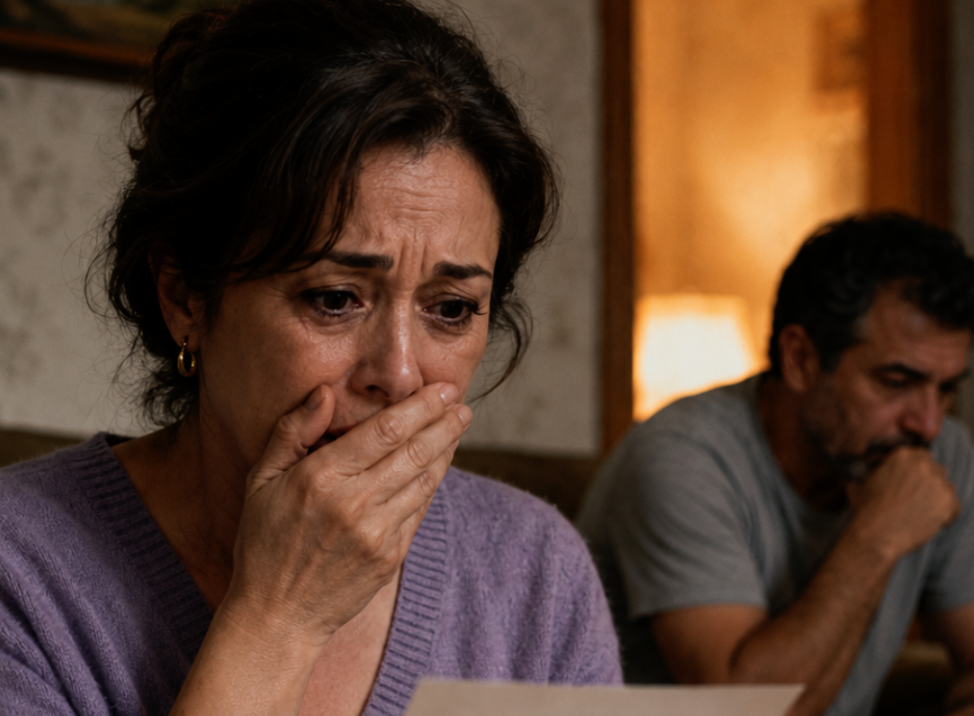
“Marinka Needs It More”: My Husband Gave My Bonus to His Sister. By Morning, He Was Looking for Money to Get His Car Out of the Impound Lot
“Marinka needs it more. She’s weak, and you’ll earn more,” my husband said without even lifting his eyes from the television when I threw the empty kraft envelope onto the coffee table.
The Empty Envelope
They had given us our bonuses in cash, the old-fashioned way, and back in accounting I had even joked, “Well, girls, that’s it. I’m finally going to fix my long-suffering jaw.”
Lida laughed, slipped a cutlet into her lunch container, and said, “Just make sure you get it home. There are far too many kind people around you.”
Well, I got it home.
Igor was sitting there in a tank top stretched out under the arms, flipping through channels with such concentration, as if the outcome of world events personally depended on him. Crusts of bread were drying on a saucer beside him. The remote lay in his hand like a scepter.
The king of the sofa.
“What just happened?” I asked.
“I already told you.”
And that was it. No “sorry,” no “let’s talk.” He said it as if he had merely moved a stool.
I looked at his ear. Strange, right? Not at his face, not into his eyes. At his ear. It was red, warm from the pillow. He hadn’t suffered or agonized over anything. He had been lying there, thinking about how conveniently he could dispose of my money, and probably even yawned while doing it.
“There were thirty-two thousand in there, Igor.”
“So what? Marinka needs to replace her refrigerator. Everything piled up on her again. And you’ll manage. You always manage.”
He chose his words slowly, thickly. As if he wasn’t making excuses, but explaining to me how the world worked. You know that tone. The one people use with us when they have already decided everything.
I picked up the envelope and turned it over. A coffee ring had stamped itself onto one corner. Probably from his mug.
Nice setup: someone else’s money, coffee, and shared air.
“And asking me first?”
“Vera, come on, why are you starting? We’re family.”
That “we’re family” stabbed me. Not the word “family.” I had gotten used to that long ago. It was the soft, greasy little implication that everything had already been settled, and only my stubbornness remained.
The Plate Scrubbed Until It Squeaked
I went into the kitchen and started washing a plate. A clean plate, by the way. I simply took a sponge, dropped some dish soap on it, and scrubbed in circles.
From the room, I heard:
“Make me some tea, all right?”
No, wait… That is not how I should say it. It wasn’t about the tea, and it wasn’t about the plate. It was just that, at some point, you realize no one is asking you anymore. You are being used like the kitchen light. It’s on, isn’t it? Then let it stay on.
I turned off the water.
Silence.
A pot of buckwheat stood on the windowsill. I had cooked it that morning so that in the evening all I’d have to do was warm up the cutlets. My whole life ran on containers and lists. A dental X-ray in a folder, receipts in a file. And my bonus in an envelope.
It had been there.
And then Marinka called.
Her voice was always thin, as if she were apologizing. But her nail polish was always fresh. And her perfume was the kind you could almost smell even through the phone.
“Verochka, you saved me! Igorek said you insisted yourself. I honestly cried. I thought, God, there really are people like that…”
I squeezed the sponge so hard that foam pushed out between my fingers.
“Oh? And what exactly did I save you from?”
“Well, everything at once. The refrigerator, boots, and one debt I had to close because it was already embarrassing. You understand, I didn’t do it for myself.”
Of course. For people. Nothing was ever for herself. Only somehow she went to the market in an old puffer coat, but her nails had glitter on them.
“Are the boots at least good?” I asked.
She hesitated for a second.
“Well… warm. Why?”
“Nothing. Wear them.”
And I hung up.
It became empty and light inside me, like after you throw a brick out of your bag and only then realize how many years you had been carrying it around. Not because Marinka had deceived me. There was nothing new there.
But because Igor had even invented me for her. He had said I wanted it myself.
A convenient wife. Generous. Silent and paying.
From the room, he shouted:
“Who called?”
“Your conscience,” I said quietly.
And I even smirked. Of course, he didn’t hear.
The Balcony and the Sign
I needed air. I went out onto the balcony in my house pants and old sweater, and the March evening pulled in dampness and the smell of fried onions from someone’s apartment below.
Cars were parked in the courtyard.
Igor’s car was parked, once again, crookedly. Almost on the lawn, nose toward the archway, right under the sign that said, “Do not block the exit.”
How many times had I told him? Ten? Twenty?
He would only wave it off.
“Who am I bothering?”
Then Valera appeared on the neighboring balcony, wearing plaid pants and holding a mug.
“Vera, your guy parked like an idiot again?” he chuckled. “The yellow trucks were driving around today. I saw them in the afternoon.”
And that was when something clicked.
No music, no thunder. Just like a lid snapping shut on a jar.
Down by the archway, an orange vest flashed. One, then another. The men were walking slowly along the courtyard, looking at the cars. One of them was marking something in his phone.
I could have shouted. I could have gone into the room and said, “Igor, move the car.” I could have, as usual, been useful in advance. Warned him, saved him, softened the fall.
But if I saved him again now, by autumn Marinka would have a new jacket, by winter a new phone, and I would still be left with my tooth aching from cold things and this wonderful role of family ATM.
Valera took a sip from his mug.
“Well, decide for yourself.”
“I’m watching,” I said.
And I went back into the apartment.
The Orange Vest
Igor was still lying there. On the screen, someone was already running somewhere and shouting, while my household philanthropist had not even taken off his slippers.
“Tea?” he asked.
“The water’s in the kettle.”
I took a towel and calmly went to shower.
That was the most interesting part: calmly. As if someone inside me had said, sit down, Vera, stop standing on tiptoe.
Through the noise of the water, I still heard the courtyard. First, a loud, short whistle. Then the hiss of hydraulics. Metal clanged, and that was it.
I shampooed my hair a second time.
Slowly.
When I came out, Igor was already rushing around the room in socks and a jacket pulled over his tank top.
“Where are the keys?! Vera, have you seen my keys?”
“Check your jacket pocket.”
He tugged at the zipper, pulled out the key ring, and froze.
“The car is gone.”
“Oh?”
“What do you mean, oh?! The car is gone!”
He ran to the window and yanked the curtain aside so hard that the hook rang against the curtain rod.
“They towed it! Those damn…!”
The word hung in the room. There was something so precise about it that I even nodded. Only he had addressed it to the wrong person.
“They probably towed it,” I said and started drying my hair. “You’re strong. You’ll find it.”
He turned around.
“What?”
“Nothing. You’re strong.”
That was when he looked at me for the first time. As if he saw not a nightstand that had been standing there for twenty years, but a person.
“You knew?!”
I shrugged.
“I saw the car was parked however you pleased. Just like yesterday. And the day before.”
“And you didn’t tell me?”
Silence.
Then he began fussing around even more, pulling on his jeans while standing, almost falling over, swearing, and rushing downstairs.
I sat down on a stool in the kitchen and suddenly realized I was very hungry. I warmed up buckwheat and took a cutlet out of the container.
My kindness ran out in our home that evening, but my appetite returned.
The Receipt on the Table
He came back an hour and a half later. Angry, rumpled, with a grayish face. He smelled of wet metal and cheap vending-machine coffee.
“They won’t release it until morning,” he muttered. “Only through the impound lot. The fine and towing fee, plus taxis back and forth.”
“That happens.”
He sat down and looked at me as if he expected me to pull money out of my sleeve. But my sleeve was empty.
Just like my envelope.
“We’ll have to take it from the shared money,” he said.
And there it was, the second attempt. In our language: climb into my pocket again.
“We don’t have any shared cash,” I replied. “You already distributed mine. The rest is for utilities and food.”
“Oh, come on. Are you seriously going to make a scene over the car now?”
“I’m not the one who made it.”
“Vera, don’t get worked up. I didn’t give it to some woman on the side. I helped my sister.”
“With my money.”
“Why are you acting like a stranger?”
I even laughed. Briefly and without joy.
“No, Igor. I’m not the stranger here. My bonus in your sister’s hands is the stranger.”
He snorted for a long time, then moved closer.
“I’ll pay it back.”
“When?”
“Well… from a side job. Or Marinka will give it back later.”
And he understood himself how that sounded.
Of course Marinka would return it. Like snow in July.
“Call her,” I said.
“It’s nighttime.”
“And giving away my money during the day was convenient for you?”
He did not call.
He went to sleep on the sofa, sighing loudly like a person deeply wounded by someone else’s ingratitude. I checked how much I had on my card and opened a new savings account in the app.
Only for myself.
For the first time, without looking back.
In the morning, Igor got up early. Gloomy and quiet. He even put the kettle on himself, which, for him, was almost repentance.
“Give me ten thousand,” he said without looking at me. “I’ll pay there, and then we’ll sort it out.”
I spread butter on bread.
“No.”
“Are you serious?!”
“More than serious.”
“That’s not humane.”
“And handing out my bonus is humane?”
He yanked open a drawer, found some coins, some old banknotes, then rummaged through his jacket. It looked both pitiful and ridiculous.
And you know, earlier, I might not have been able to stand it. I would have slipped him money out of pity. Out of habit. Out of that eternal “well, what can we do now?”
But not this time.
Kindness at Someone Else’s Expense
He went to the impound lot by bus. That, by the way, is useful for one’s character too. Standing at a bus stop, listening to the doors hiss, listening to teenagers argue over who owes whom. The world immediately becomes shared, not sofa-sized.
That day, I walked to the trolleybus stop. On the way, I went into a bakery and bought myself a sweet cheese bun.
Not because it was a holiday.
Just because I wanted one.
Lida understood immediately that something had happened.
“You look like you’ve just finished a major cleaning,” she said. “Tired, but satisfied.”
“Something like that.”
At lunch, Igor sent a short message:
“Got it.”
No period, no shame.
I hadn’t expected any.
In the evening, there was a receipt lying on the table at home. The amount was almost funny in its precision: thirty-one thousand four hundred.
Almost my bonus.
And the remote lying beside it no longer looked like a royal object.
He sat there quiet as water. He had parked the car near the neighboring building, where it was allowed, and looked out the window twice to check whether it was still there.
I silently warmed up soup. Then I took another kraft envelope out of the cupboard, wrote on it with a pen, “Vera. Personal,” and placed it in the top drawer of the dresser.
Igor saw it.
“What is this demonstration now?”
“This is order.”
“So now everything is separate?”
“My bonuses are separate. And we discuss large expenses. If you want to help your sister, help her with your own money.”
He wanted to object. He had already drawn in air, but I lifted my eyes, and he deflated.
For the first time in a long while, he understood a simple thing: it is easy to be kind at someone else’s expense while someone else’s account remains open.
Two days later, Marinka finally called. Without her former sing-song sweetness.
“Vera, Igor said you were offended. I didn’t know…”
“Now you know.”
“I’ll pay it back little by little.”
“Pay Igor back. It’s his debt. And he can decide himself how he settles things with me.”
“Are you really like this because of money?”
I looked at the envelope in the drawer. At the receipt I had deliberately not thrown away. At his remote, which now lay there like ordinary plastic, not power.
“No, Marina, not because of money. Because both of you decided for me.”
She fell silent, then finally said:
“Well, you’re strong, Vera.”
And at that, I even smiled.
“That’s why I’m not going to solve your problems anymore. That would be like living your lives for you.”
The house became quieter. Not immediately, no. Igor tried to approach the subject from the side a couple more times: sometimes hinting that I had become harsh, sometimes remembering how “everything used to be like a family before.”
I nodded and set plates on the table.
But the envelope stayed in the drawer, the account kept growing, and from then on, he parked the car by the rules.
I had my tooth fixed a month later. I sat in the dentist’s chair, closed my eyes, and thought of something funny: if not for that empty envelope and the orange vest in the courtyard, I would have gone on thinking of myself as patient and convenient.
Now everything is simple for me.
My money knows where its real place is.
And so do I.
Would you have saved the car of a husband who had just given your money to his sister?
—
The kindest husbands are often generous exactly where the money is not theirs. Vera did the right thing by not rushing in to save everyone again. Everything became visible at once: the husband, the sister, and that envelope.