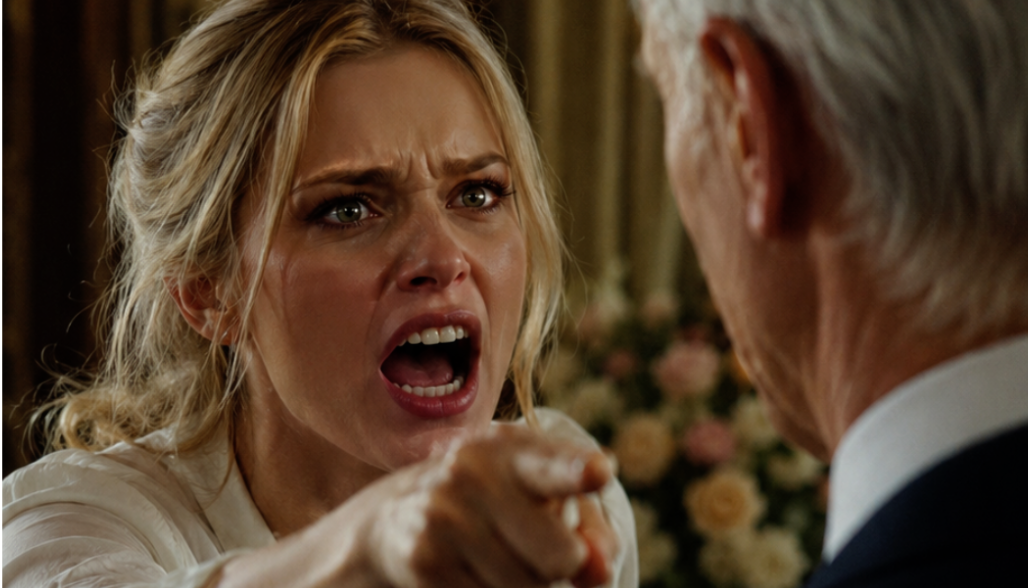
“Touch my daughter one more time, and I’ll break the other one,” her father-in-law said calmly, without raising his voice.
“Do you really think I wouldn’t notice such a large amount disappearing from the account when we’re saving every little thing for the foundation of our country house?”
Marina held the phone to her ear, staring at her reflection in the hallway mirror. Her voice did not tremble, but inside her, a wave of dull confusion was rising, mixed with the hope that this was some ridiculous banking mistake.
“Marish, what are you even talking about? I’m at work. We’re doing an inventory of rare canvases here, I barely have time to lift my head,” Sergey’s voice sounded even, even slightly tired, like a man occupied with something important.
“I’m talking about the withdrawal, Seryozha. One hundred and twelve thousand rubles. Fifteen minutes ago. The Almazny Dvor jewelry salon.”
There was a pause on the other end, filled only with the distant hum of other people’s voices. Marina waited. She desperately wanted to believe that fraudsters had used the card, that now he would curse and tell her to call the bank.
“Ah, that… Listen, let’s talk at home, okay? It’s not what you think. I’ll explain everything, honestly. Don’t wind yourself up, all right?”
He hung up first. Marina slowly lowered the hand holding the phone. The apartment, decorated with garlands and smelling of pine needles, suddenly felt uncomfortable. The artificial fireplace flickered with warm light, but a chill was already crawling down her back.
Only two days earlier, as the New Year’s chimes rang, their world had seemed as unshakable as a granite cliff. They had sat on the fluffy carpet, drinking champagne and going over plans on paper. The house by the forest, which they had dreamed of for three years, was finally becoming real — the deal was scheduled for the end of January.
Marina, a specialist in making high-precision anatomical models for medical universities, was used to being meticulous in everything. She knew how to wait, save, and plan every ruble. Sergey, an expert in antique tapestries and handmade carpets, had seemed to her like a man of the same firm principles.
They had agreed: no gifts for each other. All the money would go toward the plot of land. It was not just a decision, but their shared sworn pact. And now that pact was cracking at the seams because of some jewelry whim.
On January second, Sergey left at the crack of dawn, saying he had been urgently called to the gallery. Marina, deciding not to sit around feeling miserable alone, accepted her friend Katya’s invitation to walk around the shopping mall. It was there, amid the festive bustle and sales, that reality first cracked.
Katya, a bright woman who loved other people’s secrets, sipped her cappuccino and narrowed her eyes slyly. As if casually, she mentioned that she had seen Sergey half an hour earlier. And not just anywhere — by a display case with rings.
“My sister, Lenka, works there as an administrator,” Katya chirped, stirring the foam with a straw. “She says your man was feeling generous. He chose for a long time, very picky. Bought something with a stone, not cheap.”
At the time, Marina merely smiled, trying to keep her composure. She told her friend she knew about the surprise, though everything inside her tightened. But the information was worth checking. Leaving Katya in the café, she went up to the second floor, to the jewelry salon.
Katya’s sister, Elena, confirmed the purchase without unnecessary questions. She even showed a copy of the receipt on the monitor, assuming that the wife simply wanted to clarify the discount amount. The sum glowing on the screen painfully struck Marina’s eyes. One hundred and twelve thousand. A whole fortune that was supposed to go toward paying for the land paperwork.
Marina left the shopping mall, feeling the frosty air burn her lungs. She decided to go to her husband’s workplace. The carpet gallery was in the city center, inside an old mansion.
The security guard at the entrance, who knew Marina by sight, was surprised by her appearance. He told her that during the holidays the gallery was closed to visitors, and employees only came in one at a time for duty shifts. Today was the shift of Ilyas, the old restorer, and Sergey had not been seen there since the thirtieth.
Marina stood on the porch, looking at the snowy street. Sergey had lied twice. First about work, then about the inventory. If he was not at the gallery, then where was he? And who was the ring bought for, if no one at home was waiting for a gift from him?
She returned home and sat down in an armchair without turning on the light. Thoughts spun in her head, each more terrible than the last. Maybe he had another life? Another woman, worthy of such spending, unlike her, who saved even on winter boots?
Sergey came back late. He entered the apartment with a bouquet of white roses and a guilty smile. He smelled of frost and car air freshener. Marina did not get up to greet him, continuing to sit in the half-darkness of the living room.
“Why are you sitting in the dark?” he began cheerfully, shaking snow from his shoulders. “I asked you not to wind yourself up.”
Marina silently looked at him. In her gaze, usually soft and understanding, there was now patient waiting. She was giving him a chance. The last chance to be honest.
“I know everything, Seryozha. About the store. About the fact that you weren’t at the gallery. You have exactly one minute before I start packing my things.”
Sergey sighed, put the flowers in a vase, and sat across from her on the sofa. He rubbed his face with his palms, as if gathering his courage.
“All right. You win. I didn’t want to say anything so I wouldn’t jinx it. We’re opening a new warehouse branch in the north of the city. They’re accepting goods there now, unofficially for the time being. That’s where I was.”
“And the ring?” Marina asked quietly.
“That was my boss, Arkady Petrovich. He got stuck on a business trip in Tyumen and wasn’t going to make it back in time for his wife’s birthday. He asked me to buy it. He transferred the money to another card, my Sberbank card. I just withdrew it and paid for the purchase to save time. It wasn’t our money, Marin. I swear.”
He took out his phone, opened some chat, and showed her the messages. There really were messages from a contact named “Boss”: “Seryoga, help me out. Get something classic, size 17. I sent the money.”
Marina exhaled. The huge stone that had been pressing on her chest all evening suddenly crumbled into dust. She felt unbearably ashamed. She, a grown woman, had believed Katya’s gossip, started spying, and imagined all sorts of nonsense.
“I’m sorry,” she whispered, lowering her eyes. “I just got scared. We had agreed…”
Sergey moved over to her armchair, hugged her, and pulled her close. His sweater was warm and prickly.
“Silly girl. I would never betray our dream. And I would never betray you. We’ll buy that land and build the house. Everything will be the way we wanted.”
That evening, they drank tea in the kitchen for a long time, laughing as they discussed Marina’s suspiciousness. Sergey was affectionate, joked, and told her about the new warehouse. Marina fell asleep happy, certain that the storm had passed. But somewhere on the edge of her consciousness, like a splinter, one small detail remained: why had Sergey never shown her the notification of the transfer from his boss, quickly minimizing the app instead?
The morning of January third began with bright sunshine. Sergey left again — “to finish things at the warehouse.” While cleaning, Marina found a gas station receipt on the floor by the leg of the sofa. It had fallen out of her husband’s pocket.
Date: yesterday. Time: 2:00 p.m. The gas station address was on the other side of the city, completely opposite from the district where the new warehouse was supposedly located.
Marina froze with the rag in her hands. Anger, cold and sharp, began to rise from the bottom of her soul. She remembered yesterday’s chat. The contact had been saved as “Boss.” But she clearly remembered that Sergey’s boss was saved in his phone as “Arkady P. Gallery.”
She put down the rag. Her hands were not shaking. She went to the nightstand where her husband’s old planner lay and found his boss’s business card. The gallery secretary, a young girl, answered after the third ring, her voice sleepy.
“Hello, this is Marina, Sergey’s wife. I’m sorry to bother you during the holidays. I have an urgent question. I can’t reach Arkady Petrovich. Do you have his personal number?”
After receiving the precious digits, Marina dialed the number. The rings went on for a long time. Finally, a deep male voice answered:
“Yes, I’m listening.”
“Arkady Petrovich, Happy New Year. This is Marina, Sergey Voronov’s wife. I’m sorry to disturb you. I’m calling about the ring… Sergey is worried whether your wife liked it. He was so nervous yesterday when he was choosing it at your request.”
Silence hung on the line. Not meaningful, theatrical silence, but the ordinary confused silence of a person who does not understand what is being discussed.
“What ring, Marinochka?” the boss’s voice sounded genuinely surprised. “I’ve been home with my family at the dacha in the Moscow region all holidays. I haven’t been to Tyumen, and I didn’t ask Sergey for anything. What Tyumen? We’ve been eating salads here for the third day!”
“I understand,” Marina’s voice became dry, like an autumn leaf. “Sergey must have mixed something up. I’m sorry.”
“You two sort it out. And tell him not to use work as an excuse. We’re on holiday until the tenth. All the best.”
Marina ended the call. The phone flew onto the sofa. She did not cry. There were no tears, only a feeling of disgust, as if she had been smeared with sticky dirt.
So he had created a fake contact. Staged a whole performance. Bought a ring. And all of it with money set aside for their future. Money they had saved bit by bit. This was not just a lie. This was theft from his own family.
She stood in the middle of the room and looked around. The apartment they rented suddenly seemed foreign and hostile. Things, books, shared photographs — all of it now looked like scenery for a cheap performance.
Marina took out a suitcase. She acted quickly, methodically, like a surgeon during an operation. Clothes flew into the bottom of the bag in neat stacks. No panic.
She remembered the plot of land. The seller, Uncle Pasha, was an old acquaintance of her father. The previous year, he had gone bankrupt in the construction business and was selling a magnificent forty-hundred-square-meter plot by the forest for a laughably low price, almost giving it away, only because he respected Marina’s father.
Marina found Uncle Pasha’s number.
“Pavel Ignatyevich, hello. This is Marina. About the plot. Yes, the plans are changing. The deal will happen. But the buyer won’t be Sergey. We’ll register the documents in my mother’s name. She has the money; she’s wanted to invest for a long time. Yes, we can bring the deposit today. Thank you.”
She called her mother. The conversation was brief. When her parents learned the truth, they did not gasp or wail. Her father only grunted, and her mother said dryly, “Come over. There’s money in the savings account; I’ll withdraw it now. You mustn’t lose the land, but a man like that can and should be lost.”
She called a cargo taxi. An hour later, not a single one of her belongings remained in the apartment. She even took the curtains she had bought with her own bonus, and the coffee maker. Only a set of keys and that same gas station receipt were left lying on the table.
Sergey arrived at Marina’s parents’ house closer to evening. He was furious. As he climbed the snowy steps of the porch of their private house, he was already preparing an accusatory speech. How had she dared leave? How had she dared take her things without his knowledge?
The door was unlocked. He entered the veranda without wiping his boots. The house smelled of stove warmth, but right now that coziness only irritated him.
“Marina!” he barked, entering the living room.
She was sitting at the table drinking tea. Beside her sat her mother, Antonina Ivanovna, counting some papers. Her father, Oleg Viktorovich, was sitting in a rocking chair, with his heavy cane beside him, its handle shaped like a lion’s head.
Sergey stopped in the middle of the room. His handsome face, usually so respectable, was now twisted with indignation.
“What kind of kindergarten nonsense is this? I come home and the place is empty. Have you completely lost your mind? You turned off your phone!”
“I spoke with your boss,” Marina said calmly, without lifting her eyes from her cup. “Arkady Petrovich sends greetings from his dacha. He said he doesn’t need the ring.”
Sergey stopped short. The air seemed to whistle out of his lungs. He had not expected her to go that far. But instead of remorse, the aggression of a cornered animal flared in his eyes.
“Oh, so you were checking up on me? Spying?” He stepped toward the table. “Who do you think you are, poking your nose into my business? It’s my money! I earned it! I wanted to buy it, so I bought it!”
“That was money for the house,” Antonina Ivanovna said quietly, without stopping her examination of the land documents.
“Stay out of it, old woman!” Sergey barked. “Marina, get ready. We’re going home. Right now.”
“I’m not going anywhere.” Marina raised her eyes to him. There was no love left in them. “And you no longer have any land. Mom paid the deposit today. The plot is being registered in her name.”
Sergey’s face stretched. He realized he was losing the main prize. The land was worth three times more than they had planned to pay. It was a gold mine.
“You… you had no right! I made that arrangement! That was my opportunity!” He lunged at Marina and grabbed her by the shoulder, yanking her up from the chair. “You’re going to undo everything right now! Call that old man!”
“Let go!” Marina cried, trying to break free.
In a burst of anger, Sergey failed to control his strength and shoved his wife hard. Marina staggered, caught her foot on the chair leg, and crashed to the floor, hitting her hip.
The sound of the fall became the signal.
At that same second, Oleg Viktorovich, a disabled man of the second group and a former military officer, rose from his chair with a speed unexpected for his age. His cane sliced through the air with a whistle.
The blow landed precisely across Sergey’s shin, just below the knee. The sound of wood striking bone was dull and terrifying.
Sergey howled, grabbed his leg, and, losing his balance, fell backward through the open doorway of the veranda. He rolled down the porch steps, collecting snow with his back, and splashed straight into the unfrozen muddy puddle by the drainpipe.
His expensive cashmere jacket instantly soaked through with icy slush. His trousers split at the knee. He tried to stand, but his leg answered with such wild pain that he fell back into the mud again, whimpering through his teeth.
Oleg Viktorovich stood on the porch, leaning on his cane and breathing heavily. The wind tossed his gray hair.
“Touch my daughter one more time, and I’ll break the other one,” he said calmly, without shouting. “Get out of here.”
Sergey crawled toward his car, dragging his injured leg. He looked pathetic. Dirty, wet, humiliated. His Toyota stood five meters away, but those meters felt like a marathon to him.
Marina stepped out onto the porch, wrapped in her mother’s shawl. She watched as her husband, the man with whom she had wanted to spend her life, floundered in the mud, trying to open the car door.
“Take the ring back,” she said loudly. “Maybe it’ll be enough for treatment.”
She did not call the police. Her father had simply protected her.
A month later, Marina learned the details of that story through mutual acquaintances. Sergey really had not bought the ring for a mistress. He had bought it for his sister, who was getting married and whining that she wanted “something elite,” while her fiancé had no money. Sergey, wanting to show off in front of his relatives and prove what a successful brother he was, decided to take money from the shared fund, hoping to quietly replace it later from future bonuses.
Stupidity. Incredible, childish stupidity and a thirst for vanity.
But the price of that stupidity proved exorbitant.
He lived in a rented apartment, which became expensive to pay for alone. His leg healed badly — a severe ligament sprain and a crack in the bone tormented him on long winter nights. Problems began at work: rumors of his schemes with the “ring for the boss” reached Arkady Petrovich, and trust collapsed.
But the biggest blow for him was the land.
Antonina Ivanovna registered the plot in her own name. In the spring, land prices in that area doubled. Once, while driving past — he still hoped to talk to Marina — Sergey saw an excavator working on the plot, clearing the site for the foundation. The work was being supervised by Marina’s new acquaintance, an architect, a calm and reliable man.
Sergey sat in the car, rubbing his aching leg, and still could not fully believe that one lie, one foolish bit of boasting in front of his sister, had cost him his family, his home, his reputation, and his health. He had thought he was the master of life, that a woman would endure, understand, and bend. But life struck him across the face — with the dry cane of his father-in-law.
He slammed his fist against the steering wheel, but that only made the pain worse. Marina did not even look toward the road where his car was standing. She was unfolding the blueprint of her future house, and the wind played with her hair, making her look like a free bird.