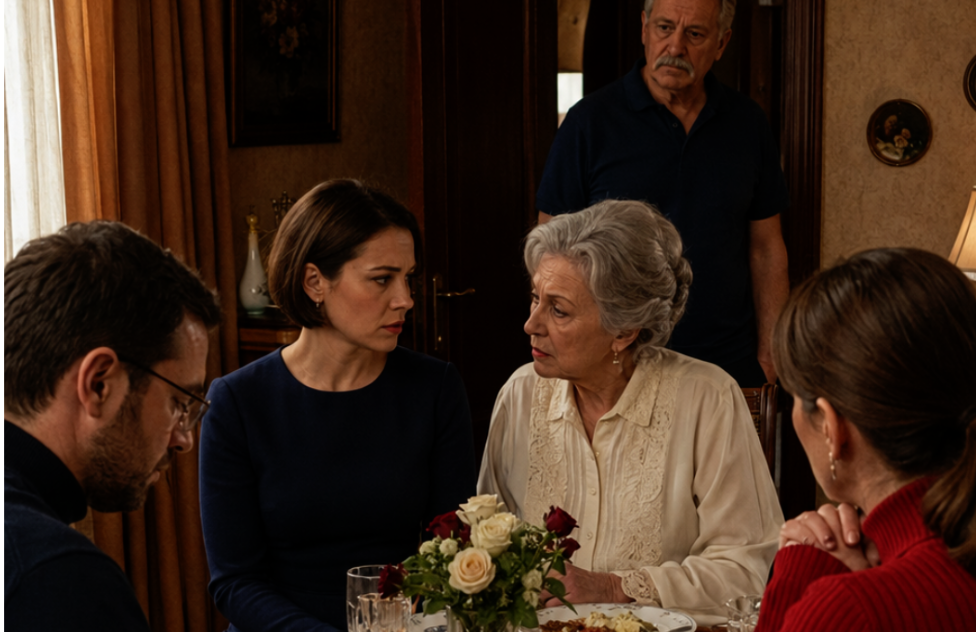
“I’m not paying for your princess’s wedding,” Masha said coldly. “She has parents. Let them pay for it.”
For a year and a half, Masha and her husband Sergey had been saving for one thing: a long-awaited vacation by the ocean.
Masha worked exhausting hospital shifts, sometimes spending entire nights in intensive care. Sergey worked too, and together they counted every expense, gave up unnecessary purchases, and slowly built their vacation fund.
A photograph of turquoise water hung on their refrigerator.
Only two months remained before the trip.
Then Sergey’s mother called.
Tatyana Vasilyevna announced that the whole family was expected at dinner that Saturday. Her tone made it clear that refusing was not an option.
When Masha and Sergey arrived, the atmosphere immediately felt strange.
Sergey’s younger sister Karina sat on the sofa flipping through a wedding magazine. Their father, Viktor Petrovich, stared silently at the television. Tatyana Vasilyevna moved around the table with unusual seriousness.
Trying to lighten the mood, Masha showed everyone photos of the resort she and Sergey had chosen.
“We’ve already reserved the flights,” Sergey added. “If everything goes well, we’ll leave in June for ten days.”
His mother slowly put down her fork.
“That sounds lovely,” she said. “But we have a more important matter.”
Karina was getting married.
And according to Tatyana Vasilyevna, the wedding had to be spectacular.
A large banquet. A host. A professional photographer. Decorations. An expensive dress. A boat cruise.
The total cost would be around two and a half million rubles.
Masha nearly laughed from shock.
Then came the real reason for the dinner.
“We’ll contribute,” her mother-in-law said. “The groom’s family will contribute too. But you and Sergey are young and successful, so your share should be larger.”
“How much?”
“Five hundred thousand rubles.”
Silence fell over the table.
Masha looked at Sergey.
He stared at his plate.
That told her everything.
He had known.
Masha thought about her endless shifts, the nights without sleep, the mortgage they still had to pay, and every small luxury she had refused herself so they could finally take that vacation.
Then she looked directly at her mother-in-law.
“I’m not paying for your princess’s wedding. She has parents. Let them pay for it.”
Karina gasped.
Tatyana Vasilyevna turned pale.
“We thought you were part of this family,” she replied.
Masha stood.
“We’ll talk at home,” she told Sergey.
The argument continued in their apartment.
Sergey insisted that Karina had dreamed of a beautiful wedding since childhood.
“Family is supposed to help family,” he said.
“A wedding isn’t an emergency,” Masha replied. “It’s a party she wants us to finance.”
The next day, Karina appeared at their apartment in tears.
“You’re jealous!” she screamed. “You can’t stand that I’ll have a beautiful wedding because yours was simple!”
Masha remained calm.
“Nobody owes you an expensive wedding.”
Karina’s face twisted with anger.
“Mom told me you’re going to the Maldives! You’d rather lie on a beach than help your own family?”
“You only call me when you need to borrow money,” Masha answered. “Don’t suddenly call me family because you want five hundred thousand rubles.”
Karina stormed out.
That night, however, Sergey confessed something far worse.
“I already took out a loan.”
Masha stared at him.
“What?”
“Five hundred thousand rubles. For five years.”
He couldn’t look at her.
“I transferred it to Mom. She already paid the banquet hall deposit.”
For several seconds, Masha said nothing.
Then she asked quietly:
“You took a loan without discussing it with me?”
“We’ll pay it off.”
“We?”
She stood.
“You made the decision alone. You chose your mother and sister over our marriage, and now you expect me to help repay it?”
Sergey told her not to dramatize.
That was the moment something inside her changed.
The following morning, Masha visited a lawyer.
She explained everything and brought bank statements and screenshots.
The lawyer advised her to collect evidence showing that the loan had been used for Karina’s wedding rather than for household needs.
So Masha did exactly that.
When Tatyana Vasilyevna and Karina came to the apartment pretending they wanted peace, Masha quietly switched on her phone recorder.
At first, everyone drank tea politely.
Then the pressure began.
“You should be grateful we accepted you,” Tatyana Vasilyevna said. “Sergey could have married someone more agreeable.”
Karina added:
“You live in my brother’s apartment and use his money. Who are you to refuse us?”
Masha looked at Sergey.
He remained silent.
Then Tatyana Vasilyevna explained that Karina was pregnant and must not experience stress.
“So I have to pay for her wedding because she’s pregnant?” Masha asked.
“You have to help your family.”
Karina suddenly jumped up.
“You ruined everything! You’re jealous because you’ll never have children! You’re a barren hen!”
The room went silent.
Masha calmly picked up her phone and stopped the recording.
“Leave my apartment.”
After they left, she played the recording for Sergey.
Instead of defending her, he became furious.
“You recorded my family?”
“I protected myself.”
“They were asking for help!”
“They insulted me and demanded money.”
Sergey paced the room.
Finally, he said:
“You should apologize. Pay at least half. Then Mom will forgive you.”
Masha looked at him in disbelief.
At that moment, Karina sent her a message containing a link to an expensive wedding dress.
“You could buy me this,” she had written. “You won’t become poor.”
Masha showed Sergey.
He shrugged.
“She’s emotional.”
That was enough.
Masha walked into the bedroom and began packing his clothes.
“What are you doing?”
“You’re going to your mother’s.”
“You can’t throw me out. This is my apartment too!”
“Then you can settle that in court.”
Sergey left that evening.
For the next two weeks, his family called constantly.
There were threats, accusations, insults, and emotional manipulation.
Then one afternoon, Tatyana Vasilyevna arrived with Sergey and two male relatives, demanding that Masha let him back inside.
Masha called the police.
When the officer arrived, she showed him the mortgage documents, bank statements, messages, and recording.
After listening, he warned Sergey’s relatives that continued threats and financial pressure could have legal consequences.
They finally left.
Soon afterward, Masha and Sergey divorced.
Under their agreement, Masha kept the apartment and accepted responsibility for the remaining mortgage. Sergey received the car.
The wedding loan remained his problem.
A month later, Masha was shopping when she unexpectedly saw Karina.
She looked exhausted.
“Well?” Karina said bitterly. “Are you happy now? You ruined my life.”
Masha looked at her calmly.
“I didn’t ruin anything.”
Karina’s eyes filled with tears.
“The wedding is canceled.”
Her fiancé had discovered how aggressively Karina’s mother had demanded money from Sergey and Masha.
He had ended the engagement.
“He said he didn’t want to marry into a family like ours,” Karina admitted.
Worse, Viktor Petrovich had left his wife after a massive argument.
And Sergey was now responsible for repaying the five-hundred-thousand-ruble loan with interest.
“I’m sorry,” Masha said. “But I couldn’t let you build your happiness with my money and against my will.”
Three days later, Masha stood at the airport with a small suitcase.
Her best friend Lena stood beside her.
The departure board displayed their flight.
White sand.
Turquoise water.
Ten peaceful days.
“Any regrets?” Lena asked.
Masha thought about the hospital shifts, the betrayal, the shouting, the lawyer, the divorce, and the empty apartment.
Then she smiled.
“Not one.”
Her phone vibrated.
A message from Sergey appeared.
“Can we talk? I understand everything now.”
Masha read it once.
Then she deleted it.
Without replying, she linked arms with Lena and walked toward check-in.
Hours later, their airplane climbed above the clouds.
Far below were the debts, arguments, broken promises, and somebody else’s wedding.
Masha finally understood something simple.
Helping family was one thing.
Allowing people to decide how she should spend her life, money, and dignity was something else entirely.
And she would never allow it again.