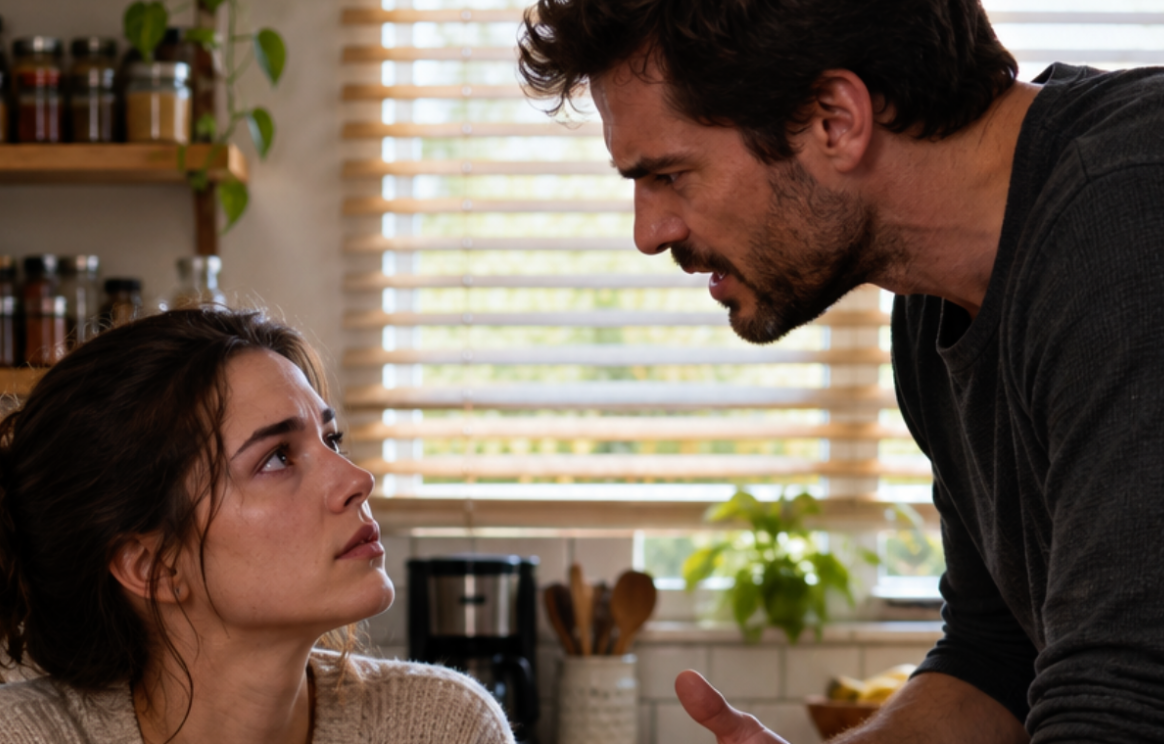
“Lena, if you refuse to sign the dacha over to Vitya, then you’re no longer family to us. Not at all.”
Her mother-in-law said this calmly, as if she were just announcing the weather. She stood in the middle of the living room in a new cashmere cardigan—the one Lena had given her for her last birthday—and looked around like she’d already made up everyone’s mind for them.
Elena balanced a tray with cups in her hands. Five cups, saucers, the sugar bowl. The family tea party, the reason she’d been summoned on a Sunday. She looked at her mother-in-law, then at the tray. The tray seemed more reliable.
“Tamara Ignatyevna, hold on. Let me put down the tea, my hands are full. Otherwise I’ll drop it—and we’ll all be picking up broken pieces together, as a family. Although, when it comes to picking up pieces in this family, we have plenty of practice.”
Tamara Ignatyevna pursed her lips. This was her main weapon in any conversation—pursed lips and a stare over her glasses. This tactic had worked flawlessly on all the family for about thirty years. It had stopped working on Elena around year two of knowing her.
And as usual, it all started with Viktor.
Viktor—the younger brother of her husband—was the kind of guy who had enough plans for ten people, but not enough patience for one. Thirty-five years old, a long string of abandoned ventures behind him, but more than enough confidence to go around. The trouble was, all that confidence reliably turned into other people’s money and nerves.
First, he opened a car wash. He rented a bay on the highway, bought equipment on credit, and hired two guys. Two months in, he found out no one ever drove by, the equipment leaked, and the guys would wash exactly one car a day, and even that reluctantly. The car wash shut down, but the loan remained.
Then came the era of ‘serious investments.’ Viktor got into stock trading—following advice from a blogger who streamed from a rented studio wearing a borrowed watch. In six months, Viktor lost everything he’d scraped together, and a bit more, because ‘the blogger promised the losses were just temporary.’
His latest brilliant plan came together last spring. Viktor decided to open a coffee shop. Not just any coffee shop, but one ‘with a concept’: eco-friendly beans, handmade ceramics, vinyl music. He rented a spot in an alley where the sun only bothered to shine on special occasions. Designed the place himself, picked menu items from internet pictures, and hired a barista with no experience but ‘bright eyes.’
Five months later, several curious things had become clear. Rent ate up all the revenue. The barista with the bright eyes brewed coffee so badly that regular customers never came back. And Viktor had racked up another loan and a couple of debts, the sum of which would keep any sensible person up at night.
Elena found out about this two weeks ago. She came home from work, took off her shoes, hung up her jacket. Her husband Andrey was sitting in the kitchen, staring intently at the tablecloth pattern. Whenever Andrey sat like that—hunched over, staring at a single spot—it meant only one thing: there was about to be a conversation about money. Or that someone in his family needed help, again. Usually both at once.
“Andrey, what’s going on?”
“Vitya’s in a mess.”
“Vitya is always in trouble. How deep is he this time?”
Andrei sighed so heavily, it was as if he was mourning an entire era.
“Pretty deep. The coffee shop went under, he has no way to pay off his loan—they’re already calling from the bank. He was renting an apartment but had to move out. Now he’s sleeping on Mom’s couch.”
“That’s rough. But what does this have to do with us?”
“He’s my brother, Lena.”
“Yeah, I’ve picked up on that. Go on.”
Andrei paused, gathered his courage, then blurted out:
“Mom wants to transfer the dacha to Vitya. The deed is in your name anyway. If he owns it, he can sell it, pay off his debts, and start over.”
Elena slowly sat down. Twelve years as chief accountant had taught her a golden rule: always do the math before reacting. Emotions are an unpredictable expense, and unpredictable expenses can wipe out any budget.
“Let me make sure I understand, Andrei. Your mother wants me to give my dacha to your brother so he can sell it and pay off the debts he racked up starting a coffee shop—in an alley where no one ever passes by. A coffee shop, Andrei! People make fortunes with coffee, but your brother still managed to go bankrupt. That, you know, is a talent in itself.”
“You always turn everything into a money issue!”
“Funny accusation, considering we’re talking about signing over real estate.”
Andrei sulked, buried himself in his phone, and didn’t say another word all evening. Elena knew this script by heart: first, the silent treatment, then a call to his mother, then another round with reinforcements. She didn’t have to wait long.
Tamara Ignatyevna dropped by on Wednesday. Apparently, the family council decided the matriarch’s presence would add weight to the discussion. Her mother-in-law entered regally, eyed the hallway as if deciding what could be improved, and got straight to business.
“Lenochka, we need to have a serious conversation about the family’s future.”
“Discuss away. I’m listening.”
“Vitenka’s in a tough spot. None of this is his fault—times are hard for young entrepreneurs these days. The boy needs help. And your dacha just sits there; you only go a couple times a summer. Why let it go to waste? Better that it does some good.”
Elena switched on the kettle and took out some cups. Outside, the neighbor’s kid was kicking a ball, thumping it against the garage wall.
“Tamara Ignatyevna, the dacha isn’t going to waste. I go there. And, by the way, it’s not just a dacha. It’s a memory of my mom. She saved for that plot for thirty years, worked two jobs, denied herself everything. She left it to me. Not to Vitya, not to a start-up charity fund. To me.”
“See, that’s even better,” her mother-in-law said, flawlessly missing the point as if it was an art form. “That means it’s a good plot, and it’ll sell for a nice price. That’ll be enough for Vitenka to pay off his debt.”
“Tamara Ignatyevna, are you seriously suggesting I sell my mother’s memory to pay off the debts of someone who bankrupted a coffee shop in five months?”
“Not selling—a family helping family! We’re all in this together, Lenochka. In a family, everything’s shared.”
“Everything’s shared in a family,” Elena repeated. “Well, except for the debts, the responsibility, and the basic math to figure out how many customers a coffee shop needs to stay afloat.”
Her mother-in-law pressed her lips together, pulled out her phone, dialed a number, and turned on the speaker as if she were a magician about to reveal her winning card.
“Vitya, sweetheart, can you come over? We need to talk, all together, as a family.”
Viktor showed up twenty minutes later, looking like someone who’d returned from a tough journey: crumpled jacket, expensive-looking watch, perfectly spotless sneakers. For a guy buried in debt, he looked suspiciously well put-together.
“Lena, hey. Thanks for agreeing to talk.”
“I didn’t agree to anything. I just came home and walked into an ongoing family meeting.”
Viktor rubbed the bridge of his nose nervously — a family gesture; Andrey does exactly the same thing.
“Look, I get how this looks. But I really had a good business plan going. I just got unlucky. The location was bad, the competitors were undercutting me, the barista let me down…”
“The barista let you down,” Elena echoed. “One barista. For the entire coffee shop.”
“Well, I only had one.”
“One person behind the counter in a place that’s supposed to thrive on high customer flow. And you’re surprised it didn’t work out?”
Elena sat down and crossed her legs.
“Vitya, I’ve been balancing the books for a company way bigger than your coffee shop for twelve years. Every day, I calculate taxes, payroll, depreciation, making sure every cent adds up. That’s just routine, not heroism. But even with that routine, I understand one barista in a shop isn’t a business—it’s self-employment with rent as a bonus burden.”
Viktor blushed, but pulled himself together. He took out his phone, opened a spreadsheet—tiny numbers, wobbly columns.
“Look, I’ve recalculated everything. If I pay off the debt now, I’ll find a cheaper location, hire a decent barista, and relaunch the project. I still have my client base. I’ll break even in six months.”
“Let me see,” Elena reached out her hand.
Viktor handed her the phone without hesitation. Elena scrolled through the spreadsheet for about forty seconds. Outside, the neighbor’s ball kept knocking monotonously and stubbornly against the garage.
“Vitya, in your ‘rent’ column, you have a dash. Zero. Zero rubles for a coffee shop in the city center. Where exactly did you find such a place? Or are you planning to sell coffee from a street cart?”
“Well, I thought I could work something out… a few free months at first, through connections…”
“Next. ‘Staff salary’—thirty-five thousand for two people. That’s seventeen and a half each for a full day working the coffee machine. Vitya, for that kind of money, you’ll get someone who can’t tell a cappuccino from a latte, and you won’t even notice.”
“Everyone tries to save money at the start…”
“Now this is a masterpiece,” Elena enlarged the screen. “‘Promotion—two hundred thousand.’ Two hundred grand on advertising, while rent is zero and salaries are below the minimum. So you’ll be working in a basement with a barista who can’t make coffee, but the entire city will know about you. Flawless logic.”
Viktor snatched back his phone and shoved it in his pocket.
“You’re just nitpicking. Mom said you’d help.”
“Mom was mistaken.”
Elena stood up, walked over to the window, and cracked it open—the room had grown stuffy.
“I’m not giving up the cottage. It’s a memory of my mom, and it’s my personal property. Vitya, there’s a legal procedure—go to the MFC, declare personal bankruptcy. You owe over half a million—that gives you every right. There’s no shame in it, it’s the system made for situations just like this. The real shame is begging for someone else’s property under the pretense of ‘family.’”
“Bankruptcy?!” Viktor jumped up so fast his chair nearly tipped over. “I’m not bankrupt! I’m just having a rough patch!”
“A mountain of debt, zero income, crashing at mom’s—if this isn’t bankruptcy, the word has lost all meaning.”
Viktor looked over at his brother. Andrey stood by the wall, fully focused on the toes of his house slippers. He looked like a kid caught with cheat notes in class.
“Andryukha, you told me she’d agree!” Viktor’s voice shot up. “You said, ‘don’t worry, I’ll handle it!’ Just like you ‘handled’ things with my coffeeshop, right?”
Andrey flinched and shot his brother a warning look. But Viktor was already on a roll.
“This was all his idea!” Viktor turned to Elena, pointing at her husband. “Your husband, if you didn’t know, spent six months telling me, ‘Open a coffeeshop, everyone’s making money on that now. I’ll help, my wife’s an accountant, she’ll take care of the numbers.’ I took out a loan on his word! And later he just said, ‘Look, I’m busy right now, you start on your own, I’ll jump in later.’ Later! He never even stopped by to check it out!”
The room fell so silent you could hear the old wall clock ticking in the kitchen.
Elena slowly turned to her husband.
“Andrey. Did you promise your brother I would handle the accounting for his coffeeshop?”
Andrey examined his slippers like a naturalist marveling at a rare specimen.
“That’s not exactly how I put it… I was just speaking generally…”
“Generally,” Elena repeated. “So you sold your brother on an idea, using my job as a guarantee, without even asking me. He’s up to his ears in debt. And now the whole family is sitting in my living room asking me to give Vitya my cottage to fix your mess. Am I getting this right?”
Andrey stayed silent. Viktor, realizing he’d said too much, clammed up too. The brothers sat there, carefully avoiding each other’s eyes.
Tamara Ignatievna was the first to pull herself together.
“So what?” she lifted her chin. “Andryusha just gave his brother some advice. Relatives should support each other. And you, Lenochka, instead of being grateful, you turn it into an inquisition. That’s not nice.”
“What’s not nice is selling an idea under someone else’s name, and then covering the hole with someone else’s property,” Elena answered calmly. “But let’s wrap up our tea. I have a report due on Monday.”
Mother-in-law stood up, her cardigan rustling in offended dignity. Viktor shuffled awkwardly, muttered something unintelligible, and headed out after her. The door closed almost silently—their spark seemed to have fizzled.
Andrey stayed behind. Elena walked past him into the room, without saying a word. There was nothing left to talk about—she’d already heard everything she needed.
After that visit, the drama really began.
Andrei switched to sighing heavily every half hour. He wandered around the apartment looking like someone the whole world—and especially his wife—had wronged. He wasn’t speaking, wasn’t washing his dishes (not that this was unusual for him, so only the most attentive observer would have noticed any change at all).
On the second day, he made his move at night.
“Lena,” he whispered in the darkness. “Just think about it. Vitka will get back on his feet. He’s talented, he just has terrible luck.”
“Andrei, anyone who hires only one barista for a coffee shop isn’t talented. He’s just careless. Go to sleep.”
“But he’s family!”
“Your family is me. And this apartment we live in. Everyone else is just relatives. It’s better to love relatives from a distance. Preferably a financial distance.”
On the third day, Andrei changed tactics. The sighs gave way to an icy silence. He stopped greeting her, started eating by himself, and made a show of putting his cup far away from the rest of the dishes. Elena watched this little performance with the curiosity of a scientist studying the behavior of a new species.
Then on Thursday, she happened to overhear a conversation.
She came home earlier than usual—her meeting got canceled, her reports were done ahead of time. She opened the door quietly and slipped off her shoes in the hallway. From the kitchen, Andrei’s voice floated in. He was talking on speakerphone, and Viktor’s tinny voice rattled out of the speaker.
“…the main thing is for the cottage to be officially in your name. Then I’ll quickly find a buyer, I know a good realtor. We’ll drop the price by two hundred thousand, but it’ll sell fast. I need to pay off my debt, and you’ll get a cut—I’ll make sure you’re taken care of.”
“What are we going to tell Lena?” Andrei’s voice didn’t exactly sound worried. More like clarifying, as if he’d already agreed to the plan but just wanted to confirm his part.
“Tell her you just put it up as collateral, and when things improve, you’ll get it back. She’s kind—play up the pity card. Say you’re lost without a job, you’re really down. Women fall for that stuff. Once we sell, well, what’s done is done. She’s not going to divorce you over some plot of land. Where would she even go?”
“What if she finds out I got you into this coffee shop mess? She’s been angry since Wednesday…”
“Andrei, relax. So you gave me the idea—so what? I made the decision myself, I took out the loan myself. But since you gave me the idea, help me sort it out—it’s only fair. Lie to your wife if you need to, that’s not my problem. The key thing is signing the cottage over to you.”
Elena stood in the hallway, leaning her shoulder against the doorframe. On the table beside her were Andrei’s car keys—the very car for which she’d paid the insurance while he was supposedly “saving up.” She wasn’t angry. Anger is an emotion for surprises. But nothing about that conversation surprised her. It was just confirmation of what had always been hiding in plain sight, like a lost glove left lying on the radiator: everyone notices it, but nobody bothers to put it away.
Elena quietly put her shoes back on and stepped out onto the landing. She closed the door behind her. After a minute, she reopened it—loudly and with a dramatic clang.
“Andrei, I’m home! They let us out early!”
When she walked into the kitchen, Andrei was sitting at the table. His phone lay face down. His expression tried to show both innocence and mild boredom—neither of which ever came naturally to him.
Elena didn’t respond. She put the kettle on, took soup from the fridge, and started to heat it up. Just an ordinary evening. Andrey glanced at her, let out a sigh, and turned on the TV.
For the next two days, she acted like nothing happened. She made dinner, asked if he’d bought bread, and chatted about the weather. Andrey relaxed, thinking his wife was finally coming around.
On Saturday morning, he woke up earlier than usual. He shaved and put on a fresh shirt. He walked into the kitchen, where Elena was sipping coffee and checking her work emails on her tablet.
“Lena, we need to have a serious talk.”
“Go on.”
“I can’t do this anymore.”
He paused dramatically, obviously having rehearsed it.
“If you won’t help my brother, I’m filing for divorce. I need a wife who stands up for my family, not someone who counts every penny with a calculator.”
Elena took another sip of coffee.
“Alright.”
“Alright what?”
“Divorce – alright. I agree.”
Andrey froze. One eyebrow climbed up while the other dropped, making his face look like a calculator with an unfamiliar symbol just entered.
“You… agree?”
“Andrey, I’m an accountant. I balance the books every day. Our balance has been deep in the red for a year and a half. You haven’t been working, you drive my car, eat what I buy, and now you want me to give away my mom’s legacy to someone who can’t even calculate how many baristas a coffee shop needs.”
She set her cup down.
“By the way, I heard your conversation on Thursday. The whole thing. About ‘selling below market price’, ‘I’ll give you a cut’ and ‘where’s she going to go’. And about how you got Vitya into the coffee shop, and now you’re scared I’ll find out. Andrey, you didn’t just ask me to help your brother. You made promises that got him into this mess, and now you want to patch things up by sacrificing my cottage. That’s not just nerve, that’s a plan even worse than Vitya’s business idea.”
The silence was so thick, she could hear the morning talk show mumbling through the neighbor’s wall.
Andrey opened his mouth. Closed it. Then opened it again.
“You… were eavesdropping?”
“I came home early. The door was open, and you were on speakerphone. That’s not eavesdropping, Andrey. That’s acoustics.”
“We would have given it all back!” he blurted out, gripping the back of a chair. “Vitya would have sold, made money, bought it back! It was just temporary!”
“A temporary solution involving the sale of someone else’s property. That sounds almost like a criminal code article, but I won’t threaten you—can’t be bothered.”
Elena stood up, walked to the dresser, and took out a folder.
“I did some calculating, too. Just to make it clear, the way you like it.”
She laid a printer page on the table, filled with her neat handwriting.
“The apartment—I bought it before we were married; my mom provided the money. The cottage—my inheritance from her. Both are my personal property. Article thirty-six of the Family Code: in case of divorce, it’s not divided. Your registration is simply your address, not an ownership share.”
“But I renovated here!” Andrey clung to his final argument like a drowning man grabbing an inflatable toy. “I put up wallpaper! Hung shelves!”
I bought the wallpaper, the receipt is in my email. As for putting up the wallpaper and the shelves—that’s just minor improvements. If you want to claim a share, you have to prove that you made a major investment and truly boosted the property’s value yourself—like, say, renovating or expanding the place. Shelves in the hallway don’t count for that, Andrei.
Outside, someone started up a motorcycle in the courtyard. Andrei stood in the middle of the kitchen, slowly realizing how big this was. His plan—to threaten with divorce, press her, take the dacha—was falling apart, just like that little coffeehouse tucked away in the alley where no one walked by.
“Lena, wait…”
His tone instantly switched from trying to be firm to pleading. The change took only a split second—Elena even noted how quick it was in her mind.
“I got carried away. Let’s forget this conversation ever happened. I’ll tell Vitya myself that it won’t work out. Let him figure it out on his own.”
“What generosity. Leaving your brother behind after you dragged him into debt yourself, and ten minutes ago using him as a battering ram against my dacha. I’m impressed.”
“Come on, Lena! I love you!”
“Andrei, what you love is the apartment where you don’t pay the utilities, the car you don’t insure, and the couch you’ve been job-hunting from for a year and a half. That’s not love—that’s convenience. Free living with all the perks, that’s what this is.”
She put the folder back where it belonged.
“I’m not filing for divorce. You are. Because you’re the one who wanted it ten minutes ago. File the paperwork yourself—no kids, no property debates, nothing to split, it’s all mine. The divorce will be finalized fast. Go stay with your mom, help Vitya with his new coffee shop. This time, actually help him, not just ‘in general terms.’ Maybe together you’ll scrape up the money for a second barista.”
Andrei looked at her with a long, cloudy gaze—a mix of hurt, confusion, and the slow realization that his rent-free life had come to an end. He opened his mouth to give a final reply, but nothing came out—so he silently walked away.
Generosity really is an amazing quality. Especially when someone else is always picking up the bill.
Andrei took his time packing. Nearly two hours, actually. Maybe he was hoping Elena would come out of her room, try to stop him, or maybe even cry. Elena just sat at her tablet working on the quarterly report. The numbers matched up. Just another normal work task.
When the front door slammed, Elena went to the window. Andrei was in the courtyard with two bags, dialing someone, waving his hands dramatically. He was probably telling Vitya all about his cold-hearted wife and how unfair life is. Fifteen minutes later, a taxi arrived, he loaded his things, and drove away. Off to start a new life—most likely on someone else’s dime.
And then, the calls started coming to Elena all on their own.
An hour later, her phone rang. ‘Tamara Ignatyevna.’ Elena paused for a moment, then picked up. After all, closing the last outstanding account was part of the job, too.
“Elena!” her mother-in-law’s voice rang with righteous outrage. “What are you doing?! You threw my son out onto the street?!”
“Tamara Ignatyevna, Andrei left on his own. By himself. I didn’t even come out of my room.”
“Don’t make things up! My son would never leave on his own! He loves you! You should be grateful that a man like him ever noticed you!”
“A man like that,” Elena repeated as she poured herself some water. “Tell me about this man. What’s he up to these days?”
“Andryusha is looking for a decent job! He’s got ambition, you know—he won’t settle for just any position! By the way, he was a shift manager at a warehouse!”
“At a warehouse,” Elena took a sip. “Tamara Ignatyevna, Andrey only worked there for three weeks—not as a shift manager, but as a stock clerk. They asked him to leave after he mixed up the invoices and an entire shipment went to the wrong place. The company had to pay a penalty for it. He told me himself, though in his version, it was his ‘clueless coworker’ who was at fault.”
There was a sudden silence on the line. But it didn’t last long.
“That’s just nonsense!” her mother-in-law quickly regrouped. “The important thing is that he’s trying! But instead of supporting him, you’re counting his mistakes! What kind of wife does that make you?”
“An ordinary one. Except your son hasn’t worked for a year and a half, and this week he tried to secretly transfer my cottage into his name to sell it along with his brother—the same brother he dragged into debt. I heard it all with my own ears. That’s your ambitious boy, Tamara Ignatyevna.”
“You’re lying! Andryusha would never…”
“I’m not lying. I’m just stating the facts. And the numbers aren’t in his favor. Have a good day. Tell Andrey that I’ll be changing the locks today. No need to return the keys—the old ones won’t work anyway.”
Elena hung up. The screen went dark. The apartment was finally quiet. Truly quiet—no sighs, no mumbling TV, no shuffling slippers in the hallway.
That evening, she called a locksmith to change the cylinder in the lock. He arrived an hour later, finished in twenty minutes, and charged her fifteen hundred.
“Good lock,” he said as he packed up his tools. “Just remember to lock it twice. You never know.”
“Three times,” Elena replied.
She brewed fresh coffee and pulled out a good piece of fish from the freezer—the kind she hadn’t allowed herself in ages, because ‘husband always wants meat.’ She set it out to thaw. Soft music played in the background.
Everything’s balanced. The loss is closed. Accounting is a precise science: sometimes, all it takes to turn things around is to cross out just one needless expense.
And a week later, for the first time in a long time, she went to the cottage alone. She flung open the windows, wiped the dust off her mother’s photos on the dresser, and steeped tea out on the terrace. The quiet was so deep, she could hear the leaves rustling in the garden. And for the first time in a year and a half, that silence warmed her instead of weighing her down. The cottage was finally what it had always been—a place where she was remembered, a place where she mattered.