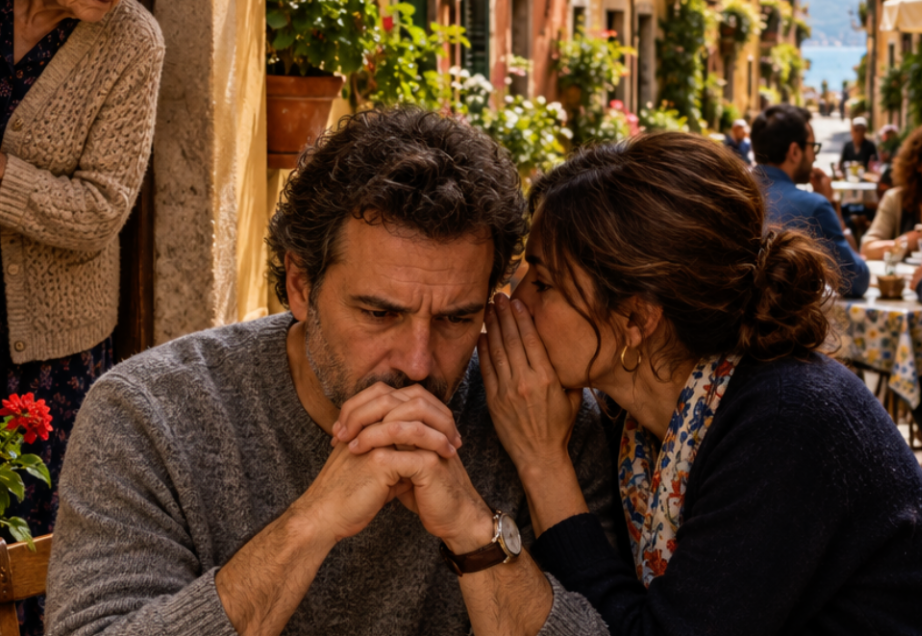
“Come on, try the pie, Mom, it’s still hot—cabbage and egg, just the way you like it,” Denis said as he slid a plate toward her, offering a perfectly browned, elegant slice. All the while, he kept his eyes fixed on the tablecloth—with its bold cranberry print—avoiding her gaze.
“Yes, go on, help yourself! We went to the market this morning to get the freshest filling just for this,” chimed in Sveta, sitting across from her. That overly sweet smile spread across her round face, the same one that only ever appeared when she desperately needed someone else’s money or help.
Nadezhda took a piece, broke off the edge with her fork, and carefully put it in her mouth. The pie was good, fluffy, but it somehow got stuck in her throat—she needed some hot tea to wash it down. Her son and daughter-in-law had certainly stirred up a lot of fuss the moment they arrived. Usually, their weekend visits were more like a nomadic raid: barging in, raiding the fridge for homemade goodies, eating quickly, leaving dirty dishes in the sink, and rushing off on urgent errands.
But today, everything was going according to some strange, clearly rehearsed script. The daughter-in-law volunteered to wash the cups, Denis gently hung his mother’s coat in the closet—a gesture he hadn’t made since he was a teen—and on the kitchen table, next to the pie, sat an expensive box of chocolate-covered marshmallows.
“Thank you, it’s delicious,” Nadezhda said as she dabbed her lips with a paper napkin and glanced at the kitchen windowsill, where the old fridge hummed steadily. “But all this care is throwing me off since this morning. Come on, tell me what’s really going on. Denis looks like he’s sitting on pins and needles, spinning his cup around like it might explode any second.”
“Oh, come on, Mom. You’re always imagining trouble where there isn’t any,” her son muttered, nervously shrugging his shoulder and immediately reaching for the sugar bowl—even though his tea was already plenty sweet.
“We just wanted to check in and see how you’re really doing—it’s the weekend, after all,” Sveta chirped sweetly, adjusting the short sleeve of her turquoise blouse. “You’re here all alone all day, probably bored. By the way, is your blood pressure monitor in the bedroom? Denis has a headache because of the weather—his temples are aching—so we should check his blood pressure before we head out.”
“It’s in the bedroom, on the nightstand by the floor lamp,” Nadezhda replied, getting up from the table. “You two stay put, I’ll bring it. You’d never find it in all my boxes anyway.”
She left the kitchen, her felt slippers gliding quietly along the carpet runner, not making a sound. She walked down the dark, narrow hallway and turned into the bedroom. The room smelled of dried mint and lavender. Porcelain figurines gleamed on the polished dresser, while the crowns of old maples swayed gently behind the sheer curtain. Nadezhda picked up the gray pouch with the device, checked the cuff, and turned to head back—when suddenly, from deep within the apartment, she heard muffled but distinct sounds.
She froze by the slightly open door. The kitchen was just on the other side of the corridor closet, and sounds in there always bounced off the tiled walls so clearly whenever the house was quiet. Now, nobody was clattering spoons in the kitchen. They were whispering.
“Sign the apartment over to your grandson!” I happened to catch their whispers in the kitchen just in time.
Nadezhda silently took three steps forward and stopped, half-hidden in the shadow of the wardrobe.
“Stop mumbling and just say it straight, for goodness’ sake!” hissed my daughter-in-law, her voice sharp as steel even in a whisper. “Tell her to sign the apartment over to her grandson!” I heard every word of their hushed kitchen conversation as I got closer—it hit me like a bucket of cold water over the head. She has two rooms all to herself, sprawling like a lady of the manor—vacuuming the carpets and watering her geraniums—while you expect the young ones to squeeze into someone else’s corners?
“Sveta, will you relax? You can’t just come in swinging like that,” Denis replied in a dull, strangled tone. “It’s her apartment. She worked her tail off for that co-op for fifteen years, holding down two jobs with no vacations while I was still in college. She won’t listen to us, she’ll throw us out—and she’d be right to do it.”
“Then use your head before it’s too late—if you still have one!” his wife snapped back, her whisper turning into a furious hiss. “Tell her it’s just a formality, that some youth subsidy or tax break will come through for Tyoma, make something believable up. We’ll get the gift deed signed and that’ll be it—she won’t be able to claim anything back. We’ll move her out to our dacha in the suburbs. The house is sturdy, we’ll fix the stove, insulate the walls, put a Chinese heater in the corner. It’s perfect for an older person to enjoy the fresh air, with a garden close by—her blood pressure will sort itself out. Meanwhile Tyoma and Alinochka will live here. Alina’s family has status and it’s embarrassing that her fiancé is cramped into a three-bedroom apartment with his parents or stuck renting dumps.”
“What dacha, Sveta?” my son’s voice faltered in a weak, pitiful attempt to resist. “In winter, the road out there gets snowed in all the way to the highway—up to your waist. The tractor only comes once a month, if at all. If she has an attack or heart trouble, the ambulance wouldn’t get there in forty minutes through those snowdrifts.”
“Stop burying your mother before her time, she’s healthier than the two of us put together!” the daughter-in-law cut him off, and I could hear the slap as her palm hit the oilcloth. “You’ll stock her up with groceries for a month—bag of grains, pasta, canned meat. Swing by once a week. It won’t kill you. Meanwhile, our child gets a proper, legally owned two-bedroom in the city center, nicely renovated, no thirty-year mortgage nightmares. So either you open your mouth and talk to her now, or I’ll handle this talk myself—but then don’t blame me for what happens.”
A heavy, dense pause settled in the corridor, broken only by the steady ticking of the cuckoo clock on the wall.
Nadezhda stood gripping the sturdy plastic case of the blood pressure monitor, feeling a strange, cold fury start to boil inside her, thick and slow like syrup. There were no tears, no sense of hurt—just an overwhelming feeling of crystalline clarity. The woman who had been considered family for twenty-five years, the one Nadezhda had shared half her pension with during hard times and had helped raise Tyoma from his very first days, had just matter-of-factly packed her life into a cardboard box and was ready to send her away to a freezing, unheated summer house—no longer needed.
And the worst thing was—her own son didn’t tell his wife to get lost. He only nervously bargained about the thickness of the insulation and how often the tractor would come by.
Nadezhda took a deep, steady breath, straightened her shoulders, and deliberately flicked the hallway light switch with a loud click. She shuffled her slippers, cleared her throat, and walked confidently back into the kitchen, now filled with autumn sunlight.
“Here you go, take it,” she said, putting the blood pressure monitor on the corner of the table right in front of Denis’s nose. “Check your pressure while you drink your tea. With all your worries about family well-being, you never know, it might have spiked.”
Denis flinched, his whole body tense, pulling his head in between his shoulders, and started fumbling nervously with the velcro on the gray cuff without even looking at the screen.
“No, Mom, I think I’m feeling a bit better now,” he muttered, getting tangled up in the wires and trying to pull the fabric over his thick sweater. “Just felt kind of heavy-headed this morning, must be the gloomy weather, the clouds are gathering.”
“It’s alright, check anyway, better safe than sorry,” Nadezhda said calmly, sitting down on her stool by the window, folding her hands in her lap, and looking intently at her daughter-in-law.
Sveta sat up straight with that frozen, polite smile on her face, but in her sharp gray eyes there was already a hint of suspicion. She was clearly trying to guess, by looking at her mother-in-law’s face, just how much this quiet, older woman standing in the dark hallway had managed to overhear.
“Denis and I were just talking about the future,” her daughter-in-law began, deciding not to abandon her plan and slowly approaching the main topic. “Time is flying by so quickly, it feels like we just blinked and our Tyoma is already nineteen. He’s a young man now—a student, has a girlfriend, a serious girl from a very good, respectable family.”
“I know, I met your Alina once,” Nadezhda replied in an even, emotionless tone. “Fingers spread, eyelashes up to her eyebrows, but she can’t manage to carry her empty cup from the table to the sink, afraid to ruin her manicure. Seems like a very independent young woman for family life.”
Sveta barely flinched but swallowed the jab, quickly switching tactics:
Young people these days, everything’s changed, it’s a different world out there. But the reality is, young couples have no place of their own, and starting life together in rentals is practically a recipe for divorce after a year. Rent prices are outrageous right now—for a shabby one-bedroom on the outskirts, landlords are asking for half your salary. Denis can’t sleep at night, he’s worried sick, trying to figure out how to help his son get on his feet.
“So, how did you come up with a way to help him?” Nadya tilted her head slightly, looking straight between her daughter-in-law’s eyes. “Are you planning to take out a loan from the bank? Or maybe put that little cottage in the suburbs up for sale, throw in your savings, and buy Tyoma a studio in the new neighborhood? Sounds like a great parental move to me, very noble.”
Denis choked on air at her words, coughed uncontrollably, and dropped the rubber bulb of the blood pressure monitor to the floor. Sveta was taken aback for a second, but composed herself quickly, shaking her head with a look of deep regret:
“We can’t possibly sell the cottage; it’s our only green retreat, our family’s summer nest. And now they’d barely give us anything for it—no modern conveniences, just a bare plot with a wooden shack. Denis and I thought of something else, something more sensible and right for everyone involved.”
“What then? Go on, Sveta, don’t keep me in suspense. I’m extremely curious to hear your financial strategy,” Nadya leaned her elbows on the edge of the table, without the slightest movement.
“We just thought it must be tough for you to keep up with such a big apartment all alone,” blurted the daughter-in-law, taking a deep breath. “Two spacious rooms, a wide hallway, high ceilings. The utility bills keep going up every month, scrubbing those floors is so much work, and washing the windows in spring is pure torture for your back. Why do you need such a palace in your golden years? For Tyoma, this apartment would be perfect as a starting place for a young family. We could draw up a deed of gift for him—a straightforward deal between close relatives, no taxes or fees to the state.”
“A deed of gift, is it,” Nadya drawled, drumming her fingers on the tabletop. “To Tyoma. And in your wise opinion, where exactly am I supposed to go once I’m free from this two-bedroom burden? Should I move into the hallway onto a rug, or just run off and apply for a place in a nursing home so you young ones can finally breathe?”
Sveta fidgeted in her chair, shooting a furious, scorching look at her silent husband, who was doing his best to pretend he was untangling the rubber tube of the device.
“Why are you twisting everything to sound so harsh, Mom?” the daughter-in-law said, putting special emphasis on calling her mother-in-law that for the first time during the conversation. “We’re thinking of your health above all! Denis and I discussed it and agreed that you’d feel a thousand times better in the fresh air. It’s quiet at the cottage, birds singing, pine trees all around, and our own land. We’ll insulate the house properly, put in modern heaters to keep it warm through any winter. Every Saturday we’ll bring you groceries in bags, so you won’t have to worry about a thing. The city is literally suffocating you—you’ve been looking pale for two months, and you even said yourself you’re out of breath!”
Nadezhda slowly turned her heavy gaze to her son. Denis was sitting there, red as a boiled lobster, staring at the floor, his jaw clenched tight against his stubbly cheeks.
“Denis,” his mother called quietly. “Why are you so silent? Do you really think this city is suffocating me, and that a cheap Chinese heater in a drafty plywood cabin among the snowdrifts will magically restore my youth and health?”
“Mom, what’s so wrong with it?” her son finally managed to say, still not meeting her eyes. “Sveta’s got a point, after all—Tyoma is your only grandson, your own flesh and blood. He literally has nowhere to live, you get that? Back in the day, Dad and I got a room from Grandma too, we figured it out somehow. And here you are, camped out alone in these sixty square meters like a hermit. It’s time to let the younger ones move forward, isn’t it a bit selfish to hold onto these meters when your grandson’s life is on the line? The wedding’s coming up, and it’s embarrassing in front of everyone.”
He didn’t get to finish. A lively, insistent doorbell sounded in the hallway: two short, rattling trills and a long buzz—only one person in the family rang like that, almost kicking the door open.
“Oh, Tyoma’s here!” Sveta exclaimed excitedly, springing up from her chair so fast it was as if she’d been shot from a spring. “I told him to stop by after class for some tea and Grandma’s jam.”
She hurried out to the hallway, snapped open the lock, and the apartment filled with the scent of the cold street wind—and the loud, confident bass of a nineteen-year-old guy.
“Hey, everyone! Hi, Grandma! So, have you figured out all the formalities yet?” Tyoma barged into the kitchen in his unzipped puffer jacket and heavy sneakers, not even bothering to take them off at the door. He was twirling a massive construction tape measure with a yellow plastic case in his hands. “Found Dad’s tape measure in the trunk, wanted to check right away if our corner sofa will fit in the big room—if we knock down that stupid storage closet between the hallway and the living room. Alina says we should make it a studio, tear out that old divider, put a bar counter in, lay some light laminate—she says the place just reeks of mothballs, like a full-on museum.”
He spoke loudly, freely, with the total confidence of someone who’s already been given this house on a silver platter and just has to sign a couple of meaningless papers at the notary.
Nadezhda slowly stood up from her seat. Her movements were smooth and unhurried, but in that quiet calm her heavy, unbreakable strength was palpable. Tyoma stopped mid-sentence and awkwardly lowered his hand with the tape measure to his side.
“So, knock the closet down for good?” Nadezhda quietly, almost sweetly, repeated, looking her grandson directly in the eyes. “And air out the mothballs, so Alina will have somewhere for her bar counter?”
“So what’s the big deal, Grandma?” The swagger returned to him as quickly as it had vanished. He grinned crookedly and shoved the tape measure into his jacket pocket. “It’s the twenty-first century—time to get rid of all this Soviet junk. Mom said you’re fine with giving us the apartment anyway, you’ll be more at peace at the dacha.”
Sveta stood in the doorway, gasping sharply through her teeth and turning pale, realizing her foolish son had revealed all their plans way too soon.
“Your mother, Tyoma, takes way too much upon herself in someone else’s home,” snapped Nadezhda, glancing at all three. “And you, my son, are right there with her. I was standing in the hallway five minutes ago and heard every filthy word you said from start to finish. How you planned to kick me out into the cold with just a sack of canned stew, so you wouldn’t be embarrassed in front of your future in-laws. How you were going to fire up that Chinese heater at the dacha while I tried to survive there on my own, without a medic or even a pharmacy.”
Denis shrank on the stool as if bracing for a smack on the back of the head, then went completely silent, hiding his hands between his knees.
“Oh, is that how it is?” Instantly, all of Sveta’s fake politeness vanished from her face, revealing the full fury of a market trader. “So you were eavesdropping? Perfect, that saves us tiptoeing around the issue! Yes, that’s exactly how we feel, and any normal person would say the same! Why do you need two rooms all to yourself? Are you planning to take these square meters with you to the grave? You’ve locked yourself away in here, sitting like a dog in the manger! You’re ruining your only grandson’s life because of your stubborn nonsense! We’re only looking out for you, trying to give you fresh air, and you glare at us like a wolf!”
“For me?” Nadezhda gave a dry, bitter laugh that stung more than a slap in the face. “For me you wouldn’t even set a cup of tea on the table unless it padded your own pocket. Remember this, Sveta, and pass it on to your hapless son: I earned this apartment myself. Every inch, every single shift at the sewing factory, fingers bloody from the needle, then doing the books at night just so Denis could afford a tutor. My home is my fortress, my shelter, and my only corner of this earth. There will be no gifting of this place. Not to Tyoma, not to Denis, not to anyone else.”
“You’re just a total egoist!” the daughter-in-law squealed, her neck turning red and her manicured finger jabbing toward her mother-in-law. “You’re tossing your own flesh and blood out on the street! What kind of mother and grandmother does that make you? Other people give their all for their kids, go to extremes, but you’re clinging to old rags and wallpaper! Remember, if Tyoma breaks up with Alina because of you, if the wedding falls apart, we’ll never set foot in this house again! Don’t expect a single glass of water from us when you’re on your deathbed, got it? You’ll rot here alone with your carpets!”
“I’ll manage somehow,” Nadezhda said, stepping up to the kitchen table, grabbing the box with the half-eaten pie, and handing it firmly to the stunned Denis. “I’ve been pouring my own glass of water for twenty years, and I’ll keep on doing it, don’t worry. But now it’s time for the three of you to go. Out. Now.”
“Grandma, are you serious?” Tyoma finally spoke up, unable to believe how his great plan for a cool youth studio with a bar just turned to dust. “We’re family!”
“The only reason I haven’t called the police for attempted fraud and trespassing in dirty shoes is because, technically, we’re still family,” Nadezhda said, gesturing toward the front door. “Don’t bother taking your shoes off, just turn around and head back out to the stairwell—all three of you. Tyoma, give the measuring tape back to your dad. You won’t need it for the next ten years, unless you start earning money for your own apartment like a real man.”
Denis was the first to get up. He looked gray, hunched over, with a deep, indelible mark of shame on his face. In silence, he tugged his wife’s turquoise sweater sleeve, trying to pull her out of the kitchen.
“Let’s go, Sveta. Enough. I said, let’s go.”
“Let me go!” his wife snapped, jerking her hand back. But under her mother-in-law’s harsh, unwavering glare, she stopped short, lips pressed into a thin white line. Hissing at the doorstep, she spat, “You’ll regret this, old woman! You’ll come crawling to us on your knees when your legs give out, but it’ll be too late! You won’t get a penny from us, not even a phone call!”
In the hallway they hurried to get dressed, shuffling noisily and kicking at their shoes, snorting loudly. Tyoma slammed the front door with such force the glass in the old china cabinet rattled. For a few more seconds, heavy footsteps and Sveta’s angry whispers berating her husband for being spineless echoed in the stairwell, then all went quiet. The stairwell door clicked shut, and the apartment fell into absolute, crystalline peace.
Nadezhda locked the front door with two turns of the heavy deadbolt, slid the latch, and returned to the kitchen.
Gray footprints from her grandson’s outdoor shoes were visible by the entry. On the table sat abandoned cups with cold tea, a thin rainbow film on the surface, and a forgotten gray blood pressure cuff case nearby. Nadezhda walked to the sink, turned on hot water, grabbed a sponge and diligently scrubbed away the brown tea stains from the cups. Her hands were steady, her breathing calm, and a surprising sense of freedom welled up inside her—like a dusty, heavy curtain finally falling and revealing a clear, honest view of the world.
The next morning, Nadezhda called the local maintenance guy and got the lock cylinder on her door replaced, carefully hiding the new keys away at the bottom of her purse. The old spare set, which had gathered dust for years in her son’s entryway, was now nothing but useless brass.
Three weeks later, the phone on her bedroom nightstand rang. Her son’s name lit up on the screen. Nadezhda picked up, held the phone to her ear, and waited in silence.
“Hi, Mom,” Denis’s voice was guilty, muffled, pleading. “How are you? We’ve been thinking… Sveta got carried away the last time, you know how nerves can be with all this wedding stuff. Tyoma and Alina had a huge fight and broke up—she left him, said she doesn’t need a broke guy without a place to live. Maybe we could come by Saturday, paint that balcony fence for you like you asked in the spring? We could just sit together, calmly, like family?”
Nadezhda walked over to the window, pulled back the edge of the sheer curtain, and gazed at the golden maple leaves slowly falling onto the clean asphalt of the courtyard.
“Yesterday, the repair service workers covered my balcony with plastic and insulated it, Denis,” her mother replied calmly, without a hint of resentment or satisfaction. “I hired them myself and paid for it with my own pension savings. And now, I drink my tea alone. You know, it actually tastes a lot sweeter than it ever did with your cake. Don’t visit. There’s no need.”
She pressed the red end call button, placed the phone face down on the polished nightstand, and headed to the kitchen to put the whistling enamel kettle on the stove. Ahead of her was a quiet, peaceful autumn evening in her own home, a home that belonged only to her.