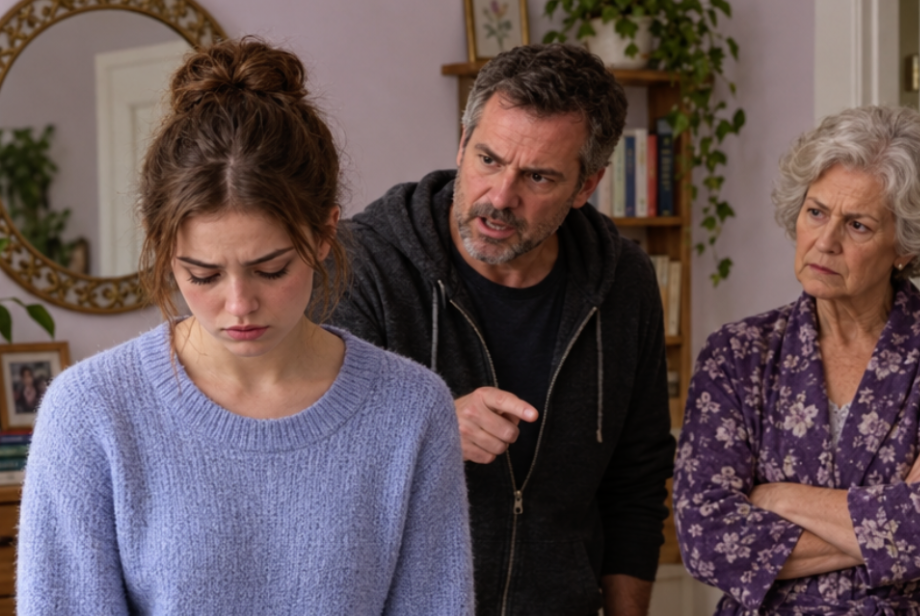
“Don’t you dare lock the bedroom door! What if my mother needs something?” Ivan snapped when Maria asked for a little privacy.
Maria called the third room in their apartment her workshop. The smallest of the three, just nine square meters, with a window overlooking an old bird cherry tree in the courtyard. It had a large cutting table, custom-made by a carpenter friend; two sewing machines—one regular and one overlocker; and a mannequin always draped in something half-finished. Shelves stuffed with fabric rolls, boxes of buttons, lace, and ribbons. On the wall, a corkboard pinned with sketches.
Maria was the head cutter at the dramatic theater’s sewing shop. Evenings and weekends, she crafted wedding and evening gowns by order. Word spread from one bride to another—she rarely managed to keep up with all the requests.
She bought the apartment at twenty-eight—three rooms, old brick building, high ceilings, third floor. A 15-year mortgage, paid off in seven thanks to nonstop work. She furnished every room herself. The bedroom was light and airy, with white curtains and a wooden bed she’d snagged at a sale and refinished herself. The living room had a wall-spanning bookcase. And her beloved workshop, where the lamp glowed over her table at night, silk and tulle scraps on the floor.
She met Ivan at a wedding—her client’s, his cousin. Tall, calm, with big gentle hands; an instructor at a driving school. He’d danced only with her all night and said he’d never seen a dress fit so well—it must’ve been made by a magician. Maria laughed and told him the magician was her.
They married after a year. “I’m 36 now,” Maria thought at the time. “I’m not a girl anymore. I know what I want.” Ivan moved in with her, having sold his room in a communal apartment for a car.
Their first two years were genuinely good. Ivan fixed everything broken, brought her coffee when she was up late sewing a dress. On weekends, they’d go out of town. Maria finally felt like she had a family.
Then Ivan’s sister, Larisa, grew tired of living with their mother.
Polina Semyonovna had lived her whole life in her own two-room apartment on the outskirts. Three years ago, she sold it to help Larisa buy a larger three-room flat. “We’ll live together now, Mom,” Larisa said. “You with us and the grandkids. Why do you need two rooms alone?” Polina Semyonovna moved in; the new apartment was put in Larisa and her husband’s names.
Three years later, Larisa called Ivan, desperate.
“Vanya, take her. I’m serious. She’s stirring up my kids, criticizes my husband every day. He told me: either she goes, or I do. I can’t anymore. Let her live with you.”
“Larisa, how can you just—she’s our mom.”
“So take her, if she’s your mom.”
The next day, Polina Semyonovna sat outside Larisa’s building with two bags. Larisa set her belongings at the door and changed the locks.
Ivan picked his mother up, brought her to his work, left her in the instructor’s room, and called Maria.
“Masha…I need to ask you something. Larisa kicked Mom out. For real. She has nowhere to go. Can she stay with us? Just for a bit. A week or two, tops.”
Maria stood by the window at the theater workshop, scissors in hand. She immediately understood. She’d only seen her mother-in-law five times in two years—at the wedding, Ivan’s birthday, New Year’s. Every time, Polina found something to criticize: Maria was an “old bride,” she had “working hands,” her sewing was just “making rags, not a real job.” Maria knew: if Polina Semyonovna came into her apartment, she’d never leave.
“Vanya,” she said gently, “let’s rent her a room. Or a small one-bedroom. I’ll help with money. It’ll be bad for her with us. And bad for us, too.”
“Rent? You want my own mother in a rental room? Are you hearing yourself? She’s 71, her own daughter kicked her out, and you’d send her to strangers?”
Polina crashed with a friend that night, then couch-surfed for a week. Meanwhile, Ivan started up the same conversation every evening.
“Masha, we have three rooms. Three! One’s standing empty.”
“That’s my workshop, Vanya.”
“So sew on the balcony. Or in the living room, just for now.”
“It’s never just for now. You know how your mom is.”
“You’re cruel, Maria. I never thought you’d be like this. Those rags matter more than people to you. My mother’s on the street, and you’re whining about a workshop.”
He said something like that every day. For three weeks. Accusing her of being cold, selfish, unloving—able to turn her back on an old woman. Maria even overheard him telling a friend: “My wife just won’t budge. She wants to kick my mother to the street.”
On the twenty-second day, Maria caved.
She dismantled her workshop over two evenings. The cutting table was put on the balcony, machines swapped for a tiny table in the living room by the window, the fabric shelf squeezed into the bedroom, the mannequin up in the closet, the corkboard with sketches taken down. Ivan brought over a cot, nightstand, and wardrobe for the now-empty room.
Polina Semyonovna arrived on Saturday with the same two bags. She looked over the hallway, the living room, the kitchen, then her room. She wrinkled her nose.
“So small. And the window’s facing the yard. Oh well, I’ll survive.”
And immediately started running the house.
First, she rearranged the dishes. Plates where the mugs were, mugs where the pots were—Maria couldn’t find anything for three evenings. Then she tossed Maria’s favorite bowl from Samarkand—”chipped dishes bring bad luck.” She threw out the dried flowers Ivan gave Maria when they met—”dust trap.” She moved a big ceramic vase from the living room to the hallway floor—”gets in the way.”
Soon, photos started disappearing.
Maria’s living room wall once held simple wood-framed photos: her wedding with Ivan, her mother in youth, herself at twenty in her first handmade dress, and her grandmother in a white scarf, holding a cat on a country porch.
One evening, Maria came home to find different photos hanging: Ivan as a first-grader, at boot camp, at the sea with Larisa, Polina young with her husband, and a silver-framed icon.
“Where are mine?”
“In the drawer,” the mother-in-law replied, eyes never leaving the TV. “I took them down. Why hang up strangers? This wall should be for the family.”
Maria held her photos, then put them back in the drawer. She didn’t want a scene. She just wanted it to be over.
But it was only beginning.
Polina Semyonovna demanded breakfast at eight, lunch at one, dinner at seven. Never cooked. Not once.
“I’ve cooked enough in my life—forty years at the plant cafeteria. Now it’s my turn to rest. You’re young, you can manage.”
Maria woke at six to make porridge and cheese pancakes before work, left labeled soup for lunch, ran straight to the kitchen after work. Her custom dress orders were falling behind; two brides had already found another seamstress.
“Vanya, can you cook at least sometimes? Or your mom? She could make an egg, at least.”
“Masha, that’s my mother. Show some respect. She’s old, it’s hard for her. It’s not a big deal, you’re in the kitchen anyway.”
Every evening brought new complaints. The soup was too salty, the porridge lumpy, the towel hung wrong in the bathroom, kitchen towel on the table instead of the oven handle, cup left in the sink, shoes not lined up in the hallway.
“Is this how you do things?” Polina would say, holding the kitchen towel like a dead mouse. “We never did it like this. My mother taught me: towel on the handle, always.”
Maria just hung the towel where told.
Soon, the apartment didn’t feel like hers. She never knew what item would be moved or discarded next. She stopped playing music (“my blood pressure, turn that noise off”), and stopped sewing in the living room so the machine wouldn’t interrupt Polina’s TV. No friends visited anymore.
And Polina Semyonovna would come in the bedroom. Anytime. Early morning to ask about porridge, late at night to complain about a leaky faucet, even during Sunday rest. Once, she barged in as Maria changed clothes—Maria clutched her robe to her chest.
“Could you please knock?”
Polina just waved her off, “Oh please, nothing I haven’t seen. I’m the mother. This is my house.”
My house.
Maria looked at Ivan, who lay scrolling on his phone.
“Vanya, can you ask your mom to knock?”
“You’re being childish, Masha. She’s family—let her be.”
Five months passed. Ivan never ‘figured anything out.’ Larisa didn’t call. Polina lived in the old workshop and wasn’t going anywhere.
In mid-March, Maria came home late and noticed a wet, torn bag by the trash chute—something familiar sticking out. An old Soviet card with bullfinches on a winter branch.
She stopped.
It was her box. The old blue tin from Danish cookies, always on the top shelf of her workshop since moving here. It was filled with cards from her grandmother. Every holiday, her grandmother wrote: for birthdays, New Year’s, Women’s Day, Easter, or sometimes, just because. Always in big slanting script with a chemical pencil:“Mashenka, it snowed; Murka the cat had three kittens, one called Marquis. Eat well. Happy birthday, Mashenka. Don’t let anyone hurt you. Come visit in the summer—the strawberries are huge this year.”
Fifty-three cards, six years. The last one came when Maria finished her college course.
The tin was gone, likely thrown out by her mother-in-law—maybe the cards had gotten stuck in the chute. Or maybe Polina kept the tin and dumped the cards. Dirty water pooled underneath.
Maria crouched down and started gathering the cards. Some dry but creased; others soaked so the letters blurred. Three disintegrated in her hands.
She spent ages, kneeling on the cold concrete, picking them up. A neighbor quietly asked if Maria needed help. She shook her head.
Clutching the cards, Maria entered her home. Polina was watching TV. Ivan sat at the kitchen table eating soup.
“Did you throw these out?”
Polina glanced over. “Oh, those. Yes. I was cleaning out the closet. Some old bits of paper, junk. Threw them away. Why keep garbage?”
“Those were my grandmother’s cards.”
“So what? Written long ago. They’d been lying around for twenty years. Junk.”
Maria felt a scream rising, but she turned and went to Ivan.
“Vanya, your mom threw out my grandmother’s cards. In the trash chute. Most of them got soaked.”
Ivan looked up and sighed, “Masha, don’t make a scene. She didn’t know—they’re just cards.”
“They’re not just cards.”
“Okay, not just. But don’t go after Mom about this. She meant well. Please stop. Sit down and eat.”
Maria just stood there, then made her way to the bedroom, where she carefully laid the cards out on the bed—wet ones apart from the dry. She used a low-heat hair dryer, tears falling as she tried not to wet them further.
She just needed a moment alone. Half an hour, even. With nobody barging in, no one asking about porridge, no more comments about towels.
Maria got up and closed the bedroom door, turning the tiny lock she’d barely used. She went back to her cards.
Five minutes later, the handle rattled—then again.
“Masha?” Ivan’s voice. “Why’d you lock the door? Open it.”
“Vanya, I just need to be alone. For a bit.”
“Open up, I said.”
Maria stood and opened the door. Ivan frowned in the hallway.
“Why did you lock yourself in?”
Her voice was tired and quiet. “Vanya, I can’t do this anymore. Five months. Your mother walks in here at six a.m., at eleven p.m., even when I’m changing. She threw out my photos. Tossed my bowl, my flowers, now my grandmother’s cards. I’m in the kitchen from six in the morning till ten at night. I want to close the door—just at night. Be alone in my own bedroom, just once. Is that okay?”
Ivan looked at her like she’d just insulted him.
“Don’t you dare lock the bedroom! What if my mother needs something? She’s seventy-one—what if she gets sick at night and we’re locked in? What’s wrong with you?”
Maria just stared at him.
She looked at the man in her bedroom doorway—the man who’d promised “just a week or two” five months ago. Who’d never once cooked a meal, never asked his mom to knock, never stuck up for his wife. Who’d seen her holding wet, ruined cards and told her not to make a fuss.
For the first time, she saw everything clearly—as if through a spotless window.
His mother always came first. Her comfort mattered more than Maria’s fatigue. Her wishes mattered more than Maria’s room or precious cards. Maria herself? Invisible. Just cooking, cleaning, laundry, and a voice that could be ignored.
“Vanya,” she said, “this is my apartment.”
“What?”
“Mine. I bought it long before we met. I furnished every room myself. Paid off the mortgage myself. You’re living here because I let you. Your mom is here because I let her. Neither of you are registered here. And in my own home, I want to close the door to my bedroom.”
Ivan flushed with anger.
“There it is. Throwing your precious apartment in my face. ‘Your’ place. So petty, Maria. Greedy. I thought you were better than this. I thought you were a real partner, not someone who counts who owns the walls.”
Footsteps from the living room, and there was Polina Semyonovna in her robe, TV remote in hand.
“What’s all this yelling?” She eyed her son, then Maria. “Vanya, is it her again? Still fussing over her little papers? Are you a man or not? Lay down the law. She’s turning my life upside down in my own home—every step, every word. Do something.”
Ivan straightened up and looked at Maria.
“Mom’s right,” he said. “You’ve forgotten who’s the man here. Here’s how it’s going to be: no locking the door, leave Mom alone, put your cards away where I don’t have to see them. And apologize—Mom’s been upset for two hours because of you.”
Polina pursed her lips and nodded, satisfaction written on her face.
Full story—continued in the comments
Maria called the third room in her apartment her studio. It was the smallest of the three—just nine square meters—with a window overlooking the courtyard, where an old bird cherry tree grew. There stood a large cutting table, custom built by a carpenter she knew. She had two sewing machines, a regular one and an overlocker. In the corner, there was a dress form that always wore something unfinished. A shelving unit held rolls of fabric, boxes of buttons, lace, and ribbons. On the wall hung a corkboard with pinned sketches.
Maria worked as the head pattern maker at the sewing department of the drama theater. In the evenings and on weekends, she made custom wedding and evening dresses. The word about her dresses spread from one bride to another, and she always had more orders than she could handle.
She bought her apartment when she was twenty-eight—a three-room place in an old brick building with high ceilings, on the third floor. She took out a fifteen-year mortgage and paid it off in seven years by working without weekends. She decorated every room herself. The bedroom in light colors, with white curtains and a wooden bed she found at a sale and repainted herself. The living room had a wall-to-wall bookshelf. And the studio, where the lamp glowed over the table in the evenings, and scraps of silk and tulle dotted the floor.
Maria met Ivan at the wedding of one of her clients. He was the groom’s cousin—tall, calm, with big, kind hands. He worked as an instructor at a driving school. All evening, he danced only with her. At the end, he said he’d never seen a dress fit a bride so perfectly and guessed a magician must have made it. Maria laughed and told him that she was the magician.
A year later, they got married. “I’m thirty-six,” Maria thought back then. “I’m no longer a girl. I know what I want.” Ivan moved in with her. He sold his room in a shared apartment—where he’d lived after the army—and spent the money on a car.
The first two years were good. Truly good. Ivan fixed everything that broke. He brought her coffee in the studio when she worked late into the night on yet another wedding gown. On weekends, they took trips out of town. Maria thought that at last, she had a family.
But then Larisa, Ivan’s sister, got tired of living with their mother.
Polina Semyonovna had lived her whole life in her two-room apartment on the outskirts. Three years ago, she sold it to help Larisa buy a three-room place. “We’ll all live together,” Larisa said then. “Mom, you’ll be with us and the grandkids; what do you need a two-room place for on your own?” Polina Semyonovna moved in with her daughter. The apartment was put in Larisa’s and her husband’s names.
Three years later, Larisa called her brother and said she couldn’t do it anymore.
“Vanya, take her. I’m serious. She’s turning my kids against me. She criticizes my husband every day. He’s already said: it’s either her or me. I can’t do this. Let her live with you.”
“Larisa, how can I just take her? She’s our mother.”
“Then you take her, since she’s our mother.”
The next day, Polina Semyonovna was sitting on a bench outside Larisa’s building with two bags. Larisa had put her things outside the door and changed the locks. Ivan picked up his mother, brought her to his work, left her in the instructors’ room, and called Maria.
— Masha, there’s something going on. Larisa kicked Mom out. Completely. She has nowhere to go. Can she stay with us? Just temporarily. Until I figure something out. Maybe a week or two.
Maria stood by the window in the theater workshop, a pair of scissors in her hand. She understood immediately. She had seen Polina Semyonovna maybe five times in two years—at the wedding, at Ivan’s birthday, at New Year’s. Each time, her mother-in-law found something to criticize: that Maria was the “old bride,” that she had “working hands,” that she “sewed rags instead of doing something real.” Maria knew that if Polina Semyonovna entered her apartment, she’d never leave.
— Vanya, — she said carefully. — Why don’t we rent something for her? A room, a small one-bedroom place. I’ll help with the money if needed. But she won’t be happy with us. We won’t be happy either.
— Rent? — Ivan repeated. — My own mother, you want me to put her in a rented room? Are you serious? She’s seventy-one. Her own daughter has kicked her out. And you want me to send her to strangers?
That evening, Polina Semyonovna stayed over with an acquaintance. Then she spent another week living at a friend’s place. Every night, Ivan would start the same conversation.
— Masha, we have three rooms. Three! One’s standing empty.
— That’s my workshop, Vanya.
— So what? You can sew on the balcony. Or in the living room. It’s just temporary.
— Temporary never stays temporary. You know what your mom’s like.
— You’re heartless, Maria. I never thought you could be like this. Your rags matter more than a person. My mother’s out on the street, and all you care about is your workshop.
He said this every day. For three weeks. Accused her of being indifferent. Of being selfish. That she must have never loved anyone if she could turn away so easily from an old person. One day Maria overheard him telling a friend on the phone: “My wife is being stubborn. She’s throwing my mother out on the street.”
On the twenty-second day, she gave in.
It took her two evenings to clear out her workshop. The cutting table was taken apart and moved to the balcony, covered in plastic. Maria carried her sewing machines to the living room, setting them on a small table by the window. The fabric shelf was moved into the bedroom, in the corner. The mannequin was put up in the attic. The corkboard with sketches was taken down. Ivan brought in a bed, a nightstand, and a wardrobe from storage to the now-empty room.
Polina Semyonovna arrived on Saturday with her same two bags. She walked in, looked around the hall, the living room, the kitchen. Peeked into her room. Grimaced.
— So small. And the window faces the courtyard. Well, I’ll manage.
She started establishing her own order from the first day.
First, she rearranged the dishes in the kitchen cabinets. Plates where the mugs had been, mugs where the pots were. For three nights, Maria couldn’t find anything. Then she threw away Maria’s favorite bowl, an old one with a chipped edge that Maria had brought once from Samarkand. “Broken dishes are bad luck.” Then she tossed out the dried flowers from the bouquet Ivan gave Maria on the day they met. “Dust collector.” Then she moved the large ceramic vase that one of Maria’s colleagues had given her out of the living room and into the hall, on the floor. “In the way.”
Then photos started disappearing.
On Maria’s living room wall hung photos in simple wooden frames. There was her and Ivan at their wedding. Her mother in her youth. Maria herself at twenty, wearing the first dress she ever made, at her graduation. And her grandmother—grandma in a white headscarf on the porch of a country house, holding a cat in her arms.
One evening, Maria came home from work to find different photos on the wall. Ivan in first grade, holding a bouquet of gladiolus. Ivan in the army. Ivan at the seaside with Larisa. Young Polina Semyonovna in a hat, hugging her husband. And an icon in a silver frame.
“Where are mine?” Maria asked.
“In the drawer,” her mother-in-law replied, eyes fixed on the TV. “In the dresser. I put them away. Why should we have pictures of strangers up here? This wall should be for family.”
Maria took her photos out of the drawer and held them for a moment. Then she put them back. She didn’t want to start a fight. More than anything, she wished all of this would end soon.
But everything was only just beginning.
Polina Semyonovna demanded breakfast by eight, lunch at one, and dinner at seven. She never cooked. Not once.
“I’ve cooked enough in my life,” she would say. “Forty years in a factory kitchen. Now it’s my turn to rest. You’re young, it’s easy for you.”
Maria started waking at six to cook porridge and make cheese pancakes before work. She’d leave soup for lunch in the fridge, labeled so her mother-in-law wouldn’t mix it up. In the evenings, she’d go straight to the stove as soon as she walked in. Her orders, wedding dresses for brides, piled up. Two clients had already gone to another seamstress because Maria couldn’t meet the deadlines.
“Vanya,” she said to her husband. “Can you cook sometimes? Or your mom? She could at least make some eggs.”
“Masha, she’s my mom. We have to respect her. She’s an elderly woman. It’s hard for her. And honestly, is it so much for you? You’re always in the kitchen anyway.”
Every evening brought complaints. The soup was too salty. The porridge was lumpy. The towel in the bathroom was hanging the wrong way. The kitchen towel was left on the table but should be on the oven handle. A cup was left in the sink. Shoes in the entryway were placed wrong.
“Is this how things are done where you come from?” Polina Semyonovna would ask, holding the kitchen towel between two fingers as though it were a dead mouse. “Towel on the table? What a disgrace. My mother taught me—the towel always goes on the handle.”
Maria stayed silent. She hung the towel on the handle.
Little by little, the apartment stopped feeling like hers. Maria would come home, not knowing what she might find. Something would be moved, or thrown away. She stopped playing music—her mother-in-law would complain it made her blood pressure rise. She stopped sewing in the living room in the evenings, since the hum of the machine disturbed the TV shows. She stopped inviting friends over.
And then Polina Semyonovna started entering the bedroom. Without knocking. At any time.
At six in the morning, to ask if the porridge would be made with milk or water. At eleven at night, to mention the bathroom faucet was dripping. On Sundays, when Maria was reading in bed and Ivan was dozing beside her. Once she walked in while Maria was changing clothes. Maria grabbed her robe and clutched it to herself.
“Polina Semyonovna, please knock.”
“Oh, what haven’t I seen?” her mother-in-law said, waving her hand. “I’m your mother. This is my home.”
Her home.
Maria glanced over at Ivan. He was lying down with his phone, not even bothering to look up.
“Vanya, tell your mom she should knock.”
“Masha, come on, don’t act like a child. She’s my mom—it’s fine for her.”
Five months passed. Ivan still hadn’t come up with anything. Larisa never called. Polina Semyonovna was still living in the studio and didn’t seem to have any plans to leave.
It was mid-March when Maria came home from work late, around nine. On the stairwell near the garbage chute, there was a soggy cardboard bag. It was torn, and some paper things had spilled out. Maria would have walked past, but her eyes caught sight of a familiar corner. A postcard—old, Soviet-style, with bullfinches drawn on a branch of rowan.
She stopped.
It was her box—a blue tin from Danish cookies. Maria had kept it on the top shelf of the studio closet ever since she’d moved into the apartment. Inside were her grandmother’s postcards. The ones her grandma sent every time Maria left the village to study at the technical college in the city. Every holiday. For her birthday, for New Year’s, for March 8th, for Easter. Sometimes just because. Grandma always wrote in big, slanted letters, with a chemical pencil she’d lick for a sharper line. “Mashenka, we had our first snow, Murka had three kittens, named one Marquise. Make sure you eat well there.” “Mashenka, happy birthday! Be happy. Don’t let anyone mistreat you.” “Mashenka, come visit in summer. The strawberries are big this year.”
Fifty-three postcards. Over six years. The last one grandma sent was for graduation, when Masha finished college.
Maria couldn’t find the box. Most likely, her mother-in-law threw it down the trash chute, but the bag of postcards was too big and got stuck. Maybe she dumped out the cards and took the box for herself. A puddle had formed under the bag—someone had mopped the stairwell and poured dirty water right there.
Maria crouched down and started gathering everything: one postcard after another. Bullfinches. Snowdrops. Father Frosts. Matryoshkas. Eights with mimosa flowers. Some were still dry, just crumpled. Others were soaked through, and the purple writing from the chemical pencil had blurred so badly you couldn’t make out the words. Three of the postcards were so wet, they fell apart right in her hands.
She spent a long time gathering them all up. Kneeling on the concrete floor in her coat, bag slung over her shoulder. The neighbor from the fifth floor came out to take out the trash, spotted Maria, paused, and quietly asked, “Masha, do you need help?” Maria shook her head.
She brought the postcards back to the apartment, clutching them to her chest. Polina Semyonovna was sitting in the living room in front of the TV. Ivan was in the kitchen eating soup.
“Did you throw these away?” Maria asked, stopping in the living room doorway.
Her mother-in-law glanced at the postcards in Maria’s hands.
“Oh, those. Yes. I was cleaning out the closet. There was a box with some junk in it, old papers. So I threw it away. Why do you need that trash? It just gathers dust.”
“Those are my grandma’s postcards.”
“So what? That was written years ago. They’ve been there for twenty years. Just junk.”
Maria felt like she was about to scream. She turned around and went to the kitchen to Ivan.
“Vanya, your mom threw out my grandma’s postcards. Down the trash chute. Half of them are soaking wet.”
Ivan finally looked up from his bowl. He glanced at the damp postcards and sighed.
“Masha, come on, don’t make a scene. She just threw them out, that’s all. She didn’t know. They’re just postcards.”
“They’re not just postcards.”
“Alright, fine, they’re not just postcards. But don’t get upset with Mom over this. She’s an elderly woman. She was trying to help, that’s all. Please, stop it. Come sit down and eat something.”
Maria stood there for a moment, then silently went to the bedroom.
She laid the postcards out on the bed—wet ones in one pile, dry ones in another. She grabbed a hairdryer and carefully started drying them, using the gentlest setting and holding it far away. Tears dripped onto the cards, and she turned her head away so she wouldn’t get them even wetter.
She just needed to be alone. Even for an hour. Even for half an hour. Without anyone walking in, asking about the porridge, or telling her the towel was hanging the wrong way.
Maria got up and closed the bedroom door, turning the little lock she’d never used before. Then she went back to her postcards.
Five minutes later, the door handle rattled. Then it rattled again.
“Masha?” Ivan’s voice came through. “Why did you lock yourself in? Open up.”
“Vanya, I just need a little time alone. Just a bit.”
“I said open the door.”
Maria stood up and opened the door. Ivan was standing in the doorway, frowning.
“Why did you lock yourself in?”
“Vanya,” she said, her voice quiet and tired. “I can’t do this anymore. It’s been five months. Your mom comes in here without knocking at six in the morning, at eleven at night, even when I’m changing. She threw my photos off the wall. She tossed out my bowl, my flowers, and now my grandma’s postcards. I’m in the kitchen from six in the morning until ten at night. I just want to close the door. Even just for the night. Just to be alone in my bedroom. Is that too much to ask?”
Ivan looked at her as if she’d just said something offensive.
“Don’t you dare lock the bedroom door!” he snapped. “What if my mother needs something? She’s seventy-one. What if she gets sick at night and we’re locked in here? Are you out of your mind?”
Maria stared at him in silence.
She looked at the man standing in the doorway of her bedroom. The man who’d promised “a week, maybe two” five months ago. The man who had never once cooked a meal. Never once told his mother to knock. Never once stood up for her. The man who had just watched her holding her soaked postcards from her grandmother and told her not to make a scene.
For the first time, she saw everything clearly. Like peering through a freshly washed window.
His mother mattered more to him. In everything. Her comfort was worth more than Maria’s exhaustion. Her wishes were more important than Maria’s bedroom. Her peace was above Maria’s grandmother’s postcards. And Maria herself—she didn’t really count at all. She was just the kitchen, the laundry, the ironing, and a quiet voice he could ignore.
“Vanya,” she said, “this is my apartment.”
“What?”
“This is my apartment. I bought it long before we even met. I furnished every room myself, with my own money. I paid off the mortgage myself. You live here because I let you. Your mother is here because I let her be here. Neither of you are registered here. And in my own apartment, I want to close my own bedroom door.”
Ivan turned red.
“So that’s it,” he said. “Now you’re throwing the apartment in my face. Yours. All yours. Petty, Maria. Selfish. I never thought you were like this. I thought you were a decent person, but you only care about whose walls these are.”
Footsteps echoed from the living room. Polina Semyonovna appeared in the doorway, wearing her robe and holding the TV remote.
“What’s with all the shouting?” She looked first at her son, then at her daughter-in-law. “Vanya, is it her again? Again with her papers? Are you a man or not? Put her in her place already. I’ve had enough! She’s driving me crazy in my own house. Can’t say a word, can’t take a single step. Tell her.”
Ivan straightened up and looked at Maria.
“Mom’s right,” he said. “You’ve completely forgotten who the man is in this house. Here’s how it is: Don’t close the door. Don’t bother Mom. Put your postcards away so they’re not an eyesore. And apologize to Mom. She’s been upset for two hours because of you.”
Polina Semyonovna pressed her lips together and nodded, looking satisfied.
Maria looked at both of them: her husband and mother-in-law, standing side by side in the doorway of her bedroom.
Then she turned, walked over to the closet, opened the top door, and pulled out a large black suitcase on wheels. She set it on the floor and opened it.
Ivan smirked, smug and a little relieved.
“There you go. Go ahead. Are you going to your mother’s or what? Go. Cool off, come back later.”
Maria didn’t respond. She went to his side of the closet. She took down his shirts, pants, sweaters, and jeans, folded them into the suitcase. Then from the dresser she packed his underwear, socks, and t-shirts. From the bathroom she brought his razor, toothbrush, shampoo, and cologne.
Ivan stopped smirking.
“What are you doing?”
Maria zipped up the suitcase and rolled it into the hallway, placing it next to the front door.
Then she went into the workshop—her former workshop. Polina Semyonovna followed right behind her.
“Where are you going? What are you doing? That’s my room!”
Maria opened the wardrobe Ivan had once brought for his mother. From the top shelf she took down two big checkered bags, the same ones her mother-in-law arrived with. She began packing her things: sweaters, skirts, robes, nightgowns, slippers, medicines from the nightstand. She wrapped the silver-framed icon in a towel and placed it on top. She took down from the living room wall all the photos of Ivan—ones from first grade and from his army days—stacked them, and packed them into the bag too.
“You have no right!” Polina Semyonovna yelled. “Vanya! Vanya, are you just going to stand there? She’s throwing me out! In the middle of the night! An old woman!”
“Maria,” Ivan finally snapped out of it. “What are you doing? That’s my mother! Do you understand what you’re doing? I’ll divorce you! You hear me? I’ll divorce you! You’ll be left all alone! Think about it! We’re a family! We have obligations! You made a promise at the registry office!”
Maria brought both bags into the hallway and set them down beside the suitcase.
Then she opened the front door—wide, all the way.
“Please,” she said. “Both of you.”
The stairwell was dimly lit. It smelled damp, and of someone else’s dinner. There was still a puddle by the garbage chute.
Ivan stared at her. Polina Semyonovna stared at her. Then they looked at each other.
“You’ll regret this,” Ivan said. “You’ll really regret this.”
“Maybe,” Maria replied. “The keys.”
He didn’t understand right away.
“The apartment keys, Vanya. And the spares. The ones you made for your mom.”
Ivan pulled out his keyring from his jacket pocket. He took off a key and placed it on the nightstand. Polina Semyonovna rummaged for a long time in the pocket of her robe, then in her purse, before silently tossing her own key next to his.
It was twenty minutes till midnight.
Ivan called a taxi. Maria could hear him talking on the phone: ‘Larisa. Yes. We’re coming to you. No, I’m not joking. Yes, Mom is with me. No, Larisa, it won’t be for long.’
They went downstairs with a suitcase and some bags, leaving without saying goodbye. Maria stood by the kitchen window and watched as a taxi pulled up to the building, as the driver loaded their bags into the trunk, as Polina Semyonovna, wrapped in a coat over her robe, got into the back seat. Ivan sat in the front. The car drove away.
Maria closed the front door. She turned the lock. Then the second one. Then put on the chain.
In the morning before work, she called the company that changed locks. The locksmith arrived by lunchtime. Maria put the three new keys in the kitchen drawer.
That evening she returned to the bedroom. The postcards were on the bed, right where she had left them. They had dried overnight. Some were warped, a few arched in shape, but they were dry. Maria took the iron, set it to the lowest setting, laid a clean cotton towel on the ironing board, and began to press the postcards one by one through the fabric. Slowly. Bullfinches. Snowdrops. Matryoshkas. ‘Mashenka, it snowed here.’ ‘Be happy. Don’t let anyone hurt you.’ ‘The strawberries are big this year.’
Forty-seven postcards survived. Six were lost completely. The last one, from graduation, dried well. Only the signature in the corner was a little smudged: ‘Your grandma Nyura.’
Maria placed the postcards in a new box—from her shoes. She wrote on it with a marker: ‘Grandma’s. Do not touch.’ Then she put it on a shelf in the closet.
Then she went back to the living room. She took her photographs out of the dresser drawer. She hung them on the same old nails. The wedding photo. Her mother’s. Herself at her graduation. And her grandmother, in a white headscarf, with a cat on her lap, on the village porch.
After that, she went to the bedroom. She turned on the lamp on the nightstand. She took the book from the shelf that she hadn’t opened since September.
And closed the door.
Just closed it. Turned the little latch. Stood for a moment, listening. The apartment was quiet. No one was walking down the hallway. No one was rattling the handle. No one was asking if there would be porridge with milk.
Maria lay down on the bed, opened her book, and began to read.