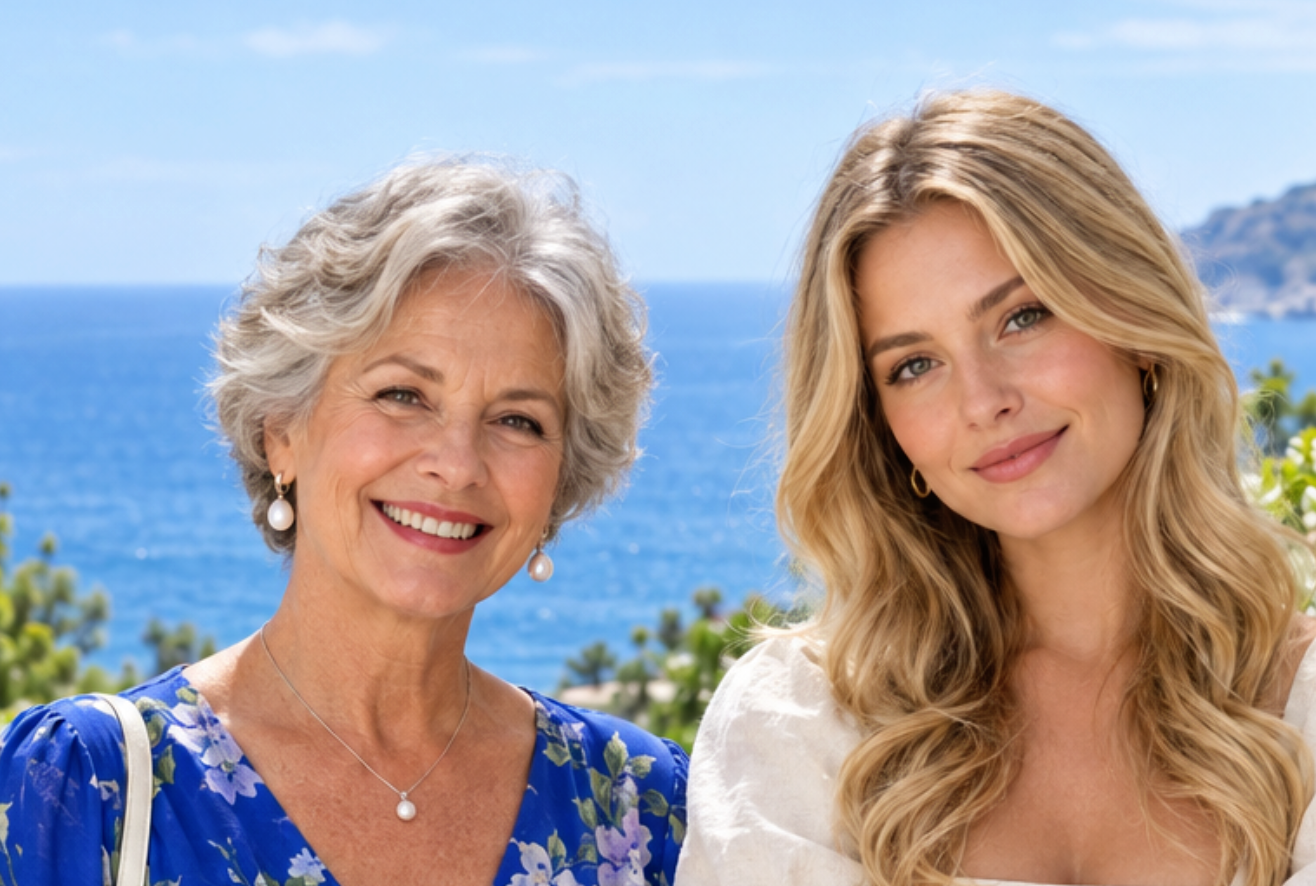
Inna stepped out onto the porch of her little house, feeling the warmth of the wooden boards under her bare feet. The morning sun was already shining stronger, promising a hot July day. She shielded her eyes with her hand, gazing out at the sea that shimmered turquoise just three hundred meters from her door.
“My own house,” Inna repeated to herself, still hardly believing her luck.
A year had passed since her divorce from Artyom, but Inna still sometimes woke up in the middle of the night, disoriented and unsure where she was. Ten years of marriage had been erased from her life suddenly and painfully, like a mole that turned out to be dangerous.
“I’ve outgrown our relationship,” Artyom had said as he packed his things into a sports bag. He didn’t even look at his wife, as if he were embarrassed or, more likely, just in a hurry to leave.
“Where are you going? Who to?” was all Inna managed to ask, unable to comprehend how ten years of marriage could end with such a brief statement.
“Nowhere. To nowhere,” Artyom shook his head, as if swatting away an annoying fly. “I just need freedom. Please understand, I don’t want to hurt you, but… I know for sure I never want to come back to our apartment.”
At that moment, Inna felt as though the air around her had thickened, becoming heavy and jelly-like. Breathing was nearly impossible, and all sounds were lost in a strange hum that filled her head.
The divorce happened quickly and without emotion, like applying for a bank loan. Artyom didn’t claim any of the belongings, and Inna was too drained to argue. The truth was, there wasn’t much to divide anyway—the apartment was rented, they never owned a car, and as for children… there never were any. Maybe that was for the best.
What shocked Inna most wasn’t that her husband left, but how quickly all of his relatives erased her from their lives. It was as if they’d wiped away a stray pencil sketch with an eraser. Everyone, that is, except his mother.
Raisa Pavlovna kept calling. At first, Inna thought her mother-in-law was trying to reconcile them, but she soon realized Raisa Pavlovna just wanted information. Where was Artyom, how was he, was he still in contact with Inna?
“Sweetheart, how are you? Are you holding up?” her former mother-in-law would ask with an overly sweet, artificial concern in her voice. “Has my Tyomochka called you? No? And have you called him?”
After every call like that, Inna felt squeezed dry, like a lemon. Raisa Pavlovna always ended their conversations with the same phrase:
“You’re still like a daughter to us. Don’t disappear.”
Inna didn’t disappear. She packed her things and left the city where every corner reminded her of her old life. Moving to the sea wasn’t a spur-of-the-moment decision—Inna had always dreamed of living by the water. As a child, when her parents took her to the sea, she would imagine herself living in a little house right on the shore, waking up each morning to the sound of the surf.
Now, her dream had come true, even if at a price. A small two-room house on the edge of a seaside town became a real refuge for Inna. The mortgage took almost a third of her administrator’s salary at a private clinic, but Inna was ready to tighten her belt if it meant she could step onto her porch every morning and see the sea.
After years of noisy city living, constant stress, and endless pressure to meet other people’s expectations, Inna finally learned how to listen to silence. For her, that silence was like heavenly music. No one criticized her cooking, complained about the mess, or demanded attention when all she wanted was to relax with a good book.
Inna started a new tradition—early in the morning, just as the sun crept over the horizon, she would go down to the shore for a stretch. Then she’d walk slowly along the edge of the water, collecting shells and smooth pieces of sea glass. Inna had plans to make a mosaic for her porch from her treasures.
“Who would’ve thought I’d become so… domestic?” she laughed, telling her friend over the phone how she planted petunias in the front garden and started a small vegetable patch for her favorite greens.
Inna felt that she had finally found herself. No longer living for her husband’s, mother-in-law’s, or coworkers’ expectations. No more trying to please everyone else. Just Inna, who loves watching the sunrise over the sea, sipping fresh coffee, and the smell of wet earth after rain.
At work, she quickly fit in—the small private clinic felt like family, everyone knew each other. Inna kept patient records, answered phone calls, and sometimes lent a hand to the nurses. Gradually, she made acquaintances around town: the shopkeeper at the corner store, the retired neighbor walking his terrier, and a married couple from the house across the street.
But it was Raissa Pavlovna’s phone calls—arriving like clockwork once a month—that always took Inna back to her past.
“Innushka, darling! How are you doing?” Raissa Pavlovna always spoke as if she’d last seen her daughter-in-law just yesterday, not a month ago. “What’s new with you?”
“Everything’s fine, Raissa Pavlovna,” Inna replied, trying to hide her irritation. “I’m working and settling into my new home.”
“Home?” Her mother-in-law sounded surprised. “What home?”
“I moved to another town. Bought a small house by the sea,” Inna didn’t even know why she shared so much—probably just out of polite habit. “Good job, peaceful life. I like it.”
There was an awkward pause on the other end, and then Raissa Pavlovna spoke again, this time with an oddly eager tone:
“A house by the sea? Wow, how lucky! Tyoma always dreamed of living by the sea, you know… but we never had the money for it,” she said, trailing off to make her point.
Inna felt something tighten inside. It was that tone Raissa Pavlovna used whenever she wanted something but wasn’t ready to ask outright.
“I live alone, Raissa Pavlovna,” Inna said carefully. “And to be honest, I’m not a big fan of having guests. I really like my solitude.”
“Oh, come on!” her mother-in-law laughed, and to Inna, the laughter sounded forced and just a bit too loud. “You’re not a hermit! We’re family!”
“Family?” Inna thought, but said nothing. The call ended as usual with, “You’re like a daughter to us,” and Raissa Pavlovna promising to call again next month.
Inna tried to put that conversation out of her mind, but something in her ex-mother-in-law’s tone kept making her uneasy. For two days, she walked around with a heavy sense of foreboding, and it turned out to be right when the phone rang during dinner.
The screen lit up: ‘Raisa Pavlovna.’ Inna frowned—her ex-mother-in-law had never broken her usual call schedule. Had something happened?
‘Hello?’ Inna asked cautiously.
‘Innushka!’ Raisa Pavlovna’s voice sounded almost too cheerful. ‘It’s all decided! We’re coming to see you!’
‘Excuse me?’ Inna almost choked on her tea. ‘Who is coming?’
‘Me and Tyomochka! Just for a week, to relax. Don’t worry, we’re not picky people. I’ll even bring my own pillows—I know how important that is for a good night’s sleep!’
Inna was silent, at a total loss for words. What did she mean by ‘we’re coming to you’? Without an invitation? To her own house? To her and her ex-husband, who hadn’t spoken since the divorce?
‘Raisa Pavlovna,’ Inna finally managed to say, ‘I think there’s a mistake. I didn’t invite you. And… not Artyom either.’
‘Oh, don’t be so formal!’ her ex-mother-in-law laughed. ‘No need for invitations among family! We won’t take up much space, promise!’
‘No, I can’t… I have work, a schedule, I…’
‘No worries, we understand everything! Tyomochka said you’ll definitely get along. He misses you so much, he’s been so worried! And really, you’re not strangers to each other!’
Inna rubbed her temples. The headache that had started to leave after her move was returning with a familiar throbbing.
‘I’ll call you back,’ she said finally, doing her best to keep her voice steady. ‘I need to think about this.’
They said goodbye, and Inna set her phone down on the table, feeling her hands shake. The peaceful, cozy little world she had built around herself suddenly felt like it was under threat.
A scene flashed in Inna’s mind: Raisa Pavlovna sitting at her kitchen table, directing where the cups should go; Artyom sprawled on the couch with his laptop, still wearing his shoes; both of them talking about her in the third person—’oh, she’s always been so strange’…
There have to be some boundaries! They can’t just decide to come over like that! And what kind of nonsense is this—‘Tyomochka misses you so much’? If he missed her, he could have called even once this past year. She hadn’t left the city or started a new life just to end up right back where she started!
Gathering her courage, Inna wanted to call Raisa Pavlovna back, but then her phone beeped—a new message from her ex-mother-in-law.
‘Inna, Artyom and I are coming to visit you for our vacation! Packing our things!’
Inna stared at the screen in disbelief. Was this real? Were they honestly planning to come stay with her without an invitation, without her agreement?
With trembling fingers, Inna dialed Raisa Pavlovna’s number. She needed to clear this up right now.
Ringing. Once, twice, three times… Raisa Pavlovna picked up on the fifth ring, her voice sounding as happy as if she’d just won the lottery:
‘Innushka! Did you get my message? Just imagine, Tyomochka was so happy when I told him you were inviting us! He has already taken his vacation days!’
“I didn’t invite you,” Inna said firmly, trying her best to stay calm. “I’m sorry if there’s been a misunderstanding, but I can’t have guests. I really value my personal space and…”
“A house by the sea? Perfect! We’re already packing up—make sure to have some treats ready for us!” Raisa Pavlovna cut her off, acting as if she hadn’t heard a word of Inna’s protest. There wasn’t even a hint of pause or apology in her voice. She spoke as if the visit was planned ages ago, with all the details settled.
Inna froze with the phone pressed to her ear. Something inside her—something important—seemed to crack. All hope of resolving this with politeness crumbled like a house of cards.
“Hold on,” Inna tried her hardest to keep her voice steady, even though her heart was pounding in her throat. “What makes you think you can just show up at my place? Without an invitation, without even asking?”
Raisa Pavlovna snorted, like she’d just heard something ridiculous:
“Innochka, don’t you get it? You’re alone, you have space. And I hope you still have a conscience, too! After all we’ve done for you, and you don’t even want us to stay by the sea for a while?”
Inna closed her eyes. The old feeling of helplessness that she had back when she was married to Artyom washed over her again. Back then, ten years ago, young, unsure of herself, Inna would hear such things, nod, apologize, and give in.
But now, everything was different. Inna opened her eyes and straightened up, as if ready for battle.
“Raisa Pavlovna, I did not invite you and I am not planning to have guests,” Inna said each word slowly and clearly. “That is my decision, and I ask you to respect it.”
There was a pause on the other end of the line, and then a chuckle that sent a chill down Inna’s spine.
“Are you offended now?” Raisa Pavlovna’s voice became a venomous whisper. “After everything we did for you? We pulled you out of the mud, introduced you to Artyom! Did you forget how you used to live in your old communal apartment?”
Inna pulled the phone away from her ear and stared at it for a few seconds as if seeing it for the first time. That familiar, yet suddenly strange voice carried not a hint of a request—only demand. That was the voice of someone who had grown used to always getting her way, never accepting a single ‘no.’
Memories flooded Inna’s mind: Raisa Pavlovna barging into the apartment Inna shared with Artyom without knocking; Raisa Pavlovna criticizing her cooking; Raisa Pavlovna deciding where they would spend their vacations… All of it was trying to burst back into her new life—without respect, without permission.
“Excuse me, I have to go,” Inna said, her voice trembling. “But my answer is no.”
Raisa Pavlovna started to say something else, but Inna hung up. For several minutes, she just sat and stared out the window at the sea. Then, with determination, she picked up her phone and sent a short message: “I’m not expecting guests. Turn around before you get here.”
The reply came almost instantly—a long, reproachful message that Inna didn’t even bother to finish reading. The phone started ringing again.
“What do you mean ‘you aren’t expecting guests’?!” Raisa Pavlovna screamed the moment Inna answered. “You’re nothing! My son gave you everything good in your life! Now you’re living it up by the sea! Do you think you’re better than us now?”
Inna didn’t reply. Her former mother-in-law’s words had no power over her anymore. Calmly, she pressed the end call button, went into her phone’s settings, and blocked the number.
Sitting on the porch of her house, watching the sunset paint the sea in golden hues, Inna realized something: “By letting in my new life, I don’t let the old one back in. Never again.”
That thought felt right to her, the only truth. She didn’t wish Artem or his mother any harm—she just didn’t want them in her life anymore. That chapter was closed, the book shelved far away.
The next morning, Inna woke up with an unexpected sense of anxiety. What if Raisa Pavlovna decided to come anyway? She might end up having to physically kick out unwelcome guests, and that wasn’t a pleasant thought.
After a brief moment of consideration, Inna called the local security company. By noon, two cameras were installed at her gate, sending all footage straight to her phone.
“Better safe than sorry,” Inna explained to her elderly neighbor, who watched the installation with curiosity. “If you ever see a woman in her sixties with dyed blonde hair, possibly with a man around forty, don’t hesitate to call the police. They’re uninvited guests.”
Her neighbor nodded in understanding:
“Don’t worry, it’s a quiet place here—strangers stand out right away. We’ll keep an eye out.”
That evening, coming home from work, Inna found three missed calls from an unknown number on her phone. Her instinct told her it was either Raisa Pavlovna with a new SIM card, or…
Her phone rang again. The same unfamiliar number appeared on the screen. Inna hesitated, but picked up.
“Hi,” Artem’s voice sounded just as it had a year ago. “I think we need to talk.”
Inna’s breath caught. How many times had she imagined this moment? Wondered what she would say if her ex-husband called? What words she would find? Now, hearing his voice, she realized—she had nothing to say to him.
“I don’t think so,” Inna replied, surprised by how calm she felt.
“Mom says you don’t want us coming over,” Artem continued. “That’s really petty of you. She’s upset.”
Inna stayed silent. Inside, she felt a strange emotion—not anger, and not resentment, but something closer to pity. Pity for someone who never grew up, who never managed to stand on his own.
“Are you even listening to me?” Artem’s voice grew more irritated. “I thought you’d changed, matured. But you’re still the same—touchy and selfish.”
Inna smirked. How upside down everything had become. Standing up for your own boundaries was now called selfishness?
“Goodbye, Artem,” Inna said quietly, and hung up.
Right after the call, she blocked that number too. There were no more calls, no more messages after that. Maybe Raisa Pavlovna and her son realized Inna wasn’t bluffing, or maybe they just decided to give up. It didn’t matter anymore.
A week later, Inna sat wrapped in a light sweater on her veranda—the evenings by the sea were starting to get chilly. Her large cup of tea was growing cold as the setting sun painted the ocean in pink and golden hues. A warm breeze swayed the lantern hanging above the table, casting whimsical shadows all around.
Inna smiled at her own thoughts. Ten years of marriage had taught her a lot, but her most important lesson came only recently: no one has the right to walk into your life without knocking. And if someone doesn’t respect your boundaries—that’s not your problem.
The house was hers again. And now—it would stay that way.
Inna took a sip of tea and ran her hand over the table she had recently painted turquoise. So much still lay ahead: making a mosaic of seashells along the path to the house, hanging a hammock between two pines, maybe even getting a cat…
The phone rang inside the house. Inna froze for a moment, then relaxed—it was just her alarm. Time for her evening medicine.
As she walked inside, Inna glanced at the security camera—the street outside was empty. Only the sea rolled its waves slowly toward the shore, and the wind whispered softly in the pine trees.
Life went on—her own life, with no more looking back at the past