Gennady, my brother, was turning sixty-five. About fifteen people gathered at his home: children, grandchildren, daughters-in-law, sons-in-law. I came with a pie — cabbage and egg, made from our mother’s recipe. Gennady has loved it since childhood. I remember how he and I used to fight over the last piece in the kitchen when we were about ten or twelve.
They placed the pie at the edge of the table, next to a store-bought cake and two trays of cold cuts from the supermarket. No one asked what it was. By the end of the evening, the pie remained untouched. The guests ate the cream cake, the children reached for candies. I packed the pie back into the bag. On the metro ride home, I kept thinking: this recipe has been in our family for sixty years. Mama baked it for every holiday, I learned it from her, and now I am the only one who knows it. And there it sat, untouched beside store-bought sliced meat.
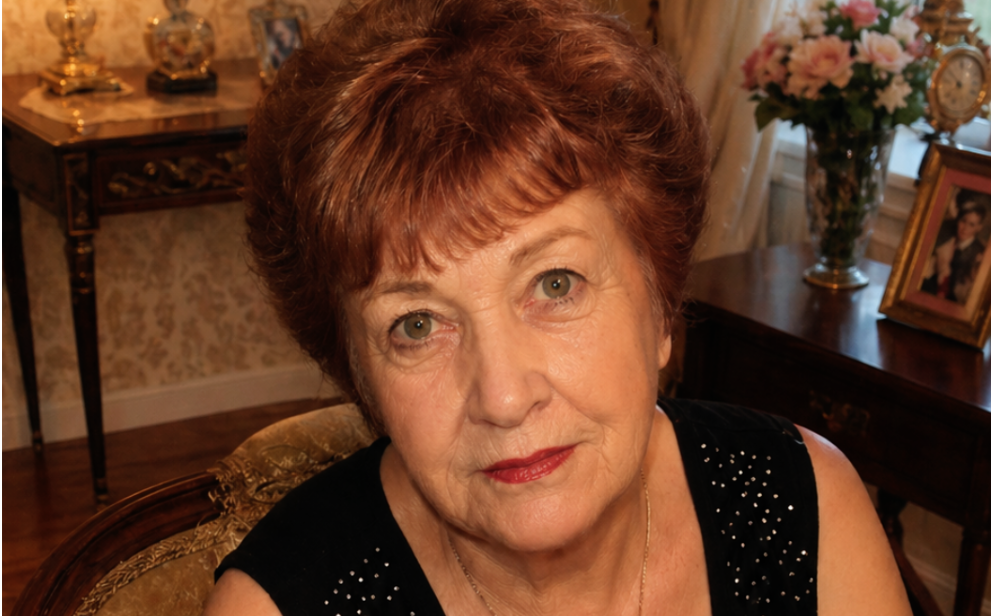
I am sixty-nine. My name is Zinaida Petrovna, though those close to me simply call me Zina. My husband passed away six years ago, and I live alone. I have three children — a son and two daughters — all grown, all with families of their own. I also have a brother, Gennady, and a sister, Lyuba. They both live in Moscow, and so do I. You would think we were close enough to see each other often.
But we mostly see one another only on holidays. And holidays are always the same.
We sit down at the table. Toasts, loud conversations, everyone interrupting one another. The younger people talk about their own things: work, mortgages, children. Gennady talks with the sons-in-law about cars and dachas. Lyuba talks with the daughters-in-law about prices and health. I sit and listen. Sometimes I try to put in a word, tell something, share something. Most of the time, they do not interrupt me on purpose — they simply do not hear me in all the noise.
Once, Gennady’s granddaughter, Katyusha — she must have been about eighteen — sat down beside me between toasts and asked:
“Zinaida Petrovna, what did you do for work?”
I was delighted. I thought someone was interested.
“I was a design engineer,” I answered. “I worked for thirty-two years at a design institute. We designed bridges.”
“Oh, that’s cool,” Katyusha said, reaching for her phone — she had received a message.
And that was the end of the conversation.
Then came Lyuba’s birthday. That was when something happened that finally turned my life upside down. Lyuba gave a thank-you toast. She said she was happy everyone had come, that family was the most important thing, that everyone being together was true happiness. Then she began listing people:
“Here are Seryozha and Anya — thank you for coming from the Moscow region. Here is Katya with the children — such good girls. Here is Gennady — my beloved brother…”
She named everyone. She did not name me.
Not because she meant to hurt me — I am sure of that. She simply forgot in the flow of words. Or perhaps I was sitting there so invisibly that her eyes just passed over me.
On the way home, I thought: if I can go unnoticed at a dinner I specifically came to, after cooking something, after spending two hours getting there — then why go at all?
I realized there was no answer.
After that evening, I began refusing invitations carefully, without scandals. First it was my blood pressure, then my leg hurt, then the doctor had scheduled an appointment on that exact day. During the first month, they called to check, wished me a quick recovery. Then they began calling less often. Now they call on the day of the holiday: “Zina, are you coming?” — “No, I can’t.” — “All right, get well.” And that is all.
Not once did anyone ask what was really happening with me. Why a person who had not missed a single family holiday in forty years had suddenly stopped coming.
Forty years — and no one noticed that I had disappeared.
But I noticed something else. When I no longer had to go anywhere on Saturday evenings, I suddenly had time. I go to the theater — the Maly Theater. A friend of mine works there as an usher and gets me good seats. Once every two weeks, I meet with my former colleagues from the institute. There are only four of us left from the old department, but we keep in touch. We talk about everything: we remember projects, discuss the news, complain about the weather. There, I am heard. They interrupt me sometimes too, but it is a living conversation, not that noise through which I used to try to say something at the family table.
Last month, my daughter Natasha came to see me herself — not for a holiday, just because, on a weekday. She brought pastries, and we sat for about three hours. That was a real conversation. She told me about work, and I told her about the institute, about the bridges we designed, about one project in Siberia where I went on a business trip in 1989. Natasha listened. She asked questions.
I did not tell her that I had stopped attending family holidays. She did not ask — perhaps she did not notice, or perhaps she guessed but did not want to bring it up.
Gennady called recently. Lyuba’s anniversary is coming soon — she is turning seventy, and everyone will gather.
“Zina, are you coming?”
“I doubt it, Gena.”
“Why? Are you still sick?”
I wondered whether to tell him or not. Then I decided to say it, but briefly:
“I’m not sick. I’m simply not interested there. At the last birthday, she listed everyone in her toast and did not mention me. I’m not offended — I understand it was accidental. But apparently, that is how things really are.”
Gennady was silent for a moment.
“Zina, you do understand she didn’t do it on purpose…”
“Of course I understand. That’s why I’m not offended. I’m simply drawing conclusions.”
He was quiet again, then said:
“All right. I’ll tell them you’re not coming.”
I hung up. I looked at the clock — in an hour and a half, I had to leave for the theater. I went to get ready.
Now I bake the pie from Mama’s recipe for Natasha. She comes especially when she knows I am baking it. She eats it and says, “Mom, why does yours always turn out better than mine?”
I explain the recipe to her. She writes it down in her phone.
That means it will not disappear.
Our heroine’s decision to stop attending family celebrations is not dictated by resentment or elderly loneliness. Behind it lies years of experience: a person comes, makes an effort, but there is no real connection. The untouched pie, the forgotten name in a toast, the conversation interrupted by a phone notification — each episode, taken separately, is a small thing. But together, they form an answer to the question: does anyone here, besides me, actually need my presence?
The invisibility of elderly people in large families is not usually caused by malice. It is the result of younger and middle generations living at a fast pace and speaking more loudly. A quiet person sitting in the corner gradually falls out of the general flow — not because they are unloved, but because no one deliberately slows down.
Our heroine found the right solution: not to demand attention where there is none, but to find an environment where it exists. Colleagues, the theater, her daughter Natasha — when she is alone with Natasha, she feels heard. One conversation with Natasha about a business trip in 1989 is worth ten noisy family dinners with toasts.
The conversation with her brother is a separate and important moment. She told the truth, briefly and without accusations. Not to make him feel guilty, but simply because he asked. That is a mature position: not staying silent out of politeness, but also not turning an explanation into a reproach.
I look forward to your opinion in the comments. Thank you all for reading the article.