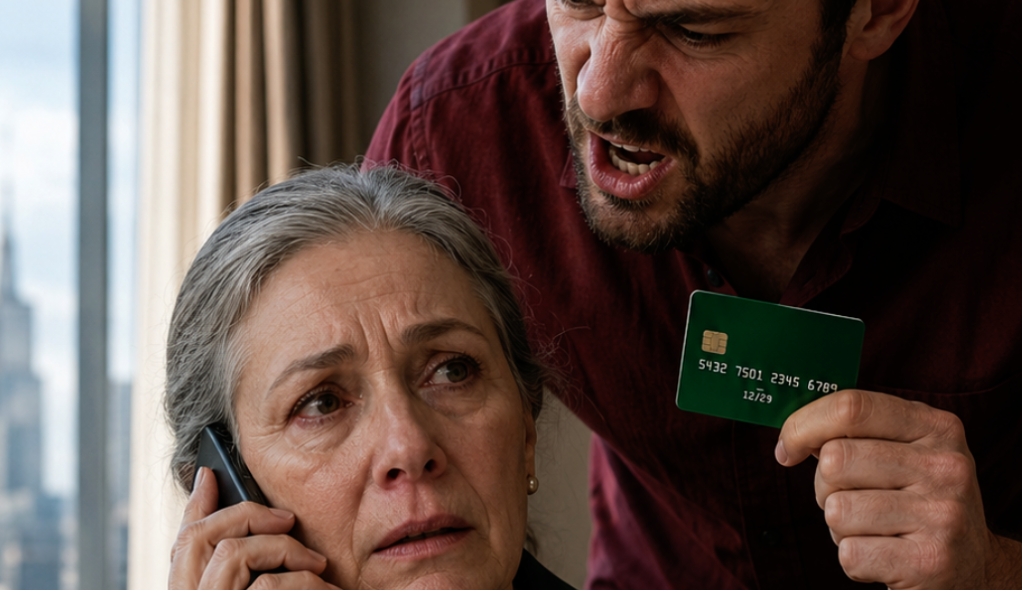
“Where is the money?! The card isn’t working!”
Marina held the phone slightly away from her ear. Dmitry’s voice blasted through the speaker, sharp and demanding.
She was sitting in her office on the twelfth floor. Outside the window there was a construction site, cranes, concrete blocks.
“It works. Just not for you anymore.”
Silence. She imagined him standing at the restaurant checkout with that girl beside him. Imagined him turning pale.
“Marina, what the hell are you doing?! I’m coming over right now!”
She hung up. Her hands were not shaking. Strange—usually they shook whenever he raised his voice.
On the desk lay Maxim’s phone. Her son had left it yesterday, silently turning the screen toward her. A video. A nightclub, lights. Dmitry kissing a girl of about twenty. His hands on her waist, the smile Marina had once believed belonged to her.
She watched it three times. She did not cry. She just watched.
Dmitry had appeared a year and a half ago, after Viktor passed away. A heart attack, fifty-six years old. Marina was left alone—with her father’s company, an apartment on Kutuzovsky Avenue, and emptiness.
Dmitry came to a meeting. Twenty-eight years old, a manager, with a smile that made you want to smile back.
“Marina Olegovna, may I clarify something?”
Polite. Attentive. Then coffee after work.
“You explain things so interestingly.”
Marina understood that he was twenty-four years younger than her. She understood how it looked. But when he said, “You’re beautiful,” she wanted to believe him.
Her father told her directly:
“Marina, he doesn’t need you for who you are.”
Her son Maxim stopped answering her calls after the wedding. He was one year older than Dmitry—twenty-nine. It was absurd. But Marina married him anyway.
For the first month, Dmitry was perfect. Breakfast on the table, massages after work.
“You get so tired. Lie down, I’ll take care of everything.”
Marina melted. Then he asked for her card.
“Give me the card. It’s awkward to ask every time. I’m not a stranger.”
She gave it to him. A week later—the car keys.
“I have a meeting. You don’t need it anyway.”
She handed them over. He began coming home later, answering more briefly, looking past her.
“What kind of dinner is this? I don’t eat heavy food in the evening.”
Marina would remake it.
“You’re a director, but you dress like… well, you know.”
She bought new dresses. Expensive ones. He nodded without looking.
One day she opened the closet—six new suits were hanging there. She had not bought them. But the card was shared.
Yesterday evening the doorbell rang. Maxim. He silently handed her his phone.
“Look.”
The video. Dmitry with a girl. They were dancing, kissing. His hand on her waist—the very gesture Marina remembered from herself.
Maxim expected tears. But Marina only handed the phone back.
“Thank you.”
“Mom, let me deal with him myself…”
“No. Go home.”
She closed the door. Sat down on the sofa. Inside her chest—nothing. Just cold.
She called the bank.
“Good evening. Please block the additional card.”
Five minutes later, it was done. Then she called her father.
“Dad, check one employee’s finances. Dmitry.”
Her father did not ask why.
“Tomorrow morning.”
“Thank you, Dad.”
She went to bed fully dressed. Dmitry came home before dawn, smelling of another woman’s perfume. He lay down beside her. Marina did not move.
In the morning, he left, slamming the door. At noon, her father called.
“We found it. He’s been taking kickbacks from contractors for the last six months. We can fire him.”
“Tomorrow morning.”
“Why not today?”
“Because today he still knows nothing.”
A pause.
“Understood, daughter.”
That evening, Dmitry called.
“Where is the money?! The card isn’t working!”
“It works. Just not for you anymore.”
She hung up. Then she packed his things. Suits into a suitcase, shoes into a bag. She carried everything into the hallway. Sat down to wait.
He burst in half an hour later. His face was red.
“What do you think you’re doing?! I stood at the register like a complete idiot! In front of people!”
Marina was silent.
“Explain what’s going on?! I’m your husband!”
“You were. Here are your things.”
He saw the suitcases. Turned pale.
“Are you serious?”
“Yes.”
“Because of what?! The card broke. I’ll call the bank…”
“Don’t. I blocked it myself.”
He froze. Stepped closer.
“What right do you have?!”
“Every right. It’s my card. My money. My apartment. And tomorrow you’ll be fired. For kickbacks from contractors. The documents are already with the lawyers.”
Dmitry’s face twisted. He tried to smile.
“Marina, wait. Let’s talk calmly…”
“Sit down.”
He sat. Marina remained standing.
“You were at a club with a girl. Maxim recorded the video. You kissed her.”
A pause. He licked his lips.
“She’s just an acquaintance. We drank, she threw herself at me! I swear, nothing happened!”
“Leave.”
“Marina, listen…”
“Leave the keys on the table.”
He jumped up. His voice broke.
“Who do you think you are?! You think because you have money, you can control people?! I gave you a year and a half of my life!”
Marina looked at him. Inside her—silence.
“You didn’t give anything. Leave.”
He was breathing heavily. Then he finally snapped.
“Nobody needs you without money! Do you understand?! Who would need you?! At least I pretended!”
Marina stepped toward him. He stepped back—and she saw that he was afraid. Not of her. Of the fact that she was no longer afraid of him.
“Get out of my house. Now.”
He grabbed the suitcase and dragged it into the corridor. Came back for the second one. Threw the keys onto the floor—missing the table. Then slammed the door.
Marina picked up the keys. Put them on the dresser. Locked the door, then put on the chain. She walked into the kitchen. Sat down. Her hands were shaking. Finally, they were shaking.
She dialed Maxim’s number.
“Mom?”
“Come over, if you can.”
“I’m already on my way.”
Maxim arrived twenty minutes later. He entered quietly. Marina was sitting in the kitchen, looking out the window.
“Mom.”
She turned around.
“Sit.”
He sat opposite her. They were silent. Then Maxim said:
“I’m sorry I showed you the video. Maybe I shouldn’t have.”
“You should have. Thank you.”
“Did he leave?”
“Yes. For good.”
Maxim reached across the table and covered her hand with his.
“Mom, I wasn’t angry with you. I just didn’t understand. I thought… I thought you had betrayed me.”
His voice trembled. Marina squeezed his fingers.
“I did betray someone. Myself. But I won’t do it again.”
“Will you be okay?”
“I already am.”
He sat beside her for another hour. They barely talked. But that did not matter.
Three days later, Dmitry rang the doorbell. Marina opened the door, leaving the chain on.
“Let’s talk. I understand everything now. Give me a chance.”
“No.”
“Marina, please. I’ll change. Honestly. I love you.”
“No.”
He stood there, shifting awkwardly. Then his voice became harder.
“You’ll regret it. I’ll find a better job, earn more. And you’ll regret it.”
“Maybe. But without you.”
She closed the door. He never called again.
Two months passed. Marina signed the divorce papers. The prenuptial agreement protected everything—Dmitry got nothing. He tried to sue, but quickly backed down.
One day she was driving home from work and saw him at a bus stop. Dmitry stood there in an old jacket, looking at his phone. His face was gray, his shoulders hunched.
Marina slowed down. Looked through the glass. Waited to feel pity or anger. But there was nothing. Just a man at a bus stop.
She pressed the gas and drove on.
That evening Maxim came over with his girlfriend. Young, laughing, with intelligent eyes. They sat in the kitchen, talking. Marina looked at her son—at how happy he was.
“Mom, how are you?” Maxim asked when the girl stepped out.
“I’m fine.”
“Really?”
“Really.”
He hugged her. Marina closed her eyes.
The next day, a new employee appeared at work—young, diligent.
“Marina Olegovna, may I ask a question?”
She looked at him. Remembered Dmitry—once just as diligent.
“Ask. But only about work.”
The young man nodded and opened his folder. He spoke about the project, about the numbers. He did not gaze into her eyes. Did not smile too broadly. He simply worked.
Marina listened and thought: this is how it should be. Clean.
That evening she returned home. The apartment greeted her with silence. Marina took a shower, made coffee, and sat by the window.
The city below lived its own life. Lights, cars, people. Somewhere out there, Dmitry was starting over. Somewhere, Maxim was building a family. Somewhere, her father was working late.
And she was here. Alone. And that was all right.
Marina took out her phone and opened the gallery. Old photographs—the wedding with Dmitry, trips, smiles. She paused on one: he was hugging her, kissing her cheek.
She tapped “delete.” Then another. And another. Slowly. Only photographs with Maxim, with her father, and from work remained in the gallery.
Marina finished her coffee. Looked out the window.
Tomorrow there would be the construction site again. Documents. Meetings. Life.
But now it was hers. Only hers.