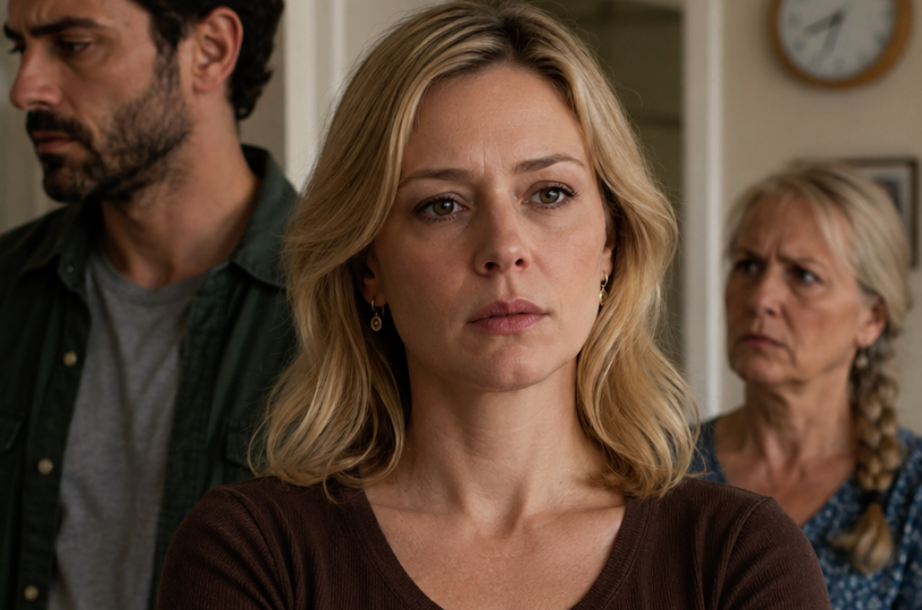
You insult me behind my back, and then ask me for money?” — the relatives had no idea I had heard their conversation.
Marina had always been proud of her career. A good position, a high salary, the respect of her colleagues — she had earned all of it through hard work. At forty-two, she confidently headed the marketing department of a large company. People considered her a successful woman. At least, that was what they said to her face.
Her personal life had turned out differently. Her marriage had fallen apart ten years ago, and she had never managed to have children. Her home greeted her with silence, a silence Marina had learned to value. Her relatives, however, had their own opinion about that.
“Poor Marinochka, all alone,” Aunt Vera would lament every time they met. “Work is good, of course, but who will bring you a glass of water in old age?”
Marina would only smile in response. There was no point arguing.
Once a year, she came to her hometown for her mother’s birthday. Tiny Zelenogorsk greeted her with familiar streets and the scent of lilacs. Family gatherings were always noisy. Two brothers with their wives and children, aunts, uncles, cousins — everyone gathered around a large table.
Marina never arrived empty-handed. Expensive gifts for her mother, treats for the table, clothes for her nephews and nieces. When her brother Sergey had lost his job two years earlier, she had helped him with money. Aunt Vera had received a sanatorium voucher from her.
This year, Marina was bringing a special gift. Her nephew Kirill, the son of her middle brother Andrey, had been accepted into a university in the capital. Tuition was paid, and Andrey had started having problems with his business. Marina had prepared an envelope with money — enough to cover the entire first year.
This time, one of her meetings was canceled. Marina reached Zelenogorsk la
te in the evening, the day before her mother’s anniversary celebration. Deciding to make it a surprise, she did not call in advance. Let it be an unexpected joy!
After parking her car around the corner, Marina walked lightly along the street she had known since childhood. Twilight wrapped the quiet town, and warm lights began to glow in the windows. She imagined how happy her mother would be when she saw her on the doorstep.
Her parents’ house was lit up in every window. Voices drifted out through the open veranda. The family had gathered for dinner. Marina smiled and quickened her pace. But right by the gate, she slowed down and listened when she heard her own name.
“Marina will bring another pile of useless gifts,” Andrey’s voice said. “She thinks her money solves every problem.”
Marina’s hand froze on the latch. She stood still by the fence, afraid to move.
“Tomorrow she’ll be bragging about her success,” her sister-in-law Olga added. “And looking down on us. The Muscovite!”
Marina flinched. She shifted awkwardly from one foot to the other, not knowing what to do. She frowned, trying to calm her pounding heart.
“Successful and miserable,” Aunt Vera added with her usual note of pity. “She has money, but no joy. A career instead of a family — is that happiness for a woman?”
A cold wind seemed to chill Marina to the bone, even though the evening was warm. She gripped her bag tighter, not daring to move and reveal her presence.
“What do you expect from an old maid with a heart of stone?” Aunt Klava’s voice creaked. “She has a calculator instead of a soul.”
Marina lifted her eyes to the sky. Aunt Klava had never liked her, believing that her niece had become arrogant. For many years, Marina had let her barbs pass by unnoticed, but tonight every word hit its mark.
“Did you see how she looked at our renovation last time?” Andrey continued, his cup clinking. “That look: poor relatives, how do you live like this? She flaunts her achievements, and we’re supposed to be the failures.”
“Andrey, don’t exaggerate,” her mother tried to object.
“Oh, come on, Mom, you know it’s true,” Andrey would not stop. “She comes once a year, brings gifts, and looks down on our modest life.”
Marina bit her lip. Was this really what they had always thought of her? She leaned against the fence. Her legs felt weak.
“Marishka is unhappy in her own way,” her mother sighed quietly. “She has a career, money, but not the most important things — family, children. No love.”
Those words wounded her more than anything else. Her mother was the only person whose opinion Marina truly valued. And even she thought her life was empty.
“She has nowhere to spend her money anyway,” came the voice of her second brother, Viktor. “So let her at least help her nephew with his studies. He’s not a stranger, after all.”
Marina drew in a deep breath, trying to hold back the tears rising in her throat. Viktor had always seemed closer to her than the others. As children, they had built huts together and dreamed of traveling.
“She promised to help with Kirill’s tuition,” Andrey said in a tone as if he were discussing a business deal. “We need to ease her into the conversation gently, get her to give a bigger amount.”
A chuckle rolled across the veranda. Marina clenched her fists so tightly that her nails dug into her palms. So all those calls, questions about her life, invitations to come earlier — all of it had been for money?
“A childless career woman spends all her money on expensive outfits anyway,” Aunt Klava declared with obvious pleasure. “So let her at least be useful to the family.”
Hot tears rolled down Marina’s cheeks. For twenty years, she had believed she had warm relationships with her relatives. She had been proud that she could help those close to her. She had been happy when her nephews and nieces called to wish her a happy birthday. She had wiped away their childhood tears, sent parcels for holidays, remembered every important date.
And they had seen her only as a wallet.
Marina wiped away her tears decisively. She straightened her shoulders. Then she sharply pulled the gate latch, and it swung open with a loud creak. She stepped into the yard, causing real panic on the veranda.
Her relatives froze with frightened faces. Her mother pressed a hand to her mouth. Aunt Klava turned pale. In Andrey’s hands, Marina noticed a cup she had brought last time — made of expensive Chinese porcelain. Useless gifts. Of course.
“Marinochka, you’re here already?” her mother stammered, trying to defuse the situation.
In the silence that followed, the chirping of crickets could be heard clearly. Marina looked around at everyone gathered there. The familiar faces suddenly seemed alien and hostile.
“You insult me behind my back, and then ask me for money?” she said in an even voice, gripping the bag with the gifts and the envelope more tightly.
The veranda sank into deafening silence. The relatives’ faces froze in different expressions — from fear to shame. Andrey was the first to recover and gave a nervous laugh.
“Oh, come on, Marina, we were just talking. It was all jokes. You misunderstood,” Andrey said, putting the cup on the table and standing up as he took a step toward his sister.
Marina raised her hand, stopping him. Andrey froze in place.
“Don’t. I heard enough,” she said, slowly walking toward the table without taking the bag off her shoulder. “You know, all these years, I thought of you as family. Real family.”
“Marinochka, sweetheart…” her mother began to rise, stretching out her hand.
“No, Mom, let me finish,” Marina said, casting an icy look over them all. “I denied myself everything so I could help you. When Dad got sick, I paid for his treatment myself. When Viktor’s roof burned down, I took out a loan that I repaid for three years. Your medicines, Mom. The repairs in this house. Your first car, Andrey. And you… you didn’t even consider me a person.”
Her mother turned pale and sank back into her chair. Aunt Klava stared down at her plate as if she had found something extremely interesting there. Viktor nervously drummed his fingers on the table.
“Marin, why are you saying it like that?” he finally raised his eyes. “It was just a bad joke. We love you, truly. We were just talking.”
“Talking?” Marina smiled bitterly. “‘An old maid with a heart of stone.’ ‘A childless career woman.’ ‘Nowhere to spend her money.’ Is that your love?”
Andrey kept studying the floor without raising his head.
Drawn by the noise, her nephew Kirill came out onto the veranda. The tall, thin boy froze in the doorway, looking at the adults in confusion.
“Aunt Marina?” he said uncertainly, taking a step forward. “You’re here already?”
For a moment, Marina softened when she saw her nephew. It was for him that she had prepared the envelope of money. But then she remembered Andrey’s words about how they needed to “ease her into the conversation” and “get her to give a bigger amount.”
“Yes, Kirill. I arrived, and now I’m leaving,” she said. Then she took a small box from her bag, carefully wrapped in bright paper. “This is for you, Mom. Happy birthday.”
Marina placed the scarf on the table, the one she had bought before hearing their conversation. She had wanted to make her mother happy, had imagined her smile. Now the gift seemed pathetic and unnecessary.
“And this,” she said, patting the bag where the envelope with her nephew’s money lay, “I’m taking back with me. The old maid with a heart of stone will no longer be a source of financial support for people incapable of basic respect.”
“Marina, please stay,” her mother said, rising and reaching out her hand. “Let’s talk calmly.”
“We’ve been talking for fifteen years, Mom. I only heard the truth now,” Marina said. Then she turned and headed quickly toward the gate.
“Marina! Stop!” Andrey jumped up. “Please forgive us, we got carried away! Stay!”
She did not turn around, despite the shouts and pleas. Kirill rushed after her, catching up with her right by the gate.
“Aunt Marina, wait!” he looked genuinely upset. “I don’t know what happened there, but they didn’t mean to hurt you, truly!”
Marina only shook her head. She took her nephew by the shoulders and kissed him briefly on the forehead.
“Study well, Kiryusha. And be better than them,” she said. Then she let him go and got into the car.
On the way home, Marina mechanically deleted her relatives’ contacts from her phone. One by one. Mom. Andrey. Viktor. Aunt Klava. She paused the longest on Kirill’s profile picture, but in the end, she deleted him too.
In the following weeks, apology letters came. Andrey called from different numbers, trying to get through to her. Her mother left tearful voice messages. But Marina remained unshakable. She changed her phone number. She changed her email address.
At work, she threw herself completely into a new project. And she used her vacation to travel to Poland. Then came Italy, Portugal, New Zealand. Countries she had kept postponing “for later” while helping her family.
Over time, the pain dulled. Sometimes, while looking through old photographs, Marina felt a stab of regret. But her decision not to communicate with her relatives remained unchanged. She had finally learned an important lesson: sometimes, cutting toxic ties is the only path to true freedom and self-respect.
And that turned out to be the best gift she could have given herself.