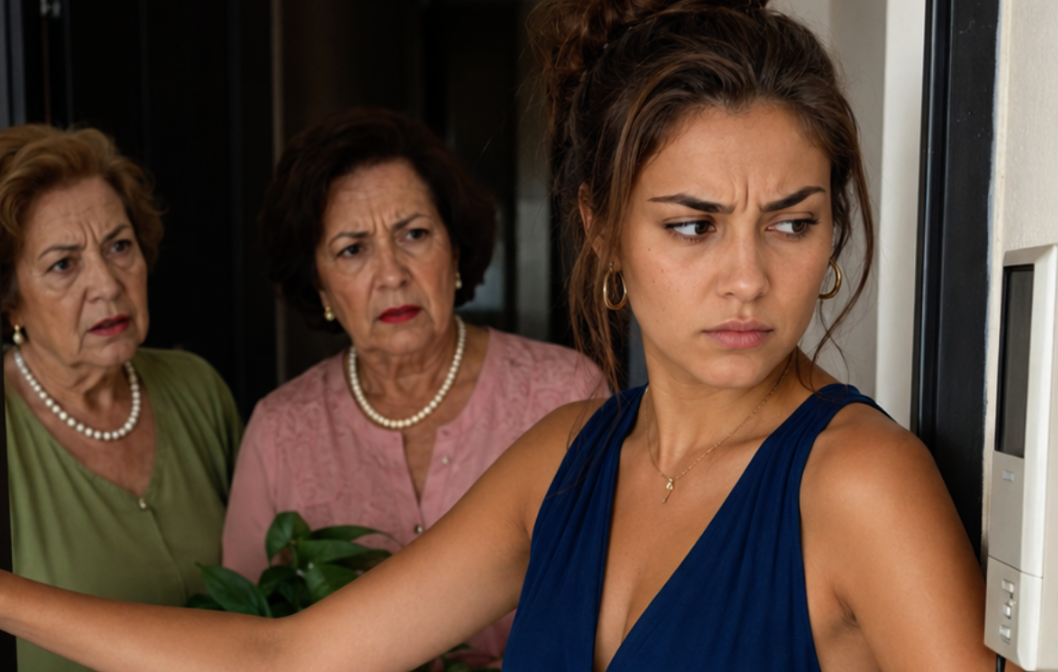
My Mother-in-Law Gave Her Friend the Key to My Apartment. But Her Generosity Ended at My Door.
“Natalia, don’t panic, but by Saturday, clear out your bedroom. Allochka is moving in. I’ve already given her a key to your door, so you don’t even need to meet her. She’ll let herself in.”
My mother-in-law, Zinaida Pavlovna, sounded so casual over the phone, as if she were telling me she had bought a loaf of bread or that it had started raining outside. I slowly lowered my cup of coffee onto the kitchen table, feeling that sarcastic little observer inside me wake up—the one that usually saved me from wanting to call an exorcist during family gatherings.
My mother-in-law had an amazing talent: she loved being generous, kind, and understanding, but only at someone else’s expense.
“Zinaida Pavlovna,” I asked, perfectly calmly. “Which Allochka? And for which lock did you give her a key?”
“What do you mean, which one? My friend, Alla Sergeevna! They’re replacing the pipes in her apartment. Major renovations for a month. Dirt, noise, plumbers walking around. You don’t expect an elderly person to go to a hotel, do you? In the Soviet Union, people always helped each other. It’s only nowadays that everyone has become selfish and thinks only about themselves. A spare room in a family should not stand empty!”
“We don’t have a spare room,” I reminded her of the obvious. “We have a bedroom and an office.”
“Oh, don’t invent problems out of thin air!” my mother-in-law dismissed me, and even through the distance I could picture her waving her hand like royalty, brushing logic aside. “You and Igor can sleep on the fold-out sofa in the office. You’re young; your bones won’t fall apart. But Allochka needs peace, an orthopedic mattress, and dietary meals. I’ve already promised her you’ll cook steamed cutlets, puree vegetables, and wash her laundry. You have a modern washing machine, after all. And remove your personal things from the bedroom dresser. Don’t embarrass me in front of a person. I’ve already promised everything!”
“Zinaida Pavlovna, in the USSR, which you so sincerely miss, people really did open their doors to anyone. But you worked as a warehouse manager, and you only opened doors to the right people with access to scarce goods.”
“You poisonous snake!” my mother-in-law immediately shrieked in an offended falsetto.
She slammed down the phone with a crack, hissing something in farewell like the punctured tire of an elite foreign car.
That evening, when my husband Igor came home from work, he looked unusually thoughtful. He washed his hands for a long time, carefully dried them with a towel, and was clearly gathering his thoughts. Apparently, his mother had already conducted a political briefing through an alternative communication channel.
“Natalia, maybe we should let Aunt Alla stay?” he began uncertainly, sitting down to dinner. “Mom asked so much. She says people need to help each other. We’d be doing a good deed. Just for a month. She’s a quiet woman; she won’t bother us.”
I stopped in the hallway and looked at my husband.
“Igor,” I said, resting my hands on the back of a chair. “Your mother gets the glory of being a savior. I get the cooking, laundry, and a stranger in my bedroom. You get a month on a sagging sofa and trips around town for her errands. Does it still look like a good deed?”
Igor froze with his fork in his hand. The scale of the approaching disaster was beginning to dawn on him. He glanced toward the office, where the old guest sofa stood, its central spring having the nasty habit of digging exactly between the ribs.
“Wait… She’ll be sleeping in our bed?”
“Exactly. On our mattress. And you’ll be driving her to the clinic and the market, because your mother promised her that too.”
“I’m calling Mom right now,” my husband said firmly, pushing his plate aside.
“No need,” I smirked, pouring myself some tea. “Let her come.”
On Saturday morning, the weekend idyll was interrupted by strange sounds. Someone was stubbornly inserting a key into the lock and trying to turn it. The secret was simple: I hadn’t changed the locks or barricaded the door with furniture. I had simply locked the door with the internal night latch. No key from the outside could deal with that.
After about five minutes of struggling, the uninvited guest pressed the doorbell. Demanding, long, openly offended.
I walked slowly to the door, slid back the latch, and swung it open.
Alla Sergeevna towered on the threshold. Beside her stood three enormous suitcases, a huge checkered bag, and, for some reason, a massive spreading ficus in a ceramic pot. My mother-in-law’s best friend looked like a widowed empress in exile who had been given a carriage that was not nearly comfortable enough by some unfortunate mistake.
“Good afternoon, Natalia,” she said dryly, without the slightest thought of apologizing for the intrusion. “What’s wrong with your lock? Zinochka gave me a key, but it won’t turn. Take the suitcases. They’re heavy, and I’m not allowed to lift heavy things.”
“Good afternoon, Alla Sergeevna. There is nothing wrong with the lock. It’s just that the key was given to you by a person who does not live here and has no authority over this apartment.”
“What kind of silly jokes are these?” Alla Sergeevna said indignantly, adjusting the silk scarf around her neck. “Zinaida said you had been informed. I have a strict routine. I need to lie down immediately. And I hope you bought farm-raised rabbit for lunch? I can’t eat store-bought.”
At that moment, the elevator doors opened with a quiet ding, and Zinaida Pavlovna herself floated onto the landing. She had arrived personally to supervise the relocation of her protégée. Seeing that her beloved guest was still standing on the doormat, hugging a ficus, my mother-in-law instantly turned crimson.
“Natalia! What kind of circus have you arranged here? Why is a respected person standing in a draft?”
“Zinaida Pavlovna, according to the laws of hospitality, hosts should always give their guests the very best!” Alla Sergeevna declared pompously, feeling powerful support from the flank.
“Alla Sergeevna, the apartment belongs to me,” I replied with a polite smile. “I did not invite you to live with us, and I did not give my consent.”
“Mercenary little boor!” my mother-in-law squealed.
She puffed out her chest like a city pigeon ready to fight to the death for a stale piece of bread.
Behind me, in the hallway, stood Igor. He remained silent and listened carefully as his mother explained to her friend why her own comfort was more important than her son’s peace.
“Zinaida Pavlovna, don’t waste your nerves,” I said, taking a step forward and turning my gaze to the guest with the suitcases. “Alla Sergeevna, I have one simple, logical question for you. You are my mother-in-law’s best friend, aren’t you?”
“Of course! We’ve been friends for forty years!” she proudly confirmed, straightening her back.
“Excellent. Zinaida Pavlovna has a luxurious three-room apartment. She sleeps in one room, the second is a guest room with a wonderful sofa, and the third is a library where she keeps stacks of old magazines. Why did your best friend send you to live with her daughter-in-law, in a two-room apartment, where I would have to exile my husband to a sagging sofa and wash your laundry myself? Why didn’t she house you at her place, in a comfortable spare room?”
Alla Sergeevna slowly turned toward her friend. Now everyone on the stair landing was looking only at Zinaida Pavlovna. The “empress’s” gaze was rapidly turning into that of a prosecutor.
“Zina?” she asked quietly. “Actually, why couldn’t I stay with you?”
My mother-in-law swallowed nervously. She began fussily fixing her hairstyle, desperately avoiding looking her friend in the eyes.
“Allochka… well, you understand. There’s dust in my library, and you have allergies. Besides, our routines are different. You get up at six in the morning and rattle pots around, while my blood pressure jumps, and I need to sleep… I only wanted what was best! Natashka is young and healthy. It wouldn’t be hard for her to take care of you!”
“You told me Natalia herself offered the room and had prepared everything long ago,” Alla Sergeevna said slowly and clearly. Her voice had turned icy. “So, you decided to dump your best friend into someone else’s apartment, onto people who weren’t even expecting me, while lying to all of us? Just so I wouldn’t disturb your sleep in the mornings? What astonishing generosity, Zinochka. With someone else’s hands.”
Igor stepped forward, finally emerging from the shadow of the hallway. There was no longer any doubt or guilt in his eyes.
“Mom, give back the key. The one you gave away. And give me yours too,” my husband said calmly, holding out his hand.
Zinaida Pavlovna, realizing that her brilliant plan had not simply collapsed but had crushed her own authority beneath it, pulled a keyring from her purse with trembling hands. She detached two keys and threw them irritably onto the small cabinet in the hallway.
“Don’t expect any more help from me!” my mother-in-law announced, as if she had already managed to provide an entire wagonload of it.
“Zina, wait,” Alla Sergeevna commanded authoritatively, grabbing the pull-out handle of the largest suitcase. “We are going to your place. I’m not allergic to dust, but I seem to have developed an allergy to hypocrisy. I’ll stay in your guest room. At the same time, we’ll check how people helped each other back in the Soviet Union. Carry the ficus.”
Behind the door, the suitcase wheels rumbled, while Zinaida Pavlovna indignantly demanded that the ficus leaves not be dragged against the elevator wall.
Igor looked at the returned keys lying on the hallway cabinet.
“Mom wanted to help her friend. Now she finally will. Personally.”
I put the keys away in a drawer. Our bedroom remained ours, and someone else’s generosity went to the address of its true owner.