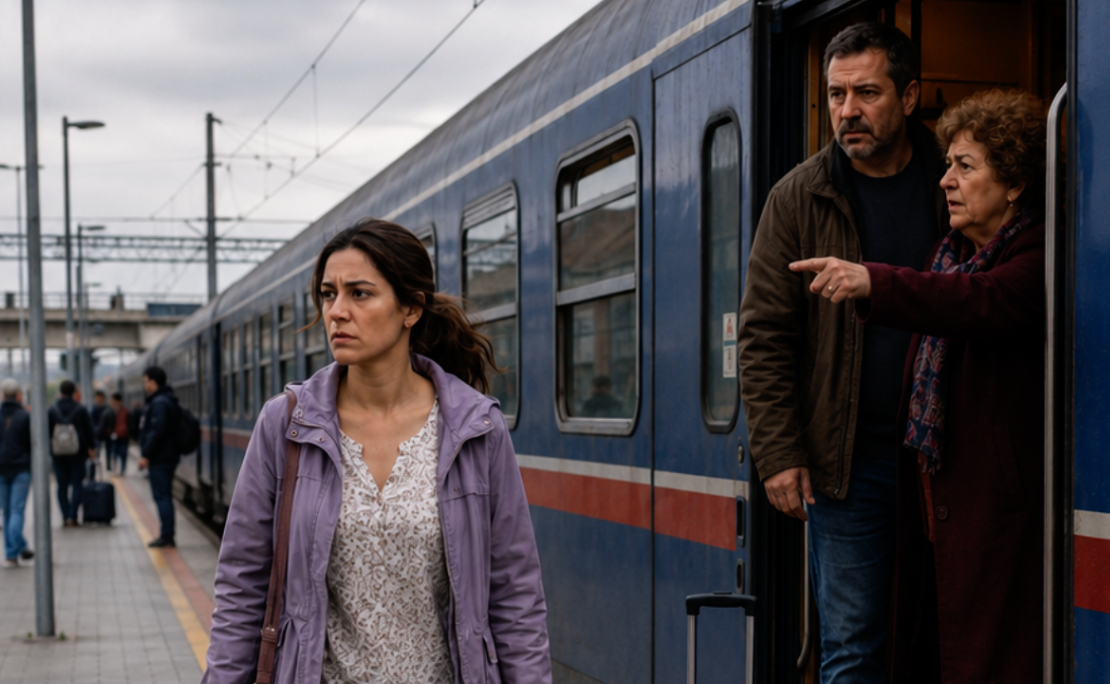
My Husband and His Mother Boarded the Train Without Me. At the Resort, They Were Left Without My Money
The sheet of paper lay beneath the sugar bowl, held down by the salt shaker. Alevtina Sergeyevna was drawing lines across it with a ruler: wake up at 6:30, tea with lemon by seven, the mineral-water gallery after breakfast, the park after lunch, a light dinner by seven.
She wrote the final line larger than all the others:
“I need a helper, not another vacationer.”
Tamara read it and withdrew her hand from the table. Stepan’s voice came from the next room.
“Mom, which suitcase should I put the blanket in?”
“The blue one. Tamara, take the small kettle. Rental apartments usually have useless ones.”
“Tamara, take this” was her mother-in-law’s substitute for addressing her by name. That was how requests, criticisms, and orders always began.
Alevtina Sergeyevna had received a key to Tamara’s apartment two years earlier, “in case there was a leak.” There had never been any leaks, but her mother-in-law regularly entered without ringing the bell. She rearranged the dry goods, checked the milk, and asked why her son was eating “store-bought garbage.” Once, she took all the towels down from the drying rack and rehung them.
“They were hanging crooked,” she said. “It was painful to look at.”
Every time, Stepan found an excuse for her.
“She doesn’t mean any harm. She raised me on her own. It’s hard for her to adjust.”
The apartment belonged to Tamara. She had bought it before the marriage, after five years of long shifts, extra jobs, and refusing to take vacations. Yet in that apartment, her mother-in-law behaved like an inspector, while Stepan acted as her assistant.
Tamara usually stayed silent. Arguing over towels seemed petty. So did arguing over a pot of soup. Then the wardrobe, the key, and Tamara’s right to decide what time she woke up also became “petty matters.”
They had been preparing for their trip to Kislovodsk for almost two months. Tamara had paid for the train tickets immediately. She had also found the apartment near the park. The owner would take payment upon arrival and was holding the reservation based on their messages.
So that Stepan would not ask her for cash at every turn, Tamara had created a virtual card linked to her account and transferred twenty thousand rubles to it for groceries.
He had promised to repay his share of the tickets after receiving his bonus. But the bonus had already been spent before it arrived: his mother needed a jacket, his warehouse had delayed an extra payment, and a neighbor had repaid only part of a debt.
Stepan worked as a warehouseman and earned a steady salary, but whenever he had money, someone else’s urgent need always appeared beside it. Most often, his mother’s.
A week before the trip, Alevtina Sergeyevna came over “to help.” She opened the wardrobe, took out Tamara’s light-colored sweater, and placed it in her own suitcase.
“For the evenings. You’ll be warm anyway.”
Then she took out Tamara’s new sneakers.
“Don’t bring these. People dress properly at resorts. They don’t look as though they’re going out to buy bread.”
Stepan sat on the sofa, scrolling through the news and nodding without looking up. Tamara said nothing. She had bought the sweater with a bonus she had received for completing a major report, but starting a fight over clothing felt embarrassing.
That was how she always gave way—not surrendering the entire room at once, but one item at a time.
That evening, Tamara placed the schedule in front of her husband.
“Have you seen this?”
Stepan read it and frowned.
“Mom likes order. We’ll sort it out once we get there.”
“‘Sort it out’ means I’ll be getting up at six thirty?”
“It’s only eight days. Is it really that difficult?”
She did not answer.
That sentence stayed with her as she fell asleep: was it really so difficult for her to serve someone else during a vacation she had paid for herself?
At the station, Alevtina Sergeyevna immediately sat down on a bench and handed Tamara another list.
Still water. Bread rolls. Wet wipes. A crossword magazine. Two sugar-free yogurts.
There were twelve minutes left before departure. Stepan was placing the suitcases beside the conductor.
“And hurry up,” her mother-in-law said. “The train won’t wait.”
Tamara looked at the underlined yogurts.
She remembered how, a year earlier, Alevtina Sergeyevna had opened the refrigerator with her own key and thrown away an entire pot of soup.
“It’s been sitting here for three days. My son cannot eat that.”
Tamara had silently washed the pot.
Now she remained silent again.
But she did not go to the kiosk.
She sent a message to the apartment owner.
“We won’t be coming. I’m sorry for canceling so late.”
The reply arrived quickly.
“Understood. I’ll cancel the reservation.”
Then Tamara blocked the virtual card.
When Stepan turned around, she was standing at the edge of the platform without any of the items from the list.
“Tamara, what are you doing?”
Alevtina Sergeyevna rose from the bench.
“Get on the train. Quickly.”
“You’re going without me,” Tamara said. “I’m staying.”
Stepan gave a laugh, but it sounded uncertain.
“But you organized everything. The apartment, the money…”
“I organized a vacation. Not a work shift serving your mother.”
“Don’t make a scene,” he said more quietly. “People are watching.”
“Then get on the train.”
The conductor urged the passengers to hurry. Alevtina Sergeyevna grabbed her son by the sleeve.
“Don’t run after her. She’ll call when she comes to her senses.”
The train began to move.
Stepan stood in the vestibule with his palm pressed against the glass. Tamara did not raise her hand.
The carriages disappeared, leaving behind a paper cup rolling near the tracks.
On the bus, Tamara found the list in her pocket. The paper had softened from the pressure of her fingers. She tore it up and threw it into the trash can near the driver’s seat.
The apartment was quiet when she returned home.
Not peaceful. Just unfamiliar.
On the way, Tamara had bought a cabbage pie. She put the kettle on and sat in the kitchen without setting out any plates.
Stepan called that evening from the train. He did not begin by asking whether she had made it home safely.
“The card isn’t working. The apartment owner says the reservation was canceled. What have you done?”
“I didn’t go. That means I don’t need the apartment.”
Alevtina Sergeyevna whispered in the background.
“Tell her to turn it back on. She’s not a child. She’ll calm down.”
“Transfer at least enough money for somewhere to sleep,” Stepan said. “We’re almost there.”
“Your mother has money.”
“She won’t touch her emergency savings.”
“Then she has a choice.”
Tamara ended the call.
An hour later, she still transferred two thousand rubles for a taxi and the first night.
Not because she had changed her mind.
She was simply frightened by the old accusations: that she had abandoned them, let them down, humiliated them.
The next morning, a message arrived from her mother-in-law.
“This isn’t enough. Is my son now supposed to carry my bags all over an unfamiliar city?”
Then Stepan wrote:
“Mom rented a room near the station. We need money for food.”
Tamara stared at the screen for a long time.
The day before, she had given in a little so they would leave her alone.
They had not left her alone.
She blocked the card permanently and did not reactivate it.
On the third day, Stepan sent a voice message. Dishes clattered in the background. Alevtina Sergeyevna was speaking so close to the phone that it sounded as though she were recording the message herself.
“I raised him alone. I have the right to enjoy a proper vacation.”
Then Stepan said wearily:
“Mom found a cheaper apartment. She transferred the money from her own account.”
The woman who supposedly had “not a single kopeck beyond her pension” turned out to have twenty-seven thousand rubles.
That evening, Alevtina Sergeyevna called Tamara herself.
“I had to spend money because of you. You’ll repay me before the end of the month.”
“I didn’t invite you to come with me,” Tamara said. “You invited me to come with you—to pay, cook, and run around buying yogurts.”
Her mother-in-law inhaled loudly.
“What, am I supposed to run around by myself? I have high blood pressure. Stepa doesn’t know where anything is.”
“He’ll learn now.”
“You’ve become rude.”
“No. I’ve started answering.”
After that call, Tamara locked the door with more than just the existing locks. The following day, she called a locksmith and had the lock cylinder replaced.
The old key lay on the hall table, light and useless.
Stepan returned two days early.
At ten in the evening, the doorbell rang. Tamara looked through the peephole. He was standing alone with a backpack. Apparently, he had already taken his mother home by taxi.
“Open the door. Let’s talk,” he said.
“Not tonight. Tomorrow, at a café.”
“Tamara, I’m tired.”
“So am I.”
The landing fell silent.
Then a key turned cautiously in the lock.
It did not fit.
Stepan understood and put it back into his pocket.
“Tomorrow,” he said.
At the café, he did not begin by talking about his mother’s hurt feelings. He sat there, crumpling a paper napkin and speaking unevenly.
“I thought you were exaggerating. But there… from the moment she woke up, it was tea, the pharmacy, the market. I sat down on a bench and she was already offended. She said I had abandoned her. I lost my temper. Then I realized that’s what you deal with every day.”
Tamara did not help him finish his sentences.
“I’m not asking you to choose between us,” she said. “But you will no longer bring her into my apartment, my finances, or my vacations. If you want to help her, do it yourself.”
“I understand.”
“No. So far, you’ve only heard me.”
He nodded.
That was better than excuses.
The following week, Stepan transferred the money for his share of the train tickets. In the message, he wrote:
“I should have done this immediately. No reply needed.”
He rented a room near the warehouse. He did not ask for a new key.
Several times he invited Tamara to meet, but when she replied, “Not today,” he accepted it.
Three weeks later, he came for dinner. He brought bread and apples. He washed the dishes without being asked, adjusted a crooked cabinet door, and did not say, “See, I’m trying.”
That was more noticeable than any apology.
On Sunday morning, a message arrived.
“They’re replacing the pipes at Mom’s apartment. I offered to pay for a hotel, but she’s already on her way to your place. Can she stay until Wednesday?”
Tamara read it twice and replied:
“No.”
At half past five, the doorbell rang.
Alevtina Sergeyevna stood outside in a traveling coat, with a suitcase and a bag of pastries.
“Stepan said you wouldn’t refuse.”
Tamara left the security chain fastened.
“Stepan said he would ask.”
“You’ve turned him against his own mother.”
“No. I simply didn’t open the door.”
The elevator stopped.
Stepan stepped onto the landing. He saw the suitcase, the partly opened door, and his mother’s face.
“Mom, I didn’t say you could stay here.”
“She has completely changed you.”
“I said a hotel. I’ll pay for one night and a taxi. You can stay with Tamara only if she invites you herself.”
Alevtina Sergeyevna squeezed the bag. Grease stains appeared on the paper.
“You’re throwing your own mother out.”
“I’m not throwing you out. I’m refusing to make you someone else’s responsibility.”
She went pale and pressed the elevator button.
When the doors closed, Stepan remained on the landing.
“I assumed again that you would feel too uncomfortable to refuse,” he said. “Even though I technically asked.”
Tamara kept one hand on the security chain.
She wanted to open the door simply to end the scene as quickly as possible.
But that was exactly how the old pattern always returned—disguised as a desire to “get it over with.”
“Don’t come in today. Deal with this first.”
“All right.”
He went after his mother but did not ask Tamara to “be understanding.”
After that, Stepan lived separately for another two months. He visited his mother on Thursdays and called her in the evenings, but he no longer passed her errands on to Tamara.
When Alevtina Sergeyevna demanded groceries “right now,” he answered:
“On Thursday.”
When she reminded him that she had sacrificed her youth for him, he said:
“I remember. I can’t today.”
Sometimes she hung up.
He did not call back first.
Tamara did not rush either. She met him when she wanted to, not when he was standing outside her door.
She watched him learn to say a brief “no” without giving a long speech afterward.
Sometimes she was angry. Sometimes she missed him.
But she no longer confused pity with consent.
In May, she suggested that they spend a weekend in Vologda. They each bought their own ticket.
Stepan sent her his boarding pass and asked:
“Do you prefer the window or the aisle?”
They arrived at the platform carrying backpacks.
No suitcases. No lists. No one else’s errands.
Before boarding, Stepan’s phone vibrated.
The screen displayed one word:
“Mom.”
He looked at it, declined the call, and slipped the phone into his pocket.
“Are you comfortable?” he asked, taking Tamara’s small bag.
Tamara nodded and stepped onto the train first.