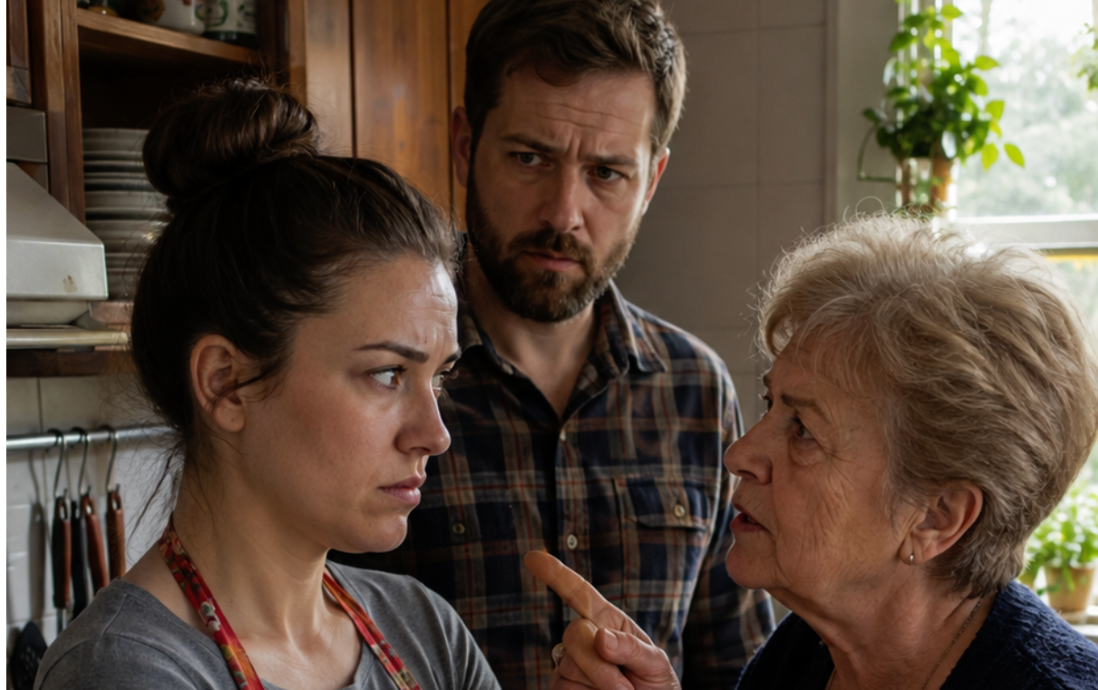
“How Could You Cancel the Transfer? My Mother Needs Your Bonus Urgently! Your Parents Have Pensions,” Her Husband Fumed
“Your parents have pensions. My mother needs your bonus much more right now,” Sergey said, sliding the phone toward his wife. “Confirm the transfer. Without this operation, she won’t be able to walk.”
Nastya looked at the banking app on the screen. The amount was almost exactly equal to her annual bonus. The numbers blurred before her eyes, and she blinked several times as though hoping they would somehow change.
For the past month, her mother-in-law had been calling almost every day. She complained about the pain, sent photographs of medical reports, and said that the doctors insisted she needed urgent surgery, otherwise her condition would deteriorate rapidly. Lyudmila Vasilyevna knew how to sound convincing—with a quiet, broken voice that made Nastya’s heart ache.
Nastya sighed heavily and pressed the confirmation button.
She didn’t yet know that only a few minutes later, she would realize she had been deceived.
For four years, she and Sergey had been building what people usually call a life together. Their rented apartment had been replaced by one bought with a mortgage. They had a shared budget, dinners together, and the habit of falling asleep while watching the same TV series.
Everything seemed to be going normally.
In December, Nastya received her annual bonus, and it was unexpectedly large. Management had appreciated her project, and an amount of money she had previously only dreamed about appeared in her bank account.
Nastya didn’t start planning a vacation or new appliances. Her first thought was of her parents.
Her father had suffered a heart attack that autumn. He spent almost three weeks in the hospital and then recovered at home for a long time, thinner and unusually quiet.
Her mother suffered from arthritis. Her knees hurt with every step, especially in damp weather.
But neither of them ever complained to their daughter, much less asked her for money.
“Don’t worry about us,” her mother said during every phone call. “You’d be better off paying down your mortgage faster. We have everything we need.”
Nastya still wanted to buy them good imported medication that wasn’t available at their local pharmacy and pay for a rehabilitation course for her father.
She had almost finished making a list.
But that was exactly when her mother-in-law became particularly active.
Lyudmila Vasilyevna first called in early November to complain about her leg. Then she called again. And again.
Each time, she mentioned new symptoms, new diagnoses, and new things the doctors had supposedly told her. She sent medical images through a messenger app. Nastya honestly tried to understand them but couldn’t make sense of anything.
Sergey patiently explained:
“Your parents have pensions and free healthcare. My mother really needs the money more right now. You understand—the operation can’t wait.”
Nastya nodded.
She trusted her husband.
She trusted her mother-in-law.
It never even occurred to her to doubt them.
The day the bonus arrived in her account, Nastya nevertheless felt something resembling anxiety.
It wasn’t fear—more like a faint uneasiness that she couldn’t shake.
“Maybe we should go to the doctor together first?” she suggested over breakfast. “Or at least find out the exact price at the clinic. I could pay the hospital directly instead of transferring the money to Lyudmila Vasilyevna.”
Sergey put his mug down on the table more sharply than necessary.
“What, you don’t trust my mother?” irritation appeared in his voice. “Do you really think she would lie about her own health?”
“That’s not what I mean…”
“Then what do you mean?”
Nastya fell silent.
That same evening, someone rang the doorbell.
Lyudmila Vasilyevna stood on the doorstep wearing a dark coat, with a large folder tucked under her arm. She stepped inside with a slight limp and sank heavily onto the sofa as though every movement caused her pain.
“Here, I brought everything I have,” she said quietly, spreading printouts, scans, and referrals across the coffee table. “The doctor said that if I don’t have the operation before the end of the year, things will get worse. Much worse.”
She spoke slowly, occasionally falling silent and placing a hand on her knee. Then she took out a handkerchief and quietly dabbed her eyes.
“I just don’t want to become a burden,” she added in an even quieter voice. “But I can barely walk anymore.”
Nastya looked at the older woman and felt the last of her resistance melting away.
Sitting in front of her was an aging mother exhausted by pain.
How could she possibly doubt her?
“All right,” Nastya sighed heavily. “I’ll transfer the money to you today.”
Lyudmila Vasilyevna prepared to leave—and suddenly rose from the sofa with surprising ease and put on her coat.
Sergey threw on his jacket and offered to walk his mother to the taxi.
Nastya remained alone in the apartment.
She sat on the sofa, staring at the medical papers spread across the table, which her mother-in-law had forgotten to take with her.
Or perhaps she had deliberately left them there to make the story more convincing.
Fifteen minutes later, Sergey returned. He closed the door, entered the room, and stopped beside her.
“Well, did you send it?” he asked, nodding toward her phone.
“Not yet.”
He sat down beside her, picked up her phone from the table, and silently opened the banking app.
“Let’s do it right now. There’s no reason to wait,” he said, handing her the phone with the transfer form already open. “Mom has to pay tomorrow.”
Nastya took the phone.
She looked at the amount.
Then she pressed confirm.
The transfer began processing.
“That’s it,” Sergey said with satisfaction as he stood up. “I’ll call her and tell her the money’s been sent.”
He went out onto the balcony and immediately called his mother.
Nastya picked up the mugs from the table to take them to the kitchen, and through the balcony door, which hadn’t been fully closed, she caught part of his conversation.
“It worked. The money’s already been sent. Just wait—it should arrive in your account today or tomorrow.”
Nastya froze.
Her mother-in-law’s loud, cheerful voice came through the phone:
“Finally! Now I can book that seaside health resort without worrying. I’ve wanted a proper vacation for ages. Good thing your wife is so gullible.”
The mugs clinked softly in Nastya’s hands.
She didn’t go into the kitchen.
She stood in the middle of the hallway, staring blankly ahead.
There was no operation.
No pain.
No doctors.
Just a seaside vacation.
Nastya silently opened her banking app.
The transfer was still marked as processing.
She pressed the cancel button quickly, almost without thinking, before something inside her could make her hesitate.
For several seconds, nothing happened.
Then the screen flashed and a notification appeared:
“Transaction canceled. Funds returned to your account.”
Nastya put the phone into her pocket.
Behind the balcony door, Sergey was still laughing at something his mother had said.
Lyudmila Vasilyevna rang the doorbell at half past nine the next morning.
Nastya opened the door herself. Sergey was still in the kitchen making coffee.
Her mother-in-law stepped into the hallway without the slightest limp.
Confidently and easily, as though yesterday’s pain had never existed.
“Nastya, the transfer hasn’t arrived,” she said matter-of-factly as she took off her coat. “I need to pay the surgery bill today. Maybe there was some technical problem?”
Nastya calmly picked up her phone from the hallway table and placed it face-up on the cabinet.
“There was no technical problem. I canceled it myself.”
Lyudmila Vasilyevna opened her mouth, but Nastya continued in an even voice without raising it.
“Last night, I accidentally overheard your conversation with Sergey. About the health resort. About the sea. And about how gullible I am.”
For a second, Lyudmila Vasilyevna stared at her daughter-in-law.
Then something in her expression changed.
The feigned exhaustion disappeared, replaced by irritation.
“So what?” she waved her hand irritably. “I exaggerated a little. You’re young—you’ll earn more money. I want to enjoy my life too, you know.”
Sergey appeared in the doorway with a mug in his hand.
He looked from his mother to his wife and remained silent.
“Sergey,” Nastya said quietly. “Did you hear that?”
He put the mug down on the shelf.
“I heard.” He paused. “But you’re causing a scandal over some money. She’s my mother. You have to understand.”
Nastya looked at her husband for a long time and very carefully—the way one looks at someone when they want to remember their face forever.
Then she silently walked into the bedroom.
It didn’t take her long to pack.
There was no rushing and no crying.
She took her documents, laptop, and enough clothes for several days—only the essentials.
Sergey stood in the bedroom doorway watching her put everything into a bag.
“Nastya, don’t be stupid,” he finally said. “Where are you going?”
“To my parents.”
“Because of the money? Seriously?”
She zipped the bag and looked at him.
“Not because of the money.”
She didn’t explain anything else.
She called a taxi, put on her jacket, and left, carefully closing the door behind her.
Her mother opened the door and didn’t even have time to ask what had happened. She simply stepped aside and let her daughter in.
Only after Nastya sat down on the sofa and briefly told her everything did her mother remain silent for a long time, staring out of the window.
“If someone is capable of taking your money through deception today,” she finally said quietly, “tomorrow he’ll take something much more important.”
Nastya nodded.
She had been thinking the same thing throughout the entire taxi ride.
A few weeks later, she filed for divorce and division of property.
Sergey sent her messages—hurt ones at first, then angry ones.
He wrote that she had destroyed their family because of her whims, that she would regret it, and that she was behaving like a child.
Nastya read the messages but didn’t reply.
She understood something that he apparently still didn’t:
It wasn’t about the amount of money in the transfer.
It was about the fact that the person who was supposed to stand beside her had chosen to lie to her—deliberately, coldly, and without the slightest remorse.
Trust cannot simply be restored.
You either protect it, or you lose it forever.
The divorce was finalized several months later.
They put the apartment up for sale, and the transaction went through quickly.
The money was divided equally, without arguments, through their lawyers.
The first thing Nastya did after her share of the money reached her account was open the list she had started making back in December.
Imported medication for her father.
A rehabilitation course.
A good orthopedic mattress for her mother—the one she had casually mentioned wanting long ago but had never directly asked for.
Nastya placed all the orders that same day.
Several weeks later, she accidentally came across her former mother-in-law’s social media page.
Lyudmila Vasilyevna was smiling against the backdrop of a blue sea, holding a misted cocktail glass in her hand.
The caption beneath the photograph read:
“Finally getting some rest!”
Nastya stared at the screen for a second.
Then she calmly closed the page.
She felt neither anger nor bitterness—only a quiet, steady sense of clarity.
Sometimes losing someone who turns another person’s compassion into a tool for manipulation isn’t really a loss.
It is a way of preserving something far more important: