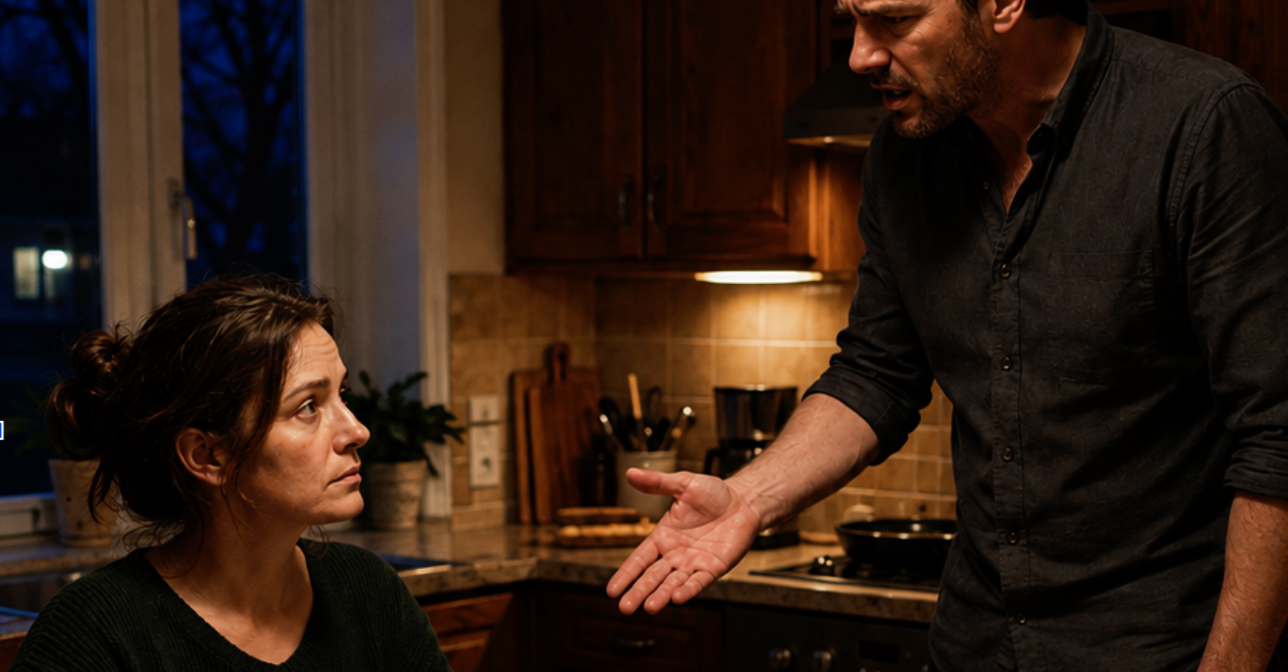
“Olga, where’s my lunch?” Sergey stood by the kitchen table, holding his work bag. Before him sat an empty glass container, missing its usual contents.
“In the cupboard,” Olga replied.
Sergey blinked. “You didn’t cook anything yesterday?”
“No. You can eat in the cafeteria at your workplace.”
“It’s expensive,” he argued.
“Then take some of your own money.”
The kitchen fell silent. The tension stemmed from the previous day. Sergey had transferred eighty-two thousand rubles—nearly his entire salary—to his mother, Valentina Pavlovna, leaving himself with a mere seven thousand for gas. More importantly, he had skipped his mandatory forty-five-thousand-ruble contribution to their joint household account.
“We can manage for one month,” Sergey had insisted.
“It won’t bankrupt you, certainly,” Olga noted coldly. “You’ve already decided what to do with your money. Now I’ll decide what to do with mine.”
Sergey hadn’t consulted her. His mother wanted light-colored kitchen cabinets and needed a down payment. To Sergey, it was a son’s duty. To Olga, it was a betrayal of their financial agreement.
“Because I helped my mother, you’re letting me go hungry?” he asked.
“You’re a grown man. Choose between gasoline and lunch. You created the punishment; I simply refused to pay for it.”
Sergey shoved the empty container into his bag and stormed out. In the past, Olga would have felt guilty and rushed to fry eggs. This time, she remained perfectly still. At her job as a medical center procurement specialist, Olga dealt with strict budgets daily. Resources spent on one item couldn’t be spent elsewhere. At home, their arrangement was identical: both transferred equal amounts for shared expenses. Sergey, however, always spent his personal funds quickly on his car or his mother, occasionally borrowing from Olga. This wasn’t a few thousand rubles; this was their entire household budget compromised for aesthetic cabinets.
Meanwhile, Sergey’s day was miserable. Cafeteria lunch cost four hundred and twenty rubles for dry cutlets. Calculating his cash, he realized seven thousand wouldn’t cover a month’s gas and food. He assumed Olga would cool down by evening.
He arrived home to the smell of baked fish. However, there was only one plate.
“Where’s mine?” he asked.
“I cooked one portion because I was the only one who bought groceries,” Olga replied.
Frustrated, Sergey attempted to cook pasta in a small saucepan, boiling water over the stove and burning his fingers. The result was an unsalted, sticky lump. “Mom invited us over on Sunday,” he mumbled as he chewed. “We need to carry out the old cabinets.”
“I’m not going,” Olga stated.
“How long are you going to keep up this circus?”
“Until you return forty-five thousand rubles to the joint account. I’m not stopping you from helping your mother. Just don’t do it at my expense.”
Over the next few days, Sergey’s remaining cash dwindled. He resorted to cheap sausages. Olga had even divided the refrigerator shelves. Sergey clumsily peeled potatoes and burnt his dinners, while Olga calmly watched. When he left a greasy pan in the sink, she made him get out of bed to wash it. Slowly, Sergey was learning the invisible labor she had always managed. Valentina Pavlovna called Olga, furious that she refused to attend Sunday’s gathering. Olga stood her ground, explaining she would no longer finance decisions made without her consent.
On Sunday, a hungry Sergey arrived at his mother’s apartment, spending his last rubles on a Swiss roll for tea. The place was filled with boxes. Instead of feeding him, his mother saved the roll for the neighbors and set him to work carrying cabinets downstairs.
When he returned, sweating, he found his mother arguing over cabinet handles. She wanted ones with a gold stripe, costing six thousand extra.
“Son, do you have anything on your card?” she asked.
“Mom, I transferred almost my entire salary to you. I have nothing.”
Valentina Pavlovna offered him only tea and cookies. When Sergey pointed out he hadn’t eaten all day, she dismissively told him to order something.
“I barely have money,” he pleaded. “Just give me back five thousand for groceries.”
“From where? I paid extra for delivery,” she retorted. “Doesn’t Olga give you anything? She’s your wife. She’s supposed to feed you.”
“You received the money intended for our groceries.”
“A son gives his mother money once, and now he holds it against her? Explain to her who the man of the house is.”
Sergey stared at the light-colored cabinets. Suddenly, the aesthetic upgrade looked grotesque. His mother hadn’t asked how he would survive the month. She hadn’t offered a hot meal despite his physical labor. She simply expected Olga to silently absorb the collateral damage of her desires. Disgusted, Sergey put on his jacket and left without finishing the work. Returning home, Sergey found Olga chopping vegetables. He sat heavily at the table, a changed man. “She wouldn’t give me the money,” he admitted quietly. “She said you were obligated to feed me, and that I should show you who the man of the house is. I’d never really heard how that sounded before.”
“What should I do?” he asked, not for himself, but for them.
Olga opened their household ledger. “Here is what you will do:
Return your share: Pay back the forty-five thousand rubles to the joint account.
Communicate: Don’t transfer large amounts without discussing it with me first.
Participate: Take an active role in household chores. We take turns cooking.”
Sergey checked his bank app. “I have seven hundred and eighty rubles left.”
“That’s enough for chicken and bread. I have potatoes. We split the cost, and I’ll write down that you owe me.”
That evening, they cooked soup together. Sergey carefully cut the vegetables, staying in the kitchen instead of retreating to the television. It was a simple meal, but it represented a
profound shift.
Over the next month, Sergey learned to fry omelets, bake chicken, and manage his daily provisions. When his mother called to complain about needing matching chairs, Sergey held firm. “I’ll help when you genuinely need something, and when I have money to spare. New chairs are not a necessity.”
When his next salary arrived, Sergey transferred the full forty-five thousand rubles to the joint account, plus what he owed Olga.
“Can we live the way we used to now?” he asked.
“I don’t want things to be the way they used to be,” Olga replied softly. “We’ll both cook. And we make decisions together.”
Sergey packed their lunches that night. He filled the green-lidded container for Olga, and the blue-lidded one for himself. He finally understood that his empty container hadn’t been a punishment, but a reflection of his own empty understanding of partnership. He wiped down the stove, washed the pan, and placed Olga’s container on the lower shelf so she wouldn’t forget it—a gesture of care he had finally learned to reciprocate.