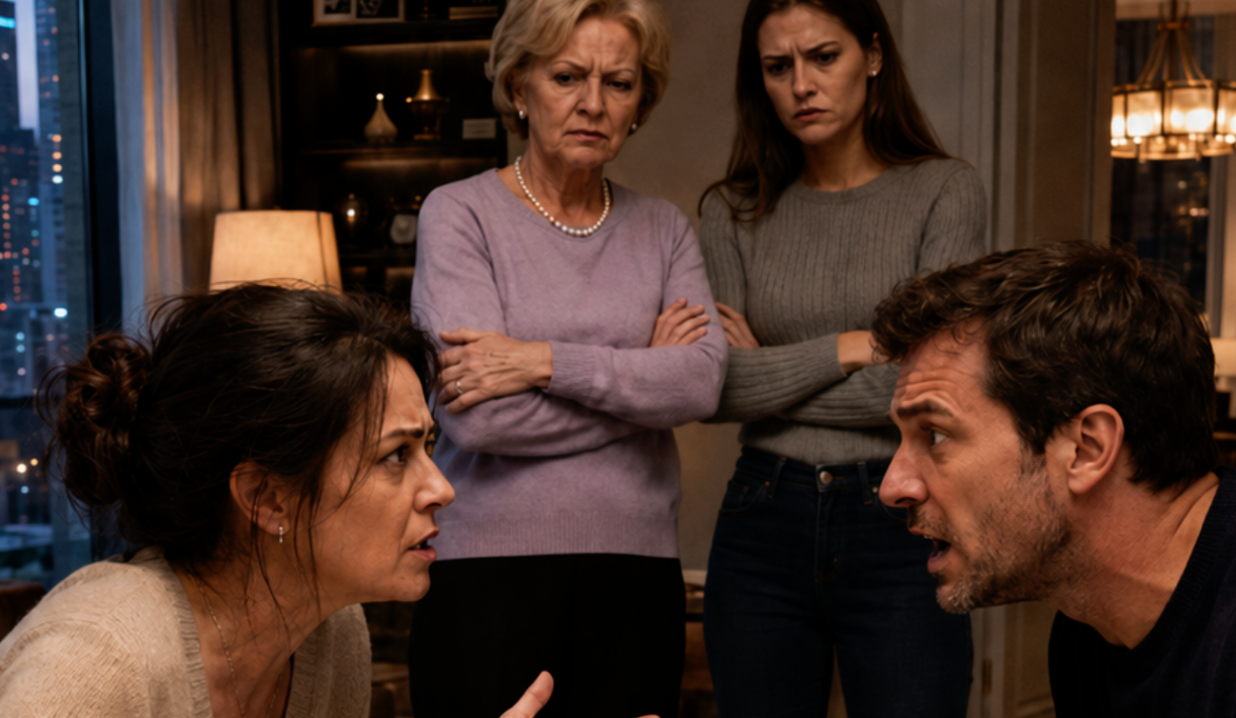
“An Apartment for Your Mother, a Car for Your Sister—And What Do I Get?” I Snapped at My Husband
For years, Polina and Andrey lived from paycheck to paycheck.
They rented a tiny one-room apartment with a window facing a construction site. In winter, cold air slipped through the frame, and Polina sealed the gaps with strips of old cloth. Their landlady raised the rent every year, and although Andrey always said they would move someday, “someday” never seemed to come.
They had debts, little savings, and no financial safety net.
Polina worked as a manager at a logistics company and took side jobs preparing contracts and handling paperwork for acquaintances. Andrey worked as a technician and sometimes repaired appliances for neighbors in the evenings.
Then Polina saw an opening for a department head position at her own company.
She applied without telling Andrey because she didn’t want to get her hopes up.
The interview went well.
The next day, she got the call.
She had been promoted.
When she came home, she quietly said:
“I got a promotion.”
Andrey looked up from his phone.
“Seriously?”
“Department head. My salary will be twice as high.”
He stood, hugged her, and told her he was proud of her.
For the first time in years, Polina felt that things might finally become easier.
Her first larger salary arrived at the end of the month.
She looked at the amount for a long time before transferring part of it into a savings account.
It was the first time she had ever been able to do that.
Three months later, something even more unexpected happened.
A notary called her.
Her uncle Nikolai, whom she had barely seen in recent years, had died and left her money.
“How much?” Polina asked.
“Five million rubles.”
For a moment, she could hardly understand what she had heard.
Five million.
She had spent years counting every thousand rubles, worrying about groceries, bills, rent, and debt.
Now she had five million.
That evening, she told Andrey.
“Uncle Kolya left me an inheritance. Five million rubles.”
Andrey stared at her.
“That’s a lot of money.”
“Yes.”
“We need to decide what to do with it.”
Polina nodded.
She had already been thinking about buying an apartment.
Their own apartment.
No more rent.
No more freezing windows.
No more worrying about what would happen if their income suddenly disappeared.
But before she could say any of that, Andrey spoke.
“Mom needs an apartment.”
Polina looked at him.
“What?”
“You know how she lives. That communal apartment is terrible. A decent one-bedroom place would cost around three million.”
Polina slowly picked up her glass of water.
“Andrey, we live in a rented apartment ourselves.”
“We can deal with ours later.”
“How?”
“Your salary is good now. We can save.”
Polina stared at him.
Something about the conversation felt wrong.
“And what about the remaining two million?”
“Sasha needs a car.”
Sasha was Andrey’s sister.
“She takes the bus to work,” he continued. “A decent used foreign car would be around one and a half or two million.”
Polina put down her glass.
“Wait. Three million for your mother and two million for Sasha?”
“Yes.”
“That’s five million.”
“Yes.”
“That’s my entire inheritance.”
Andrey hesitated.
“They’re family, Polina.”
“So am I.”
“We’re doing fine.”
“We’ve been renting a freezing one-room apartment for four years.”
“That’s temporary.”
“Andrey, how long does something have to last before it stops being temporary?”
He frowned.
“That’s not the point. We’re talking about the money.”
“Exactly. My money.”
“Our money,” he corrected.
“No. The inheritance is mine.”
Andrey looked surprised.
“We’re married.”
“And you just distributed all five million without even asking me.”
“I didn’t distribute it. I suggested something.”
“You said three million to your mother and two to Sasha. That sounds more like a finished plan.”
“We can discuss it.”
“Good. Then tell me what we get.”
Andrey said nothing.
“Well?”
“We can save for ourselves later.”
Polina felt anger rising.
“For seven years, we haven’t been able to save properly. Now I finally earn more, and I’ve received an inheritance, and your first idea is to spend all of it on your mother and sister.”
“They’re our family.”
“They’re your family. I’m your family too, Andrey. But somehow I’m not part of your plan.”
“You’re exaggerating.”
“Am I? Three plus two equals five. There is nothing left.”
Andrey sighed.
“Maybe Mom can find something cheaper. Sasha doesn’t need an expensive car.”
Polina stared at him.
“Do you hear yourself? You’re negotiating how to divide my inheritance between your mother and sister.”
He fell silent.
Polina thought of all the years she had taken extra work.
All the mornings she had woken up early.
All the times she had counted every ruble.
She had kept telling herself that eventually things would improve.
And now that they had improved, Andrey’s first instinct was to give everything away.
“I want to buy an apartment,” she said.
“For us.”
Andrey spread his hands.
“I thought that was obvious. We live together.”
“Then why wasn’t it the first thing you mentioned?”
“My mother is suffering.”
“I know. And I’m willing to discuss helping her. But I’m not willing to give away everything.”
“Don’t you feel sorry for her?”
“I do.”
“Then what’s the problem?”
“The problem is that you expect me to solve your family’s problems with my inheritance while I continue living exactly as before.”
Andrey grew irritated.
“Mom deserves normal housing.”
“I agree.”
“And Sasha needs reliable transportation.”
“I agree.”
“So?”
“So where are we?”
“We’re managing.”
“No,” Polina said quietly. “We’re enduring. There’s a difference.”
Andrey raised his hands.
“Fine. We buy Mom an apartment, Sasha a car, then we save from your new salary for our own place.”
Polina stared at him.
“You’re doing it again.”
“What?”
“Your mother first. Your sister second. Us last. And somehow the future savings come from my salary.”
“I’m just making a plan.”
“So am I. Except in my plan, my husband and I aren’t last.”
Andrey walked to the window.
“So you’re refusing to help my mother?”
“Stop twisting what I’m saying.”
“You have five million and don’t want to help people close to us.”
“I want to help myself too.”
“Family matters more than money.”
Polina felt something inside her become suddenly calm.
“Andrey, I am family.”
He turned toward her.
“I’m your wife. I worked for years. I took extra jobs. I fought for that promotion. Uncle Kolya barely knew me, but he still thought about me enough to leave me something. And the first thing you did was give it away in your head.”
“Are you saying Mom and Sasha are strangers?”
“I’m saying they are your relatives. Their problems are not automatically my financial responsibility.”
“That’s greed.”
Polina’s expression hardened.
“Greed?”
“Yes. You have five million and won’t help your own family.”
“Your family. With my money.”
“We’re married. It’s our money.”
“The inheritance is legally mine.”
Andrey froze.
“What do you mean?”
“It’s personal property. Even in a divorce, it isn’t automatically divided.”
There was a long silence.
“Why are you talking about divorce?”
“I’m talking about who owns the money.”
“That’s not how marriage works.”
“Your version of marriage seems to be that I earn and you decide who receives it.”
Andrey sat back down.
“Fine. Tell me what you want.”
“An apartment for us first. If money remains afterward, I’m willing to discuss helping your mother.”
“And Sasha?”
“If there is enough.”
“They’re not strangers.”
“They’re not my parents either.”
Andrey remained silent.
That silence told Polina everything.
The next morning, the argument began again.
Andrey casually mentioned that his mother was already looking at apartments.
“Sasha found a good car too.”
Polina looked up sharply.
“They’re already looking?”
“Mom was just checking options.”
“I haven’t agreed to anything.”
“They’re hoping.”
“Then they shouldn’t.”
Andrey frowned.
“You’re heartless.”
“Maybe. But I never promised them my money.”
That same day, Polina called a lawyer.
At the consultation, the lawyer explained that an inheritance received during marriage was her personal property as long as it had not been mixed into jointly owned assets.
Polina listened carefully.
“Then I want to talk about divorce.”
That evening, she told Andrey.
“I want a divorce.”
He stared at her.
“Because of money?”
“Because of the way you think about money. And because of the way you think about me.”
“We can fix this.”
“We already talked.”
“I just want to help my mother.”
“And I want to stop living like I have to sacrifice everything for everyone else.”
Andrey tried several times to change her mind.
He called.
He sent messages.
He even arrived with flowers at her mother’s home, where Polina was temporarily staying.
But every conversation eventually returned to the same subject.
His mother.
His sister.
The five million.
Eventually, Polina understood something painful.
It felt as though Andrey wanted access to the inheritance more than he wanted to repair their marriage.
She stopped responding.
During the divorce, Andrey tried through his lawyer to include the inheritance in the division of property.
He failed.
The money had remained in Polina’s separate account.
Not a single ruble had been spent on shared property.
Their jointly owned belongings were divided separately.
A car.
Some furniture.
Household items.
Nothing significant.
Andrey moved in with his mother in the communal apartment.
Several months later, Polina found her own apartment.
It had two rooms, high ceilings, light parquet floors, and windows facing east.
There were trees in the courtyard.
She viewed it twice.
On the third visit, she bought it.
The apartment was registered only in her name.
On moving day, Polina carried the first box inside and stood quietly in the empty hallway.
The apartment smelled of fresh paint and wood.
She walked through the rooms.
In the bedroom, she stopped by the window and looked outside.
Bare branches.
A strip of river in the distance.
Silence.
No one was deciding what she should do.
No one was dividing her money.
No one was expecting her to solve someone else’s problems.
It was simply her apartment.
Her keys.
Her decision.
Zoya Grigoryevna remained in the communal apartment.
Sasha continued taking the bus.
Polina sometimes thought about them.
Not with satisfaction.
Not with anger.
She had never forbidden Andrey from helping his family.
She had simply refused to finance that help herself.
And apparently, once the money had to come from Andrey’s own pocket, helping them was no longer quite so urgent.
On the evening of her first day in the new apartment, Polina sat on the floor between moving boxes.
She still didn’t have a table.
For dinner, she ate buckwheat straight from the pot.
The same food she had eaten years earlier when she and Andrey had run out of money before payday.
But this time, it was different.
This time, buckwheat was simply dinner.
It was no longer proof that she was trapped.
And that difference felt enormous.