My Sister Didn’t Invite Me to Her Wedding—But When the Groom Walked Out, Everyone Suddenly Remembered My Number
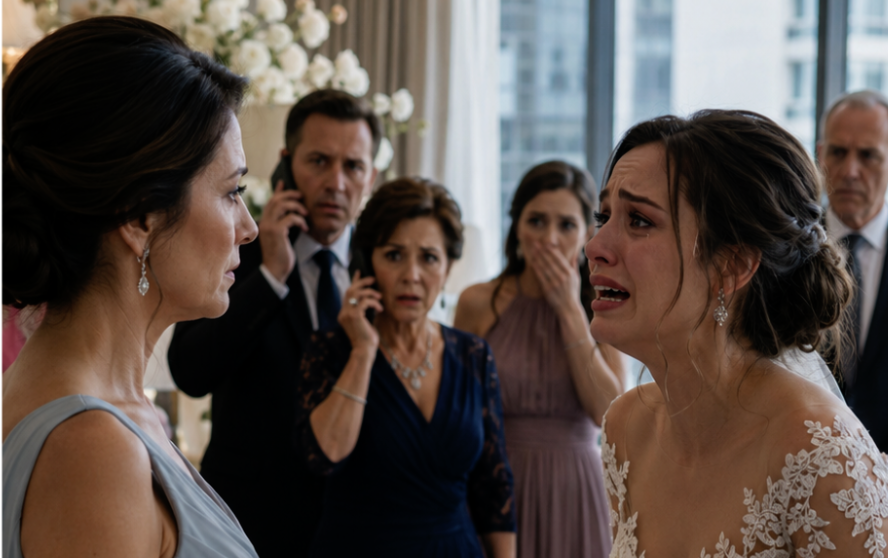
“Natalia, where are you? Ruslan walked out of the reception hall! Polina is hysterical, the guests are filming everything, and you need to come here right now!”
My mother was nearly shouting into the phone.
I stood barefoot on the balcony of a spa hotel overlooking the Volga, wrapped in a white robe with a mug of tea in my hand. The river below was gray and heavy beneath the spring sky.
“Natasha, are you listening to me?” Mother demanded. “Your sister’s wedding is falling apart!”
“I’m listening.”
“Then get ready. You know how to talk to people. You know Ruslan. Calm him down. Help with the guests. The manager needs to know what to do.”
I closed my eyes.
Calm him down. Organize the guests. Fix everything.
As usual.
“Mom,” I said quietly, “I wasn’t invited to the wedding.”
She fell silent.
Only for a second.
“Oh, don’t start that now. The guest list was limited. You’re an adult. You didn’t need to take it personally.”
“And now there’s suddenly room for me?”
“This isn’t the time for sarcasm.”
I looked at the river.
“I’m not coming.”
“What?”
“I’m staying here.”
“Your sister’s life is collapsing, and you’re sitting at a spa?”
“The spa I booked after she told me there wasn’t room for me at her wedding.”
“Natalia, stop bringing up the past.”
“It happened six days ago.”
Before she could continue, I ended the call.
My phone immediately lit up again.
Mom.
Polina.
Mom.
An unknown number.
Then Mom again.
I silenced it.
Six days earlier, Polina had sent me a message while I was working in my decorating studio.
“Natash, don’t be upset. We had to reduce the guest list. The restaurant is expensive and there aren’t enough seats. We’ll celebrate separately later, okay?”
I read it three times.
My younger sister was getting married in one of the most expensive restaurants by the river.
And somehow there was no seat for me.
I called her.
She didn’t answer.
Half an hour later, she posted photographs online.
Crystal chandeliers.
Gold-embossed seating cards.
Beautiful white tables.
And the caption:
“Celebrating with only our closest people.”
I enlarged the seating chart.
There were cousins, distant relatives, friends of friends, hairdressers, neighbors, people I barely recognized.
My name wasn’t there.
That evening Mother called.
“Natasha, don’t make a scene. Polina is already stressed.”
“She didn’t invite me to her wedding.”
“She wants the celebration to feel light.”
“And I make it heavy?”
Mother hesitated.
“You’re too serious. Polina gets tense around you.”
That was the real answer.
Not limited seating.
Not money.
Me.
I had always been the serious one.
The reliable one.
The older sister.
When Polina forgot something, someone helped her.
When she borrowed money, someone paid.
When she cried, everyone rushed to comfort her.
I was expected to cope.
“You’re the older one,” Mother always said.
As though being born first meant accepting a lifetime contract to be patient, responsible, and useful.
Polina finally called that night.
“Natash, don’t sulk.”
“You deliberately removed me from your wedding.”
“Oh, don’t say it like that.”
“What should I call it?”
“The venue isn’t made of rubber. Ruslan invited people, Mom invited people…”
“And my seat?”
She laughed.
“You’re acting like someone threw you out.”
That laugh stayed with me.
Not because it was cruel.
Because it was careless.
She genuinely believed I would forgive her.
I always did.
Two hours later, I booked the spa hotel.
For once, I spent money on myself without asking whether I deserved it.
When Mother found out, she called me childish.
“You’re going away on your sister’s wedding weekend?”
“I’m not on the guest list.”
“You could still stay nearby.”
“No. I’m not standing outside a door I wasn’t invited through.”
So on Friday evening, I drove away from Kazan.
The hotel was quiet.
There were pine trees near the water, a swimming pool with panoramic windows, and no family members asking me to solve anything.
For the first time in years, I had nowhere I needed to rush.
On Saturday afternoon, however, I received a message from an unknown number.
“Hello. This is Oleg. Polina has been messaging me all week. I don’t want problems. If you can influence her, please do.”
I froze.
Oleg was Polina’s ex-boyfriend.
She had always liked keeping old admirers close, even when she was already with someone else. Not because she loved them.
She liked knowing they still wanted her.
I replied:
“Please don’t involve me. I wasn’t invited to the wedding.”
Two hours later, my aunt Margarita called.
“Whatever happens, don’t come here.”
“What happened?”
“Polina arranged for Oleg to appear at the pre-wedding photo session. She claimed it was accidental. Ruslan saw her fixing Oleg’s collar and laughing with him.”
I sat down.
“And?”
“Later someone told Ruslan that Polina had invited Oleg herself. During a toast, Ruslan stood up, said a few things, put his napkin down, and walked out.”
“No shouting?”
“Nothing. That’s why everyone knows it’s serious.”
Margarita sighed.
“Your mother is already trying to get you here. Polina is crying. The guests are sitting around pretending everything is normal. They want you to organize the disaster.”
“So they don’t need me.”
“They need what you do for them.”
That sentence stayed with me.
They needed what I did.
Not me.
For years, I had been the person who softened every consequence.
When Polina had debts, I helped.
When she lost jobs, I listened.
When she fought with boyfriends, I came over.
When Mother needed someone at the hospital, I went.
Someone made a mess.
I cleaned it.
Someone panicked.
I stayed calm.
Eventually, people stop recognizing your help as kindness.
They start treating it as infrastructure.
My phone rang.
Mother.
This time I answered.
“Where are you?” she demanded.
“At the hotel.”
“Polina is devastated! Ruslan disappeared. The manager needs instructions, the host doesn’t know what to announce, and guests are leaving. Can you at least come and take Polina home?”
“She can take a taxi.”
“She can’t be alone!”
“And I’m supposed to handle everything?”
“Natalia, family is in trouble.”
“No, Mom. The family is simply experiencing trouble without the person who usually fixes it.”
“You’re being cruel.”
“I’m just not fixing anything.”
There was a long silence.
Then she said coldly:
“Fine. Do whatever you want.”
She hung up.
I went swimming.
As I floated on my back, looking through the windows toward the dark river, I felt terrified.
Not because Polina’s wedding was collapsing.
Because for the first time, I wasn’t rushing to save her.
Without that role, I wasn’t sure who I was.
The next morning, Margarita texted:
“Ruslan didn’t return. Polina stayed with your mother. Half the guests left early. You did the right thing.”
Those final words were strangely difficult to accept.
You did the right thing.
I returned home on Monday.
When I opened my apartment door, I immediately saw unfamiliar shoes.
Mother and Polina were already inside.
Mother sat at my kitchen table still wearing her coat.
Polina sat near the window in a cream tracksuit, pale and exhausted.
Margarita stood nearby holding a mug.
“Thank God,” Mother said. “We’ve been waiting.”
“Why?”
Polina began crying.
“Natash, I ruined everything. Ruslan took his things. He won’t answer me. Mom thinks you could talk to him.”
I slowly removed my jacket.
“And why should I call him?”
“Because you know how to speak calmly!” Mother snapped. “People listen to you!”
I turned toward her.
“So I wasn’t invited because I spoiled the wedding atmosphere, but now I’m supposed to repair what that atmosphere was hiding?”
“Oh, stop talking about the invitation,” Polina whispered. “I’m already suffering.”
“You’re suffering because there are consequences.”
Mother stood.
“Can’t you see the condition she’s in?”
“I can. Did anyone care about the condition I was in when I realized my own sister didn’t consider me close enough to attend her wedding?”
“Those things aren’t comparable.”
“They are to me.”
Polina looked up.
“I didn’t want to hurt you.”
“No,” I said. “You just didn’t think hurting me mattered.”
She looked away.
That was answer enough.
Mother gripped the chair.
“She needs someone reasonable.”
“She has you.”
“She doesn’t listen to me.”
“But she listens to me when she needs something.”
Margarita finally spoke.
“Enough, Valentina. You created this situation.”
Mother turned sharply.
“What are you talking about?”
“You raised one daughter to be admired and the other to take care of everyone.”
“Stay out of it.”
“No. Natalia has spent years cleaning up your problems. She helped with your hospital visits, your celebrations, Polina’s debts, her crises. And what did she get? A message saying there wasn’t enough room at the wedding.”
Polina cried harder.
“What am I supposed to do? Die over one mistake?”
I looked at her.
“This isn’t one mistake.”
She stared at me.
“It’s years of expecting other people to absorb the consequences of your choices.”
“Are you trying to destroy me?”
“No. I’m refusing to protect you from something you created.”
Mother stepped closer.
“You’ve become heartless.”
“No.”
My voice was surprisingly calm.
“I just don’t have any free hands left for other people’s chaos.”
The room went quiet.
Outside, a truck honked.
Somewhere upstairs, water moved through the pipes.
A box of pastries sat forgotten on the table.
Finally Mother asked:
“So what do you expect us to do? Sit here while Polina’s life falls apart?”
“I expect you to do something you’ve never done.”
“What?”
“Let Polina live her own story. Without putting me in the middle.”
Polina stared at me.
“You really won’t call Ruslan?”
“No.”
“Not even for me?”
“No.”
She grabbed her bag and headed for the door.
Mother followed her.
Before leaving, she turned around.
“When you need help someday, remember this.”
“Okay.”
That one calm word seemed to anger her more than any argument could have.
The door slammed.
Margarita and I remained in the kitchen.
She pushed the pastry box toward me.
“Want one?”
I laughed.
“No. Let them take their compensation with them.”
Margarita smiled.
My knees were shaking now.
Not from fear.
From relief.
“I still feel sorry for Polina,” I admitted.
“You can feel sorry for someone without becoming their rescue service.”
That evening Polina texted:
“I thought at least now you would be there for me.”
I waited an hour before answering.
Then I wrote:
“I was there for you for too long. You simply got used to it being free.”
After Margarita left, I stood by the window in my quiet apartment.
Children were playing outside.
A radio played somewhere upstairs.
And suddenly I understood everything.
They hadn’t invited me to the place where they wanted everything to look perfect.
But the moment everything collapsed, they called me.
That difference told me exactly what my role had been.
They hadn’t loved me more because I was reliable.
They had simply become comfortable knowing I would always clean up after them.
I still loved them.
I still felt sorry for them.
But I was finished being free insurance against their decisions.
And for the first time in years, my own home felt incredibly easy to breathe in.