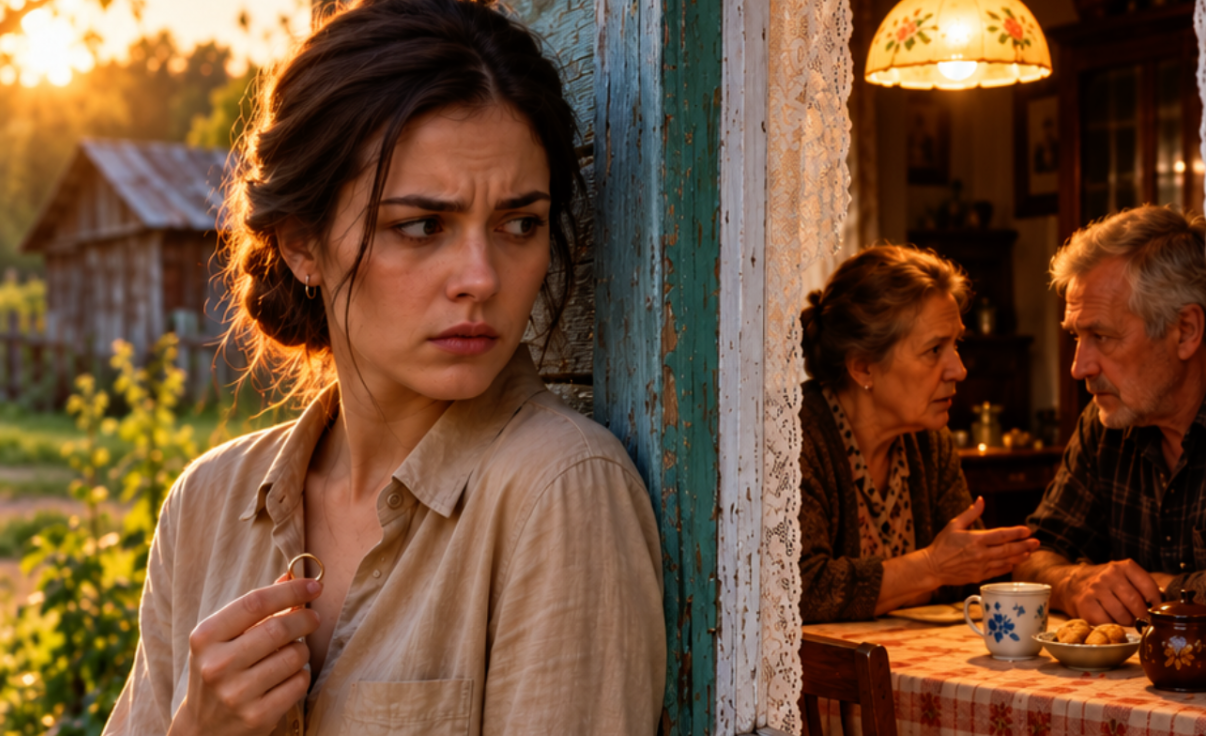
After Coming to Help My Mother-in-Law at the Dacha, I Overheard My Husband’s Parents Talking—and Filed for Divorce
Lena came to her mother-in-law’s dacha to help plant seedlings. She had raised the tomatoes, peppers, and eggplants herself since February, carefully turning them toward the light and watering them every morning.
Her mother-in-law, Zinaida Pavlovna, had called two days earlier.
“Lenochka, the seedlings need to be planted before the weekend. Grisha is away on a business trip, so you should come.”
It hadn’t sounded like a request. But after nine years of marriage, Lena was used to responding whenever her mother-in-law decided something needed to be done.
When Lena arrived, she left the box of seedlings on the porch.
“Lena, is that you? Come in! I’ve put the kettle on!” Zinaida Pavlovna called from inside.
Lena sat down to remove her sneakers first. Her mother-in-law hated dirty footprints, even at the dacha.
Then Lena heard her father-in-law’s voice through the open veranda window.
“Zina, enough. Tell her. Or I will.”
“Don’t interfere. I’ll decide when.”
“You’ve been deciding for six months. The boy is suffering.”
Lena froze.
“Grisha isn’t suffering,” Zinaida Pavlovna replied. “He just can’t choose.”
“He can’t choose because you keep protecting him. You—and that Lena.”
That Lena.
Lena stared at the half-undone shoelace in her fingers.
“She’s a good woman,” Boris Andreyevich continued, “but Grisha doesn’t love her. You know it. I know it. He’s been with Nastya for a year. And now she’s pregnant.”
Lena stopped breathing.
Pregnant.
Then came the words that destroyed whatever uncertainty remained.
“Nastya is four months along. Grisha told me himself in March.”
“I know,” Zinaida Pavlovna said.
“You know?”
“What was I supposed to do? Call Lena myself?”
Lena sat completely still.
Four months.
It was May.
That meant January.
Their ninth wedding anniversary had been in January.
Grisha had given Lena small gold teardrop earrings that month. She had been so happy because he rarely bought her gifts anymore. She wore them almost every day.
And while she was admiring those earrings, another woman was carrying his child.
Lena looked at the seedlings beside her.
She had grown them in the bedroom she shared with Grisha. He used to joke that she talked to the plants as if they were children.
They had no children.
Years earlier, Lena had suggested they start a family.
Grisha agreed casually.
But pregnancy never happened. Doctors suggested IVF. Grisha signed the papers, then failed to appear for the procedure twice, claiming work emergencies.
Eventually, Lena stopped making appointments.
Now she understood why.
She left without entering the house.
The seedlings remained on the porch.
Outside the gate, Lena called Grisha.
“Are you still on your business trip?”
“Of course. I told you. Novgorod.”
“What’s the address of the project?”
There was a pause.
“Why?”
“I want to know.”
“I’ll send it later.”
Behind his voice, Lena could hear a television.
She ended the call.
During the bus ride home, she barely thought at all.
When she entered the apartment, Grisha’s old gray sneakers were standing beside the wall. She stared at them and suddenly realized she knew those shoes better than she knew her husband.
That evening she didn’t cry.
Instead, she opened her laptop.
She searched for a family lawyer.
Property division after divorce.
How to divorce when one spouse refuses.
The apartment had been gifted to Grisha by his parents, so Lena knew she had no claim to it. But their car had been purchased during the marriage, and they also had a joint bank account.
Recently, Grisha had been transferring money somewhere. Whenever Lena asked, he gave vague explanations.
She had always accepted them.
Now she wouldn’t.
On Thursday, she called a lawyer.
“The apartment is his separate property,” the lawyer explained. “But the car was purchased during the marriage?”
“Yes.”
“Then it can be divided.”
For the first time since the dacha, Lena felt she was doing something practical.
Grisha returned on Sunday.
He kissed her on the head as though nothing had happened.
He smelled of unfamiliar floral soap.
“How’s Mom?” he asked. “Did she plant the seedlings?”
“I didn’t stay.”
“Why?”
“I felt sick.”
He opened a beer and began typing on his phone. Lena watched him smile at the screen.
Not at her.
“Grisha.”
“Hmm?”
“Who is Nastya?”
His phone immediately went face down on the table.
“Why are you asking?”
“I heard your parents talking at the dacha.”
Silence.
“Lena, I can explain.”
“You don’t need to.”
“At least listen.”
“I already listened. She’s four months pregnant.”
He rubbed his face.
“It wasn’t planned.”
“The baby?”
“No. I mean us. Me and Nastya.”
Lena looked at him.
“And our IVF? Was that planned? The IVF appointments you missed twice?”
He had no answer.
Two days later, Lena filed for divorce.
Grisha couldn’t believe it.
“Lena, calm down.”
“Lena, let’s talk.”
“Lena, you’re throwing everything away.”
Then he tried something else.
“You understand this apartment is mine? Where are you going to live?”
“I’ll figure it out.”
She packed her belongings into two suitcases.
After nine years of marriage, everything that truly belonged to her barely filled them.
Clothes.
Documents.
Laptop.
Books.
Her mother’s old collection of stories.
Her notebook containing the lawyer’s number.
Her friend Vika immediately offered her a sofa.
When Lena stood at the door, Grisha looked strangely lost.
For a moment, she almost felt sorry for him.
Then she remembered the earrings.
She removed the little gold teardrops.
“Keep these.”
“Why? They were a gift.”
“You gave them to me in January.”
He said nothing.
“When Nastya was already pregnant.”
Lena placed them on the dresser and left.
Three days later, Zinaida Pavlovna called.
“Lenochka, Grisha told me everything.”
“I know.”
“You acted too quickly.”
“You knew for six months.”
“We thought he would handle it himself.”
“He did. Just not the way you wanted.”
Her mother-in-law’s voice softened.
“You’re a good girl, Lena. I always thought so.”
“A good girl. Just not a daughter-in-law worth telling the truth to.”
“I never said that.”
“You called me ‘that Lena.’ I heard you through the window.”
Lena ended the call.
Living on Vika’s worn sofa was uncomfortable, but strangely peaceful.
One evening Vika came home carrying pizza.
“Eat,” she said. “We can talk later. Or not talk at all.”
That was when Lena finally cried.
Not because of Grisha.
Because she suddenly remembered the seedlings she had abandoned on the porch.
She wondered whether anyone had planted them or whether they had simply been forgotten.
The divorce took three months.
At one hearing, Grisha opposed it.
The judge asked Lena whether she still wanted the marriage dissolved.
“Yes.”
Outside the courtroom, Grisha approached her with coffee.
“Lena, I don’t need Nastya. I need you.”
“What about your child?”
“I’ll support the baby financially.”
Lena stared at him.
“The child you’re willing to support is the child you had with another woman. But you couldn’t even show up when we were trying to have one together.”
She walked away.
During the court-ordered reconciliation period, Grisha messaged her constantly.
“I miss you.”
“Please talk to me.”
Sometimes he sent only her name.
Lena never replied.
There was nothing left to say.
At the final hearing, the marriage was dissolved.
Lena received compensation for her share of the car. Grisha had already withdrawn most of the money from their joint account.
Her lawyer offered to challenge it.
Lena refused.
She wanted to be finished.
The money she received was enough to rent a small studio apartment.
Twenty-eight square meters.
Fifth floor.
No elevator.
But it was hers.
In August, Lena went to the market and bought plants.
This time she didn’t buy tomatoes.
She chose basil, two pots of mint, and a small hot pepper plant called “Little Flame.”
The seller told her it was easy to grow.
“Water it every other day, and it’ll live for years.”
Lena placed it on the sunniest part of the windowsill.
That evening Vika called.
“How’s the new place?”
“Good. I bought some plants.”
“That’s a good sign.”
“Why?”
“When a woman buys plants, it means she plans to keep living.”
“Who said that?”
“I did. Just now.”
Lena laughed.
The sound surprised her.
She couldn’t remember the last time she had heard herself laugh like that.
Later she sat beside the window, breathing in the fresh smell of mint.
She thought briefly about Grisha.
Not with anger.
Not even with pain.
More like someone thinking about a train that had already left the station.
Wherever it was going was no longer her concern.
Then she remembered the dacha, the thin plywood walls, and the box of seedlings she had left behind.
But she didn’t stay with the memory.
She filled a glass with water and watered her new plants.
Outside, the streetlights came on.
Lena switched off the main light and left only the small lamp glowing beside the pots.
A warm circle of light in a tiny apartment.
Small.
Quiet.
But hers.
In September, four new red peppers appeared on the Little Flame.
Lena looked at them and smiled.
She didn’t pick them.
She decided to let them grow.