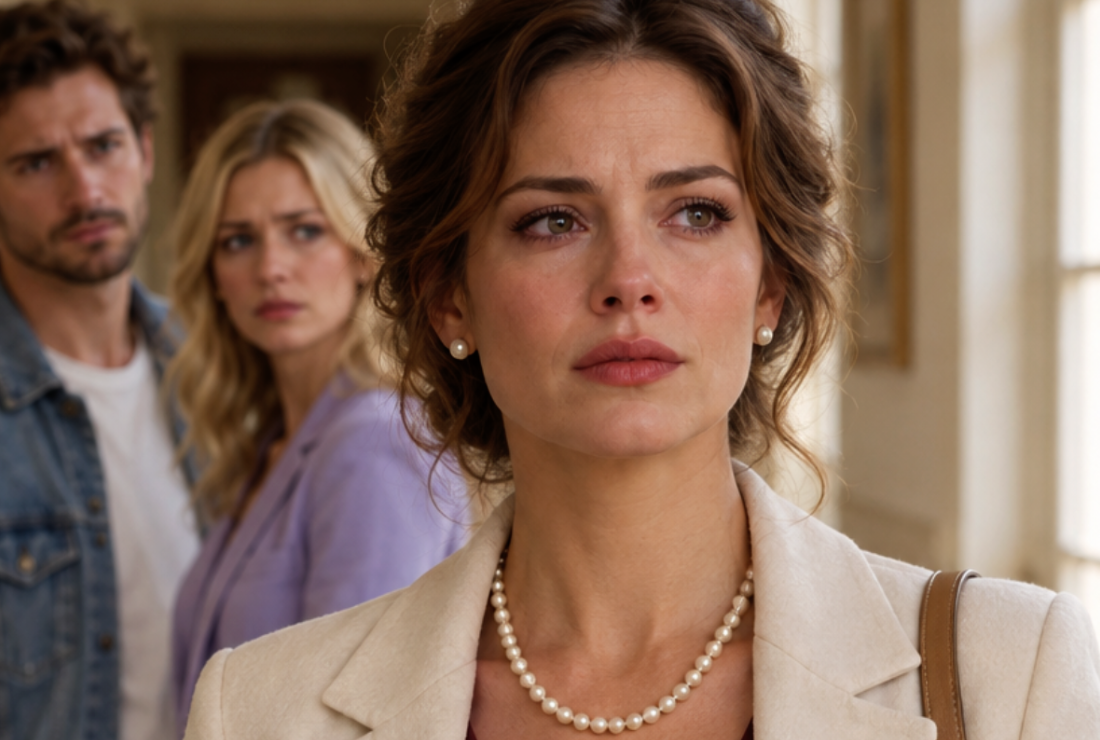
Daria had long since gotten used to having breakfast alone. The morning hours always dragged on, especially while Artyom finished his well-earned ten hours of sleep in the bedroom, and she crunched on toast while checking her email. Outside, tufts of poplar fluff floated by—the summer had been unusually dry and stifling. Daria pushed aside her cup of cold coffee and opened her banking app. A new mortgage payment notification had arrived.
Daria glanced at the calendar with marked dates. Payment days were highlighted in red and paydays in green. For the past six months, there hadn’t been a single green mark for Artyom. He lost his job in May when the company where he worked as a system administrator was taken over by a large holding. The new management brought in their own IT team, and Artyom, along with half the tech department, found themselves out the door—with just two months’ severance.
“Don’t worry, darling,” Artyom had said then, putting his arm around her shoulders. “It’s just temporary. With my experience, people will be lining up to hire me.”
But May passed, then June, and July was coming to a close, and those people lining up for Artyom’s experience remained nowhere to be found. His severance was long gone, leaving the entire financial burden on Daria—a teacher of English at a private language school.
Daria transferred the money to the loan account, her finger lingering for a moment over the confirmation button. Each time, she hoped Artyom would get in first, take the initiative. After all, the apartment was technically his. Three years ago, when they had just married and decided on a mortgage, the loan was taken out in Artyom’s name. Daria’s income back then wasn’t great, and her credit history wasn’t perfect—she’d fallen behind on a student laptop loan once.
The app sent a notification of a successful transaction, and Daria exhaled heavily. Another thirty thousand gone from her account. She’d earned that money by teaching extra evening lessons after her main shift at school.
Footsteps sounded from the bedroom. Artyom, yawning, came into the kitchen and headed straight for the fridge.
“Good morning,” Artyom said as he poured himself some orange juice. “What’s for breakfast?”
Daria silently pointed at the frying pan with the now-cold omelet.
“Cold again?” Artyom grimaced. “You could have warmed it up.”
Daria felt a bead of sweat run down her temple. The kitchen was stifling; the air conditioner had broken back at the start of summer.
“You can heat it yourself,” Daria replied as she packed her bag. “I have to go to work. I’ve got six lessons today and two extra consultations in the evening.”
Artyom muttered something and turned on the microwave. His phone screen was glowing with a notification from another job search site.
“Look,” Artyom showed Daria his screen. “’Wanted: system administrator, three years’ experience, server technologies knowledge, English at least B2.’”
“Sounds perfect,” Daria said, zipping up her bag. “Will you send your resume?”
“Already have,” Artyom said, scratching the stubble on his chin. “But they’re only offering a hundred and twenty thousand. For that kind of money, you’d have to work yourself into the ground.”
Daria clenched her teeth. Her salary at the school was seventy thousand, and she really was working herself to the bone. With extra lessons, it added up to about a hundred. But Artyom seemed to have already forgotten what it meant to work. A steady work schedule, early mornings, the routine of office life—all of it felt distant and unreal to him.
“Better something than nothing,” Daria said, glancing at her watch. “I have to go.”
Artyom nodded absentmindedly and stared at his phone, while Daria, checking hers, paid the utility bills remotely. Another fifteen thousand gone.
When Daria finally got home late in the evening, she found a guest in their apartment. Vera Nikolaevna, Artyom’s mother, was sitting in the armchair by the window flipping through a magazine. Artyom was in the kitchen, busy stirring something in a pot.
“Daryushka!” Vera Nikolaevna exclaimed with fake enthusiasm. “Artyom and I are making dinner. I just stopped by to bring a new recipe, and he made me some tea and convinced me to stay.”
Daria smiled tiredly and nodded. After twelve hours at work, the only thing she wanted was peace and quiet. But Vera Nikolaevna never came over for no reason. Every visit had a hidden agenda, and Daria already had a feeling what it was this time.
“How’s your job hunt going, Tyomochka?” Vera Nikolaevna asked when everyone sat down at the table. “Have you found anything suitable?”
“Well, Mom, I sent out a resume to a good company today,” Artyom replied as he served himself some pasta with meat. “But something tells me it’s not the right fit. Their requirements seemed a bit shady.”
Daria sighed heavily. In the past three months, Artyom had found reasons to turn down at least a dozen ‘not right for him’ options. The salary was too low, the office was too far, or the company seemed unreliable.
“Don’t worry, son,” Vera Nikolaevna reassured Artyom, patting his hand. “Your father was out of work for three months before he landed a chief engineer job. You can’t find a good position overnight.”
Daria barely managed not to remind everyone that Artyom’s father was out of work thirty years ago, during a national economic crisis.
“And how are things going for you, Daryusha?” Vera Nikolaevna turned to her daughter-in-law, briefly eyeing her appearance. “Still shuttling around with your students? Ever thought about doing something more serious?”
“I’ve been teaching English for six years, Vera Nikolaevna,” Daria tried to keep her voice calm. “This is my profession.”
“Of course, of course,” Vera Nikolaevna nodded. “It’s just, you know, things are so unstable these days. And Artyom needs your support while he looks for something decent. How are you doing with the mortgage?”
Daria felt her ears burn. There it was—the main question of the evening.
“We’re managing,” Daria answered shortly, avoiding her mother-in-law’s gaze.
“Dasha’s handling everything,” Artyom chimed in, smiling at his mother. “She has lots of extra teaching hours now. Plus, she still tutors on the side.”
“Ah, right,” Vera Nikolaevna nodded. “Good for you, Daria. But you realize this can’t last forever? Artyom will soon find a job, and everything will fall back into place.”
In Vera Nikolaevna’s view, “finding their roles” meant Artyom would be the main breadwinner and Darya would take care of the house and cook dinner. The classic dynamic: the woman as the keeper of the home, the man as the provider.
“You know, Tyoma,” Vera Nikolaevna continued, “maybe you should think about a management position? With your experience, it’s a shame to keep working as a system administrator. You’re really meant to be the head of the IT department!”
Darya rolled her eyes when no one was looking. Artyom had only been an administrator for three years. How could he manage a whole department? But Vera Nikolaevna always believed her son had endless potential.
After dinner, Darya washed the dishes while Artyom walked his mom to her car. When he got back, he flopped onto the couch and turned on the TV.
“Do you think maybe we should help Mom get a new car with a loan?” Artyom asked, flipping through the channels. “Her old one is on its last legs.”
Darya froze, dish towel in hand.
“We have a mortgage, Artyom,” Darya said slowly. “I got two bonuses for extra hours, and all of it went to the payment. What car?”
“I didn’t mean we should buy it for her,” Artyom shrugged. “Just help Mom pick something, maybe help with the down payment.”
Darya closed her eyes and counted to five. Stay calm. Just stay calm.
“Maybe she should pay off the coat loan first,” Darya replied, heading to the bathroom.
The next two weeks went by as usual. Darya worked from morning till night, while Artyom stayed at home, now and then sending out resumes and going to interviews. It was always the same: the companies offered too little, wanted too much, or just weren’t the right fit for Artyom.
On Friday evening, Darya came home and found Artyom wasn’t alone. Vera Nikolaevna was there again, but not just her—Artyom’s father, Pavel Georgievich, had come too. That was unusual. His parents divorced ten years ago and hardly ever showed up together.
“And here’s Darya!” Vera Nikolaevna beamed. “We decided to drop in and see how you’re living in this beautiful apartment.”
Darya took off her shoes and tiredly walked to the kitchen. There was a bottle of wine on the table, along with plates of snacks.
“Are we celebrating something?” Darya asked, trying not to show her irritation. No one had warned her about this little “family” dinner.
“Oh, we just wanted to get together,” said Vera Nikolaevna. “Tyoma, pour Dasha some wine.”
Artyom handed her a glass, and Darya took a sip. The wine was expensive—definitely not something they usually bought.
“How’s work going, Darya?” asked Pavel Georgievich. “Tyoma says you’ve been run off your feet.”
“It’s fine,” Darya replied shortly. “A lot of hours, but I’m managing.”
“Yeah, it’s tough for you right now,” sighed Vera Nikolaevna. “At least the apartment is yours. No need to worry about rent.”
Darya kept quiet. Technically, the apartment wasn’t really “hers”—it was a fifteen-year mortgage, and only three years were down.
By the way, Pavlik, have I shown you the renovation photos? Vera Nikolaevna pulled out her phone. Check out the tiles Tyoma and Dasha put up in the bathroom. We used to just dream about this kind of thing, remember?
Darya frowned. Why does Vera Nikolaevna talk as if this apartment belongs to her? ‘We used to just dream about this,’ as if she had any part in owning this place.
“Yeah, it’s a nice apartment,” Pavel Georgievich agreed. “You two got lucky with that mortgage. There’s no way anyone could get a deal like that now—interest rates have gone up.”
“Let’s have a toast!” suggested Vera Nikolaevna, raising her glass. “To our family home! And to Tyoma finding a great job soon, so everything will work out!”
Everyone clinked glasses. Darya took a sip, feeling her irritation growing inside.
“Artyom, did you tell your parents that I’ve been the one paying the mortgage for the last six months?” Darya asked, looking him straight in the eyes.
An awkward silence fell over the table.
“What does it matter who pays?” Artyom brushed it off. “We’re a family, it’s all one budget.”
“Still, though?” Darya pressed.
“It’s just a rough patch,” Vera Nikolaevna interrupted. “Tyoma will get a job soon and then things will go back to normal.”
“You did the right thing putting the apartment under Artyom’s name,” Pavel Georgievich chimed in. “The guy had a solid job and great credit history. Smart move.”
Darya looked at her father-in-law. He didn’t even realize that his harmless comment was a ticking time bomb.
“Yeah, of course,” Darya said slowly. “The apartment is in Artyom’s name. He bought it.”
“Well, we decided together,” Artyom tried to backtrack, but it was too late.
“Deciding doesn’t mean paying,” Darya retorted. “I’ve been the only one making payments for the last six months. That’s nearly two hundred thousand rubles.”
“So what?” Vera Nikolaevna frowned. “You’d be spending money on housing anyway. Artyom is the one giving you a roof over your head. This is just a rough patch you need to get through.”
Darya stared at her mother-in-law. Was she serious? “Artyom is giving me a roof over my head?”
“Vera Nikolaevna,” Darya began, trying to stay calm, “I’m not just ‘spending money on housing.’ I’m paying off the loan for an apartment that legally isn’t even mine. That’s very different.”
“What difference does it make whose name is on the documents?” Vera Nikolaevna scoffed. “You’re a family.”
“Only as long as you stay together,” Pavel Georgievich noted dryly.
“What do you mean by that?” Vera Nikolaevna asked, looking at her ex-husband.
“Well, if anything happens, the apartment goes to Artyom,” Pavel Georgievich said bluntly. “That’s just the way it is. Darya is great for supporting her husband through tough times, but facts are facts.”
Darya felt a chill. She looked at all three of them, unable to believe her ears. Did they really think it was normal for her to pay the mortgage alone for an apartment that didn’t belong to her?
“Don’t worry, Dashka,” Artyom reassured, patting her shoulder. “I’ll find a job, and everything will be fine.”
Without a word, Darya got up from the table.
“Excuse me, I’m tired,” Darya said. “I’m going to lie down for a bit.”
She left the kitchen, but instead of heading to the bedroom, she stopped in the hallway, leaning against the wall. The muffled voices from the kitchen reached her ears.
“Your wife seems really on edge lately,” Vera Nikolaevna remarked. “Maybe she should see a specialist?”
“Everything’s fine, Mom,” Artyom waved her off. “She’s just tired from work.”
“Well, make sure she doesn’t start claiming rights to the apartment,” added Pavel Georgievich. “Now she’s paying and starts thinking she has some kind of special entitlement.”
“Let her not imagine she’s the mistress of the house,” Vera Nikolaevna smirked. “Everything here belongs to us.”
Artyom didn’t argue. He just laughed in response.
Darya listened to this conversation, and for the first time in a long while, everything became crystal clear in her mind. This wasn’t her home. These weren’t her people. She was a stranger here—not a young wife, but a free ATM with cleaning and cooking functions.
Darya silently went into the bedroom, lay down on the bed, and closed her eyes. Her heart beat steadily and calmly. Tomorrow. Everything would begin tomorrow.
In the morning, while Artyom was still asleep, Darya quietly got up and turned on her computer. She logged into her bank app, her account on the mortgage bank’s website, and opened her email. Methodically and without rushing, she took screenshots of all payments from the past six months, printed out statements, gathered receipts. She put everything into a new folder and tucked it away in her bag.
For the next two days, Darya went about her usual routine. She made breakfast, worked, came home, checked her email. But inside her, everything had changed. Every move, every conversation felt charged with new meaning. She observed her own life from the outside, as if preparing to leave it forever.
On Tuesday morning, while Artyom was still asleep, the doorbell rang. Darya opened the door without even asking who it was. She knew—it was Vera Nikolaevna. Her mother-in-law often stopped by unannounced, especially in the mornings, when she expected to find Darya home.
“Daryushka, I was just passing by and thought I’d drop in,” said Vera Nikolaevna, walking into the kitchen without taking off her shoes. “I have a new recipe for apple pie… You like baking, don’t you? Tyomochka will be pleased.”
Without a word, Darya nodded and left the kitchen. She quickly got dressed, packed her bag, grabbed the folder of documents from the table, and placed it in a visible spot—right on the coffee table in the hallway. On top, she put the set of keys.
“Where are you going?” Vera Nikolaevna asked in surprise, peeking out of the kitchen.
“I have lessons,” Darya said, pulling on a light jacket.
“And Artyom’s breakfast?” Vera Nikolaevna raised her eyebrows.
Darya looked at the clock.
“It’s ten o’clock. He’ll get up at noon. I’m sure he’ll manage on his own,” Darya replied and, without saying goodbye, walked out the door.
That was the end. No shouting, no hysterics, no accusations. Just the quiet departure of someone who realized there was no point in staying any longer.
By evening, Darya’s phone wouldn’t stop ringing. Artyom, Vera Nikolaevna, even Pavel Georgievich—everyone wanted to know where she was and when she’d be back. Darya didn’t answer. She was sitting in a small but cozy one-bedroom apartment she’d rented that very day. The realtor had been understanding—once Darya explained her situation, the contract was signed the same day.
A week later, the calls started coming less often. Artyom switched to messages—at first making jokes like “come on, stop sulking,” then moving to accusations: “you left your family when we needed you most.” Finally he was begging: “please, let’s just talk.” Darya read them all, but didn’t reply. What was left to discuss? Everything had already been said—if not by her, then by the situation itself.
Vera Nikolaevna sent a voice message. Her tone was full of indignation:
“Darya, if you’re a normal woman, you’ll come home immediately! What will people say? Artyom is losing his mind! Do you even understand what you’re doing?”
Darya deleted the message without listening to the end. She understood. For the first time in a long while, she truly understood what she was doing.
Her small apartment cost three times less than their mortgage payment. Without side jobs, without the constant stress over money, Darya could finally live in peace. Sleep as much as she needed. Eat when she wanted to. Rest without feeling guilty.
Sometimes, waking up in the morning, Darya thought she was supposed to feel regret, sadness, or loneliness. But strangely, all she felt was calm—a quiet, deep joy of someone who has shrugged off an unbearable burden.
Someone else’s burden. Someone else’s home. Someone else’s family.
A month later, Artyom sent his final message: “I’ve filed for divorce. If you don’t even want to talk, so be it. I hope you’re happy.” Darya smiled, put down her phone, and walked to the window. Outside, the autumn wind rattled the glass, tearing the last yellow leaves from the trees.
She was happy. For the first time in a very long while. It was real, deep, peaceful happiness—the happiness of a free person.