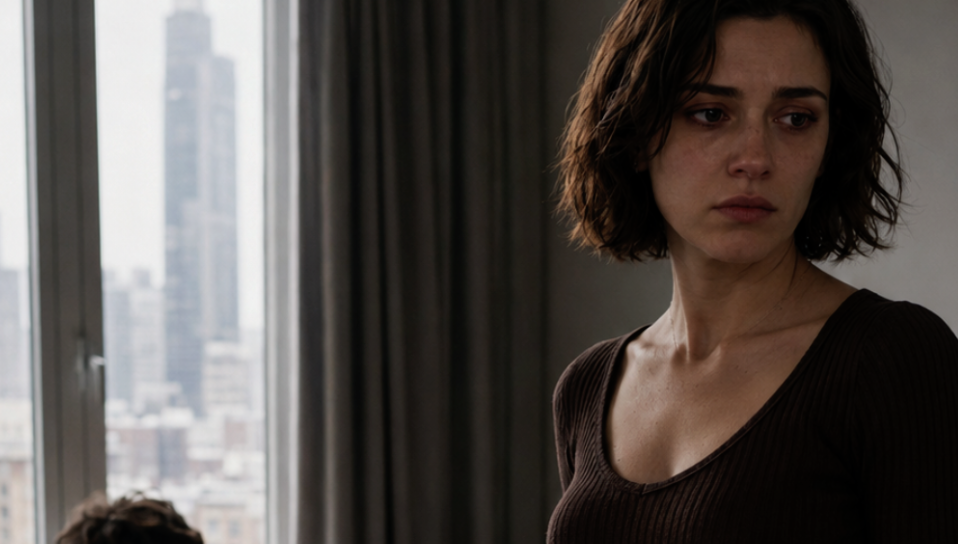
“The sea is canceled,” Leonid said without looking up from his phone. “My mother is coming to stay with us.”
I was standing in the middle of the bedroom with an open suitcase. In my hands was a swimsuit. New, with the tag still on it. My first one in seven years.
“What do you mean, canceled?” I carefully placed the swimsuit on the bed. “The tickets are already bought. Non-refundable. Two hundred and eighty thousand, Leonid.”
He rubbed the bridge of his nose and sat down on the edge of the sofa. He always did that whenever a conversation started going somewhere he didn’t want it to go.
“What am I supposed to do? She’s already bought a train ticket. She’ll be here the day after tomorrow. I can’t exactly tell her to turn around.”
We had been married for seven years. And in those seven years, I had not had a single vacation. Not by the sea, not at a sanatorium, not even in a neighboring city for the weekend. Nowhere. The first year, there was our honeymoon in Sochi. Three days. Then Nadezhda Pavlovna called and said her blood pressure was acting up. We came back. Her blood pressure turned out to be one hundred thirty over eighty — perfectly normal for her age. I knew that for sure because I was a pharmacist and saw numbers like that on prescriptions every day.
Since then, not a single trip. Every time we planned a vacation, Nadezhda Pavlovna appeared. The fourth time in seven years. As if on schedule.
“Leonid,” I sat down beside him, trying to speak evenly. “We saved for this vacation for four months. I took extra shifts. Twelve hours each. You saw how I came home.”
“I saw,” he said, still looking at his phone. “But my mother is more important.”
I adjusted my glasses. My fingers slipped — my hands were dry, cracked from antiseptics. Eight years in a pharmacy had turned my skin into sandpaper.
“More important than what?” I asked.
“More important than the sea, Rimma,” he finally looked at me. “A person only has one mother. She’s seventy-four. Don’t you understand?”
I understood. I understood that Nadezhda Pavlovna lived in Voronezh, in her own three-room apartment, with a neighbor-friend who visited her every day. That she went to the market herself, carried her own bags, and made preserves for winter herself — twenty jars at a time. And that every one of her “visits” began with the same phone call to Leonid: “Son, I miss you. I’ll come for a week.”
“A week” stretched into two. Then three. Once, Nadezhda Pavlovna stayed with us for a month and left only because her neighbor called and said a pipe had burst in her apartment.
“I’m not canceling,” I said. “You go ahead. Meet your mother. I’ll fly.”
Leonid raised his head. As if I had suggested something indecent.
“Where are you going to fly? Alone? Without your husband?”
“With Sonya.”
“No,” he stood up. “No, Rimma. We’re a family. Either together, or not at all.”
And I gave in. Just like the four times before. I put the swimsuit back into the wardrobe, closed the suitcase, and stored it on the mezzanine shelf.
Two hundred and eighty thousand burned away. Non-refundable.
And two days later, Nadezhda Pavlovna stood in our hallway with a heavy checkered bag and a package of homemade pickles.
“Well, show me what you’ve got here,” she said, looking around the corridor. “It’s about time you changed the wallpaper. Leonid, do you and your wife not take care of this apartment at all?”
Nadezhda Pavlovna stayed with us for three weeks.
In the first two days, she rearranged everything in the kitchen. Pots — into another cupboard. Spices — onto another shelf. Cutting boards — under the sink, “because it’s more hygienic that way.” I worked twelve-hour shifts and came home to an apartment where I could no longer find anything.
“Nadezhda Pavlovna,” I said on the third day, opening a cupboard while searching for a frying pan. “I’m used to a certain order. It’s more convenient for me when everything is in its place.”
She looked at me over her glasses. A heavy, downward look — even though I was half a head taller than her.
“You, Rimma, are used to disorder. That’s not order, it’s chaos. Who keeps a frying pan next to grains?”
“It’s convenient for me,” I said.
“Well, it isn’t convenient for me. Or for Leonid. Right, Leonid?”
Leonid was sitting at the table with his phone and said nothing. His shoulders hunched, as always when his mother addressed him.
“Mom,” he said. “Come on, it’s fine.”
“It’s fine” — that was all I heard. Not “Rimma is right,” and not “Mom, this is her kitchen.” Just “it’s fine.”
On the fifth day, Nadezhda Pavlovna took on the curtains. I had bought them last year — linen, mustard-colored. I had spent two weeks choosing them because they matched the armchair upholstery and the cushions. Eight thousand rubles.
I came home from work — the curtains were lying on the armchair, folded. On the windows hung white tulle that Nadezhda Pavlovna had brought with her.
“What is this?” I asked.
“These are normal curtains,” she said, tapping her finger on the table. “Not rags. Mustard is a color for a hospital, not for a home.”
I was silent for three seconds. Then I took down her tulle, folded it, and placed it on a stool. I took out my curtains and started hanging them back up.
My hands did not tremble. Not this time.
“What are you doing?” Nadezhda Pavlovna’s voice dropped lower.
“Hanging my curtains,” I said without turning around. “I like my curtains. This is my home. And I choose the color of the curtains.”
The silence lasted about five seconds. Then Nadezhda Pavlovna got up from the table and left the room. I heard her dialing a number in the hallway. Her voice was muffled, but I could make out the words: “Leonid, your wife is being rude to me. I’m not used to being treated this way.”
Leonid came home from work earlier than usual. The door slammed so hard that Sonya flinched in her room.
“What scene did you make?” he asked from the doorway.
“I hung my curtains.”
“Mother is upset! She brought those curtains for us, she made an effort, and you didn’t even say thank you!”
I looked at him. At his broad shoulders, which were squared right now because his mother was not in the room, but behind the wall. Around her, he hunched. Around me, he straightened his back.
“Leonid,” I said. “I said thank you for the pickles. For the jam. For the pies. But I will choose the curtains in my own home.”
“This is OUR home!”
“Then why does your mother make all the decisions?”
He did not answer. He rubbed the bridge of his nose, turned around, and went to his mother.
That evening, Sonya came up to me in the kitchen. Quiet, holding a textbook in her hands, as if she had only come in for water.
“Mom,” she said. “He calls her every time. Before every vacation. I heard it.”
“What did you hear?”
“He says, ‘Mom, we’re planning to go on such-and-such date.’ And then she comes. Every time.”
I put the kettle on the stove and stood there, listening to the water come to a boil. So it wasn’t an accident. Not a coincidence. Four times in a row was a system.
Sonya stood beside me, shifting from foot to foot.
“Mom, are you okay?”
“Yes,” I said. “Go do your homework.”
But I was not okay. I took out my phone, opened my notes, and counted. The first time — the honeymoon, a trip package for three, one hundred twenty thousand. The second — Turkey, two years ago, one hundred ninety thousand. The third — Kaliningrad, last spring, tickets and hotel for fifty thousand. The fourth — this two hundred and eighty.
Six hundred and forty thousand rubles. In seven years. All burned away.
And during that time, Leonid had taken his mother to Kislovodsk twice. On sanatorium trips. Both times — using shared money.
I closed the notes, put away the phone, and poured myself tea. My hands were calm. The decision had not fully formed yet, but something inside had already shifted.
A month after Nadezhda Pavlovna left, I invited a friend over for dinner. Valya worked with me at the pharmacy. We had known each other for nine years.
Leonid went to a friend’s place to watch football. Sonya was in her room. Valya and I opened wine, sliced cheese, and settled in the kitchen. The first normal evening in a long time.
“So how are you?” Valya asked. “Where are you going this summer?”
“Nowhere,” I said and smiled. I had already gotten used to that question.
“Again?”
“Again.”
Valya shook her head. She knew. Everyone knew.
And then the doorbell rang. I opened it — Nadezhda Pavlovna was standing on the threshold. With a bag and a package.
“Leonid said I should stop by, that you were home alone,” she said. “I decided to check on you. We haven’t seen each other in so long.”
A month. One month had passed. And that was “so long.”
She came in, saw Valya, and sat down at the table. I poured her tea, because Nadezhda Pavlovna did not drink wine and did not approve of it.
For about ten minutes, the conversation went normally. Then Valya asked:
“Nadezhda Pavlovna, do you travel?”
And it began.
“Of course!” Nadezhda Pavlovna straightened in her chair. “Leonid took me to Kislovodsk. Twice. Mineral baths, massages, mountains. Beautiful!”
She turned to me.
“And you, Rimma, where have you been lately? I haven’t seen a single photo from you. Nowhere at all?”
I adjusted my glasses.
“No,” I said. “Nowhere.”
“You see,” Nadezhda Pavlovna said to Valya, as if explaining something obvious. “Young, healthy, and she doesn’t go anywhere. Leonid offers, and she refuses. Her own fault. At her age, I had already traveled all over Crimea.”
Valya looked at me. I noticed how she pressed her lips together.
“Nadezhda Pavlovna,” Valya said. “Rimma doesn’t travel not because she doesn’t want to.”
“Then why?”
Valya fell silent. She looked at me, asking permission with her eyes.
And I answered myself.
“Because every time we buy tickets, you come,” I said. My voice was even. I didn’t shout. I simply listed the facts. “Four times in seven years. Our honeymoon — you called, and we came back. Turkey — you arrived the day before the flight. Kaliningrad — the same thing. This year — the sea. Two hundred and eighty thousand, non-refundable. Altogether — six hundred and forty thousand rubles. I counted.”
Nadezhda Pavlovna stopped tapping her finger on the table. Her hand froze halfway to her cup.
“What nonsense are you saying?”
“I’m stating numbers,” I answered. “Not complaints. Numbers. I can give you the dates too, if needed.”
Silence.
Valya stood up and said she had to go. I walked her to the door. When I returned to the kitchen, Nadezhda Pavlovna was already calling Leonid.
Twenty minutes later, he burst into the apartment.
“Why are you humiliating my mother in front of outsiders?” he stood in the hallway without even taking off his shoes.
“I didn’t humiliate her. I named the amounts.”
“What amounts? What are you talking about?”
“The six hundred and forty thousand rubles we lost on canceled trips. Over all the years of our marriage.”
Leonid looked at his mother. Nadezhda Pavlovna stood in the kitchen doorway with her arms crossed.
“Son,” she said. “It’s either me or that woman.”
“Mom,” Leonid rubbed the bridge of his nose.
“She must apologize,” Nadezhda Pavlovna cut in.
Leonid turned to me.
“Rimma. Apologize to Mom.”
I took off my glasses and wiped them with the hem of my sweater. Without them, everything blurred slightly — Leonid, his mother, the hallway with their shoes.
“No,” I said. “I won’t.”
“Then I’m going to my mother’s,” he said. “Until you come to your senses.”
“Fine,” I answered.
He had expected a different answer. I saw it in the way his chin twitched. But I was silent, and he was silent too. Then he grabbed his jacket and left. Nadezhda Pavlovna followed him. She left the bag of pickles in the hallway.
I sat down on a stool in the empty kitchen. My legs were aching after my shift. Twelve hours behind the counter, and then this. But inside, everything was clear — the way the sky becomes clear after a storm.
He came back three days later. Without apologies. Without a conversation. He simply came in, hung up his jacket, and sat down to dinner. Nadezhda Pavlovna had gone back to Voronezh.
But a week later, Leonid started speaking to me in short phrases. “Is dinner ready?” “Where’s my shirt?” “Pick up Sonya.” And I realized he was punishing me with silence. Because I hadn’t apologized.
And another week later, I started putting money aside. Into a separate account. One he didn’t know about.
A year passed quickly. Sonya turned sixteen, and I arranged her international passport myself. Leonid signed the consent form without even asking why. He didn’t care, as long as his mother wasn’t calling.
In May, I bought tickets. Two of them — for me and Sonya. Antalya, a three-star hotel, nine nights. I paid from my own account — the very same one Leonid knew nothing about. I had been setting aside forty-seven thousand from my salary every month. Over the year, enough had accumulated.
I bought refundable tickets. This time, I had learned from experience.
And I told Leonid:
“Let’s all go together. In June. I found a good option.”
He looked at me as if I had started speaking another language. Then he nodded.
“All right. Let’s try.”
For two weeks, I waited. I packed the suitcases. I bought Sonya new sandals and a sun hat. For myself, sunscreen, which cost twenty percent less at our pharmacy because of the employee discount.
Four days before the flight, Leonid came home from work later than usual. He sat down at the table and placed his phone screen-down. I already knew that gesture. Phone screen-down meant his mother had called. Or he had called her.
“Rimma,” he began.
And I felt my fingers clench. My nails dug into my palms. Not from anger — from expectation. Because I knew what he was going to say. I had known for four days.
“Mother is coming. We need to meet her.”
“When?” I asked, though I already knew the answer.
“The day after tomorrow.”
The day after tomorrow. Two days before the flight.
“Leonid,” I said. “Did you call her?”
“What?”
“Did you call her and tell her we were flying?”
He looked away. Rubbed the bridge of his nose. And I understood — yes. He had called. Just like the four times before. Told her the date, told her the route, and Nadezhda Pavlovna had immediately bought a train ticket. Like clockwork.
“She misses us,” Leonid said. “She turns seventy-five this year.”
“Seventy-four,” I corrected him. “She’ll be seventy-five in November.”
He waved his hand.
“What difference does it make? A mother is one of a kind. We’re all she has. The sea isn’t going anywhere.”
And that was when I remembered. All seven years. Every “the sea isn’t going anywhere.” Every swimsuit with a tag. Every suitcase I took out and then put away again. Six hundred and forty thousand rubles. Four ruined trips. Twelve-hour shifts that cracked the skin on my hands.
“Fine,” I said.
Leonid exhaled. Relaxed. He thought I had given in again.
“That’s my smart girl,” he said. “I’ll call Mom back and tell her to bring her own bed linen, since we don’t have much spare.”
I nodded. Left the kitchen. Went into Sonya’s room.
“Pack,” I said. “We’re flying the day after tomorrow.”
Sonya looked up from her phone.
“Mom, but he said—”
“I know what he said. Pack your suitcase. Swimsuit, books, charger. I have your passport.”
Sonya stared at me for three seconds. Then she smiled — for the first time in a month — and reached for her backpack.
I returned to the kitchen. Leonid was sitting at the table with his phone, already discussing with Nadezhda Pavlovna what sheets she should bring.
“Leonid,” I said. “I’m not canceling the tickets.”
He raised his head.
“What do you mean?”
“I mean exactly that. I’m flying with Sonya. You’re staying. Meet your mother.”
The phone went silent. Nadezhda Pavlovna on the other end probably fell silent too.
“Are you serious?” he asked.
“Seven years, Leonid. I haven’t had a vacation in seven years. Four times, we lost money. I work six days a week, twelve hours a day, and my hands crack from antiseptic. I’m forty-eight years old. And I want to see the sea.”
“And Mother? What am I supposed to tell her?”
“Tell her your wife went on vacation. For the first time in seven years.”
He stood up. The chair scraped against the floor.
“Rimma, if you leave, that’s…” he stumbled. “That’s disrespect. Toward my mother. Toward me.”
“And four canceled vacations — was that respect toward me?”
He did not answer. He stood there, gripping his phone. From the speaker came Nadezhda Pavlovna’s voice: “Leonid! What’s going on? What is she saying?”
I turned and left the kitchen.
I did not sleep that night. I sat in Sonya’s room, checking the documents. Two passports — mine and my daughter’s. Hotel reservation. Insurance. Transfer. Everything was paid for.
In the morning, I wrote a note. Short, on a sheet from a notepad:
“Leonid, Sonya and I have flown away. We’ll be back in ten days. Meet your mother. We need this vacation. Rimma.”
I placed the note on the kitchen table, next to his mug. Took two suitcases, woke Sonya, and called a taxi.
At the threshold, I turned around. The apartment was quiet. Leonid was asleep.
“Let’s go,” I said to Sonya.
In the taxi, Sonya was silent for about five minutes. Then she asked:
“Mom, will he be angry?”
“He will,” I said.
“And then what?”
I looked out the window. The morning city drifted past — gray, familiar. In four hours, I would see the sea. For the first time in seven years.
“Then nothing,” I answered.
At the airport, I turned off my phone. I turned it back on only once we were in the plane and had gained altitude. Twelve missed calls from Leonid. Three messages from Nadezhda Pavlovna: “Rimma, what do you think you’re doing?” “Bring the child back!” “I won’t leave this like this!”
I put the phone in my bag. Sonya was reading a book beside me. Beyond the airplane window were clouds.
The sea was warm.
Three weeks passed. Sonya and I came back tanned. In the refrigerator stood jars of pickles — Nadezhda Pavlovna had brought them. On the table lay my note. The very same one. Leonid had not removed it.
He was sitting in the living room when we came in. He looked at us and said nothing. Then he got up and went into the bedroom. The door closed.
Since then, he has been sleeping on the sofa in the living room. He talks to me through Sonya: “Tell your mother I’m at work,” “Ask your mother where the receipt is.” Nadezhda Pavlovna calls every evening. Sonya says she hears through the wall: “Son, she doesn’t respect you. That’s not a wife, that’s a punishment.”
And I sleep peacefully. For the first time in seven years. On my bedside table is a shell that Sonya found on the beach.
My husband says I betrayed the family. My mother-in-law says I abandoned my husband for a resort. And I think that after seven years without a single day of rest, a person is allowed to decide for herself at least once.
Did I go too far with that note and running away? Or after seven years without a vacation, did I have the right to fly away without his permission?