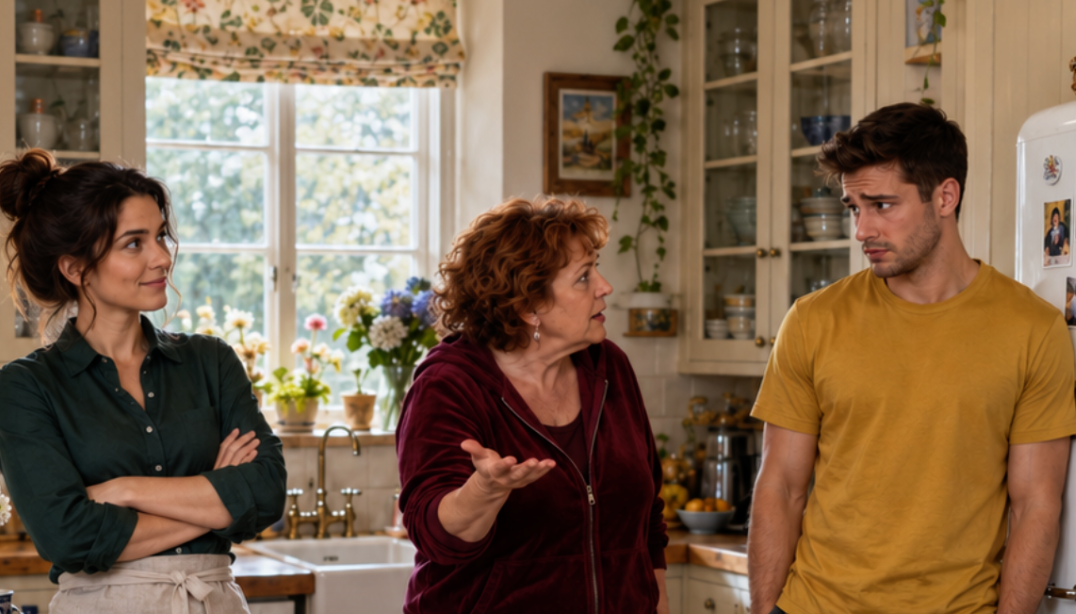
“You Should Have Booked for Three,” the Mother-in-Law Shouted at Her Son. But He Booked the Trip for Two—and There Was No Place for Me
“You’ll pay the remaining balance by Friday. Sixty thousand. The reservation will be canceled if we don’t pay.”
Svetlana turned off the faucet. Water was still dripping from her fingers onto the rubber mat beside the sink.
“Mom is already on her way from the bus station,” Pavel added without looking up from his phone. “She’ll stop by, and we’ll discuss the room arrangements.”
Svetlana took the towel from her shoulder and hung it on the hook. On the countertop beside her work laptop sat a cold container of pilaf. Pavel brought lunch with him to work and finished whatever was left when he got home.
“What room arrangements, Pasha?”
“At the boarding house. Who gets which room. Mom wants the corner one because it’s quiet.”
A key rattled in the lock in the hallway. Svetlana didn’t even flinch. Her mother-in-law had her own set of keys—Pavel had made a duplicate six months ago without asking her.
“Svetochka, open up! My hands are full!” came a voice from the hallway.
Tamara Stepanovna swept into the kitchen in a burgundy coat without even taking it off, carrying two grocery bags from Magnit. She set them on the floor and began unloading containers with brightly colored lids directly onto the table, right on top of Svetlana’s papers.
“Aspic, cutlets, Olivier salad. I cooked everything for the road. Everything costs three times as much down south.”
Svetlana carefully moved the containers aside to clear space around her laptop.
“Hello, Tamara Stepanovna.”
“Hello. Well, we’re going!” her mother-in-law announced, lowering herself heavily onto a stool and undoing the top button of her coat. “I’ve already worked out the rooms. I’ll take the corner one overlooking the garden so there’s no draft. Pashenka gets the sea-view room. He works so hard—he deserves it.”
Svetlana was thirty-nine. For eight years, she had owned a café on the ground floor of an apartment building—twenty seats, two coffee machines, and three baristas working shifts. The business became profitable in its third year. Now it brought her an average net income of 160,000 rubles a month, and more than 200,000 in December. She managed the revenue herself through an app and balanced the register every evening. She always had the numbers at her fingertips.
Pavel worked at the railway depot as an assistant train driver. With bonuses and allowances, his salary was around seventy thousand. His bonuses, according to him, were “unpredictable” and “off the books.” In seven years of marriage, Svetlana had never once seen a single bonus appear in their account.
Their two-room apartment in the district center had been purchased by Svetlana with a mortgage four years earlier, in her own name. She had paid the down payment from the café’s profits. She also made the monthly mortgage payment of forty-two thousand rubles from her own card. Pavel contributed twenty to twenty-five thousand “for the family,” and even that was irregular. The money went toward groceries and his gasoline.
A year earlier, Svetlana had started saving for dental implants. She had neglected her teeth while building the business, and now the dentist had estimated the total treatment at around two hundred thousand rubles. She had already saved one hundred forty thousand. The money sat in a separate savings account that she never touched.
“I booked the boarding house myself,” Pavel finally said, placing his phone face down. “I paid the deposit. Now the remaining amount is your part. A family has to stick together.”
“How much was the deposit?”
“Twenty-five.”
“From which card?”
Pavel hesitated for a moment.
“Yours. Well, the one I contribute money to as well. Why? Does it matter?”
“It does.” Svetlana opened her laptop. “Let’s deal with the facts.”
“Oh, Svetochka, come on,” her mother-in-law interrupted, spreading a scarf across her lap. “It’s family money. Pasha is taking care of everyone. He organized the vacation, and you’re counting every kopek as usual.”
“I am,” Svetlana agreed. “That’s what I do.”
She opened the banking app. The card was in her name, and Pavel had an additional card linked to it. She transferred thirty thousand rubles there every month, while he contributed a little over twenty.
“All right. How many people is this trip booked for?”
“Two,” Pavel said. “Full board. Two weeks down south.”
“Two people meaning who?”
There was a pause.
“Well… Mom and me.”
Svetlana raised her eyes from the screen.
“And me?”
“You’ll pay extra and come too,” he said as if explaining something obvious. “There weren’t any rooms available for three, so I booked for two. We’ll add you later.”
“Add me later,” Svetlana repeated.
“Svetochka, don’t pick at every word,” Tamara Stepanovna said, waving a ringed hand. “The important thing is that we’ll all vacation together. Me, Pashenka, and you somewhere nearby.”
“Nearby where?”
“Well, maybe in a shared room. Or we’ll put in a folding bed. You’re used to running around anyway.”
Svetlana moved the container of aspic away from her elbow.
“Let’s look at the numbers. The deposit was twenty-five thousand. What’s the full price for two people?”
“Eighty-five,” Pavel muttered.
“Eighty-five minus the twenty-five-thousand deposit leaves sixty thousand. Correct?”
“Correct. So pay the sixty.”
“Eighty-five thousand is for two people. You and your mother.” Svetlana spoke evenly, as though reading a receipt to a customer. “Forty-two and a half thousand per person. Where am I in this reservation?”
Pavel said nothing.
“Pasha. Eighty-five thousand is for two people—you and your mother. I’m not included. I would have to pay separately, another forty-something thousand. Yet you’re telling me to ‘pay the remaining sixty for everyone.’ Who exactly is ‘everyone’ when there are only two people on the booking, and neither of them is me?”
“Women are always counting every kopek,” Pavel muttered through clenched teeth, reaching for his phone.
“Well, that’s interesting,” Svetlana said.
Tamara Stepanovna shifted uncomfortably on her stool.
“Svetochka, why are you being so difficult? Pasha meant well. You have to understand—I’m his mother, I’m getting older, I need a vacation by the sea. You two are young. What difference does it make to you whether you sleep on a folding bed or a regular one?”
“Mom is more important,” Pavel nodded. “She has high blood pressure. The doctor prescribed a southern climate for her.”
“Wonderful,” Svetlana said. “Then why do you need my sixty thousand if the two of you are going together?”
“Because we have a shared family budget!” Pavel raised his voice. “I gave you a proper life, by the way! You were living in rented apartments before me. I set you up with a normal life. Your business got on its feet with my help…”
Svetlana slowly turned the laptop screen toward him.
“Show me where your help appears in the business accounts. I’ll wait.”
Pavel didn’t look at the screen.
“Well, you know I supported you emotionally.”
“Emotionally,” Svetlana repeated. “All right.”
At that moment, the phone in her apron pocket rang. The number was unfamiliar. Svetlana glanced at it—the area code matched the boarding house Pavel had bookmarked on the website.
She answered and immediately switched on speakerphone, placing the phone on the table between the food containers.
“Hello, Svetlana Andreevna?” said a woman’s voice. It was an administrator. “You submitted a request asking us to confirm the details of the reservation. Your booking is for two guests: Pavel Sergeyevich and Tamara Stepanovna, for two weeks, with a corner room and a standard sea-view room. We’re waiting for the remaining payment of sixty thousand rubles by Friday, otherwise the reservation will be canceled. Unfortunately, we cannot add a third guest because the building is fully booked. Am I correct that you will be making the payment?”
The silence in the kitchen became almost tangible.
“Thank you,” Svetlana said into the phone. “I’ll call you back.”
She ended the call.
“So you submitted the inquiry using my number,” she said, looking at Pavel, “so I wouldn’t have direct access to the booking details. But you listed me as the person responsible for payment. Bingo.”
Pavel opened his mouth and then closed it.
“The building is full. A third guest cannot be added,” Svetlana continued. “So there was never going to be a folding bed. There was never any plan to ‘add me later.’ The two of you are going together. You and your mother. For two weeks. And I’m supposed to pay sixty thousand rubles and stay home paying the mortgage.”
“Svetochka…” her mother-in-law’s voice trembled. “Surely you understand that a mother is more important…”
“And this,” Svetlana said, opening the banking app, locating the transaction, and enlarging it with her fingers, “is the deposit. Twenty-five thousand rubles, paid on the twenty-fifth. From my card. There were thirty-one thousand rubles in that account that day—thirty thousand of mine, transferred a week earlier. Pasha, you had eight hundred rubles in there at the time.”
She placed the phone face up on the table so both of them could see.
“You paid the deposit for your vacation with your mother using my money. Twenty-five thousand. And now you’re demanding another sixty thousand. In total, I’m supposed to pay eighty-five thousand rubles for a vacation I’m not even going on.”
“That was family money!” Pavel’s neck turned blotchy red beneath the collar of his shirt.
“Family money,” Svetlana nodded. “Then the vacation should be a family vacation. Where am I in it?”
Tamara Stepanovna suddenly turned toward her son. The scarf slipped from her lap.
“Pashenka, what do you mean you booked for two? I told you to book for three right away so there wouldn’t be a scandal! I warned you!”
“Mom, stay out of this,” Pavel snapped.
“What do you mean, stay out of it?!” his mother shouted, her face turning grayish. “I told you in plain Russian: book it for three so your wife can come too and won’t nag you! But you got greedy and booked it for two because you didn’t want to give her a place—and now you’re trying to make her pay for it too! You idiot!”
“You were the one who said you wanted the corner room and I should have the sea-view room, and she could stay somewhere off to the side!” Pavel shot back.
“I said off to the side, not without a room at all!” Tamara Stepanovna banged her ring against the table. “You’ve humiliated me in front of my daughter-in-law!”
Svetlana watched the scene with her arms folded across her chest. The café revenue spreadsheet was still glowing on the laptop screen.
“Let me summarize,” she said calmly when both of them finally ran out of steam. “For seven years of marriage, I’ve been paying the mortgage—forty-two thousand rubles a month for four years. That’s around two million rubles toward the debt. The café is mine. The down payment came from my profits. Pasha, you contribute twenty to twenty-five thousand for household expenses, and that money goes toward your gasoline and the food you eat. Now you’ve taken the deposit for your vacation from my card and you’re demanding another sixty thousand for a trip that doesn’t include me. While I’m saving money to fix my teeth.”
She opened her second savings account and turned the screen toward them.
“One hundred forty thousand. For dental implants. The total treatment costs two hundred thousand. I’ve been saving for a year and denying myself a vacation. And you expect me to withdraw sixty thousand from this account so you and your mother can go to the sea.”
“My salary is partly off the books!” Pavel was almost shouting. “My bonuses are unpredictable! I work myself to death at that depot, burning through shift after shift, while you shuffle papers around in your café and think you’re the boss of everyone!”
“Shuffle papers,” Svetlana repeated. “All right.”
“You’ve become so greedy, Svetka!” her mother-in-law jumped in, having recovered. “You came to my son when everything was already provided for you, and now you’re too stingy to spend money on a close relative! A mother is more important. Have some fear of God!”
“Greedy?” Svetlana tilted her head slightly. “And whose ‘ready-made life’ did I supposedly walk into, Tamara Stepanovna? A man with eight hundred rubles in his account? He was the one who moved into my apartment where everything was already provided. He’s registered here, but he isn’t an owner.”
Her mother-in-law stopped short.
“What do you mean—not an owner?” she asked. “Pasha, you told me the apartment belonged to both of you!”
Pavel remained silent, staring at the countertop. His Adam’s apple twitched.
“The two-room apartment is registered in my name. The mortgage is in my name. I paid the down payment from savings I had before the marriage,” Svetlana said evenly. “Only jointly invested money can potentially be divided. And every mortgage payment for the past four years has come from my card. The bank statements prove every kopek. Registration gives you the right to live somewhere. It does not make you an owner.”
Tamara Stepanovna looked at her son. Suddenly, the burgundy coat she was wearing seemed far too heavy.
“Pashenka… you told me everything was shared. You said you were the man of the house. You said you’d brought her into a ready-made life.”
“Mom…”
“So this is her apartment?! And you promised me a sea-view room using her money?!”
Svetlana closed the laptop.
“Here’s what we’re going to do,” she said. “The twenty-five-thousand-ruble deposit was my money, taken from my account. I’m transferring the same amount back into my savings right now, with a witness present.”
She tapped her phone a couple of times.
“Done. Twenty-five thousand has gone back into my dental fund.”
Pavel jerked forward.
“You have no right!”
“I do. It’s my account and my money. The reservation is yours. If you want to travel with your mother, pay the remaining sixty thousand yourself. From your assistant train driver’s salary. Your bonuses may be unpredictable, but I’m sure you’ll figure something out.”
“Where am I supposed to get sixty thousand?!” Pavel howled.
“I don’t know,” Svetlana said. “It’s your vacation. You booked it yourself. You arranged the rooms yourself. You left no place for me yourself. Pay for it yourself.”
She stood up, removed her apron, and hung it over the back of a chair.
“And now take your containers.”
She packed them back into the Magnit grocery bags.
“You’ll need them for the journey. Everything costs three times as much down south.”
“Svetochka, you can’t do this…” her mother-in-law began uncertainly.
“Yes, I can, Tamara Stepanovna.”
Svetlana handed her the bags.
“And leave the keys on the little table. The duplicate set Pasha had made. They’re keys to my apartment.”
Her mother-in-law automatically looked toward the table by the entrance, where a set of keys with a seashell keychain was lying.
Svetlana walked over, picked them up, and slipped them into her pocket.
“These are mine.”
Tamara Stepanovna stood up and pulled her burgundy coat closed. She looked at her son. He remained seated, red-faced, staring at the countertop.
“You really did it this time, Mr. Provider,” she said quietly before walking toward the door.
Pavel left two days later. He moved in with his mother, near the same bus station she had arrived from carrying those containers.
He never found the sixty thousand rubles. The reservation was canceled on Friday, and the deposit was lost—but this time it was his loss, not Svetlana’s.
Nobody went south.
Six weeks passed.
The divorce was finalized without any real dispute. There was essentially nothing to divide, and Svetlana documented her property and finances with bank statements.
Pavel briefly tried to claim a share of the apartment, but after comparing the cost of an appraisal and court fees with the actual amount he had contributed during those four years, he quietly backed down.
Tamara Stepanovna called once, about a month later.
Svetlana answered because she assumed it was something important.
“Svetochka, forgive Pasha,” her mother-in-law began in a drawn-out voice. “He didn’t mean anything bad. He’s a simple man. He was only trying to do what was best for the family…”
“For the family?” Svetlana repeated. “Tamara Stepanovna, I’m no longer part of your family. Goodbye.”
She blocked the number.
Svetlana learned the rest from Pavel’s sister.
Her brother had moved onto their mother’s couch, and now the two of them argued every other day because Tamara Stepanovna constantly reminded him about the lost deposit and the “humiliation over the seaside vacation.”
His sister messaged Svetlana herself without being asked:
“You did the right thing. He’s owed me money for three years too. He keeps promising he’ll pay me back when he gets his bonuses.”
Svetlana began the implant procedure the same week she restored the twenty-five thousand rubles to her savings.
The surgeon scheduled the first stage, and she paid the deposit from the account. Soon, she had almost enough saved again to cover the entire treatment. The café had brought in strong revenue in May as tourist traffic increased.
The dentist promised that within six months she would receive her permanent crowns.
Svetlana didn’t close the café for a single day.
She removed the old apartment lock—the one for which a duplicate key existed—and installed a new electronic lock operated by a key card.
She had exactly one card made.
On Friday evening, she balanced the café register, closed the banking app, and slipped her phone into her apron pocket.
Then she took off the apron and hung it on the hook.
She reached into the pocket and pulled out the keyring with the seashell charm. She turned it over in her hand for a moment and placed it on the little table beside the entrance.
One set of keys.
She poured herself a coffee from the machine at work—a double, exactly the way she liked it.
In her own kitchen.