Home Blog Page 20

Classmates were mocking me at the reunion, thinking I was still a nobody… But in the morning, they saw me on the cover of a business magazine.

0

“Sokolova? Marina Sokolova?! Did you really come after all?” Igor Valentinov stretched his lips into a smile, but his eyes remained cold. “Guys, look who showed up!”

Marina stopped at the restaurant door. Fifteen years had passed, but his voice still carried the same mocking tone familiar from their student days. She took a deep breath and decisively stepped inside.

“Hi, Igor. Hello, everyone,” her voice sounded calm, although her heart was pounding as if trying to burst out.

The restaurant hall was softly lit by warm lamps. Almost their entire group had gathered at the long table — about fifteen people. Faces were familiar but distant, like old photographs, a little faded by time.

“Marinochka!” Anna Svetlova — the only friend from those years — rushed to her. “I’m so glad you came!”

“I couldn’t miss such an event,” Marina smiled, feeling some of the tension ease.

“Come, sit with us,” Anna pulled her toward the table. “We were just talking about how we took exams from Petrovich.”

Marina sat down, feeling curious eyes on her. Next to Igor sat Olga Beresneva — once the beauty of the course, now a well-groomed woman with perfect hair and a slightly tired look.

“Marina, you haven’t changed at all,” Olga said with polite friendliness. “Still the same… reserved.”

“You look great too, Olya.”

“What do you do now?” Sergey Volkov asked, pouring wine. “Still trying to change the world?”

She remembered that tone — once part of the student mockery about her ecological business project.

“Almost,” Marina answered, accepting the glass. “I have a small company.”

“I guess,” Igor leaned forward, “something to do with your ‘green’ ideas? Remember when she was all about those biodegradable bags?” He laughed, and a few people joined in.

“Yes, that’s exactly what we do,” she replied calmly.

“So, is saving the planet profitable?” Igor wouldn’t let up.

“Sometimes it works, sometimes it doesn’t,” Marina smiled evasively.

“Well, not everyone can be successful,” he shrugged. “I manage a department at TechnoProgress, Dima started his own company…”

“Remember how Marina failed her thesis defense?” Svetlana Krymova suddenly jumped in, Olga’s former friend. “She got mixed up in her calculations!”

“That’s not quite right,” Marina gently objected. “I got a B.”

“For a top student, that’s a failure,” Igor picked up. “Especially after all your speeches about innovation.”

An awkward silence hung over the table. Marina felt her cheeks flush — just like back in university.

“I remember how Marina solved that financial analysis problem even the professor got stuck on,” Nikolai Lebedev, sitting at the far end of the table, suddenly said.

Marina looked at him surprised. He was always quiet, and she hadn’t expected him to remember anything.

“That happened,” she thanked him with a smile.

“Alright, enough memories,” Igor raised his glass. “Let’s drink to our reunion! Fifteen years — like one day!”

Everyone nodded and raised their glasses. The conversation shifted to general topics: work, children, university anecdotes. Marina relaxed a little but still felt like an outsider among them. She knew she didn’t fit in with this circle, just like before.

“Are you married, Marina?” Olga asked when the conversation turned to football.

“No, not yet.”

“Any kids?”

“None either. Work takes all my time.”

“Poor thing,” Olga said with sincere sympathy. “I already have three. Igor works a lot, of course, but we manage.”

Marina nodded, finding no words. By most here, she was indeed a “loser” — no husband, no children, only a career.

“I’m going out for some air,” she said and got up from the table.

The terrace was quiet and fresh. Marina took a deep breath. Why did she even come? To feel again like that student who couldn’t find her place?

“May I?” Nikolai appeared nearby with two cups of coffee. “Thought you might want to warm up.”

“Thank you,” she gratefully took the cup. “It got a bit too hot inside.”

“Not just from the heat,” he smiled. “Igor is still the same… overwhelming.”

“Some things never change,” Marina shrugged.

“Others do,” Nikolai looked at her intently. “You’ve changed. Stronger. More confident.”

“Really?” she raised her eyebrows in surprise.

“Yes. Not just outwardly. In many ways.”

“And you’re more observant than I thought,” she smiled. “Honestly, I barely remember you.”

“No wonder,” he smirked a little. “I tried to be invisible. Especially around Igor and his crew.”

“Everyone was a little afraid of him.”

“Except you,” he said unexpectedly. “You always stood by your ideas, even when they laughed in your face.”

Marina wanted to say something but then Anna came running onto the terrace, excited, holding a phone.

“Marina! Why were you silent?!” Anna handed her the phone. “It’s you!”

The screen was open to a business magazine page. On the cover of the new issue sat Marina herself in a formal suit. The headline read: “Green Billion: How Marina Sokolova Turned an Ecological Idea into a Business Worth 50 Million.”

“That… came out quite recently,” Marina replied embarrassed. “I didn’t want to make it public.”

“Didn’t want to make it public?!” Anna pulled her back into the hall. “Guys! Look here!”

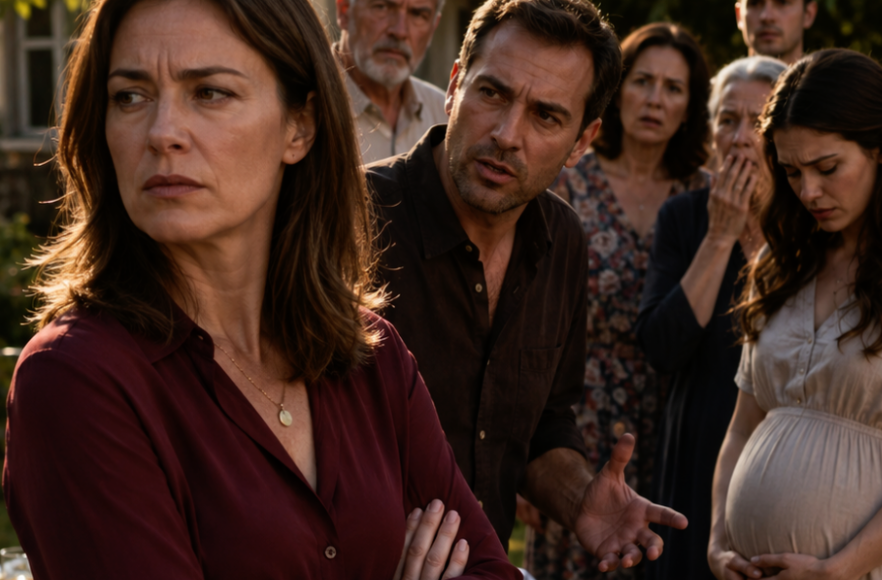
A commotion began in the restaurant. The phone passed from hand to hand. Faces changed — from surprise to complete incomprehension.

“Is it true?” Igor looked as if he couldn’t believe his eyes. “Fifty million?”

“That’s the estimated company value,” Marina calmly explained. “Not my personal funds.”

“But you own it?” he pressed.

“I’m the majority shareholder, yes.”

A heavy silence fell over the table. Olga shifted her gaze between Marina and her husband, as if trying to comprehend what she heard. Someone quietly whistled.

“So all these years when we laughed at your ‘green’ projects…” Igor slowly said.

“I was just following my own path,” Marina finished calmly. “Like all of you.”

“Fifty million, though!” Svetlana exclaimed. “That’s huge money!”

“It’s the result of twelve years of hard work,” Marina said. “And many mistakes they don’t write about in magazines.”

The evening atmosphere changed sharply. Now everyone wanted to talk to Marina, learn details, say they had always believed in her. She answered politely but without much enthusiasm. This sudden sympathy irritated her more than pleased.

When most guests left, Igor sat down next to her with a glass of brandy.

“You know, I always said you’d achieve a lot,” he said with the same fake smile.

“Interesting,” Marina replied softly, looking him straight in the eyes. “I remember you saying I’d fail.”

“Oh, come on, those were just jokes,” he waved it off. “Okay, let’s talk about cooperation? I have connections at TechnoProgress, maybe we can work something out…”

“Sorry, Igor, I have to go,” Marina stood up. “Early start tomorrow.”

Leaving the restaurant, she bumped into Olga, who stood by the entrance smoking.

“I didn’t know,” Olga began without looking at Marina. “That you were so successful.”

“It’s just work, Olya.”

“No, it’s not just that,” Olga finally looked up. “The thing is, I dropped out of school for Igor back then. I thought he’d become someone important and I’d be by his side. And now…”

“You have three kids,” Marina gently reminded her. “That’s a big deal too.”

“Yes, but…” Olga hesitated. “Never mind. Just know I’m really happy for you.”

Marina nodded and headed for a taxi. Soon Nikolai came up to her.

“May I walk you?”

“Of course.”

They slowly walked down the evening street. Nikolai told her how he became a financial analyst, moved to St. Petersburg, went through a divorce. Marina listened and thought this quiet man had always made her feel sympathy — she just hadn’t noticed before.

“You know,” he suddenly said, “I kept your course paper on ecological management. The very one everyone laughed at.”

“What? Why?” she was surprised.

“It was brilliant. I always felt you were special,” he smiled. “I was just too cowardly to say it out loud.”

“And I was too insecure to notice those who supported me,” Marina lightly touched his hand. “Thank you for telling me.”

At the hotel, they exchanged numbers and agreed to meet for breakfast before departure.

The next morning, Marina went down to the restaurant. Several classmates were already sitting at a table, including Igor and Olga. Fresh magazines lay on the coffee table, including the one with her photo on the cover.

“Good morning,” Marina nodded to everyone and joined Nikolai.

“Did you sleep well?” he asked.

“Almost not,” she admitted. “Too much on my mind.”

“Good or bad?”

“Both,” she smiled. “But I’m glad I came yesterday. Like closing an old chapter.”

“And opening a new one?” he looked at her warmly.

“Maybe,” she smiled wider. “Time will tell.”

Out of the corner of her eye, she noticed Igor deliberately taking the magazine and showing her photo to someone at the next table. But now it didn’t matter.

Marina understood the main thing: true success is not about proving something to those who doubted. It’s about living your life, believing in your ideas, and finding those who stand by you. Even if it takes fifteen years.

An Old Man Found a Pregnant Girl in the Snow. He Saved Her from the Blizzard. And She Gave Him a Reason to Live

0

Vasily Stepanovich lived at the edge of the village, where time seemed to have stopped. His little old house, as if pressed to the ground from weariness, was surrounded by a crooked fence and creaky gates that no one had repaired for a long time. Around him — silence. The whole street had died out: neighbors had moved away, some went to the city, others — to eternity. Only memory and recollections remained.

He was seventy years old. For a full forty years, he had served people — as a feldsher (paramedic) at the local clinic, which was now closed, along with everything that connected him to the past. After his wife’s death, he was left alone. His children were rare visitors, sometimes calling, sometimes remembering. But he had long grown accustomed to loneliness. The habit had become his shield, his protection from pain and unnecessary conversations.

That year, winter came early and harsh. The wind howled so fiercely that even the sturdiest window frames trembled from its rage. Snow fell in thick walls, tearing off roofs and swirling in the air, as if trying to carry away the last traces of human life.

Vasily Stepanovich’s house was the only one where a light bulb still burned. He stoked the stove, prepared a modest dinner — potatoes boiled in their skins and a couple of salty pickles from the barrel. This was how he always ate, simply and without fuss. Nothing fancy, nothing unnecessary.

He was almost about to go to bed when he heard a strange sound. At first glance — just the usual howl of the blizzard. But then again. Quiet, almost a whisper, as if someone was asking for help. His heart froze, then suddenly beat faster.

It wasn’t just alarm. It was professional sensitivity, which he had never lost in all his years working in emergency care. And it came back to him, awakening as a sharp pain in his chest.

He quickly put on his sheepskin coat, slipped on his felt boots, took his flashlight — the very one with the worn-out casing that had saved him many times on night calls. He stepped outside. The cold hit his face; his breath turned into a white cloud of steam. Step by step, listening carefully to every sound, he walked along the road until he noticed a silhouette at the roadside.

At first, it seemed like a sack or some trash. But as he got closer, he realized: it was a person. A woman. She was crawling in the snow, leaving a faint trail behind her. Her fingers were blue, her lips trembling, and her belly, under an old coat, was sticking out — she was pregnant. Close to giving birth.

Vasily knelt down beside her. Carefully leaned toward her:

“Girl… can you hear me?”

She slowly opened her eyes, looked at him with difficulty, and whispered:

“Help… me… it hurts so much…”

And lost consciousness.

The old man didn’t hesitate for a second. He gently lifted her — she was incredibly light, as if not alive, but a shadow. It seemed life itself was slipping out of her. He slowly trudged back, overcoming snowdrifts, gusts of wind, cold, and his age.

His thoughts were confused, but one thing was clear: if he didn’t make it in time, two would die — she and the child inside her.

When he reached home, the blizzard seemed even fiercer, but stepping over the threshold, he felt something long forgotten ignite inside — the fire of life, purpose, necessity. The house that had held only silence for years suddenly filled with chaos, warmth, and hope.

He laid the woman on an old but warm bed, covered her with several blankets, stoked the stove so that the flames roared in the chimney. Water boiled on the stove. He recalled everything he knew about childbirth — though many years had passed, his hands remembered what to do.

The woman was unconscious, her body convulsed with spasms, her forehead covered with sweat. Vasily ran to the shed, fetched an old wooden box — inside was everything that might be needed: bandages, antiseptics, scissors, even a clean swaddling cloth left “just in case” many years ago.

He put his hand on her forehead — a fever. Then checked her pulse — weak but steady. Moistened her lips with water and spoke softly:

“Wake up, girl. You’re home. No one will abandon you.”

She opened her eyes. A faint spark of life flickered there.

“The baby… he… soon… pain…”

“Hold on. I’m here. We’ll manage. I promise.”

The process began. And it was agonizing. But Vasily did not spare himself. He carried water, changed sheets, helped her breathe, supported her when the woman wanted to give up. At that moment, he felt no age, no back pain, no cold creeping through the walls. He was again who he had been all his life — a feldsher, a rescuer, a friend.

And then, in the middle of the night, a cry sounded. Loud, clear, filled with life. A little boy was born — red, wrinkled, but alive. The woman cried. Vasily carefully wrapped the baby in the swaddling cloth and placed him on his mother’s chest.

For the first time in many years, he felt his own eyes grow moist. He whispered:

“Welcome, little one. You came into the world on the darkest night. Maybe that’s why you will bring the light.”

Morning came unnoticed. The snow was still falling, but the blizzard had calmed. Through the fogged window, soft grayish light entered the house.

Vasily sat in a chair holding a cup of hot tea. The woman slept, holding her son close, now peacefully, with a slight smile. When she woke, her gaze became clear. Gratitude sparkled in her eyes.

“Good morning! How do you feel?” he asked, approaching and straightening the blanket.

“Better… thank you. You… you saved us!”

Tears filled her eyes.

“You did everything, girl. I just helped a little.”

She was silent, then with effort sat up on the pillow.

“My name is Marina. I ran away…” her voice trembled. “My father kicked me out when he found out I was pregnant. He said I had brought shame to the family. I didn’t know where to go. I walked along the road until my legs gave out. I thought I’d die.”

Vasily listened silently. There was no judgment in his eyes. Only sympathy and understanding. He had long understood: in life there is no black or white. There are only people trying to survive.

“Where did you live before?”

“Near Vologda. I have no one left… except him.” She looked at the baby. “I will name him Alexey.”

Vasily nodded. The name was strong, reliable, as if given by fate.

“So now you have a new path. No one here will judge you. In this village, truth has almost disappeared, but you will have a roof, silence, warmth… and the company of an old grump like me.”

Marina smiled through her tears.

“I would really like to stay… I don’t even know your name.”

“Vasily Stepanovich. Just Vasily, if you want.”

They fell silent. A calm, rare and precious, hung between them. She pressed the baby to herself, and he went to pour more tea.

A quiet life was beginning again — unexpectedly, unplanned, but with hope.

Several weeks passed. Winter slowly gave way. Snowdrifts still stood high, but the days grew longer, and the sun already warmed like spring.

Laughter sounded again in Vasily Stepanovich’s house — childlike, ringing. Little Lesha grew quickly, and Marina every day filled the house with care, warmth, and energy that the old man seemed to have long forgotten.

One morning, there was a knock on the door. It happened rarely — the village was long deserted, and those who remained knew: people didn’t visit Vasily Stepanovich just like that.

He opened the door. A man stood on the threshold, wearing an expensive coat, with a cold gaze and confused thoughts.

“Does Marina Karpova live here?”

Vasily darkened.

“And who is asking?”

“I’m her father. I was told she might be here.”

Behind him appeared Marina. She froze. Her eyes widened. The moment stretched into eternity.

“Dad…”

He stepped forward. His face was older than she remembered. In his eyes — uncertainty, remorse.

“I searched for you. I understood everything when I found out you were alive. Forgive me… I had no right…”

Marina was silent. In her gaze — not only pain but also strength. The strength that passed through the blizzard, birth, and loneliness.

“Why did you come?”

“Because I can no longer live with what I did. I wanted to see my grandson… at least once. And, if you allow, to help.”

She looked at him for a long time, then shifted her gaze to Lesha, who peacefully slept in her arms. Slowly stepped aside and said:

“Come in. But know this: I am no longer that girl you cast out. I am a mother. And this house is my fortress.”

Vasily stood aside. He said nothing but felt pride inside. And quiet gratitude for being there when she needed support.

He thought to himself:

“That even in the harshest winter, fate can give a second chance. The main thing is not to pass by those who have frozen in loneliness.”

— I found two little kids in my garden, raised them as my own, but after fifteen years, some people decided to take them away from me.

0

“Marish, come quickly!” Stepan shouted from the garden, and I dropped the half-mixed dough right into the sourdough starter.

I rushed out onto the porch — my husband was standing by the old apple tree. And next to him… two small children: a boy and a girl. They were sitting in the grass between the carrot beds, dirty, wearing torn clothes, with big frightened eyes.

“Where did they come from?” I whispered, stepping closer.

The girl reached out to me with her hands. The boy pressed close to her but didn’t look scared. They were about two years old, maybe a little older.

“I don’t understand myself,” Stepan scratched the back of his head. “I went to water the cabbage, and there they were. Like they grew out of the ground.”

I crouched down. The girl immediately wrapped her arms around my neck, pressing her cheek to my shoulder. She smelled of earth and something sourish. The boy stayed in place but didn’t take his eyes off me.

“What are your names?” I asked softly.

There was no answer. Only the girl hugged me tighter and started to snuffle.

“We need to notify the village council,” Stepan said. “Or the local policeman.”

“Wait,” I said, stroking the child’s tousled hair. “First, let’s feed them. Look how skinny they are.”

I led the girl inside; the boy cautiously followed, holding the edge of my dress. In the kitchen, I sat them both at the table, poured some milk, and cut bread with butter. The children ate greedily, as if they hadn’t eaten for days.

“Maybe gypsies dropped them off?” Stepan suggested, watching them.

“No, I don’t think so,” I shook my head. “Gypsy children usually have darker skin. These two are fair-eyed and blonde.”

After eating, the kids perked up. The boy even smiled when I gave him a second piece of bread. The girl climbed onto my lap and fell asleep, clutching my sweater tightly.

In the evening, the local policeman Petrovich arrived. He examined the kids and wrote something in his notebook.

“Spread them out among the villages,” he promised. “Maybe someone lost them. For now, let them stay with you. There’s no room at the reception center in the district.”

“We don’t mind,” I said quickly, holding the sleeping girl close.

Stepan nodded. We’d been married a year, but still had no children of our own. And now — two at once.

That night, we set them up in our room — on the floor by the stove. The boy couldn’t fall asleep for a long time, watching me closely. I reached out my hand, and he timidly took my finger.

“Don’t be afraid,” I whispered. “You’re not alone anymore.”

In the morning, a gentle touch woke me. I opened my eyes — the girl was standing beside me, carefully stroking my cheek.

“Mama…” she said uncertainly.

My heart stopped. I lifted her up and held her to my chest.

“Yes, dear. Mama.”

Fifteen years passed like a blink. We named the girl Alyonka — she grew into a slender beauty with long golden hair and eyes the color of spring sky. Misha became a strong young man, just like his father.

Both helped with the farm, did well in school, and became everything to us.

“Mama, I want to go to the city university,” Alyonka declared at dinner. “To become a pediatrician.”

“And I want to study at the agricultural academy,” Misha added. “Dad, you said it’s time to develop the farm.”

Stepan smiled and ruffled his son’s shoulder. We never had biological children, but never regretted it — these two became ours truly.

Back then, Petrovich found no one. We formalized guardianship, then adoption. The children always knew the truth — we hid nothing from them. But to them, we were real mom and dad.

“Remember when I baked pies for the first time?” Alyonka laughed. “I dropped all the dough on the floor.”

“And you, Misha, were afraid to milk the cows,” Stepan teased. “You said they’d eat you.”

We laughed, interrupting each other with memories. So many moments over the years! The first school day when Alyonka cried and didn’t want to let me go. Misha’s fight with bullies who called him a foster kid. And the talk with the principal after which it all stopped.

After the kids went to bed, Stepan and I sat on the porch.

“They’ve grown up good,” he said, hugging me.

“My own,” I nodded.

The next day everything changed. A foreign car pulled up to the gate. Out came a man and a woman about forty-five, neatly dressed, businesslike.

“Hello,” the woman smiled, but her eyes were cold. “We’re looking for our children. Fifteen years ago they disappeared. Twins — a girl and a boy.”

It was like being doused with ice water. Stepan came out behind me and stood beside me.

“And what brings you here?” he asked calmly.

“We were told you took them in,” the man pulled out a folder of papers. “Here are the documents. These are our children.”

I looked at the dates — they matched. But my heart didn’t believe.

“You stayed silent for fifteen years,” I said quietly. “Where were you?”

“We searched, of course!” the woman sighed. “It was a difficult time. The children were with a nanny, and she took them away. On the way, she had an accident… The children disappeared. Only now did we manage to find a lead.”

At that moment Alyonka and Misha came out of the house. Seeing strangers, they froze and looked questioningly at us.

“Mama, what’s happening?” Alyonka took my hand.

The woman gasped, covered her mouth with her palm.

“Katya! It’s you! And this is Artyom!”

The children exchanged looks, clearly not understanding what was going on.

“We are your parents,” the man blurted. “We came home.”

“Home?” Alyonka’s voice trembled. She squeezed my hand tighter. “We are already home.”

“Oh, come on,” the woman stepped forward. “We are your blood family. We have a house near Moscow, and can help with the farm. Family is always better than strangers.”

There it was. I felt anger boiling inside.

“You didn’t look for them for fifteen years,” I hissed. “And now, when they’re grown, able to work — suddenly you appear?”

“We filed a police report!” the man began.

“Show me,” Stepan held out his hand. The man pulled out some certificate, but Stepan noticed the date — a month ago.

“That’s a fake,” he said. “Where is the original?”

The man faltered, putting the papers away.

“You didn’t look for them,” Misha suddenly intervened sharply. “Petrovich checked. There were no reports.”

“Shut up, kid!” the man snapped. “Get ready, you’re coming with us!”

“We’re not going anywhere,” Alyonka stood beside me. “These are our parents. Real ones.”

The woman’s face flushed. She pulled out her phone.

“I’m calling the police now. We have documents, blood is thicker than papers.”

“Call them,” Stepan nodded. “But don’t forget to invite Petrovich. He’s kept all records for fifteen years.”

An hour later, our yard was full of people. The local policeman, a district investigator, even the head of the village council came. Alyonka and Misha sat at home; I was near them — holding them as best I could.

“We won’t give you away,” I whispered, holding the children close. “No matter what. Don’t be afraid.”

“We’re not afraid anyway, Mom,” Misha clenched his fists. “Let them just try.”

Stepan came into the room. His face was grim.

“Fake,” he said shortly. “The documents are forged. The investigator immediately noticed inconsistencies. Dates don’t match. When the children came to us, those ‘parents’ were in Sochi — tickets and photos prove it.”

“Why would they do that?” Alyonka asked.

“Petrovich figured it out. They have a farm but are in debt. Workers ran away — no money to pay. They decided to find free labor. Heard about you somehow — and forged everything.”

We went out into the yard. The man was already being put into a police car. The woman yelled, demanding a lawyer, a trial.

“They’re our children! You’re hiding them!”

Alyonka approached her and looked straight in her eyes:

“I found my parents fifteen years ago. They raised me, loved me, never abandoned me. And you are strangers who wanted to use us.”

The woman stepped back as if struck.

When the cars left, we were alone — the four of us. Neighbors dispersed, whispering and discussing what had happened.

“Mom, Dad… thank you for not giving them away,” Misha hugged us.

“Silly boy,” I stroked his hair. “How could we? You’re our children.”

Alyonka smiled through tears:

“You know, I often thought: what if my real parents were found? Now I know. Nothing would have changed. My real parents are here.”

That evening, we gathered at the table — like fifteen years ago, only now the children were grown. But the love remained the same — alive, warm, and familial.

“Mom, tell us again how you found us,” Alyonka asked.

I smiled and began the story again — about two little ones in the garden, how they entered our home and hearts, how we became a family.

“Grandma, look what I drew!” three-year-old Vanyushka held out a sheet with colorful scribbles.

“Lovely!” I picked up my grandson. “Is this our house?”

“Yeah! And that’s you, Grandpa, Mom and Dad, Aunt Alyona and Uncle Seryozha!”

Alyonka came out of the kitchen — now a doctor at the district hospital. Her belly rounded; she was expecting her second child.

“Mom, Misha called, they and Katya will be here soon. Did you manage to bake the pies?”

“Of course,” I nodded. “Apple ones, your favorite.”

Years flew by unnoticed. Alyonka graduated, returned home — saying city life was cramped, but here was air, peace, and home. She married our tractor driver Seryozha — a reliable guy.

Misha finished agricultural college and now runs the farm with Stepan. They’ve tripled its size. He married a teacher, Katya; they already have little Vanya.

“Grandpa!” the grandson slipped from my arms and ran to the yard.

Stepan just returned from the field. His hair was graying but he stood strong as an oak. He scooped up Vanya and spun him around.

“Well, Vanya, what will you be when you grow up?”

“A tractor driver! Like Dad and you!”

Alyonka and I exchanged smiles and laughed. History repeats.

Misha’s car pulled up. Katya jumped out first, carrying a pot.

“Brought borscht, your favorite!”

“Thanks, dear.”

“And we brought news!” she blurted happily.

“What news?” I asked cautiously.

“We’re having twins!” Katya beamed.

Alyonka hugged them, Stepan’s face spread into a satisfied smile.

“So that’s family for you! The house will be completely full!”

At dinner, everyone gathered around the large table Stepan and Misha made a couple of years ago. There was enough room for all.

“Remember that story?” Misha said thoughtfully. “About the fake parents who filed that claim?”

“How could I forget,” Alyonka smiled. “Petrovich still tells that story as an example to the young.”

“And I thought then: what if they really were my real parents? What if I had to leave?” Misha continued. “And I realized: even if they were real, I would have stayed. Because family is not blood. It’s all this,” he gestured around the table.

“Don’t get your wife all emotional now,” Stepan grumbled, but his eyes twinkled.

“Uncle Misha, tell me again how you and Aunt Alyonka were found!” Vanyushka requested.

“Again?!” Katya laughed. “He’s heard it a hundred times already!”

“Well, tell me!” the kid insisted.

Misha began the story. I sat watching my children, daughters-in-law, grandson. Stepan, who year by year grew even dearer to me.

Once I thought I couldn’t have children. But life gave me such a gift — found two just like that, in the garden, between the beds. And now our house is filled again with laughter, voices, life.

“Grandma, when I grow up, will I find someone in the garden too?” Vanyushka asked.

We all laughed.

“Maybe you will,” I patted his head. “Life is full of miracles. The main thing is to keep your heart open. Then love will find you itself.”

The sun was setting behind the horizons, painting the old apple tree in pink tones — the very tree where it all began. It grew, just like we did. Like our family.

And I knew one thing: this is not the end. Ahead are many happy days, new smiles, new stories. A real family — alive, growing. And its roots are where love is.

An orphan who grew up in an orphanage got a job as a waitress in a prestigious restaurant. But after she accidentally spilled soup on a wealthy customer, her fate changed drastically.

0

Girl, do you even realize what you’ve done?!” Semen shouted, waving a ladle. “Soup on the floor, the customer splashed, and you’re just standing there like a statue!”

Alyona looked at the dark stain on the man’s expensive suit and felt her insides tighten. This was the end of her job. Six months of effort — and all for nothing. Now this rich man would make a scene, demand compensation, and she’d be fired without severance.

“Please, I’m sorry… I’ll clean it up right away,” she stammered, grabbing napkins from the table.

The man raised his hand to stop her:

“Wait. It’s my fault. I turned suddenly and got distracted by a phone call.”

Alyona froze. In two years of working as a waitress, she had heard all kinds of things, but a customer apologizing to her — that had never happened before.

“No, it was clumsy of me…” she muttered.

“Don’t worry. The suit can be cleaned. But did you get burned?”

She shook her head, still not believing what was happening. The man was about forty-five, with graying hair and glasses. He spoke calmly, without the fake polite tone usually put on by wealthy customers.

“Then let me change clothes, and you bring a new soup. Just be careful this time,” he smiled slightly.

Igor, the hall administrator, appeared out of nowhere.

“Mr. Sokolov, sorry for the incident! We will definitely compensate for the suit…”

“Igor Petrovich, no need. It’s fine.”

Alyona brought a new serving of soup, her hands still trembling. Sokolov ate slowly, occasionally glancing at her thoughtfully.

“What’s your name?”

“Alyona.”

“How long have you worked here?”

“Six months.”

“Do you like it?”

She shrugged. What was there to say? A job is a job. The salary is okay, and the team depends on luck.

“And where did you work before?”

The question was easy, but Alyona tensed inside. Rich men don’t just casually ask about waitresses’ pasts.

“At another café,” she answered shortly.

Sokolov nodded and didn’t ask more. He paid, left a generous tip, and left.

“You’re lucky,” Semen grumbled. “If I’d had a client like that in my youth, I’d be retired by now.”

A week later, Sokolov came to the restaurant again. He took the same table and asked to be served by Alyona.

“How are you?” he asked when she brought the menu.

“Fine.”

“Where do you live?”

“I rent a room.”

“Alone?”

Alyona put down the menu a little sharply.

“And?”

Sokolov raised his hands in peace:

“Sorry, I didn’t mean to pry. You just remind me of someone.”

“Who?”

“My sister. She was independent at your age too.”

Alyona felt something tighten inside. “Was” — meaning she’s no longer alive.

“Does she work somewhere?”

“No,” Sokolov paused. “She’s been gone for a long time.”

Their conversation was interrupted by another customer asking for the bill. When Alyona returned, Sokolov was finishing his salad.

“Can I come here often?” he asked. “I like it here.”

“Of course, it’s a public place.”

“And if I ask to always be served by you?”

Alyona shrugged. The customer is always right, especially when he pays well.

Sokolov started coming twice a week. Ordered the same thing: soup, salad, main course. Ate slowly, sometimes spoke quietly on the phone. The perfect visitor.

Gradually, he began to tell about himself. Owns a chain of hardware stores, lives with his wife in a house outside the city. They have no children.

“Where are you from?” he asked once.

“From the city,” Alyona answered evasively.

“Are your parents alive?”

“No.”

“Have they been gone long?”

“I don’t remember them. I grew up in an orphanage.”

Sokolov paused, his spoon hanging over the plate.

“Which one?”

“The fourteenth boarding school on Sadovaya.”

“Got it. How old are you?”

“Twenty-two.”

“When did you leave the orphanage?”

“At eighteen. First, they gave me a dormitory, then I rented on my own.”

Sokolov stopped eating. He looked at her strangely, as if just noticing.

“Is something wrong?” Alyona asked.

“No, it’s okay. It’s just… my sister also grew up in an orphanage.”

“Poor her.”

“Yes. I was twenty then, studying at university. I couldn’t take her in — I lived in a dormitory, barely making ends meet on a scholarship.”

“And then?”

“Then it was too late.”

There was such pain in his voice that Alyona didn’t ask more. It wasn’t her place to stir up someone else’s memories.

The next week, Sokolov brought her a gift — a small, neat box.

“What is this?”

“Open it.”

Inside were gold earrings — simple but elegant.

“I can’t take these.”

“Why not?”

“Because we hardly know each other.”

“Alyona, it’s just a token of attention. No strings attached.”

“For what?”

He paused a moment.

“Do you have any plans for the future?”

“What plans? I work and save money for an apartment.”

“Would you like to change jobs?”

“To what?”

“There’s a manager vacancy at one of my stores. The salary is three times higher than here.”

Alyona leaned back from the table.

“And do I have to do something for that?”

“Work. Receive goods, supervise salespeople, prepare reports. You’ll learn everything.”

“Why me?”

“Because you’re responsible. No complaints in six months, always polite to guests. And because I want to help.”

“Why?”

Sokolov took off his glasses, wiped them with a napkin.

“My sister was sent to an orphanage at twelve — our parents died in a fire. I was in my third year at university. I thought I’d hang on a couple of years, get my degree, find a good job, and bring her to me.”

“What happened?”

“She died of pneumonia, a year before I graduated. I found out about the funeral only a month later.”

Alyona was silent. The story was touching, but what did it have to do with her?

“I’ve thought my whole life: if I had acted earlier, dropped out, got a job somewhere…”

“So what? You both would have survived, instead of struggling alone?”

“Maybe. But she would be alive.”

“You can’t know that.”

“I do. They treated her badly there. If she had lived with me…”

“Listen, I’m very sorry about your sister. But I’m not her.”

“I understand. But let me at least try to fix something.”

Alyona took the box with the earrings.

“I’ll think about the job. But take these back.”

“Alyona, come on! It’s just a gift, no conditions.”

“That’s exactly why I’m not accepting it.”

At home in her rented room, Alyona told her friend Valentina, who grew up with her in the orphanage.

“I don’t believe in kind rich men,” Valentina said, biting an apple. “They all want something.”

“He acts like an older friend. Even like a father.”

“Even worse. That means he has strange ideas.”

“Stop it, Val. Don’t say nonsense.”

“Alyona, we heard many times as kids: don’t trust adults who are too kind. Remember what happened to Natasha Krylova?”

She remembered. Natasha left with a man promising the world. Returned pregnant and bruised.

“But the salary really is good…”

“Talk to Igor. He’s experienced.”

Igor was cautious about the offer:

“Alyona, rich people don’t give anything for nothing. He definitely has his own goals.”

“What goals?”

“Don’t know. Maybe he wants to cheat his wife. Maybe he’s looking for a replacement daughter. Maybe worse.”

“He says he wants to atone for his guilt to his sister.”

“And you believe him?”

“Why not? The story sounds plausible.”

“You’re smart, Alyona. But you don’t understand people well. You expect too much.”

But after a week, Alyona agreed. Not for the money, though it was important. She was just tired of carrying trays and putting up with customers’ whims every day.

The store was on the city’s outskirts, selling building materials. Staff: three salespeople, a loader, an accountant, and her.

Sokolov trained her for a week. Explained patiently, repeated without anger at mistakes.

“You have a good memory,” he said. “And you can find common ground with people. I think you’ll manage.”

The first month was hard. The salespeople didn’t accept her — young, inexperienced, and with a patron. But Alyona wasn’t used to giving up. She worked from morning till night, studied the assortment, memorized prices, learned to deal with suppliers.

Over time things improved. Sokolov came once a week — checked documents, talked to staff. He treated Alyona kindly, but without familiarity.

“How are things?” he usually asked.

“Okay. Getting the hang of it.”

“If something is unclear — call. Don’t hesitate.”

“Okay.”

“And how’s the housing? Still renting a room?”

“For now. But I’m already looking for an apartment.”

“Maybe I can help? I know some realtors.”

“Thanks, I’ll manage myself.”

He nodded and didn’t insist.

Two months later, Sokolov invited her to dinner.

“To a restaurant?” Alyona asked, surprised.

“No, home. My wife cooks great. She wants to meet you.”

Alyona hesitated. It felt awkward to refuse the boss, but going to strangers’ home was strange.

“Don’t worry,” Sokolov laughed. “We’re not scary. Just want to chat in a calm atmosphere.”

The Sokolovs’ house was big, with a garden and pool. Marina, his wife, greeted Alyona rather reservedly.

“Marina,” Alyona introduced herself, extending her hand.

A beautiful, well-groomed woman, but her gaze was cold.

“Come in, come in,” she said. “Boris told me a lot about you.”

“Hopefully good things.”

“Some good, some not,” Marina smiled, but her eyes stayed indifferent.

During dinner, Sokolov asked Alyona about work and plans. Marina barely spoke, only occasionally making sharp remarks.

“Have you thought about getting a higher education?” she asked.

“I have. Just not now.”

“Got it. Work is more important.”

“Marish,” her husband gently corrected.

“What? I’m just curious. Rare to meet people who become independent so early.”

“In orphanages, you have to grow up fast,” Alyona replied.

“Yes, of course. Boris told me about your… background.”

That “background” sounded like something low.

“Marina, we agreed,” Sokolov said more strictly.

“About what? I said nothing bad. On the contrary, I admire it. Not everyone can survive those conditions.”

Alyona understood: it was time to leave.

“Thank you for dinner. I have to go.”

“How to go? We just ate!” Sokolov protested.

“Got to get up early tomorrow.”

“I’ll take you.”

“No need, I’ll get there myself.”

On the way home, she thought about Marina. She clearly hadn’t accepted her. And it made sense — the husband suddenly began caring for a young girl from an orphanage, spending time and money on her. Any wife would worry.

The next day, Sokolov called.

“Alyona, sorry about last night. Marina was in a bad mood.”

“It’s okay.”

“No, it’s not. She had no right to behave like that.”

“I understand her. I’d worry too if I were her.”

“About what?”

“That my husband suddenly started helping some stranger.”

Sokolov was silent.

“You’re not a stranger to me. You’re… special.”

“Because I remind you of your sister?”

“Not only because of that.”

“Why else?”

“Because you’re strong. You didn’t break, didn’t complain about fate, didn’t lose faith. You keep moving forward.”

“There are many like that.”

“More than you think.”

A month later, what Alyona feared happened. She came to the store, and the staff were whispering.

“What’s going on?” she asked.

“Nothing special,” the senior saleswoman Svetlana replied. “Yesterday the boss bought an apartment.”

“What apartment?”

“A studio in a new building on Rechnaya. They say he’s putting it in your name.”

Alyona’s heart stopped.

“How do you know?”

“My son-in-law works in real estate. Says the papers are almost ready.”

Alyona waited until lunch and called Sokolov.

“We need to talk.”

“Of course. Come to the office.”

“Better at a café.”

“Okay. You know ‘Europa’ on Central? I’ll be there in half an hour.”

Sokolov was already waiting at the table.

“Something wrong at work?”

“Are you buying me an apartment?”

He didn’t deny it.

“Yes, I am.”

“Why?”

“I wanted to help you.”

“You don’t owe me anything.”

“I know. But it’s important for me to do this.”

“For what? What have I done for you?”

He took off his glasses, rubbed his eyes.

“Her name was also Alyona. She was a year younger than you when she died. Blonde, gray-eyed, stubborn. Just like you.”

Alyona felt a squeeze inside.

“And?”

“When I saw you, for a second it seemed — it was her. Grown up, matured, but the same.”

“Boris Viktorovich…”

“Wait. I know it’s silly. That you’re not her. But I needed to know that at least one child from the orphanage got a normal life. That I helped someone.”

“You’re not helping me. You’re helping yourself.”

He nodded.

“Maybe. But that doesn’t make the help any less real.”

“It does. Because you see not me. You see your dead sister.”

“That’s not true.”

“It is. That’s why I can’t accept the apartment.”

“Why?”

“Because I don’t want to be anyone’s substitute. Even a generous one.”

Sokolov was silent for a long time.

“What if I offered the apartment to someone else — not you?”

“Then I’d believe you really want to help.”

“So it’s about motives?”

“It’s about me not being someone’s memory.”

He stood up.

“Understood. Sorry for wasting your time.”

“Don’t be angry. I’m grateful for the job, for your belief…”

“For what? For using you?”

“For trying.”

He left, leaving money on the table.

The next day Alyona submitted her resignation. Gave it to the secretary.

“Please pass it on.”

“Boris Viktorovich valued you very much.”

“I just decided to change direction.”

That evening Sokolov called.

“Alyona, don’t make hasty decisions. Not because of our conversation.”

“I’m not because of that. I just realized I want to be a cook.”

“Really?”

“Absolutely.”

He was silent.

“Then good luck.”

“Thank you.”

Igor welcomed her gladly.

“Alyonka! We thought you forgot us.”

“I wouldn’t forget if there was something to lose,” she laughed.

Semen took her desire to study seriously.

“You have the right hands. The main thing is not to rush.”

Alyona enrolled in culinary college courses. Worked as a waitress, studied in the evening, practiced at home at night.

Valentina tried her dishes.

“Tasty. But why?”

“I don’t want to depend on anyone’s mercy.”

“Who did you depend on?”

Alyona told the whole story.

“You’re such a fool,” her friend shook her head. “They were giving you an apartment, and you refused.”

“They weren’t giving it. They wanted to pay for the role of a dead sister.”

“So what? An apartment is an apartment.”

“It matters to me.”

Six months later Alyona was already working as a cook’s assistant. The salary was less than before, but she felt she was in the right place.

One day, Sokolov came to the restaurant. Sat at his usual table. Alyona went to serve.

“Good evening. What will you have?”

“Soup of the day, Greek salad, grilled fish.”

“Okay.”

She brought the order; he thanked her. They ate in silence.

Before leaving, he stopped her.

“Alyona, can we talk?”

“Sure.”

“I wanted to apologize. For everything that happened.”

“No need.”

“You were right. I was looking for my sister in you.”

“And now?”

“Now my wife and I do charity. We help orphanages. But we don’t try to replace anyone anymore.”

Alyona nodded.

“Meeting you changed my life. Made me rethink everything.”

“Mine too.”

“How?”

“I believed in myself. Realized I can choose my own path.”

Sokolov smiled.

“Then we’re even.”

“Looks like it.”

He put money on the table and headed for the exit. At the door, he looked back:

“Good luck, Alyona. Real luck.”

“You too.”

When he left, Alyona cleared the table. He left exactly the right amount of tip. No more, no less.

And that was just right.

Arriving at the hospital to see her dying husband, a wealthy woman threw money to a beggar… But upon hearing a strange advice, she froze in hesitation.

0

An elegant woman in an expensive coat, with a heavy gaze and restrained posture, entered the old building of the city hospital. The air was thick with the smell of medicines, and the walls seemed to hold stories of pain and loss. She slightly wrinkled her nose — not from the smell, but rather from memories that suddenly came alive in her mind. Her husband, one of the country’s most famous billionaires, was now lying in one of the hospital rooms. After a stroke, he no longer spoke. His eyes were open but frozen, as if looking somewhere beyond time.

They had long become strangers to each other. There was no divorce, but neither was there love. They lived like neighbors, separated by a wall of money, obligations, and silence. When her lawyer called and told her that her husband’s condition was rapidly worsening, she hesitated for a long time to come. What could she say to him? What did she want to hear? Perhaps she just hoped for one last chance — a signature that would keep everything as it was intended. But when the car stopped at the hospital entrance, she realized: it was not just about the documents. It was something more — the desire to be near, even if it was too late.

At the entrance to the intensive care unit, she was met by a thin girl about ten years old. The girl was holding a plastic cup and staring toward the hospital cafeteria. The child’s jacket was torn, her hair was messy, and in her eyes was a strange calmness, as if life had already taught her the most important things. The woman habitually pressed her lips, took some bills from her purse, and threw them on the floor near the girl without slowing down.

“Buy yourself something to eat,” she muttered through clenched teeth, as if trying to rid herself of a guilt she didn’t even know she felt.

The girl looked up. She did not thank her. She only asked quietly, almost in a whisper:

“Have you ever told him that you loved him?”

The woman stopped. The words hit her right in the heart. She turned around, but the girl was already walking away, bent over like an old woman tired of life. At that moment, it seemed to her the child vanished into thin air, but she dismissed it as fatigue.

The room was quiet. Her husband lay with closed eyes, but they were open — he was looking out the window. Apparently, he could hear. Maybe even see. The woman approached cautiously, as if afraid to disturb his last moments. She sat down next to him. And for the first time in many years, she took his hand. Cold. But alive.

“I… I’m sorry,” she whispered, her voice trembling. “I kept thinking we’d have time. But then… I just stopped believing.”

A tear rolled down her cheek. She didn’t know if he heard. But suddenly his fingers weakly squeezed her hand. As a reply. As a farewell. As “thank you for coming.”

A nurse passed by. She looked out the window.

“Who is that?” she asked in surprise. “We didn’t allow anyone in without a pass…”

But the bench was already empty.

The woman clenched the money in her fist. For some reason, she suddenly wanted to find that girl. Not to return the money — but to thank her. For the question that awakened something human inside her. For the reminder not to waste time. And for appearing exactly when needed.

Two days later, he died.

At the funeral, the woman stood by the coffin in a strict black dress and expensive dark glasses. But she did not hide her face — tears flowed freely, unashamed of the company. Those who knew her before did not recognize her: arrogant, cold, always businesslike and haughty, today she seemed genuine. So much so that she wasn’t recognized at first glance.

After the ceremony, she unexpectedly refused part of the inheritance, donating the funds to charity. Soon journalists began to say that “the billionaire’s widow funds shelters for homeless children.” Some called it publicity, others a consequence of grief. But she never commented. Only once, in a short interview, she said:

“Sometimes one simple word from a stranger can change a whole life. The main thing is to hear it in time.”

A month passed.

One evening, as the sun was setting, the woman returned to that very hospital. She stopped by the bench where the girl had sat — where something new had begun.

And suddenly she noticed her.

The same jacket, the same eyes. But now she was standing by a memorial plaque at the entrance, which read:

“To the angels in white coats and souls who left too soon.”

The woman stepped closer, her heart pounding.

“Is that… you?”

The girl turned and nodded quietly.

“Thank you for listening.”

“You… you’re not just a child, are you?”

There was no answer. The girl looked at the sky, then simply… disappeared. Without a sound. Without wind. As if she had never been there.

The woman stood there for a long time, her hand pressed to her chest.

For the first time in many years, she felt calm.

Because now she knew: her husband left not with an empty heart.

And she remained not with an empty soul.

Six months passed.

She radically changed her life: sold her villa on the coast, resigned from the board of directors, disappeared from the social chronicle. Now she could only be met in a simple coat — at a children’s home on the outskirts, where she read fairy tales to kids, or in the kitchen — where she cooked soup herself in a homeless shelter.

But all this time she could not forget the thought about that girl. Who was she? Why had she appeared at that moment? Why had she disappeared?

The woman began searching. She visited all the shelters in the area, questioned social workers, showed photos. No one knew anything. No one had seen her.

Only one old hospital orderly, after a long pause, said:

“You’re not the first to describe her. But a girl matching that description died many years ago… Right here. In this hospital. No one visited her. She was needed by no one.”

One evening, returning to her modest new apartment, the woman found a strange envelope at the door. Without an address. Without a signature. Inside was a child’s drawing: a man and a woman holding hands, above them the sun, and next to them — a girl with wings.

On the back were just two words:

“You made it.”

The woman clutched the drawing to her chest. And at that moment she understood — she was no longer searching. Because the answer had been nearby all along. Not in newspapers, not in documents, not in money…

But in the human heart that had finally awakened.

In the spring, when the snow melted, she decided to return one last time to that very hospital. She just wanted to sit on that bench, to remember. Without noise, without cameras, without people. Alone.

She sat down. Looked at the empty sky.

“Thank you…” she whispered. “For him. For me. For the chance to become human.”

Someone quietly sat down on the bench next to her.

She startled. Turned around.

The girl.

The same one. Wearing the same jacket. Alive. Real.

“You… you didn’t disappear?”

“I never disappeared,” the girl smiled. “You just started seeing differently.”

The woman watched, unbelieving.

“Who are you?..”

“Does it really matter?” the girl replied softly. “The main thing is that you’re alive now. You know how to feel.”

And then the woman suddenly understood: before her was not just a child. It was her past, her forgotten soul, her conscience — the part she once buried in pursuit of status and coldness.

And now — she had found it.

The girl stood up, gently touched her hand — and walked down the path, dissolving in the spring sunlight.

She never saw her again.

But from that day on, every time the woman helped someone — a warm child’s voice echoed in her heart:

“You made it.”

At the wedding, the son insulted his mother, calling her a “scoundrel” and a beggar, and ordered her to leave. But she took the microphone and gave a speech…

0

Svetlana Petrovna stood in the doorway of the room, barely opening the door — so as not to disturb, but also not to miss an important moment. She looked at her son with the same gaze that mixed motherly pride, tenderness, and something almost sacred. Sashka stood before the mirror in a light suit with a bow tie, which his friends helped him fasten.

Everything looked like a scene from a movie — he was well-groomed, handsome, and calm. But inside Svetlana something clenched with pain: it seemed to her that she was superfluous in this scene, as if she did not exist in this life, as if she had not been invited at all.

She carefully adjusted the hem of her old dress, mentally imagining how it would look with the new jacket she had prepared for tomorrow — because she had already decided to go to the wedding, even without an invitation. But as soon as she took a step forward, Sashka, as if sensing her gaze, turned around, and his expression instantly changed. He came up, closed the door, and stayed in the room.

“Mom, we need to talk,” he said calmly but firmly.

Svetlana straightened. Her heart started pounding wildly.

“Of course, son. I… I bought those shoes, remember the ones I showed you? And also…”

“Mom,” he interrupted. “I don’t want you to come tomorrow.”

Svetlana froze. At first, she didn’t even realize the meaning of what was said, as if her mind refused to let the pain into her heart.

“Why?..” her voice trembled. “I… I…”

“Because it’s a wedding. Because there will be people there. Because you look… well… not quite right. And your job… Mom, understand, I don’t want people to think I’m from… some kind of low place.”

His words fell like icy rain. Svetlana tried to interrupt:

“I made an appointment with a stylist, they’ll do my hair, manicure… I have a dress, very modest, but…”

“Don’t,” he cut in again. “Don’t make it worse. You’ll stand out anyway. Please. Just don’t come.”

He left without waiting for an answer. Svetlana remained alone in the dim room. Silence enveloped her like cotton. Everything became muffled — even her breathing, even the ticking of the clock.

She sat motionless for a long time. Then, as if pushed by something inside, she got up, took an old dusty box from the closet, opened it, and pulled out an album. It smelled of newsprint, glue, and forgotten days.

On the first page was a yellowed photograph: a little girl in a wrinkled dress standing next to a woman holding a bottle. Svetlana remembered that day — her mother was yelling at the photographer, then at her, then at passersby. A month later she was deprived of parental rights. That’s how Svetlana ended up in an orphanage.

Page after page hit her like blows. A group photo: children in identical clothes, without smiles. A stern-faced caretaker. It was then she first understood what it meant to be unwanted. She was beaten, punished, left without dinner. But she did not cry. Only the weak cried. And the weak were not spared.

The next section — youth. After graduation, she worked as a waitress in a roadside café. It was hard, but no longer scary. She gained freedom — and that was exhilarating. She became neat, started choosing clothes, sewing skirts from cheap fabrics, curling her hair in the old-fashioned way. At night, she learned to walk in heels — just to feel beautiful.

Then — an accident. There was a commotion in the café. She accidentally spilled tomato juice on a customer. Panic, shouting, the manager fiercely demanded explanations. She tried to explain, but everyone was angry. Then Victor — tall, calm, in a light shirt — suddenly smiled and said:

“It’s just juice. An accident. Let the girl work in peace.”

Svetlana was stunned. No one had ever spoken to her like that. Her hands trembled as she took the keys.

The next day he brought flowers. Just placed them on the counter and said, “I want to invite you for coffee. No strings attached.” He smiled in a way that made her feel, for the first time in many years, not like “a waitress from the orphanage,” but like a woman.

They sat on a bench in the park, drinking coffee from plastic cups. He talked about books, travels. She — about the orphanage, dreams, about nights when she had a family in her dreams.

When he took her hand, she couldn’t believe it. Her world seemed to change: in that touch there was more tenderness than in her entire life. Since then, she waited for him. And every time he appeared — in the same shirt, with the same eyes — she forgot what pain was. She was ashamed of her poverty, but he seemed not to notice. He said: “You’re beautiful. Just be yourself.”

And she believed him.

That summer was surprisingly warm and long. Svetlana later remembered it as the brightest period of her life — a chapter written with love and hope. Together with Victor, they went to the river, walked in the forest, talked for hours in small cafés. He introduced her to his friends — smart, cheerful, educated. At first she felt awkward, an outsider, but Victor squeezed her hand under the table — and that gesture gave her strength.

They watched sunsets on the roof of a house, brought tea in a thermos, wrapped in a blanket. Victor shared dreams of working for an international company but said he did not want to leave the country forever. Svetlana listened, holding her breath, memorizing every word, because she felt: it was all so fragile.

One day he asked her — jokingly, but with some seriousness — how she would feel about a wedding. She laughed, hiding her embarrassment, and looked away. But inside a fire ignited: yes, yes, a thousand times yes. She was just afraid to say it aloud — afraid to scare away the fairy tale.

But the fairy tale was scared off by others.

They were sitting in the very café where Svetlana once worked when it all started. At the next table someone laughed loudly, then a slap, and a cocktail flew into Svetlana’s face. The liquid ran down her cheeks and dress. Victor jumped up, but it was too late.

At the next table sat his cousin. Her voice full of anger and disgust:

“Is this her? Your chosen one? A cleaner? From the orphanage? Is that what you call love?”

People looked. Someone laughed. Svetlana didn’t cry. She just got up, wiped her face with a napkin, and left.

And from that moment, the real pressure began. The phone rang constantly with angry whispers, threats. “Leave before it gets worse.” “We’ll tell everyone who you are.” “You still have a chance to disappear.”

Provocations began: she was slandered to neighbors, rumors spread that she was a thief, prostitute, drug addict. Once an old neighbor — Yakov Ivanovich — came to her and said people had offered him money to sign a paper claiming he saw her taking something out of the apartment. He refused.

“You’re good,” he said. “And they’re scoundrels. Hang in there.”

She hung in there. She told Victor nothing — didn’t want to spoil his life before he left abroad: he was going for an internship in Europe. She just waited for it all to pass, for them to survive.

But not everything depended on her.

Shortly before departure, Victor got a call from his father. Nikolai Borisovich Sidorov, the city mayor, a powerful and tough man, summoned Svetlana to his office.

She came. Modestly, but cleanly dressed. Sat opposite, straightened up as if in court. He looked at her like dust beneath his feet.

“You don’t understand who you’re messing with,” he said. “My son is the future of this family. And you are a stain on his reputation. Leave. Or I will make sure you leave. Forever.”

Svetlana clenched her hands on her knees.

“I love him,” she said quietly. “And he loves me.”

“Love?” Sidorov snorted with contempt. “Love is a luxury for equals. And you are not equal.”

She didn’t break. Left with her head held high. Said nothing to Victor. Believed love would win. But on the day of departure, he flew away without knowing the truth.

A week later the café owner — Stas — called her. Dry, always displeased. Claimed goods were missing and said someone saw her taking something from the storeroom. Svetlana didn’t understand anything. Then the police came. An investigation began. Stas pointed at her. Others were silent. Those who knew the truth were afraid.

The state-appointed lawyer was young, exhausted, indifferent. In court he spoke weakly. Evidence was unreliable, sewn with white thread. Cameras showed nothing, but the testimony of “witnesses” was more convincing. The mayor put pressure. The verdict — three years in a general regime penal colony.

When the cell door slammed behind her, Svetlana realized: that was it. Everything that was — love, hopes, future — remained behind bars.

Then, a few weeks later, she began to feel nauseous. She went to the infirmary, took a test. Result — positive.

Pregnant. By Victor.

At first, she couldn’t breathe from the pain. Then silence came. Then a decision. She would survive. For the child.

Being pregnant in a colony was hell. She was teased, humiliated, but she kept silent. She stroked her belly, talked to the baby at night. Thought about names — Sashka. Alexander. After the patron saint. For a new life.

The birth was difficult, but the baby was healthy. When she first held her son, she cried. Quietly, silently. It wasn’t despair. It was hope.

Two women helped her in the colony — one for murder, another for theft. Rough, but respectful to the baby. They taught her, guided her, swaddled him. Svetlana held on.

After a year and a half, she was released on parole. Yakov Ivanovich waited for her outside. Holding an old baby blanket.

“Here,” he said. “They gave it to us. Come, a new life awaits you.”

Sashka slept in the stroller, clutching a plush teddy bear tightly.

She didn’t know how to thank him. Didn’t know where to start. But she had to — from day one.

Mornings started at six: Sashka to nursery, she to the office to clean. Then the car wash, evening — a part-time job at a warehouse. At night — sewing machine, threads, fabrics. She made everything: napkins, aprons, pillowcases. Day followed night, night — day, and all blurred into a fog. Her body ached, but she went on, like clockwork.

One day on the street she met Larisa — the same girl from the kiosk near the café. She froze seeing Svetlana:

“Oh God… Is that you? Alive?”

“And what was supposed to happen?” Svetlana asked calmly.

“Sorry… So many years… Listen, do you know Stas went bankrupt? Completely. He was kicked out of the café. And the mayor… he’s in Moscow now. And Victor… Victor got married. Long ago. But, they say, unhappily. Drinks.”

Svetlana listened as if through glass. Something pricked inside. But she just nodded:

“Thanks. Good luck to you.”

And walked on. No tears, no hysteria. Only that night, after putting her son to bed and sitting in the kitchen, she allowed herself one thing — to cry. No sobbing, no moaning — just let out the silent pain from her eyes. And in the morning got up again — and went on.

Sashka grew. Svetlana tried to give him everything. First toys, a bright jacket, tasty food, a good backpack. When he was sick, she stayed by his bedside, whispered fairy tales, put on compresses. When he fell and scraped his knee, she rushed from the car wash, covered in foam, scolding herself — why didn’t she watch better. When he asked for a tablet, she sold her only gold ring — a memory of the past.

“Mom, why don’t you have a phone like everyone else?” he asked one day.

“Because I have you, Sashunya,” she smiled. “You’re my most important call.”

He got used to everything appearing easily. That mom was always near, always smiling. Svetlana hid her fatigue as best she could. Didn’t complain. Didn’t allow herself weakness. Even when she wanted to fall and never get up.

Sashka grew up. Became confident, charismatic. Did well in school, had many friends. But more and more often he said:

“Mom, buy yourself something already. You can’t always wear those… rags.”

Svetlana smiled:

“Okay, son, I’ll try.”

But in her heart, it ached: could it be that even he… was like everyone else?

When he told her he was going to get married, she hugged him with tears:

“Sashunya, how glad I am… I will definitely sew you a snow-white shirt, okay?”

He nodded, as if he didn’t hear.

Then came that conversation. The one that broke everything inside her. “You’re a cleaner. You’re a disgrace.” Those words — like blades. She sat long before the photo of little Sashka — in blue crawlers, smiling, reaching out his hand to her.

“You know, baby,” she whispered, “I am everything to you. Everything. I lived only for you. But maybe it’s time to live for myself too.”

Svetlana got up, went to the old tin box where she saved money “for a rainy day.” Counted the money. Enough. Not for luxury, but for a good dress, a hairdresser, and even a manicure. She booked a salon on the outskirts, chose modest makeup, a neat hairstyle. Bought an elegant blue dress — simple, but perfectly fitting.

On the wedding day, she stood before the mirror for a long time. Her face was different. Not the exhausted woman from the car wash, but a woman with a story. She looked — and couldn’t believe it. Even put on lipstick — for the first time in many years.

“Sashunya,” she whispered, “today you will see me as I was. The one who was once loved.”

At the registry office, when she appeared, everyone turned around. Women scrutinized, men glanced secretly. She walked slowly, with a straight back, a slight smile. In her eyes — no reproach, no fear.

Sashka didn’t notice her immediately. When he recognized her — he turned pale. Approached, hissed:

“I told you not to come!”

Svetlana leaned toward him:

“I didn’t come for you. I came for myself. And I already saw everything.”

She smiled at Dasha. She blushed but nodded. Svetlana sat aside, didn’t interfere, just watched. And when Sashka caught her gaze, she realized — he saw her. For the first time in a long time — as a woman, not a shadow. And that was the main thing.

The restaurant was noisy, bright, glasses clinking, chandeliers sparkling. But Svetlana seemed in another reality. She wore that very blue dress, styled hair, calm eyes. She did not seek attention, proved nothing to anyone. Her inner silence was louder than any celebration.

Next to her was Dasha, sincere, open, with a warm smile. In her gaze there was no contempt — only interest and maybe admiration.

“You are so beautiful,” she said gently. “Thank you for coming. Really, I’m very glad to see you.”

Svetlana smiled:

“It’s your day, girl. Happiness to you. And… patience.”

Dasha’s father, respectful, with confident posture, approached and politely said:

“Join us. We’d be glad. Please.”

Sashka watched as his mother nodded with dignity and followed him without a word of reproach. He didn’t manage to object. Everything went by itself — mother was already beyond his control.

Then came the toasts. Guests stood up, joked, recalled stories. Then silence fell. And Svetlana stood up.

“If I may,” she said quietly, “I’d like to say a few words too.”

Everyone turned to her. Sashka tensed. She took the microphone as if she had done it before, and spoke calmly:

“I won’t say much. I just want to wish you love. The kind that holds you when you have no strength left. That doesn’t ask who you are or where you come from. That simply is. Take care of each other. Always.”

She didn’t cry. But her voice trembled. The hall froze. Then applause. Sincere. Genuine.

Svetlana returned to her seat, lowering her eyes. And at that moment someone approached. A shadow fell on the tablecloth. She looked up — and saw Him.

Victor. Grayed, but with the same eyes. The same voice:

“Svet… Is it really you?”

She stood up. Her breath caught, but she didn’t allow herself a sigh or tears.

“You…”

“I don’t even know… what to say. I… thought you… disappeared.”

“And you got married,” she said calmly.

“I was told you ran away. That you were with someone else. Sorry. I was a fool. I searched. But my father… he did everything to make me believe.”

They stood in the middle of the hall, as if everyone else disappeared. Victor held out his hand:

“Let’s go. Talk?”

They went into the corridor. Svetlana did not tremble. She was no longer that girl who was humiliated. Now — she was different.

“I gave birth,” she said. “In prison. From you. And raised him. Without you.”

Victor closed his eyes. Something inside tore.

“Where is he?”

“There. In the hall. At the wedding.”

He turned pale.

“Sashka?”

“Yes. That’s our son.”

Silence. Only her heels on the marble floor and the distant sound of music.

“I have to see him. Talk,” he said.

Svetlana shook her head:

“He’s not ready. But he will see. Everything. I hold no grudge. Just… now everything is different.”

They returned. Victor invited her to dance. A waltz. Light as air. And there they twirled in the center, everyone watching. Sashka froze. Who was this man? Why was mom like a queen? Why was everyone looking not at him, but at her?

He felt something breaking inside. For the first time in his life he felt ashamed. For words, for indifference, for years of ignorance.

When the dance ended, he approached:

“Mom… Wait… Who is this?”

She looked into his eyes. Smiled calmly, sadly, and proudly at once.

“That’s Victor. Your father.”

Sashka froze. Everything became muffled, as if underwater. He looked at Victor, then back at his mother.

“You… you’re serious?”

“Very.”

Victor stepped forward:

“Hi, Sashka. I’m Victor.”

Silence. No one said a word. Only eyes. Only truth.

“We three,” said Svetlana, “will have a lot to talk about.”

And they went. Not loudly, not solemnly. Just — the three of them. A new life began. Without the past. But with truth. And, perhaps, with forgiveness.

Their daughter disappeared in 1990, on the day of her graduation. And 22 years later, the father found an old photo album.

0

Their daughter Lena disappeared in 1990 — on the day of her graduation.

It was a warm June night. The sky was sprinkled with stars, and the house smelled of lilacs and fresh baking — her mother had baked her favorite vanilla cake. Lena was twirling in front of the mirror in a blue dress, laughing, and her father, Nikolay, watching her, suddenly thought: “This is true happiness…”

But no one could have known that this would be their last evening together.

After the graduation party, Lena never came back home. Not that night, not the next day, not even a week later. The search went on for a long time, but it was all in vain. The police shrugged their shoulders, witnesses’ statements contradicted each other, and the only lead — stories about a girl on the highway — turned out to be false.

Years passed. Olga, her mother, almost stopped leaving the house. Nikolay aged prematurely. Hope, like a small flame in an old lamp, gradually faded.

And then — the year 2012.

One rainy October day, Nikolay was going up to the attic to tidy up. The air was full of dust; around him were boxes with books, old toys, and junk. Suddenly, he found a photo album. The very one — with childhood photos of Lena: school performances, summer trips, first grade…

Opening it, he felt his heart tighten with memories. Here she was in her school uniform, there with friends in the yard. But one photo looked unfamiliar. It definitely hadn’t been there before.

In the picture — an adult Lena, about thirty years old, standing by a wooden house against a mountain backdrop. On the back was written: “2002. I am alive. Forgive me.”

Nikolay almost dropped the album. His hands shook.

From that moment, a new chapter in his life began — the search for answers. Who put this photo there? How did it get into the album? Where had Lena been all those years?

Coming downstairs, Nikolay silently handed the photo to his wife. Olga took it with trembling hands, looked closely — and froze. A cautious, painful hope ignited in her eyes.

“This is her… This is Lena…”

They sat for long hours in silence, unable to look away from the photo. The color was a bit faded, but the details were clear: the little house, the mountains, and in the background — a sign: “Gostinica ‘Zvezda’” (Hotel “Star”).

Nikolay brought a magnifying glass. With difficulty, they read: “2002. I am alive. Forgive me. L.”

“She was alive…” he whispered. “For twelve years… and said not a word. Why?..”

The next morning Nikolay started searching. On the internet, he found a hotel with that name — in Kyrgyzstan, in a small mountain village. Without hesitation, he packed, withdrew money from his account, and set off.

The journey was long: train, transfers, bus, and finally an old minibus winding through the mountains. The higher he climbed, the colder the air became. When he was almost there, Nikolay’s heart pounded as if it wanted to burst out.

The hotel was there. An old sign, a familiar facade. Inside smelled of wood and time. Behind the counter sat a middle-aged woman.

“Excuse me,” Nikolay began with a trembling voice. “Do you know a woman named Lena? Lena Nikolayeva. Maybe she lived here about ten years ago…”

The woman looked at him intently.

“Wait. You’re Nikolay? Her father?”

He froze.

“Yes…”

She approached, opened a drawer, and took out a worn envelope. On it was written in large letters: “To Dad. Only if he comes himself.”

Nikolay’s hands trembled as he tore open the envelope.

“Dad.

If you are reading this — it means I was wrong. I ran away then, in 1990. Not from you — from fear. I fell in with a bad crowd. And then it became too late to come back. I was ashamed.

I am alive. I have a son. His name is Artyom. He has never known you.

Many times I planned to write, but I didn’t dare.

If you came — find me. I am not far.

Forgive me.

L.”

Nikolay read the letter several times until tears began to drip onto the paper. He didn’t even notice his hands shaking.

“She lives in a nearby village,” the woman said. “If you want, I can take you there.”

And so he stood at the doorstep of a small village house. In the garden, a boy about ten years old was playing. A tall, dark-haired woman appeared nearby. Their eyes met.

Lena.

She froze. So did he.

“Dad?”

He couldn’t say anything. Only nodded. And in the next moment, he was holding her in his arms — tightly, just like back then, many years ago.

“Forgive me…” she whispered. “I will fix everything. I promise.”

Several more years passed. The house once again echoed with laughter. The boy named Artyom called Nikolay “grandpa,” and Olga, for the first time in twenty years, planted flowers by the porch again.

The pain of the past sometimes reminded them of itself. But now the photo album stood on the shelf, open. On the last page — a photo of the whole family: Lena, Artyom, Nikolay, and Olga.

And the caption:

“Family is when you find each other. Even after twenty-two years.”

The autumn of 2013 was especially warm. Leaves fell slowly, and the air was filled with the scent of apples, dry grass, and something new — hope.

Olga sat on the veranda peeling potatoes, holding an old knitted blanket on her lap. From inside came the voice of her grandson:

“Grandpa, did you really work on a tractor?”

“Really!” Nikolay laughed. “And not just worked — I was the best driver in the district!”

Artyom, a cheerful boy with lively eyes, loved grandpa’s stories. Especially those times when there were no smartphones, and life seemed like a movie.

Lena came out to the porch.

“Lunch!” she called. “Artyom, call grandpa.”

Nikolay came closer, looked carefully at his daughter.

“You know… every day I’m afraid I’ll wake up — and you’ll be gone again.”

Lena lowered her eyes.

“I was afraid too. That you wouldn’t accept me. Wouldn’t forgive me.”

“Silly girl,” he said softly. “How could anyone not forgive their own daughter?”

One day Olga was taking winter clothes from the attic and came across an old box. Inside lay a leather diary — worn, with Lena’s handwriting.

At first, she wanted to close it. But then she opened it at random.

“I worked as a cleaner, then in the kitchen. I lived in a corner with an old woman and cats. Sometimes it felt like I was long dead. I wanted to come back. But I didn’t have the strength…”

“When Artyom was born, I felt needed again. I swore: if fate gives me a chance — I will return. Explain everything. Even after twenty years.”

Olga sat with the diary for a long time. Then went to the kitchen, made tea, and silently hugged her daughter.

“Don’t disappear anymore, do you hear?”

Lena nodded, unable to speak.

A few months later, a man appeared at the doorstep. Tall, with graying hair, eyes full of the past. Nikolay opened the door and immediately understood: this was a part of their family’s pain.

“Hello. My name is Stanislav. I… knew Lena. In 1990. I… apologize.”

They sat on a bench. Lena came out later, saw the visitor — and paled.

Stanislav told how he was the guy Lena fell in love with at the graduation. He promised her freedom without rules. Then he abandoned her. Disappeared when things got hard. Only many years later did he find out she had a son.

“I don’t ask for forgiveness. I just wanted you to know: I didn’t forget either.”

Lena was silent for a long time. Then calmly said:

“Now we can move on.”

“I forgave long ago,” Lena said quietly. “But not for you. For myself. To live on.”

Stanislav left. And with him, it seemed, vanished the last ghost of the past.

The New Year brought warmth, laughter, and again that same album. Now it had new pages — Artyom himself glued in photos: school pictures, walks, fishing with grandpa.

On the last one, he wrote:

“Family is not those who stay nearby always. It’s those who return.”

Seven years passed. Artyom turned fifteen. He grew taller than his mother, started wearing glasses, and got interested in photography. He often went into the forest with a backpack, camera, and notebook.

He loved photographing places where memories remained: abandoned houses, rusty swings, campfire traces. He called it “traces of life.”

Nikolay could no longer run after his grandson like before. His heart grew weak, his legs failed him. But every morning he still sat by the window with a cup of tea, watching Artyom leave the gate with his camera.

“We have a real artist growing up,” he said proudly. “Only instead of a brush — a camera.”

Olga grew calmer over the years. Her smile remained the same, but now her eyes held something deep — as if she had found inner balance.

Lena began teaching literature at the local school. The students respected her. Life finally found meaning, rhythm, and a place to stay for a long time.

But time went on. And with it — everything inevitable.

One spring day, Nikolay did not wake up.

He left quietly, as he had lived in recent years. On the bedside table, they found an old photo: Lena in her graduation dress, with Olga next to her — young, laughing.

Artyom stood in the garden for a long time, holding his grandfather’s album. He opened it to the last page and inserted a new photo — Nikolay in his chair, with his grandson on his lap.

The caption read:

“You taught me to remember. Thank you, grandpa.”

Five more years passed.

Artyom entered a university in Moscow, in the photography and journalism faculty. He often wrote home. Each letter started the same way:

“Hi Mom. I miss you. I remember.”

A year after Nikolay’s death, Olga passed away. Lena remained alone in the house — but not lonely. She had books, memories, and a son who came every holiday, bringing stories and photos from around the world.

In the spring, she took out that very photo from 2002 — where she stands by the mountain house with the inscription “I am alive. Forgive me.”

Turning the back, she added:

“Now I really live. And, it seems, I have finally forgiven myself.”

The year 2025.

Artyom, grown up, returns to his native home. With a camera, notebook, and one big idea — to write a book. About family, about memory, about the girl who came back after twenty-two years.

He opens the old album. On the first page — Lena as a child. On the last — himself, with his mother under a blooming apple tree.

On the last spread, he writes:

“The story doesn’t end if someone remembers it. This is our story. The story of return.”

Artyom often returned to the house where his childhood was spent. He didn’t move back for good — he left city life, work, shoots, festivals. But every time he crossed the threshold, he felt like he was returning to something important, something close.

The house stood. The blooming apple tree blossomed every spring as before. Artyom cared for it — trimmed branches, whitewashed the trunk. He called it “the tree of memory.”

Lena’s books, albums, Nikolay’s thermos, Olga’s herbs — everything remained as it was. Once, sorting old things, he found an envelope without a signature. Only a date: 1990.

Inside — a letter from Lena, written on the day she disappeared.

“If you are reading this — it means I have left. Don’t look for me. I need another life. Forgive me if you can. I will return when I deserve your forgiveness.”

Artyom held the letter for a long time. Then placed it next to the one Lena wrote in 2002. They seemed to reflect each other — fear and regret. Flight and return.

He photographed them and carefully put them back.

Lena aged beautifully. Without complaints, with dignity. Something deep appeared in her eyes — like those who have been through a lot and understood the main thing.

She no longer blamed herself. Forgave — not immediately, but truly. Everything she could give her son, she gave. The rest — let time take it away.

They often sat on the porch in silence. Artyom asked questions about the past — about grandmother, about school, about the guy she left with in 1990.

Lena didn’t always answer right away.

“I thought then I was running to freedom. But later I realized — I was just running from myself. But… if I hadn’t run away, you wouldn’t exist. And without you, I wouldn’t have survived. That’s all.”

Artyom listened. Sometimes turned on a voice recorder. These conversations were to become part of his book.

In 2026, Artyom’s book was published. It was simply called: “Photo Album.”

It included photos, letters, Lena’s monologues, Olga’s diary entries, stories about Nikolay. It was all true. Pain, regret, love, forgiveness. Family — not perfect, but alive.

The book unexpectedly found thousands of readers. Because it was real.

Lena was invited to presentations. She was afraid of public speaking, but once went on stage and said just one thing:

“Thank you for remembering us. Because when we are remembered — we are alive.”

Autumn 2030.

Lena left quietly, as her father once did. Artyom found her — sitting in a chair by the window, with a book on her lap and the first photo in her hands.

He buried her next to her parents, under the apple tree.

Then he sat there for a long time. In silence. Without tears.

He took his camera and took one last shot: the tree in the autumn light, the inscription on the tombstone:

“Nikolay, Olga, Lena. The Nikolayev Family.”

Underneath, he added:

“They found each other. And I — found them.”

He stood up. And walked on.

With memory in his heart. With a camera in his hands. And with a story that now only he kept.

Years passed.

Artyom lived in St. Petersburg. He had his own studio, students, exhibitions. He never called himself a photographer — he said:

“I just catch the breath of time.”

In the corner of his studio was a locked cabinet. There were old things: the album, letters, a voice recorder with his mother’s voice, grandmother’s herbs in paper bundles. He rarely opened it. Only when he missed them especially.

One spring day, he came back to the village again.

The house had changed — a new roof, an open veranda. But the garden remained the same. And the apple tree — blooming, alive.

Artyom walked through the garden. Took off his shoes. The ground was cool, like in childhood. He stood under the tree, raised his camera — and took one last shot. Not for an exhibition, not for a book. Just because he wanted it.

The photo remained in the camera. Artyom no longer printed those pictures.

Because he knew: the main thing was already captured. Everything that needed to be said — was said. Everything that needed to be found — was found.

He sat on the bench and closed his eyes.

And suddenly heard — light footsteps. As if his mother came out of the house. As if grandmother was carrying tea. As if grandpa was laughing somewhere near the shed.

And at that moment he understood:

No one really leaves. They just become silence, wind, light between the leaves.

And if you truly remember — you are with them. Always.

Arina had always been quiet. But not because she was afraid to speak or felt lonely.

0

Arina was always quiet. But not because she was afraid to speak or felt lonely. Her silence was deliberate, like breathing, like a pause before a word truly worth saying. In her family, speech was valued not for quantity but for weight. Every word had to carry meaning. And if it could be replaced by silence — it was better to stay silent.

Her father was a military man, a former officer who knew the value of endurance, patience, and precision. Her mother was a judo coach, a master of sports, who taught that true strength is not in striking first, but in being able to hold back until the very last moment. Their house often echoed with the motto: “Speak only when your words are more important than silence.” It became for Arina not just a phrase, but a life principle.

From early childhood, she listened to adult conversations. Her father told stories about how during drills they had to lie still for hours, even breathing carefully so as not to give away their position. Her mother shared thoughts that in a fight, victory belongs not to the one who strikes first, but to the one who can endure no matter what. These stories were part of her upbringing. They shaped her understanding that strength is not cruelty but self-control, clarity of mind, and readiness to act at the right moment.

Since she was four, Arina knew how to fall properly to avoid injuring her joints. By five, she learned how to escape a simple hold. By eight, she could defend herself against two attackers. The training was never harsh; it was precise and thoughtful, like a chess game. No wasted energy. Only what was necessary. Like breathing. Like a step. Like a decision.

At school, she was just an ordinary girl. Not a leader, not a beauty, not a star student. Just Arina. Reserved, calm, almost invisible. Until a certain moment, no one bothered her much. Everything changed in sixth grade. That’s when a senior boy, convinced he was entitled to everything, grabbed her by the hand in the corridor and pressed her against the wall saying, “Hey, beauty, want to hang out?”

Arina didn’t scream. Didn’t cry. Didn’t try to run away. She simply did what she had been taught. Clearly, quickly, without extra movements. She slipped away, struck — and the boy was on the floor. There was a lot of noise. Parents were called. The principal yelled that Arina was a danger to other children. That it was unacceptable. That she needed to control her emotions.

Her father replied calmly:
“She was defending herself. If you had protected her, this wouldn’t have happened.”

After that, she had to change schools. Move. Start over. In the new place, Arina promised herself to be even quieter, even less noticeable. She just wanted to study, breathe freely, not be a heroine. Not attract attention. Not become the object of someone’s interest.

But it was in this school that Syoma took her for a victim.

He was someone feared and listened to in the class. Confident, loud, with a group of followers. His favorite rule was: “If you don’t laugh at my jokes — you’re not one of us.” And Arina never laughed. That drove him crazy.

“Who are you anyway?” he asked on the first day. “The new girl who walks around like she forbids everyone to breathe here?”

She didn’t answer.

“Hey, are you deaf?”

Silence.

He decided he had won. His friends joined in. Mockery, name-calling, nicknames. “Princess Quiet,” “PQ.” Gum in hair. Jokes to the whole class. Teachers pretended nothing was happening. Some even smiled.

Arina kept silent.

Sometimes in the evening, her mother would look at her long and ask:
“Is everything okay?”

Arina nodded. She promised herself she would handle it alone. No complaints. No tears. Just like she was taught.

But every night she trained. Not for revenge, not for fighting, but for readiness. Because in life you never know when and where you’ll have to defend yourself — not only with your body but with your spirit.

A couple of weeks later, the situation escalated. Syoma started to get bored. It became too easy. He began waiting for Arina by the locker room. “Accidentally” bumped her shoulder. Once pushed her against the wall. Smirked:
“You probably like it? You’re silent, so you agree.”

She just adjusted her backpack and walked away.

Her silence — it was not fear. It was a choice.

That evening she trained longer than usual. Her father entered the hall, sat on a bench, watching.

“Is he touching you?” he asked.

“It doesn’t matter,” she replied. “I’m managing for now.”

“Good,” he said. “You know the rules: never first. But if it starts — don’t hold back.”

Another week passed. Arina stayed late at school: a project, the library, helping the janitor. She left late. Almost everyone was gone. It was gray, cold. Leaves swirled underfoot, the wind whistled in her ears. She was heading to the bus stop when she heard footsteps behind. Voices. Syoma and four of his friends.

“So, new girl, aren’t you afraid of the dark?” he smirked. “We just want to talk. Friendly. Nobody will do anything bad… Just remember: silence means consent.”

Arina stopped.

Put her backpack on the ground.

Took off her jacket.

Braided her hair.

Turned around.

“Watched too many movies?” laughed Lyokha.

Seven seconds.

First punch — to the stomach. Second — to the shoulder. Third — to the knee. Fourth she threw over her hip. The fifth didn’t even have time to raise his hands.

Syoma stood in shock. He looked at her as if seeing her for the first time. As if he realized he was wrong.

“Who… who are you anyway?!”

Arina calmly put on her jacket, picked up her backpack, and answered:

“I’m the one you shouldn’t have touched.”

She left. As if nothing had happened.

The next day at school was unusually quiet. Syoma was absent. One of his friends came with a black eye. Another with a bandaged arm. Teachers were silent. But the looks were different. More attentive. More respectful.

Arina sat at her usual back desk. As always. Writing. Looking ahead. Looking for no one. Afraid of no one.

No one teased her anymore. No one joked. Only once a teacher whispered as she passed by:

“It’s good that we have you here.”

Arina didn’t reply.

A month later, a new girl came to school — Sveta. Fragile, with a thin voice and anxious eyes. During recess, the same boy approached her:

“Well, what’s your name, beauty?”

Before Sveta could answer, Arina was there. Just approached. Looked her in the eyes. And that was enough.

“Okay, okay, we were joking,” the boy muttered.

Sveta looked at her with admiration.

“You didn’t hit her,” she said later.

“No,” Arina replied. “Sometimes just standing is enough.”

Since then, she became an example to many. Not “cool” or “tough” — but real. People came to her for advice, support, strength. And she gave the most important thing — belief in oneself.

Years passed. Arina grew up. Graduated from college. Moved to another city. But sooner or later she returned. Not as a schoolgirl, but as a woman who knows what she wants.

She opened a self-defense class for girls. In the first month, 76 students signed up. Each came with her own story. Some silent like Arina. Some shouting in fear. But all looking for support.

Arina taught not only how to defend oneself. She taught how to keep your back straight. Set boundaries. Be silent — when words won’t change anything. And speak — when it’s time.

When a journalist asked her:

“Why didn’t you use your strength for revenge?”

She answered:

“Because real strength is when you can hit but don’t. When you choose not revenge, but dignity. Because you are above it.”

✦ Final thought

Silence is not weakness. It is a pause before choice. And if a girl is silent — maybe she’s just waiting for you to stop being foolish.

He inherited a house standing in the middle of a lake… Yet what he found inside completely changed his life.

0

The phone ringing in the apartment caught Elliott Row by the stove. An omelet was frying in the pan, filling the kitchen with the aroma of garlic and melted butter. He wiped his hands on a towel and cast an irritated glance at the screen — the number was unknown.

“Hello?” he answered shortly, continuing to watch the dish.

“Mr. Row, this is your family’s notary. You need to come to me tomorrow morning. There is an inheritance matter. You need to sign some documents.”

Elliott hesitated. His parents were alive and well, so from whom could he have inherited anything? He didn’t even ask questions — just silently nodded as if the caller could see him, and hung up.

The next morning was cloudy and foggy. As Elliott drove through the city, his mild confusion gradually turned into annoyance. The notary was already waiting for him at the office entrance.

“Come in, Elliott. I understand this all sounds strange. But if it were something ordinary, I wouldn’t disturb you on a day off.”

The office was empty. Usually, there was a busy bustle here, but now only the echo of footsteps on the wooden floor disturbed the silence. Elliott sat down on a chair opposite the desk, folding his arms.

“This concerns your uncle — Walter Jonas.”

“I don’t have an uncle named Walter,” Elliott immediately objected.

“Nevertheless, he bequeathed you all his property.” The notary carefully placed an old key, a yellowed map, and a sheet of paper with an address in front of him. “A mansion on the water. It now belongs to you.”

“Excuse me… Are you serious?”

“The house is located in the middle of Lake Konamah, in central Connecticut.”

Elliott took the key. It was heavy, covered with a faded pattern. He had never heard of the man or the place. Yet something inside him clicked — that moment when curiosity overcomes common sense.

An hour later, his backpack held a couple of T-shirts, a bottle of water, and some food. According to the GPS, the lake was only forty minutes from his home. This only increased his interest: how could he not know such a place was so close?

When the road ended, a lake spread out before him — gloomy, still, like a mirror. In its middle stood a house — huge, dark, as if it had grown straight from the water.

Old men with coffee mugs sat on the terrace of a café by the water. Elliott approached them.

“Excuse me,” he began, “this house on the lake… do you know who used to live there?”

One of the men slowly set down his cup.

“We don’t talk about that place. We don’t go there. It was supposed to disappear many years ago.”

“But someone lived there, right?”

“We’ve never seen anyone on the shore. Never. Only at night we hear the rustle of boats. Someone restocks supplies, but we don’t know who. And we don’t want to know.”

At the pier, he noticed a faded sign: “June’s Boats.” Inside, a woman with a tired face met him.

“I need a boat to that house in the middle of the lake,” Elliott said, handing over the key. “I inherited it.”

“No one goes there,” she answered coldly. “The place scares many people. Me too.”

But Elliott didn’t back down. His words grew more insistent until she finally agreed.

“All right. I’ll take you. But I won’t wait. I’ll be back tomorrow.”

The house towered over the water like a forgotten fortress. The wooden pier creaked beneath his feet. June carefully tied the boat to the dock.

“We’ve arrived,” she muttered.

Elliott stepped onto the shaky platform and wanted to thank her, but the boat was already pulling away.

“Good luck! I hope you’ll be here waiting for me tomorrow,” she shouted and disappeared into the fog.

Now he was alone.

His hand reached for the lock. The key turned easily. There was a dull click, and the door slowly creaked open.

Inside it smelled of dust, yet surprisingly fresh. Large windows, thick curtains, and many portraits. One caught his attention especially — a man by the lake with the very house towering behind him. The caption read: “Walter Jonas, 1964.”

In the library, the walls were lined with books marked with notes in the margins. In the corner study stood a telescope and neat stacks of notebooks — observation and weather records, the latest dated last month.

“What was he looking for?” Elliott whispered.

In the bedroom — dozens of stopped clocks. On the dresser — a locket. Inside — a photo of a baby with the inscription: “Row.”

“Was he watching me? My family?..”

On the mirror hung a note: “Time reveals what seemed long forgotten.”

In the attic lay boxes with newspaper clippings. One was circled in red: “Boy from Middletown disappeared. Found a few days later unharmed.” The year — 1997. Elliott paled. That was him.

In the dining room, one chair was pushed back. On it lay his school photo.

“This is no longer just strange…” he muttered, feeling noise and confusion in his head.

His stomach twisted with anxiety. He quickly ate some canned food found in an old buffet and silently went up to one of the guest rooms. The sheets were clean as if waiting for someone long ago. Outside the window, the lake caught the pale moonlight, and the house seemed alive — it breathed with the water’s surface.

But sleep did not come. Too many questions. Who was Walter Jonas? Why had no one heard of him? Why had his parents never mentioned any brother? And why this mysterious obsession with himself?

When Elliott finally fell into a restless sleep, true darkness had already settled in the house — the kind where the creak of floorboards sounds like footsteps, and a shadow on the wall feels like a living being.

A sharp metallic clang cut through the silence. He sat up sharply in bed. A second sound — as if a massive door downstairs had swung open. Elliott grabbed his phone — no signal. Only his own tense eyes reflected on the screen.

He took a flashlight and stepped into the corridor.

Shadows grew thicker, almost tangible. Every step echoed with a dull fear inside. In the library, books shifted slightly as if just touched. The door to the study remained open. Cold air drew from behind a tapestry on the wall, which Elliott hadn’t noticed before.

He pulled back the fabric — behind it was a heavy iron door.

“Not this,” he whispered, but his fingers instinctively touched the cold handle.

The door gave way with effort. Behind it began a spiral staircase leading down beneath the house, under the water. With each step, the air grew damper, thicker, filled with the smell of salt, metal, and something ancient, as if entering history.

Below stretched a long corridor filled with cabinets and drawers. Labels read: “Genealogy,” “Correspondence,” “Expeditions.”

One drawer was marked: “Row.”

Elliott pulled it out with a trembling hand. Inside lay letters. All addressed to his father.

“I tried. Why do you remain silent? This is important for him. For Elliott…”

“So he didn’t disappear. He wrote. He wanted to know me,” Elliott whispered.

At the end of the corridor was another massive door labeled: “Authorized personnel only. Jonas Archive.” It had no handle — only a palm scanner. A note stuck beside it: “For Elliott Row. Only for him.”

He placed his palm.

Click. The room gently lit up. A projector came to life, and on the wall appeared the silhouette of a man.

Gray hair, tired eyes. He looked straight at Elliott.

“Hello, Elliott. If you see this, it means I am no longer here.”

The man introduced himself: Walter Jonas.

“I… am your real father. You shouldn’t have found out this way, but I’m afraid your mother and I made many mistakes. We were scientists obsessed with survival, climate, protecting humanity. She died giving birth. And I… I was afraid. Afraid of what I might become. So I gave you to my brother. He gave you a family. But I never stopped watching you. From here. From the house on the lake. From afar.”

Elliott sank onto a bench, feeling numb.

“It was you… all this time…”

The voice in the recording trembled:

“I was afraid to break you, but you became a strong, kind person — better than I could have imagined. Now this house belongs to you, as part of your journey, as a chance. Forgive me: for silence, for cowardice, for being near but never truly present.”

The image went dark.

Elliott didn’t know how long he sat in the dark. Then he slowly got up, as if in a dream, and returned upstairs. By dawn, June was already waiting for him at the dock. Seeing him, she frowned:

“Are you okay?”

“Now I am,” he answered quietly. “I just had to understand.”

He went home to talk with his parents. They listened silently, not interrupting. Then they hugged him.

“Forgive us,” whispered his mother. “We thought it would be better this way.”

“Thank you,” he said. “I know it wasn’t easy.”

That night Elliott lay in his bed. The ceiling remained the same. But everything around now seemed different.

A few weeks later, he returned to the lake again. Not to live there, but to restore it. A Center for Climate and History Studies opened in the house. Children ran through the halls, neighbors came with smiles. The house was no longer a refuge of secrets and ghosts. It had become a place of life once more.

The mother-in-law sent her daughter-in-law to pick mushrooms in a deserted fir forest, but she did not return alone.

0

You do understand that this isn’t even up for discussion, right?” The woman in a terry robe, with a towel carelessly wrapped around her head, walked past her husband, dropping the remark as if it were about choosing a restaurant for dinner.

The man, engrossed in his laptop screen, barely looked up. He might have seemed completely focused, but anyone who knew him well would have understood immediately: he was just putting off the conversation.

“What exactly is ‘not up for discussion’?” Vlad removed his glasses and looked attentively at his wife. Without them, his face looked more stern, as if he was trying to decipher the hidden meaning behind her casual phrasing.

“You will pay for Marina’s wedding,” Irina’s voice sounded as cheerful as if she was announcing a lottery win.

“Sorry, what?” Vlad chuckled and leaned back in his chair.

“Yes, the whole wedding, completely,” she removed her towel and began fussing with her hair, teasing it aimlessly.

“Sorry, I must be missing something. At which family meeting was it decided that I am specifically obligated to sponsor this celebration?”

The walls of the living room, painted in a warm gray-green hue, seemed to freeze in anticipation. The room was functional but cozy, like those apartments described on internet forums as “nothing superfluous.” On a shelf stood books and several photographs, among which their wedding photo particularly stood out. Vlad always compared that day to the beginning of building a house: the foundation was solemnly laid, but no one knew how many more stones would have to be moved to finish it.

“It’s a family tradition,” Irina continued confidently, as if talking about age-old customs.

“Which family? Ours?” Vlad lifted his glasses and looked at her from top to bottom. “We live on Earth, in this city, within these four walls, and this is the first I’ve heard of such a ‘family regulation’.”

His wife, as usual, radiated confidence. Every one of her movements was precise, her voice impeccable. She spoke as if she knew the answers to all questions in advance.

“You’re the man, you’re the head of the family. Therefore, you’re obliged to help,” she stated, as if explaining a simple truth to a child.

“Yes, of course, I’m ready to help. Twenty thousand rubles—a perfectly reasonable amount for such an occasion.”

Irina raised her eyebrows in surprise, as if she had just heard a suggestion to replace the banquet with sandwiches.

“Vlad, do you hear yourself? What twenty thousand? You might as well have suggested sending a postcard!”

“Irina, let’s be specific. Is this a question of budget—your personal view of fairness or another fantasy? The fifty thousand I planned to allocate already seemed heroic to me, and you’re talking about four hundred thousand. Four hundred?! Are you serious?”

Vlad raised his voice, but immediately checked himself. Despite his external charisma, his nerves sometimes failed him. “Calm down, don’t lose it,” he reminded himself mentally.

“In our family,” Irina softly continued, as if the whole affair was just a misunderstanding, “it’s customary to help relatives. Mom helped Aunt Lena, dad paid for half of the car for his brother… It’s normal.”

“I’ve heard that, yes. But where in this scheme does the word ‘ability’ fit? The budget isn’t a whim—it’s reality. Sure, we’re not in besieged Leningrad, but four hundred thousand just so someone can get married? Seriously?”

Irina sat on the sofa, abruptly falling silent. Her hands automatically smoothed the folds of her robe, and her gaze remained direct and piercing.

“It’s a matter of principle, right?” She squinted. “You just don’t care about my family?”

“No, not at all!” Vlad exhaled angrily. “I’m happy for Marina. Let her get married, I’ll even write a toast. Maybe even with rhymes. But don’t turn me into an endless source of money!”

A short silence followed, which only sharpened the tension. Vlad stood up and began pacing the room, like an animal trapped in a cage.

“Alright. Suppose. Here’s twenty thousand. That’s the maximum I can afford. Understand this, finally.”

“Dear,” Irina said coldly. “Marina won’t forget this. And neither will I, probably…”

Several days later.

Vera Stepanovna settled into her favorite armchair by the window, enjoying the last rays of the evening sun. Her home always seemed like a real refuge to Vladislav—here, permeated with the scents of home baking and herbal collections, even the most severe troubles remained outside. After the recent conversation with his wife, this place became especially significant to him.

“Mom, you won’t believe,” he started, trying to maintain a light tone, as if talking about the weather. “She demanded that I pay for her sister’s wedding. In full! As if I just received a five-million bonus for special achievements.”

His mother lazily stirred her tea spoon before responding:

“Really? Did she seriously say that? Maybe it was about a gift or some symbolic help? After all, it’s normal—to make something nice for the young ones.”

Vera Stepanovna might have been outraged in the past, but years had made her more serene and philosophical. Now, her gentle voice barely touched Vlad, evoking mixed feelings.

“No, mom, not about a gift,” he objected. “She literally said: ‘Pay for the wedding.’ As if that’s the sole purpose of my life.”

Sounds of running water and a creaking cabinet door came from the kitchen—it was his sister Galina, deciding to enhance the meeting with fresh pastries, peeking out from behind the doorway.

“Vlad, stop winding yourself up,” she said, shaking her head. “Maybe she was just joking? You know, women sometimes exaggerate. And you took it seriously.”

“A joke?” he asked, turning to his sister. “Irina’s tone left no room for doubt.”

But then he fell silent, pondering. Over these days, he had replayed their conversation in his mind multiple times, and it all seemed logical. However, now, hearing Galina’s words, he began to see the situation from a different angle.

“Wait,” he murmured, more to himself. “What if it really was a joke?”

Galina smiled, noticing his thoughtful look:

“Listen, Vlad, four hundred thousand for someone else’s wedding? Come on. Your wedding at least had something to do with you, but this is about her sister. It’s clearly a provocation. Besides, Ira loves such jokes.”

Vlad bit his lip, imagining the scene: Irina standing in front of the mirror in her favorite robe, suppressing laughter, uttering that phrase with the most serious expression. He, a man practical to the bone, immediately took her words at face value.

“Well, there you have it,” he finally admitted, exhaling as if he had lifted a heavy weight off his shoulders. “She definitely caught me off guard. If you’re right, Galina, this will be embarrassing—because I seriously discussed it.”

“Don’t worry, Vladik,” his sister winked, handing him a pastry. “When you find out the truth, you’ll laugh about it together. Just don’t get worked up in advance.”

Vera Stepanovna smiled faintly, continuing to stir her tea. She shook her head as if pondering how fate had matched such a strict and methodical son with a woman who obviously took life more lightly.

“Alright,” Vlad muttered, settling back into his armchair. “I’ll have to revisit this conversation at home. If she really was joking, I’m ready to apologize. The main thing is not to take every word she says so close to heart.”

For the first time in a long time, he laughed heartily. Suddenly, everything seemed much lighter. If he was wrong, at least it could become an excellent topic for a shared joke.

Several days later.

Vlad had just changed after work and settled comfortably on the sofa, intending to relax a bit. But his plans were not meant to come to fruition—the living room was suddenly occupied by Svetlana Grigoryevna. His mother-in-law always made an impression of a confident woman: impeccable appearance, clear speech, and the ability to tactfully impose her opinion. Her sudden visit caught Vlad off guard, though he tried not to show it. However, within a couple of minutes of conversation, all thoughts of relaxation evaporated.

“Vladislav, dear son-in-law,” she began in a soft but strictly organized tone, “you know that Marina, my younger daughter, is soon getting married, right?”

“Yes, I know,” he replied, tensing up, and immediately remembered the recent conversation with Irina. Then, he had written off her words as a joke, but now he realized that the topic was clearly serious.

“Excellent,” continued Svetlana Grigoryevna, turning to him with the expression of a person who already knows the outcome of the conversation. “In our family, there has always been a rule: we meet all important events together. Now that you’re part of our clan, this applies to you too. Marina’s wedding is a special moment for us, and you are obliged to help. It’s your family duty, Vladislav.”

Her motherly tone caused him inner tension, but he still tried to maintain composure.

“Of course, I’ll help,” he said evenly. “Irina mentioned this. I can contribute, say, thirty thousand. That’s a perfectly reasonable amount to support.”

But his words only caused a light head shake from the mother-in-law with a hint of reproach.

“Vlad, what are you talking about thirty thousand?” she countered. “You should take on the full expenses. A wedding is a major event. Marina is young, and their family can’t afford such expenses right now. I’m sure you can help.”

His light smile disappeared when he realized that the conversation would be much more difficult than he had anticipated.

“Excuse me, but pay for the entire wedding? Are you serious?” he asked, trying to control the growing irritation. “Let’s be honest: why me? What are my obligations towards the groom’s family?”

Svetlana Grigoryevna seemed to expect this question and answered without hesitation:

“Because you’re now part of our family, and it’s important to Irina. Family values are not just a declaration. If you want respect, you need to be ready for mutual support.”

“Alright,” Vlad nodded, thoughtfully looking at her. “And what about the groom’s family? Who are they? What are they contributing? Why does the burden fall entirely on me?”

This question made the mother-in-law pause for a moment, but she quickly found an answer:

“The groom is young, temporarily without means, his job is unstable. His parents… well, you understand. Therefore, we are counting on the help of the older sister and her husband, that is, you, Vlad.”

He sighed deeply, feeling irritation boiling inside.

“So, I paid for my own wedding completely, and now I’m supposed to pay for your Marina’s too? That’s too much,” he said, trying to speak calmly. “Let’s distribute the responsibility. If we’re helping, let’s do it together. Let the groom find funds. Let his relatives also contribute. But I definitely won’t be paying for everything. Thirty thousand maximum.”

Irina, who had been in the kitchen up until this moment, came into the living room, wiping her hands with a towel.

“Vlad, think about it, this is our family. Isn’t it logical to support?” she said softly.

“I support my relatives, but let’s be realistic,” he turned to his wife. “Your mother is asking me to finance a wedding for someone who is practically a stranger to me. Thirty thousand is my limit. If you want more, look for other sources.”

Svetlana Grigoryevna sharply rose, her face expressing more disappointment than anger.

“Well then, wonderful. Just remember, Vlad: that’s not how you act in a family,” she stated coldly. “I always thought you were understanding. It seems I was mistaken.”

She briefly went into the kitchen, whispered something to her daughter, then returned to the living room, threw one last look at her son-in-law, and left, slamming the door. Irina snorted discontentedly and retreated to the bedroom, leaving Vlad alone.

He sat on the sofa, examining his hands, and couldn’t understand how an ordinary evening had so quickly turned into such an unpleasant situation.

The evening turned out to be unusually tough. Vlad, wearily sitting at the kitchen table, held a mug with almost cooled tea. His gaze was fixed on one point on the wall—he was trying to calm down after the tense conversation with his mother-in-law. Irina, having finished cleaning, sat opposite her husband. Her eyes expressed determination: apparently, she decided to continue discussing her sister’s wedding.

“Vlad,” she began softly but confidently, “let’s discuss it again. I understand that today’s conversation with mom was unexpected for you, but we can afford to help. We have the means.”

He looked up at her. In his gaze, there was fatigue from endless explanations, but he decided to try again.

“Ira, I’ve already said,” he spoke calmly, “this money is meant for our family. It’s not a fund to assist Marina or her celebrations. We planned how to spend it long ago, and it concerns only the two of us.”

“But you understand,” she interrupted, “Marina is my sister. For me, she’s like a second daughter. We’ve always been close. She deserves a beautiful wedding. She and Oleg have been together for three years!”

Vlad thought for a few seconds, then responded, trying to be gentle but firm:

“Ira, I really understand your feelings for your sister, but let’s be realistic. Why should I take on all the responsibility for her wedding? Why should it rest solely on me when our finances are already tight?”

Irina frowned. It was hard for her to accept his position, though she understood that Vlad’s words made sense.

“We have savings,” she stubbornly countered. “The money is just sitting there.”

“Yes, there are savings,” Vlad agreed, “but let’s remember where they came from. Most of it—gifts from my family. My relatives. And what did your family offer? A microwave and a washing machine. Alright, those are useful things, but the money was gifted to us by my close ones. And now you want to spend it on your sister’s wedding? That’s absurd.”

His voice became a bit harsher than he intended, but his inner outrage took over. He didn’t like that his position was being challenged.

“You’re starting to keep track of gifts? That’s not nice, Vlad,” Irina sharply retorted. “This money belongs to both of us.”

“Yes, it’s ours,” he nodded, maintaining calm, “and I propose using it for us. Things aren’t smooth as is. My salary—forty-five thousand, yours—thirty. How will we live if we spread all our savings? We have loans, everyday expenses. What if a child comes along? Or an economic crisis? Have you thought about those scenarios?”

Irina’s eyes dimmed. Anger gave way to contemplation, but resentment still smoldered inside.

“It’s not that much money, Vlad,” she muttered. “We could have allocated a little to help…”

“We’ve already helped,” he interrupted. “I’m willing to give thirty thousand. That’s my maximum. But to fully pay for the wedding? No, Ira, that’s impossible. I’m not going to squander our family capital for someone else’s celebration.”

“Someone else’s?!” she exclaimed, jumping up from her chair. “Marina isn’t a stranger! She’s my sister, our family! How can you say that?!”

“Ira, let’s look at the situation soberly,” Vlad tried to calm her, raising his hand. “I have nothing against your sister. But why doesn’t anyone demand participation from her fiancé, Oleg? Where’s his contribution? Where’s his family’s help? Why does everything have to be resolved at my expense?”

Irina stood, clenching her fists.

“Because you always think only of yourself!” she shouted. “You could at least once show some generosity!”

Vlad slowly stood up, trying to control his emotions.

“I’m thinking of us, Ira,” he replied coldly. “Of us together. This wedding is not my obligation. If you think I’m stingy, maybe it’s worth considering why our priorities are so different. You know our income, our plans. And if your sister’s wedding is more important to you than our joint budget, then, perhaps, we need to have a serious talk.”

Irina turned away, wanting to end the dialogue. She felt mixed feelings: guilt mixed with irritation. Vlad added nothing further. He silently left the kitchen, leaving his wife alone among the silence, which now seemed especially oppressive.

The situation was becoming increasingly tense with each passing minute. Vlad was immersed in work, trying to finish an urgent report, when suddenly Marina appeared before him. Her sudden appearance and clearly set face made him wary. After a quick greeting, she went straight to the point, without any preamble.

“Vlad,” she began, trying to maintain an appearance of calm, “I came to talk about the wedding. You have to understand that the family always helps its own. It’s our tradition.”

Vlad looked up at his sister-in-law, feeling irritation starting to rise inside. He understood that this conversation was not going to be easy.

“Marina,” he said, pushing aside the documents to focus entirely on the interlocutor, “I’ve already told Irina, told your mom. I’m willing to help, but within reasonable limits. Thirty thousand—that’s the maximum I can allocate. But to fully pay for your wedding? No, sorry. It’s not my duty.”

Marina immediately darkened, her face flushed with indignation.

“How can you say ‘not your duty’?” she exclaimed. “You’re now part of our family! Why are you so stingy? Don’t you understand that we always help each other?”

Vlad sighed deeply, crossed his arms over his chest, and leaned back in his chair.

“Marina, I’m not stingy, I’m rational,” he replied calmly. “I’m ready to offer help, but no more than what I’ve already proposed. The money you so casually dispose of has its cost. It’s gifts given to us, Irina and me, for our wedding. They’re intended for us, not for you and Oleg. I think it’s extremely unfair to demand that I finance someone else’s wedding.”

Her reaction was immediate: Marina snorted, casting a scathing look at him.

“There’s nothing unfair here,” she retorted sharply. “If you had even a little generosity, you would do everything possible to support the family. But you… You don’t even respect our traditions. Honestly, I don’t understand how Irina could have married such… a petty man like you. She deserves better.”

These words struck Vlad painfully, provoking a surge of anger. However, instead of snapping, he decided to shift the conversation.

“Really?” he asked, dryly chuckling and leaning forward slightly. “Well, since we’ve started talking about the wedding, let’s talk about your fiancé, Oleg. Where is he now? Why should I take on the obligations for your wedding? If he’s such a worthy man as you portray him, why aren’t his family or he himself participating in this? Maybe it’s just more convenient for all expenses to fall on someone else’s shoulders? To me, that’s called a lack of responsibility.”

Marina clearly did not expect such a rebuttal. Her face turned even redder, and her eyes shifted from hurt to fury.

“Don’t you dare judge what and how!” she blurted out. “Oleg works as he can, but we’re currently facing financial difficulties. You just can’t understand that. And your stinginess—it’s really beyond the pale. You could help, but instead, you find reasons to insult my fiancé!”

Vlad allowed himself a short sarcastic laugh.

“Listen, Marina, I’m not here to solve your ‘temporary difficulties.’ But you know what? If you can’t afford a lavish wedding, no one is stopping you from just registering your relationship. Without extra costs, everything is simple. And if you want a ceremonial ceremony, perhaps you should have started saving in advance. And by the way, if Oleg can’t organize your celebration, you should think not about me but about his readiness to take on responsibility.”

His words finally drove her to the brink. Tears of offense sparkled in her eyes.

“You… You’re just a cold, heartless man!” she cried out. “I thought you at least respected our family a bit. Now I see you’re not ready to be part of it.”

“Marina,” Vlad’s voice turned icy, “I respect your family, but I’m not going to jeopardize my financial stability to satisfy someone’s excessive demands. Good luck to you and Oleg. And don’t come to me with this again.”

Not giving her a chance to respond, he demonstratively turned away. Marina abruptly rose, cast one last icy glance at him, and headed for the exit. Just by the door, she turned and, clenching her teeth, threw out:

“I don’t understand how Irina can live with you. You’re just pathetic.”

The door slammed shut, echoing in the room, leaving Vlad alone. A bitter smile appeared on his face, but it was evident that the conversation had left an unpleasant aftertaste. Another conflict that would undoubtedly add tension to family relations.

The morning at home greeted Vlad with noticeable tension. He woke up earlier than usual, feeling an internal heaviness after yesterday’s conflict. Sitting at the kitchen table with a cup of coffee, he tried to focus on the upcoming workday, but his thoughts stubbornly returned to the quarrel with Irina. He couldn’t understand why she insisted so strongly that her sister’s wedding should become his personal responsibility.

Irina appeared from the bedroom after a while. Her gaze was cold and detached, and instead of a greeting, she just walked to the kitchen cabinet, carefully avoiding eye contact with her husband. The almost tangible tension in the air, and each of her steps, intensified his feelings of guilt mixed with a sense of injustice.

“Good morning,” he broke the silence, trying to defuse the atmosphere a bit. “How did you sleep?”

“Fine,” she responded curtly, not even turning around.

Vlad sighed heavily. He understood that the events of the previous evening had left a deep mark, and they were both on the verge.

“Listen, Ira,” he began cautiously, “I don’t want our relationship to be ruined over money. But I really think it’s wrong to take on the full payment of your sister’s wedding. It’s too much of a burden for us right now. We’re building our life, our home, and we might have our future expenses: children, health, unforeseen situations… I’m not refusing to help, but there are limits that need to be considered.”

Irina sat down opposite him with a cup of tea, glancing at him for a second before turning away again.

“You never understood how important it is to support each other in a family,” she said quietly. “Marina and I have always been very close. If one of us was in a tough spot, the other always came to help. I can’t just ignore her needs. And you… you choose money over our relationship, over the family.”

Inside, Vlad’s irritation boiled, but he suppressed the urge to respond sharply. He wanted to defend himself against what he felt were unfounded accusations, but he understood that would only exacerbate the situation.

“Ira, I’m not saying ‘no’ to helping,” he replied gently. “I’m just saying that this help should be reasonable. I’ve already offered thirty thousand. Isn’t that enough? Why can’t you see this as caring about our joint financial stability?”

“Because you’re doing it reluctantly,” she interrupted sharply. “You don’t really want to help. You’re just trying to get by with the minimum effort. It’s not what I asked you for.”

Vlad pressed his lips together and looked out the window to calm himself. He felt the tension between them growing, but he had no strength or desire to continue the argument.

“It seems we just see family obligations differently,” he said after a pause. “But I still love you, Ira. I really don’t want this conflict to affect our relationship. I hope you feel the same.”

Irina was silent for a long time, staring into her cup. After a few minutes, she quietly replied:

“I love you too. But I need time to figure out what to do next.”

Vlad nodded, understanding that nothing more could be changed right now. Rising from the table, he took his keys and headed to work. On the way, he pondered: Is there a compromise that could satisfy them both, or has this situation already left a crack in their relationship that could become deeper over time?

During the weekend, Vlad and Irina’s apartment was unusually noisy. Vera Stepanovna, Vlad’s mother-in-law, along with her younger daughter Marina, as usual, arrived without warning, but this time their intentions were more than obvious. Vlad, anticipating that the visit would again lead to a discussion about money, decided to take control of the situation. He silently got up, threw on his jacket, and headed for the exit.

“Vlad, where are you going? We haven’t finished yet!” Vera Stepanovna intercepted his movement, standing by the door and crossing her arms.

“If you’re going to talk about money again, let me warn you: there isn’t any. And even if there were, I wouldn’t give it,” Vlad declared calmly but firmly, meeting her disapproval with a direct look.

Marina, who had been watching from the couch, couldn’t stand it:

“So that’s it! When it comes to helping our family, you start twisting away? You’re just a miser, Vlad! You can’t even spare a small amount, although Irina says everything’s fine!” Her voice was full of indignation.

“Marina, calm down!” Vera Stepanovna tried to smooth the conflict, giving her daughter a stern look, but it was already too late.

“No, mom, let him explain how this can even be understood! He has the money, everything’s fine, but he just crushes my simple dream of a wedding! By the way, remind you that he didn’t pay for his own wedding either—it was our relatives who did!” Marina spitefully squinted.

These words elicited only a bitter smile from Vlad.

“Are you sure that’s how it was, Marina?” he asked, approaching her. “At least, my mom told a very different story. She took out a loan to cover the expenses for our wedding and then paid it off alone. Neither you nor your mother even offered her help then. And now you have the audacity to claim that your family paid for everything? That’s a lie, even to yourself.”

The room seemed to freeze. Vera Stepanovna frowned but said nothing. Vlad continued, now addressing the mother-in-law:

“And explain to me, Vera Stepanovna: if you consider me part of your family, why did no one from your side extend a helping hand when my sister Galina needed support? When my mom, paying off the loan for our wedding, was barely making ends meet?”

Irina, who had been silently watching the conversation until then, suddenly stirred:

“Vlad, enough! You’ve proved your point to everyone! Yes, they didn’t help back then, but that changes nothing! Can’t you just show some generosity? This money could help Marina create her happiness, and you don’t even want to listen!”

“Generosity?” Vlad turned to his wife. “And you think I didn’t show it when I spent part of the money gifted to us for our wedding on renovating the apartment, paying utilities, and buying furniture? Or forgot that it was with that money we paid for your long-awaited courses?”

“It doesn’t matter!” Irina sharply countered. “You always think only of yourself, but a real family doesn’t act like this!”

The atmosphere was getting tenser. Both raised their voices, and emotions were running high. Finally, Vera Stepanovna, whose tone was cold and merciless, took the floor:

“Vladislav, if you don’t agree to help Marina right now, we’ll have to acknowledge that you’re unworthy of being part of our family. We’ll never accept you again!”

These words made Vlad freeze. He looked incredulously at his mother-in-law, realizing that her ultimatum might have far more serious consequences.

“Are you saying that Irina will also leave me if I refuse? Is that your ‘not worthy’?” his voice grew louder, rising in pitch.

Vera Stepanovna was silent, clearly hoping that the pressure would work. But Vlad just narrowed his eyes, sensing a catch.

“If that’s your ultimatum, listen carefully: my decision remains the same. I won’t let you load your problems onto my shoulders. If you want to consider me stingy—fine. But to make my place in the family dependent on your demands—that’s too much.”

“Then I don’t want such a son-in-law in our family!” Marina flared up, supporting her mother. Her voice trembled with anger. “You’re destroying my happiness, Vlad! If it weren’t for you, we would have already started preparing for the wedding…”

“Marina, with that approach to happiness, only an empty shell will remain. Better to be called ‘stingy’ but keep respect for myself. And you should learn to rely on your own strengths, not use others,” Vlad cut her off, his face showing determination.

Vera Stepanovna nodded disapprovingly at her daughter, signaling that it was time to leave. Marina, boiling with rage, was the first to exit the apartment, throwing back:

“You’ll regret this, Vlad.”

Following her, Vera Stepanovna left without even giving Vlad a farewell glance. The door slammed with a loud click, leaving behind an oppressive silence.

Vlad slowly took off his jacket and tossed it over the back of a chair. Irina still sat on the couch, her eyes cast down. A deep chasm seemed to have formed between them, seemingly impossible to bridge.

The apartment was enveloped in oppressive silence. Vlad continued to stare at the closed door behind which Vera Stepanovna and Marina had disappeared. Then he slowly turned to Irina, who remained on the couch, staring at the floor. Her confusion was evident—she seemed not to know how to react to what had just happened.

“Irina,” he began, trying to keep his voice calm, although tension seeped through every word, “please explain to me what just happened? What exactly did your mother mean when she said: ‘either the money or you’re no longer a family member’? Does she mean that seriously? So now I’m just a wallet to you, which can be crossed out if I don’t meet the requirements?”

Irina raised her eyes, filled with embarrassment and confusion. For a few seconds, she was silent, clearly struggling to find the words.

“I… don’t know, Vlad. I myself don’t understand what she meant by that,” she replied, her voice slightly trembling. “I think mom just got angry at the moment. And… I don’t want to talk about this right now.”

“How can you ‘not want to’?” his eyebrows came together, and dissatisfaction in his voice became more noticeable. “This concerns both of us! She essentially put you in a position to choose between family and me. Do you realize that? Or do you prefer to pretend that nothing happened?”

Her face twisted in a grimace of pain. She quickly got up from the couch, turning away to avoid his penetrating gaze.

“Vlad, I really can’t discuss this right now. Do you hear me? Just… give me some time to come to terms with it, okay?” her voice was a bit louder than usual, as if she was trying to shout over her own thoughts.

“So, you’ll go to another room again to avoid dealing with the problem?” he asked, closely watching her reaction.

She remained silent, but her silence was eloquent.

A whole month had passed.

Vlad sat at the kitchen table, sipping coffee and lazily scrolling through the news on his phone. At that moment, Irina entered the room. She nervously adjusted her hair, shifted from foot to foot, and finally spoke:

“Vlad, I need to talk to you.”

He looked up, immediately noting her agitated state.

“I’m listening.”

Irina took a deep breath, gathering her thoughts.

“Remember when mom insisted that you finance Marina’s wedding? We had such a big fight then… So, mom said that now Marina won’t have a wedding at all. They broke up because they don’t have money, and mom thinks it’s your fault…”

Hearing this, Vlad slowly put down his phone on the table, fully aware that his wife was waiting for his reaction. He looked at her attentively, trying to determine whether she was joking, then unexpectedly burst out laughing.

“Wait a minute,” he said through laughter. “Now I’m officially the culprit of your sister’s family drama? And does that mean I’m no longer part of your mother’s family? Great! Does that mean Svetlana Grigoryevna won’t be visiting us anymore?”

Irina watched him with a slight sense of guilt, but when his laughter became contagious, she couldn’t help but smile.

“Vlad, I admit, I was wrong then, insisting on it so much. Sorry. You were right.”

She sat down opposite him and pulled a small brown document from her bag. Vlad raised an eyebrow in surprise.

“What’s this?” he asked.

Irina handed him the certificate with a wide smile.

“It’s my diploma from completing the courses that you insisted I take, and even paid for. I finished the program, and now I’ve been promoted at work!”

Vlad carefully examined the document, then joyfully looked up at his wife.

“Well done! That’s what it means to make the right choice. It was an investment not in someone’s wedding, but in you. This is what a real family is—you and me. Everyone else… they’re secondary.”

Irina pondered for a moment, then smiled and nodded.

“Yes, you’re absolutely right. We are our family.